Last updated: 2026-11-20
Ford Explorer vs Honda Pilot: Reliability Compared
 Ford Explorer
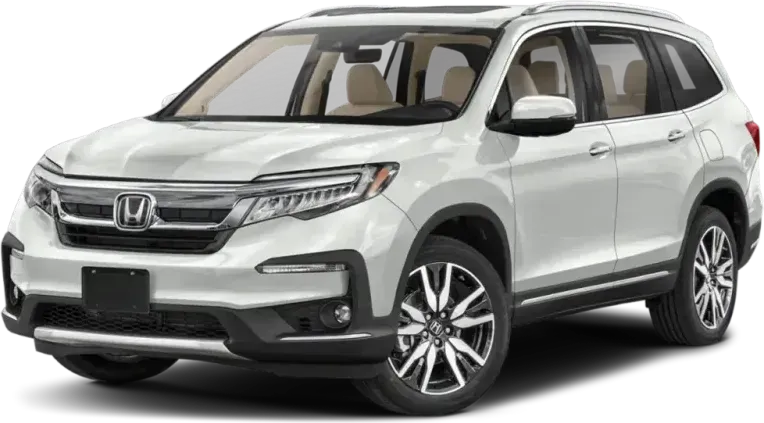 Honda Pilot
Dead even: 3 rounds each, 1 drawn
The Ford Explorer and Honda Pilot are effectively tied on reliability. The Pilot is cheaper to repair, while the Explorer has far more recalls. What separates them is the kind of trouble: Explorer owners report engine and transmission failures, Pilot owners report screens and electronics going dark.
How Do the Ford Explorer and Honda Pilot Generations Compare?
Verdict
The Ford Explorer is more reliable than the Honda Pilot, scoring 66/100 vs 65/100.
Effectively tied. Neither model pulls ahead on the numbers that matter. The Pilot costs less to keep running and has far fewer recalls, but it makes more unscheduled shop visits and draws more complaints per vehicle sold. The Explorer has the opposite mix: fewer shop visits and fewer complaints per sale, with a higher repair bill and a long recall list. Each lands in the good range, so the decision comes down to which kind of failure you can live with and how much you want to spend each year.
Biggest gaps
- Ford Explorer needs 0.3 fewer repairs per year
- Honda Pilot has 66 fewer total recalls
- Ford Explorer has 3.2 fewer complaints per 10k sold
Round by round
- Reliability ScoreExplorer
- Total RecallsPilot
- Complaint RateExplorer
- Annual Repair CostPilot
- Repair FrequencyExplorer
- Major Repair RiskPilot
- Safety RatingDraw
Leaning Ford Explorer or Honda Pilot? Check the exact car before you buy
Whichever wins on paper, the car in front of you has its own past. A VIN check shows its accidents, title history and any open recalls.
Ford Explorer vs Honda Pilot: Which Is More Reliable?
| Metric | Ford Explorer | Honda Pilot |
|---|---|---|
| Reliability ScoreOut of 100, higher is better | 66/100 | 65/100 |
| Years Tracked | 9 | 9 |
| Total RecallsLower is better | 117 | 51 |
| Complaints per 10k SoldLower is better | 8.5 | 11.7 |
| Annual Repair CostLower is better | $732/yr | $542/yr |
| Repair FrequencyUnscheduled shop visits a year | 0.2/yr | 0.5/yr |
| Major Repair RiskChance a repair is major | 14% | 13% |
| Safety RatingNHTSA overall | 2026 NHTSA | 2026 NHTSA |
| Frontal | ||
| Side | ||
| Rollover | ||
| Year WinsModel years with the higher score | 5 | 4 |
What Are the Common Problems With the Ford Explorer and Honda Pilot?
Mechanical trouble dominates the Explorer's list. Owners describe transmissions that slip, clunk, or lock up, engines that fail with metal in the oil, hoods that open at speed, and stalls at stop signs. Brakes are a separate worry: cars rolling away in Park, with 15 crash-linked complaints. Pilot trouble is mostly electronic. Screens and gauge clusters go black while driving, the idle stop will not restart the engine, and the windshield camera fails, with dealer quotes above $2,000. The Pilot's crash-linked area is forward collision avoidance, which the Explorer's main list does not include.
| Ford Explorer | Problem area | Honda Pilot |
|---|---|---|
0.7 | Electrical | 2.4 |
0.7 | Engine | 2.0 |
1.7 | Transmission | 0.7 |
1.3 | Body and structure | <0.1 |
0.1 | Fuel system | 1.2 |
<0.1 | Automatic emergency braking | 1.0 |
0.3 | Brakes | 0.6 |
0.3 | Backup camera | 0.2 |
<0.1 | Steering | 0.3 |
0.2 | Wipers and visibility | 0.2 |
<0.1 | Airbags | 0.2 |
0 | Seat belts | 0.3 |
0.1 | Seats | 0 |
<0.1 | Acceleration and cruise control | <0.1 |
0.1 | Headlights and exterior lights | 0 |
0.1 | Suspension | 0 |
0 | Lane keeping | <0.1 |
1.3 | Other or unspecified | 1.0 |
Complaints per 10,000 units sold, aggregated across all tracked model years from NHTSA owner reports. Shorter bars mean fewer complaints.
Ford Explorer problem guides
Which Is Cheaper to Maintain: Ford Explorer or Honda Pilot?
How Does Ford Explorer vs Honda Pilot Reliability Compare by Year?
| Year | Ford Explorer | Honda Pilot | Edge |
|---|---|---|---|
| 2026 | 70/1004 recalls · 45 complaints | 72/1000 recalls · 37 complaints | Pilot+2 |
| 2025 | 70/10014 recalls · 114 complaints | 67/1004 recalls · 220 complaints | Explorer+3 |
| 2024 | 75/1006 recalls · 22 complaints | 71/1006 recalls · 122 complaints | Explorer+4 |
| 2023 | 70/10012 recalls · 115 complaints | 69/1005 recalls · 156 complaints | Explorer+1 |
| 2022 | 63/10021 recalls · 278 complaints | 68/1003 recalls · 184 complaints | Pilot+5 |
| 2021 | 60/10022 recalls · 465 complaints | 62/1008 recalls · 462 complaints | Pilot+2 |
| 2020 | 52/10029 recalls · 1,262 complaints | 59/1009 recalls · 500 complaints | Pilot+7 |
| 2019 | 68/1004 recalls · 304 complaints | 54/10011 recalls · 935 complaints | Explorer+14 |
| 2018 | 64/1005 recalls · 736 complaints | 63/1005 recalls · 443 complaints | Explorer+1 |
Best years to cross-shop: The 2024 Ford Explorer scored 75/100 and the 2024 Honda Pilot scored 71/100, the strongest shared model years that have been on the road for at least two years, where available.
Who Should Buy the Ford Explorer vs the Honda Pilot?
Team PilotPick the Pilot if your priority is a lower yearly bill and a cleaner recall history. It suits a driver who can tolerate an infotainment blackout or a camera warning more easily than a drivetrain failure. Avoid 2019 and 2020, its weakest years. Before buying, ask whether the windshield camera and fuel injectors have ever been replaced, since owners report both as costly.
Team ExplorerPick the Explorer if you want fewer trips to the shop and can absorb a higher repair bill when something does go wrong. Avoid 2020 and 2021, its weakest years, and check that every open recall has been completed. Ask for transmission and engine service records, and test the parking brake on a slope. The 2024 and 2025 years rate well, but they have had less time to collect complaints, so do not treat them as proven.
Ford Explorer vs Honda Pilot: Common Questions
- Is the Ford Explorer more reliable than the Honda Pilot?
- No, the two are effectively tied. The Pilot has the lower repair cost and fewer recalls. The Explorer has fewer unscheduled shop visits and fewer owner complaints per vehicle sold. Both sit in the good range, so the more useful question is which type of failure worries you more.
- Which has more recalls, the Explorer or the Pilot?
- The Explorer has far more. Federal recall records show 117 across its nine model years from 2018 to 2026, against 51 for the Pilot. Check any used Explorer for open recall work, since some owners report waiting on parts.
- Which is cheaper to repair, the Explorer or the Pilot?
- The Pilot is cheaper. Independent repair-cost data shows about $542 a year for the Pilot and $732 for the Explorer, roughly $950 less over five years. The Pilot does go to the shop more often, at 0.5 visits a year compared with 0.2.
- How serious are the Honda Pilot's camera and fuel injector problems?
- Both can get expensive. Owners report the windshield camera failing between 32,000 and 125,000 miles, with dealers quoting over $2,000 to replace and calibrate it. Failing fuel injectors appear from about 32,000 miles, and some owners say Honda denied warranty extension coverage, leaving bills over $1,000.
- What are the worst Ford Explorer problems?
- Powertrain and engine failures stand out. Owners describe transmissions that slip or lock up, and engine failures with metal in the oil, several between 47,000 and 54,500 miles. Hoods opening at speed and cars rolling away in Park are also reported. The 2020 and 2021 model years are weakest.
Related Reliability Comparisons
More Ford Explorer comparisons
Decided between Ford Explorer and Honda Pilot? Run a VIN check before you buy — uncover hidden accidents, title issues, and open recalls.
How we score the Ford Explorer and Honda Pilot
Scores weight complaint severity at 35%, repair costs at 30%, recall impact at 20%, and the spread of complaints across systems at 15%, with complaint counts adjusted for US sales. Read the full methodology.
See incorrect data? Report an issue