Last updated: 2026-11-19
Engine & powertrain
Honda Pilot Fuel System Problems
Honda Pilot fuel system problems mostly mean failing fuel injectors and fuel pumps that cause stalling and power loss, chiefly in 2018 to 2020.
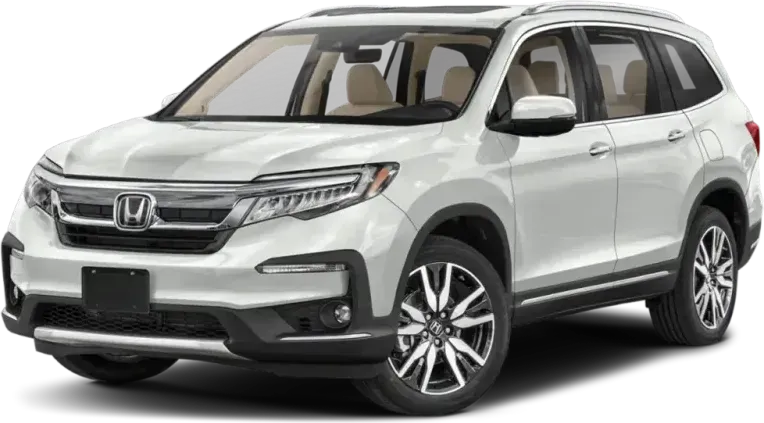
- Owner complaints
- 343
- Share of all complaints
- 11%
- Crash / fire / injury reports
- 1 / 1 / 2
- Related recalls
- 4
Honda Pilot fuel system complaints by model year
The 2019 model year has the most fuel system complaints by a wide margin, and the highest rate per vehicle sold. The 2018 year comes next, then 2020 with far fewer. Complaints drop sharply from 2021 on, to single digits per year. Part of that is time. Newer years have had less time on the road to collect filings, so low counts for 2023 to 2026 do not prove those years are trouble free. The 2026 year has no complaints yet.
| Model year | Complaints | Per 10,000 sold | Crash, fire, injury reports |
|---|---|---|---|
| 2018 | 101 | 6.3 | 0, 0, 0 |
| 2019 | 172 | 12.7 | 1, 1, 1 |
| 2020 | 43 | 3.5 | 0, 0, 0 |
| 2021 | 9 | 0.6 | 0, 0, 0 |
| 2022 | 5 | 0.5 | 0, 0, 0 |
| 2023 | 3 | 0.3 | 0, 0, 1 |
| 2024 | 4 | 0.3 | 0, 0, 0 |
| 2025 | 6 | 0.5 | 0, 0, 0 |
| 2026 | 0 | 0 | 0, 0, 0 |
Owner complaints filed with NHTSA under fuel system, fuel/propulsion system, hybrid propulsion system. Newer model years have had less time to collect complaints.
What goes wrong
Two parts account for most of the real failures: fuel injectors and fuel pumps. Owners usually see an Emissions System Problem message or a check engine light first. Then the engine hesitates, misfires, surges, or loses power. Dealers diagnose failed injectors, high-pressure fuel pumps, or fuel pump modules. Some replaced injectors reportedly fail again. Many filings are not failures at all. They are complaints that dealers had no parts to finish a fuel pump recall repair, sometimes for months.
The risk is real. Owners report stalling and sudden power loss at highway speeds, and several pulled onto the shoulder. One 2019 owner describes a collision with injury after the engine hesitated and surged. Another 2019 report describes smoke, then a fire at the front of the car, while stopped at a light. A 2023 report describes the engine shutting off after about 30 minutes of idling with children inside, flagged with an injury. Some cars limp home at reduced speed. Others need repeated restarts or a tow.
Symptoms owners report
Emissions warning from bad injectors
Most common in 2019. An Emissions System Problem message or check engine light appears, with codes such as P219A, P219B and P0430. Owners then report rough running, misfires, and lost power at highway speed. Dealers diagnose failed fuel injectors.
Hesitation, surge, and stalling
The engine hesitates when the driver presses the gas, then lurches or surges. Others lose power outright at speeds from about 30 to 70 mph. Some cars need several tries or several minutes before they restart. Stalls at idle-stop also appear.
Fuel pump failure
Dealers diagnose failed high-pressure fuel pumps and fuel pump modules. One owner says a pump replaced under a recall failed later and left the family stranded on a highway, needing a long tow. Another had a pump replaced outside any recall.
Loud vibration from the fuel line
Several 2018 owners describe loud vibration or rattling in the fuel line when accelerating, traced to a failing high-pressure fuel pump. One owner says the shop advised replacing parts leading to the pump because of fire risk.
Recall repair stuck waiting for parts
A large share of 2018, 2019 and 2020 filings come from owners told dealers had no pump parts. Waits of months, even a year, are reported. Many of these owners have had no failure. Others stalled while they waited.
Fuel gauge and fuel smell reports
One 2019 owner says the gauge showed fuel remaining, then the car stalled and would not start until gas was added. A 2025 owner reports a strong gasoline smell inside the cabin that the dealer could not reproduce.
When the problems start
Failures show up well before high mileage. Injector problems in 2019 models are reported from about 32,000 to 76,890 miles. In 2018 models, failures run from about 45,000 to 140,000 miles, tied to fuel pumps and injectors. For 2020, dealers diagnosed failed injectors at about 34,000 and 50,000 miles. Owners of newer years rarely give mileage, so no pattern shows for them.
Repairs and recalls
Owners report injector replacement bills of over $1,000, over $1,200 and about $1,689. One paid for injectors and spark plugs under a service bulletin, and the problem remained. Many 2019 owners say Honda refused warranty extension coverage because their VIN fell outside the covered range, though one got injectors replaced under a service bulletin just past the factory warranty. Federal recall records list four recalls in this area. Two cover fuel pump replacement for 2018 to 2021 and 2019 models. For 2023 to 2025, one is a software reprogram for stalling and one is a fuel filler neck repair. All are free.
| Model years | Campaign | Problem |
|---|---|---|
| 2023, 2024, 2025 | 25V031000 | Honda (American Honda Motor Co.) is recalling certain 2022-2025 Acura MDX Type-S, 2023-2025 Honda Pilot, and 2021-2025 Acura TLX Type-S vehicles. A software error in the fuel injection electronic control unit (FI-ECU)… |
| 2023, 2024, 2025 | 24V900000 | Honda (American Honda Motor Co.) is recalling certain 2023-2024 Passport and 2023-2025 Pilot vehicles. The fuel filler neck tube and fuel filler pipe may separate, allowing fuel to leak. |
| 2018, 2019, 2020, 2021 | 23V858000 | Honda (American Honda Motor Co.) is recalling certain 2013-2023 Honda Accord, Civic Coupe, Civic Sedan, Civic Hatchback, Civic Type R, CR-V, HR-V, Ridgeline, Odyssey, Acura ILX, MDX, MDX Hybrid, RDX, RLX, TLX, 2019-2022… |
| 2019 | 21V215000 | Honda (American Honda Motor Co.) is recalling certain 2019-2020 Acura MDX, MDX Sport Hybrid, RDX, TLX, Honda Accord, Civic Hatchback, Insight, 2019 Acura ILX, Honda Accord Hybrid, Civic Coupe, Civic Coupe Si, Civic… |
Checking a used Pilot for fuel system problems
- Enter the VIN on Honda's recall lookup and confirm the fuel pump recall repair was completed, not just scheduled.
- Ask for service records showing fuel injector or fuel pump replacement, and whether the work was done at a dealer.
- Scan for stored codes such as P219A, P219B and P0430, and check for any Emissions System Problem message.
- Test drive on a highway on-ramp and watch for hesitation, surging, or loss of power under acceleration.
- Let the engine idle several minutes and note any stall, rough idle, or gasoline smell in the cabin.
- For 2023 to 2025 models, confirm the software reprogram and fuel filler neck inspection recalls were done.
For the rest of the car, use a full Honda Pilot inspection checklist.
4 fuel system recalls cover the Honda Pilot. A VIN check shows whether the car you're looking at had its recall work done, plus accident and title history.
Honda Pilot Fuel System Problems: common questions
- Which Honda Pilot years have the most fuel system problems?
- The 2019 model year has the most owner complaints in this area and the highest rate per vehicle sold. The 2018 year is next, followed by 2020. Complaints for 2021 and later are far fewer, though newer years have had less time to collect them.
- Is it safe to drive a Pilot with a fuel system warning?
- Owners report stalling and sudden power loss, including at highway speeds and in traffic. One 2019 owner describes a collision with injury. Treat an emissions warning with hesitation as a safety issue and get it diagnosed promptly rather than waiting.
- Is there a recall for Honda Pilot fuel problems?
- Federal recall records list four. Two replace the fuel pump module or assembly on 2018 to 2021 and 2019 models. For 2023 to 2025, one reprograms software that may cause a stall, and one covers the fuel filler neck tube and pipe. All are free.
- How much does fixing Pilot fuel injectors cost?
- Owners report paying over $1,000, over $1,200 and about $1,689 for injector replacement on 2019 models. One owner paid for injectors and spark plugs under a bulletin, and the problem continued. Some got coverage under a service bulletin, but others say Honda denied it based on VIN.
- What does the Emissions System Problem message mean on a Pilot?
- In 2019 complaints, the message often comes with codes P219A, P219B or P0430, and dealers traced it to failed fuel injectors. Owners describe rough running, misfires, and lost power. A shop should confirm the cause, since codes alone can mislead.
Other Honda Pilot problems
Electrical & lighting
Engine & powertrain
Driver-assist tech
Brakes, steering & tires
More on the Honda Pilot
See incorrect data? Report an issue