Last updated: 2026-11-20
Brakes, steering & tires
Honda Pilot Brake Problems
Honda Pilot brake complaints center on phantom automatic braking, a sinking pedal, and cars that fail to stop at low speed. Two recalls apply.
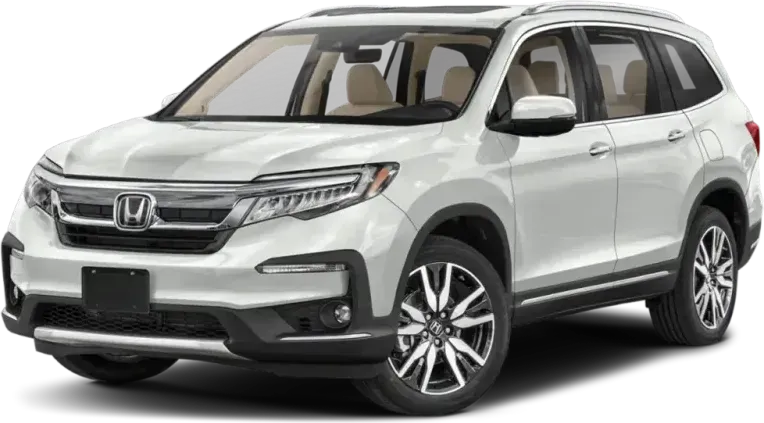
- Owner complaints
- 156
- Share of all complaints
- 5%
- Crash / fire / injury reports
- 19 / 0 / 16
- Related recalls
- 2
Honda Pilot brake complaints by model year
The 2019 model year has the most brake complaints, at 35, and the highest rate per vehicle sold. The 2025 year follows with 29 and the most crash and injury reports, despite little time on the road. The 2020, 2021, and 2022 years each have a steady stream. The 2018 year has only a few. The 2023 and 2024 years have fewer, and 2026 has almost none, but those newer years have had less time to collect reports, so low counts do not make them safer.
| Model year | Complaints | Per 10,000 sold | Crash, fire, injury reports |
|---|---|---|---|
| 2018 | 5 | 0.3 | 1, 0, 1 |
| 2019 | 35 | 2.6 | 1, 0, 3 |
| 2020 | 23 | 1.9 | 3, 0, 4 |
| 2021 | 25 | 1.7 | 4, 0, 2 |
| 2022 | 16 | 1.6 | 2, 0, 1 |
| 2023 | 13 | 1.2 | 0, 0, 0 |
| 2024 | 9 | 0.6 | 1, 0, 0 |
| 2025 | 29 | 2.3 | 7, 0, 5 |
| 2026 | 1 | 1 | 0, 0, 0 |
Owner complaints filed with NHTSA under service brakes, parking brake. Newer model years have had less time to collect complaints.
What goes wrong
Brake complaints on this SUV split into two kinds of trouble. The first is the automatic braking system acting on its own. The car brakes hard on clear roads with nothing ahead, a red "Brake" alert flashes for no reason, and dealers often find no stored codes. The second is the pedal itself. It feels soft, sinks to the floor, sits stiff and high, or fails to stop the car at parking-lot speeds, sometimes with no dash warning at all.
This is a safety issue, not a nuisance. Complaints in this area include crash and injury reports in most model years, and none involve fire. Phantom braking at highway speed raises the risk of being rear-ended. Failures to stop at low speed have sent cars into walls, buildings, and off a parking structure. Some cars were towed more than once after a flood of brake, stability, and steering warnings. Dealers often could not reproduce the fault, so a car can go home with the problem unsolved.
Symptoms owners report
Phantom automatic braking
The car brakes hard on its own with nothing ahead, on highway on-ramps, curves, or clear roads at 40 to 60 mph. Some owners say it feels like a rear-end hit. Dealers often find no codes and cannot reproduce it.
Pedal sinks or feels soft
Owners report a soft, low, or spongy pedal that sometimes goes to the floor. Stopping feels slow, then grabs suddenly. Some say dealers called it normal, and bleeding the brakes helped only a little.
No stop at parking speeds
In several 2025 reports, pressing the pedal at parking-lot speed did not stop the car, and it rolled into walls, buildings, or stairs with no dash warning. Some 2018 to 2022 reports describe the car accelerating while parking.
Wall of brake warnings
Brake, ABS, stability control, brake hold, and steering assist warnings appear at once. Some owners lose steering assist or acceleration, and some cars were towed more than once. One new car showed this at 105 miles.
Early rotor and pad wear
One 2021 owner reported rotors and pads ruined by rust pitting and scoring, with a brake warning message. Others describe grinding when hot, pulling to one side, squeaking, and gravel scoring rotors.
When the problems start
Many problems show up very early. Owners report phantom braking or warnings within the first 1,000 miles on some 2022 cars, at 105 miles on a 2024, and at 1,156 miles on a 2020. A 2020 crash report cites about 2,000 miles. Other reports come later, such as rust-pitted rotors at 21,869 miles, a stuck pedal and brake booster fault at 41,000 miles on a 2023, and a collision braking failure at 41,500 miles on a 2021.
Repairs and recalls
Owners say dealers often cannot reproduce the fault. Reported fixes include a replaced antilock brake module that did not hold, a broken brake switch blamed by one dealer, a camera replacement advised for one collision braking warning, and wiring harness or fuel part swaps that did not solve it. Federal recall records list two. Recall 23V458000 covers 2021 and 2022 Pilots for a tie rod fastener between the brake booster and master cylinder. Recall 25V391000 covers 2023 to 2025 Pilots for a brake pedal pivot pin that was not secured properly. Both are free dealer repairs. Cost data for these repairs is not available.
| Model years | Campaign | Problem |
|---|---|---|
| 2023, 2024, 2025 | 25V391000 | Honda (American Honda Motor Co.) is recalling certain 2021-2025 Acura TLX, 2023-2025 Acura MDX, and 2023-2025 Honda Pilot vehicles. The brake pedal pivot pin was not secured properly, which can cause the pedal to shift… |
| 2021, 2022 | 23V458000 | Honda (American Honda Motor Co.) is recalling certain 2020-2021 Civic, 2020-2023 Ridgeline, 2021-2023 Passport, 2021-2022 Pilot, and 2020 Acura MDX vehicles. The tie rod fastener that connects the brake booster and the… |
Checking a used Pilot for brake problems
- Enter the VIN on NHTSA's recall lookup and confirm recalls 23V458000 (2021-2022) or 25V391000 (2023-2025) were completed, if they apply.
- Press the pedal firmly while stopped. It should feel firm and hold, not sink slowly or sit stiff and high.
- Test drive on a highway and an on-ramp. Watch for sudden hard braking or a flashing red Brake alert with nothing ahead.
- Pull into a parking space slowly and brake several times. The car must stop every time, with no unexpected acceleration.
- Ask for service records showing brake warning visits, towing, or repeated dealer diagnosis, and walk away from unresolved ones.
- Look at rotors for rust pitting or scoring and listen for grinding, squeaking, or pulling to one side.
For the rest of the car, use a full Honda Pilot inspection checklist.
2 brake recalls cover the Honda Pilot. A VIN check shows whether the car you're looking at had its recall work done, plus accident and title history.
Honda Pilot Brake Problems: common questions
- Which Honda Pilot years have the most brake problems?
- The 2019 model year has the most brake complaints and the highest rate per vehicle sold. The 2025 year has the most crash and injury reports. The 2020 to 2022 years also have a steady number. Newer years have had less time to collect complaints, so fewer reports there do not prove they are better.
- Is it safe to drive a Pilot with brake problems?
- Not if the fault is unresolved. Owners report cars that did not stop at low speed, a pedal that sank to the floor, and hard braking on highways. Crashes and injuries appear in the complaints. Have a dealer inspect any brake warning or odd pedal feel before driving it.
- Is there a recall for Honda Pilot brakes?
- Federal recall records list two. Recall 23V458000 covers 2021 and 2022 Pilots for a brake booster tie rod fastener. Recall 25V391000 covers 2023 to 2025 Pilots for a brake pedal pivot pin. Dealers repair both free. Check a VIN for completion.
- Why does my Pilot brake by itself?
- Owners with this symptom suspect the collision mitigation braking system. Some link it to dark asphalt patches, curves, or sunlight. Dealers often find no codes and cannot reproduce it. The data does not give a confirmed cause, so document each event and report it to a dealer.
- How much do Pilot brake repairs cost?
- The data has no price for these specific brake fixes. Independent repair-cost data puts the model's overall estimated annual repair cost at $542. Recall repairs on the booster or pedal assembly are free at a dealer. Get a written estimate for anything else.
Other Honda Pilot problems
Electrical & lighting
Engine & powertrain
Driver-assist tech
More on the Honda Pilot
See incorrect data? Report an issue