Last updated: 2026-10-10
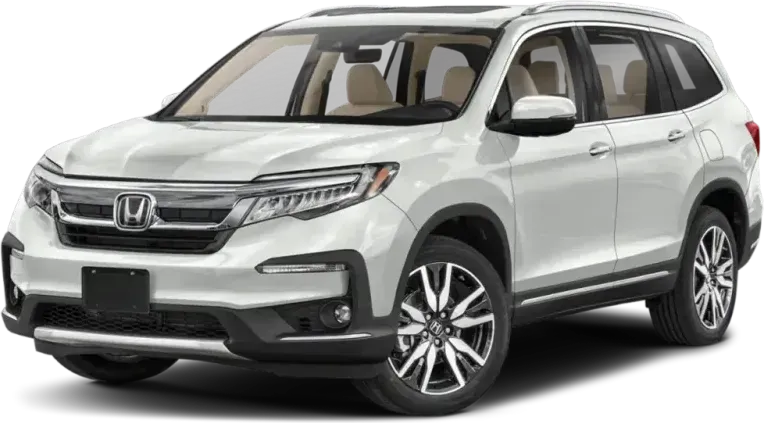
Honda Pilot Years to Avoid
9 scored model years (2018–2026) · model average 68/100
Skip the 2019 Pilot. Owners filed the most complaints that year, mainly about the engine stalling or not restarting after auto idle stop, plus engine bearing failures and rough shifting. The 2024 is the year to buy instead.
Verdict
- Avoid
- 2019 56/100
- Buy
- 2024 72/100
- Model average
- 68/100
Honda Pilot Years to Avoid
These model years score significantly below the Honda Pilot average of 68/100.
| # | Year | Score | Rating | Recalls | Complaints | Top Issue |
|---|---|---|---|---|---|---|
| 1 | 2019 | 56/100 | Mixed | 11 | 794 | Electrical System (223) |
Why These Years Should Be Avoided
2019 Honda Pilot
Owners filed 794 complaints, the most of any year, and federal records show 11 recalls. The largest group is the engine stalling or not restarting after idle stop at lights, often starting between 25,000 and 45,000 miles. Several reports describe connecting rod failures that destroyed the engine, and five fires were reported.
Top issues: Electrical System (223), Unknown Or Other (102), Engine (96), Power Train (77), Fuel System, Gasoline (71), Fuel Propulsion System (54)
View full 2019reliability report →What Are Common Honda Pilot Problems?
Pilot electrical problems
632 complaintsMost reported in 2019, 2020, 2021
2019: The engine stalls or will not restart after auto idle stop shuts it off at lights, intersections and on-ramps.
UNKNOWN OR OTHER
279 complaintsMost reported in 2019, 2021, 2018
2019: This catch-all category mixes several problems.
ENGINE
255 complaintsMost reported in 2019, 2018, 2020
2019: Connecting rod and rod bearing failures destroy the engine in several reports.
POWER TRAIN
232 complaintsMost reported in 2019, 2018, 2020
2019: Judder, jerky shifts between first, second and third gear, slipping and hesitation under acceleration are the main transmission complaints.
FUEL SYSTEM
155 complaintsMost reported in 2019, 2018, 2020
2019: Most reports concern fuel pump recall 23V858.
FORWARD COLLISION AVOIDANCE
147 complaintsMost reported in 2019, 2021, 2020
2019: The camera behind the rearview mirror fails and shuts off adaptive cruise control, lane keeping assist, collision mitigation braking, road departure mitigation and auto high beams at the same time.
Best Honda Pilot Year to Buy Instead
2024 Honda Pilot
The 2024 has been on the road long enough to judge, and it drew far fewer complaints per vehicle sold than the 2019. Its issues are steering noise and a hesitant first-to-second shift, not the stalling and engine failures seen in 2019. Test the steering and the pull-away from a stop.
Found a Safe Year? Check the Specific Car
Even the 2024 Honda Pilot has 6 recalls on file. A VIN check confirms the recall work on the exact car and shows its accident, title, and service history.
- Accidents
- Open Recalls
- Title History
- Odometer Rollback
All Honda Pilot Years by Generation
Honda Pilot Reliability Scores by Year
Third generation (YF5/6; 2016) (2016–2022)
2022 Honda Pilot
3 recalls · 105 complaints
2018 Honda Pilot
5 recalls · 408 complaints
2021 Honda Pilot
8 recalls · 358 complaints
2020 Honda Pilot
9 recalls · 431 complaints
2019 Honda Pilot
11 recalls · 794 complaints
Fourth generation (YG1/2; 2023) (2023–2025)
Frequently Asked Questions
Which Honda Pilot year should I avoid?
Which Honda Pilot years have transmission problems?
Is the 2020 Honda Pilot a good year?
Why is the 2024 Honda Pilot the recommended year?
Should I buy a 2026 Honda Pilot because it has no complaints?
How we score every Honda Pilot model year
Scores weight complaint severity at 35%, repair costs at 30%, recall impact at 20%, and the spread of complaints across systems at 15%, with complaint counts adjusted for US sales. Read the full methodology.
See incorrect data? Report an issue