Last updated: 2026-10-10
Lexus ES vs Mercedes-Benz E-Class: Reliability Compared
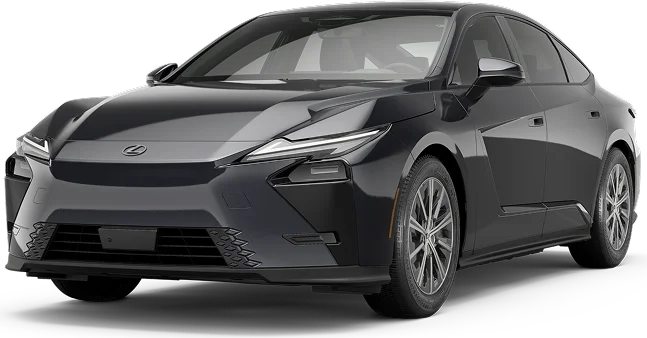
Lexus ES
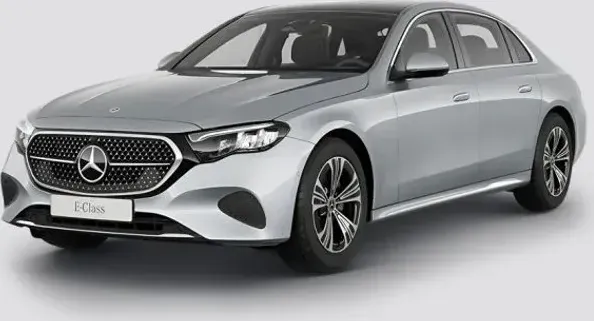
Mercedes-Benz E-Class
Lexus ES wins this matchup over the Mercedes-Benz E-Class, and by a wide margin. The deciding fact is recalls: federal records show 15 for the ES across eight model years and 184 for the E-Class. Here is what that means for a used buyer.
How Do the Lexus ES and Mercedes-Benz E-Class Generations Compare?
Verdict
The Lexus ES is more reliable than the Mercedes-Benz E-Class, scoring 83/100 vs 60/100.
Reliability favors the Lexus ES by a wide margin. Federal recall records show 15 recalls across its eight model years, against 184 for the E-Class. The E-Class also draws the more disruptive owner complaints: 48-volt batteries that die and leave the car unable to start, misfires that trigger limp mode, and transmissions that fail outright at low mileage. The ES has its own problems, mainly stalling and automatic braking, but it has far fewer recalls and a smaller pile of complaints.
Key Differences
- 1Lexus ES has 169 fewer total recalls
- 2Lexus ES scores 23 points higher in reliability
Category Scoreboard
Lexus ES vs Mercedes-Benz E-Class: Which Is More Reliable?
| Metric | Lexus ES | Mercedes-Benz E-Class |
|---|---|---|
| Reliability Score | 83/100 | 60/100 |
| Years Tracked | 8 | 8 |
| Total Recalls | 15 | 184 |
| Total ComplaintsRaw count — varies with sales volume | 95 | 469 |
| Year Wins | 7 | 0 |
What Are the Common Problems With the Lexus ES and Mercedes-Benz E-Class?
Starting and power trouble define the E-Class, while stalling and braking define the ES. On the E-Class, the 48-volt battery dies early, sometimes before 1,000 miles, and misfires push the car into limp mode. Two transmission reports describe total failure at about 15,000 and 22,000 miles. On the ES, weak throttle ties to a low-pressure fuel pump, and automatic braking fires on its own. Crash links differ. The ES has crash-linked air bag and brake complaints, mostly air bags failing to deploy. The E-Class has crash-linked steering complaints, which the ES does not list. Both have crash-linked electrical reports.
| Component | Lexus ES | Mercedes-Benz E-Class |
|---|---|---|
| ELECTRICAL SYSTEM | 4 | 36 |
| UNKNOWN OR OTHER | 6 | 28 |
| ENGINE | 6 | 21 |
| POWER TRAIN | 3 | 18 |
| STEERING | — | 13 |
| AIR BAGS | 8 | 4 |
| WHEELS | 2 | 10 |
| SEAT BELTS | — | 11 |
| FUEL/PROPULSION SYSTEM | 7 | 2 |
| TIRES | 2 | 7 |
| BACK OVER PREVENTION | — | 9 |
| STRUCTURE | 2 | 6 |
| FUEL SYSTEM | 3 | 3 |
| SERVICE BRAKES | 5 | — |
| LANE DEPARTURE | 2 | — |
| VEHICLE SPEED CONTROL | 2 | — |
| FORWARD COLLISION AVOIDANCE | — | 2 |
Raw complaint counts aggregated across all tracked model years from NHTSA owner reports. Counts vary with sales volume.
How Does Lexus ES vs Mercedes-Benz E-Class Reliability Compare by Year?
| Year | Lexus ES | Mercedes-Benz E-Class | Edge |
|---|---|---|---|
| 2024 | 80/1004R / 9C | 63/1001R / 7C | Lexus ES |
| 2023 | 80/1004R / 18C | 63/1005R / 20C | Lexus ES |
| 2022 | 88/1000R / 16C | 60/1008R / 19C | Lexus ES |
| 2021 | 88/1000R / 0C | 56/10030R / 36C | Lexus ES |
| 2020 | 83/1001R / 5C | 56/10026R / 35C | Lexus ES |
| 2019 | 78/1003R / 33C | 54/10042R / 100C | Lexus ES |
| 2018 | 80/1002R / 10C | 55/10072R / 252C | Lexus ES |
Best years to cross-shop: The 2022 Lexus ES scored 88/100 and the 2024 Mercedes-Benz E-Class scored 63/100 — the strongest shared model years that have been on the road for at least two years, where available.
Who Should Buy the Lexus ES vs the Mercedes-Benz E-Class?
Lexus ES vs Mercedes-Benz E-Class: Common Questions
- Is the Mercedes-Benz E-Class more reliable than the Lexus ES?
- No. The Lexus ES is clearly more reliable, with an excellent standing against a good one for the E-Class. The ES has 15 recalls across eight model years, while the E-Class has 184. E-Class owners also report early battery failures that leave the car unable to start.
- Which has more recalls, the E-Class or the ES?
- The E-Class has far more. Federal recall records list 184 recalls across its eight model years from 2018 to 2026. The ES has 15 across 2018 to 2025. Some E-Class owners also reported waiting on steering recall repairs because dealers lacked parts.
- What are the most common E-Class problems?
- Electrical trouble leads the list, with 36 complaints. The 48-volt battery dies early and the car will not start or move. Engine complaints come next, with misfires and limp mode. Power train, steering, and seat belt complaints follow, including two reports of total transmission failure at low mileage.
- What goes wrong with the Lexus ES?
- Air bags top the ES list, mostly reports of failure to deploy in a crash. Stalling and weak throttle response follow, and most of those reports tie to a low-pressure fuel pump with no parts available. Owners also reported automatic braking that engaged on its own.
- Which model years of each car should I avoid?
- Avoid 2018 and 2019 on both cars, since both are the weakest years for each model. For the ES, 2021 and 2022 are the strongest years. The E-Class years 2024 and 2026 rank well, but they have had less time to collect complaints.
Related Reliability Comparisons
More Lexus ES comparisons
More Mercedes-Benz E-Class comparisons
Decided between Lexus ES and Mercedes-Benz E-Class? Run a VIN check before you buy — uncover hidden accidents, title issues, and open recalls.
How we score the Lexus ES and Mercedes-Benz E-Class
Scores weight complaint severity at 35%, repair costs at 30%, recall impact at 20%, and the spread of complaints across systems at 15%, with complaint counts adjusted for US sales. Read the full methodology.
See incorrect data? Report an issue