Last updated: 2026-10-10
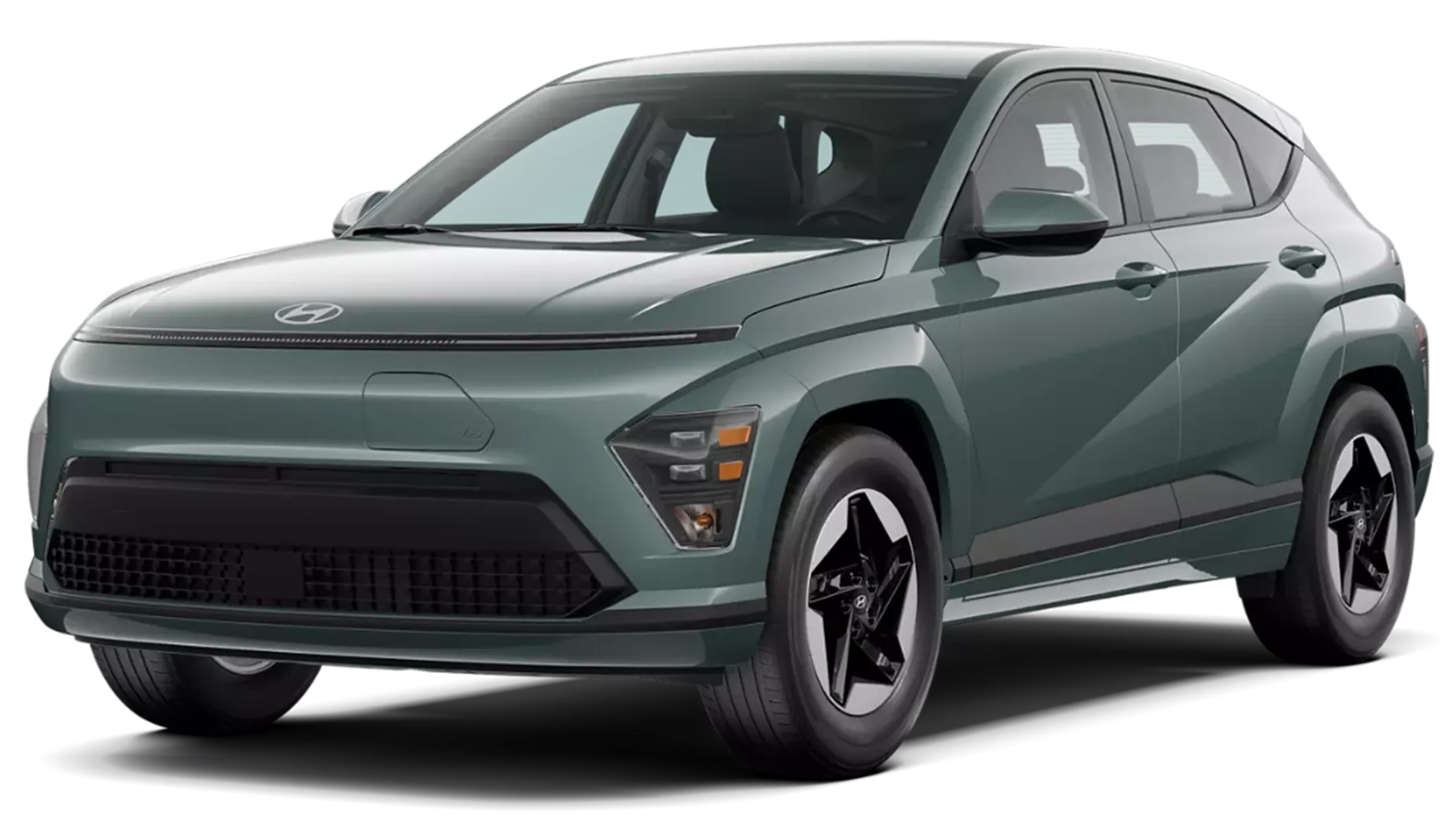
2019 Hyundai Kona Reliability Report
The 2019 Hyundai Kona rates mixed and is the weakest Kona year we score, mainly because of engine oil burning, stalls and fire-risk recalls.
Recalls
4
Complaints
224
Complaint Rate
30.5per 10,000 sold
Est. Repair Cost
N/A
Annual Fuel Cost
$2,000–$2,200
Detailed Score Breakdown
Component-weighted complaints normalized by sales volume
Independent repair cost ratings
Recall count weighted by severity
Breadth of reported problem categories
The Verdict
The weakest Kona year we score, with the most complaints of its neighbors, four recalls including two park-outside fire risks, and heavy engine oil burning.
Top Issues to Watch
- ENGINE (92)
- ELECTRICAL SYSTEM (55)
- POWER TRAIN (19)
Generation & Refresh (US)
2019 is year 2 of the First generation (OS; 2018-2023).
- Redesigned for the 2018 model year.
- A refresh arrives in 2021.
- 1st generation Kona (US).
What this means for buyers
Year 2 is typically a safer pick than the first model year — early issues are more likely to be identified, but the platform is still new.
If you're comparing prices, check 2018 (redesign year) vs 2019+ pricing and recalls.
2018: First generation (OS; 2018-2023) Launch
Generation start — new platform.
2019: This Model Year
2019 is year 2 of the First generation (OS; 2018-2023).
2021: Mid-Cycle Refresh
Updated features and styling tweaks.
Should You Buy the 2019 Hyundai Kona?
Buy with caution. This is the weakest of the nine Kona model years we score, and it sits well below average against other 2019 SUVs. The 2018 Kona looks better, with far fewer complaints and no recalls. The 2020 rates about the same as this year, though it has fewer complaints and recalls.
Engine trouble is the main concern. Owners report burning oil, sometimes with no low-oil warning before the level runs dry. Heavy oil use is typically reported at 80,000 to 90,000 miles. Stalling from low oil and camshaft damage show up earlier, between 61,736 and 66,448 miles. Knocking, smoke, stalls at highway speed and failed engines follow, and three filings involve fire. Federal recall records cover the engine, the electrical system and the brakes, and two of the recalls are park-outside fire-risk recalls.
Ask for proof that every recall was completed and for any oil consumption test records. Look at a 2018 first. Crash protection is not the issue here, since the federal rating is 5 of 5 stars.
Compared to the 2020 Hyundai Kona, which scored 2 points higher. See also the 2018 Hyundai Kona for an earlier comparison.
Pros
- +5-star NHTSA crash rating
- +Not a first-year model
Cons
- −Below-average reliability score
- −Moderate recall count
- −Above-average complaint rate for SUV
- −ENGINE issues reported (92 complaints)
- −6 fire incidents reported in owner complaints
- −Safety recall: park-outside advisory issued
Compare 2019 Hyundai Kona With

2019 Kia Soul
Reliability: 76/100

2019 Buick Encore
Reliability: 76/100

2019 Kia Sportage
Reliability: 74/100

2019 Chevrolet Trax
Reliability: 75/100

2019 Nissan Kicks
Reliability: 73/100
Common Problem Categories
Safety
LOW RISK- 4 manufacturer recalls issued
Other
HIGH RISK- ENGINE (92)
- ELECTRICAL SYSTEM (55)
Recall Overview
4
recalls on record
A moderate 4 recalls are on file for the 2019 Hyundai Kona. Each one points to a specific safety or compliance issue identified by the manufacturer or NHTSA — check the list below before buying.
NHTSA.gov →Complaint Breakdown
30.5
per 10,000 soldSegment avg: 21.2
Safety Incidents
13
Crashes
6
Fires
7
Injuries
0
Deaths
NHTSA 5/5 Stars
Data sourced from NHTSA complaint filings and manufacturer recall notices. Complaint narratives are owner-reported.
2019 Hyundai Kona Recall Details
4 recalls have been issued for the 2019 Hyundai Kona. All recall repairs are performed free of charge at authorized dealerships.
ENGINE
Hyundai Motor America (Hyundai) is recalling certain 2019-2020 Elantra, 2019-2021 Kona and Veloster vehicles equipped with 2.0L Nu MPI engines. The piston oil rings may not have been properly heat-treated, which could result in engine damage.
Consequence
A damaged engine may stall, increasing the risk of a crash. In addition, oil may leak onto hot exhaust components, increasing the risk of a fire.
Remedy
Dealers will inspect and, if necessary, replace the engine, free of charge. In addition, Hyundai will deploy Piston Ring Noise Sensing System (PNSS) software. Owner notification letters were mailed August 24, 2021. Owners may contact Hyundai customer service at 1-855-371-9460.
ELECTRICAL SYSTEM
Hyundai Motor America (Hyundai) is recalling certain 2019-2020 Kona Electric and 2020 Ioniq Electric vehicles. The lithium-ion (Li-ion) battery may short-circuit.
Consequence
An electrical short in the Li-ion battery increases the risk of a fire.
Remedy
Owners are advised to park their vehicles outside and away from structures until the interim action is complete. Hyundai will notify owners, and as an interim action, owners have the option to follow provided instructions to perform a battery update through the vehicle's infotainment system or request a Hyundai dealer to provide the update. Once parts are available, dealers will inspect the Battery System Assembly (BSA), and replace it if necessary. Repairs will be performed free of charge. Owners were notified of the safety risk, and the interim action, with a letter mailed April 9, 2021. Final owner notification letters were mailed June 17, 2021. Owners may contact Hyundai customer service at 1-855-371-9460. Hyundai's number for this recall is 200.
SERVICE BRAKES, HYDRAULIC
Hyundai Motor America (Hyundai) is recalling certain 2019-2020 Nexo Fuel Cell and 2019-2021 Kona Electric vehicles. The Integrated Electronic Brake (IEB) system may detect an abnormal sensor signal and as a result, may significantly reduce braking performance.
Consequence
Reduced braking power could lengthen the distance required to stop the vehicle, increasing the risk of a crash.
Remedy
Hyundai will notify owners, and dealers will update the IEB software, free of charge. The recall began January 25, 2021. Owners may contact Hyundai customer service at 1-855-371-9460. Hyundai's number for this recall is 199.
Buying a used 2019 Hyundai Kona? Check its history first
Engine problems lead owner complaints about the 2019 Hyundai Kona, and 4 recalls were issued for it. A VIN check shows whether this car's recall work was done, plus accident, title, and odometer history.
- Accidents
- Open Recalls
- Title History
- Odometer Rollback
2019 Hyundai Kona NHTSA Safety Ratings
Overall Safety Rating
Crash Test Results by Configuration (expand)
Gas Powertrain
Rollover risk: 13.6%
Safety Technologies
Hyundai KonaRepair Costs & Maintenance
Maintenance Rating
2.5Maintenance rating: 2.5 out of 5Based on NHTSA complaint patterns, recall severity, and publicly available cost benchmarks.
Category-level averages derived from publicly available industry reports (AAA, CarMD). Model-level estimates produced by Auto Reliability Index.
Hyundai Kona Resale Value
The Hyundai Kona is estimated to retain about 75.9% of its original value after 3 years, based on observed used-car listings.
This benchmark covers the Hyundai Kona model overall and is not specific to the 2019 model year.
- Value Retained
- 75.9%
- Depreciation
- 24.1%
- Listings Analyzed
- 65
after 3 years
over the same period
U.S. used-car listings
Listings observed in . This is a historical market benchmark, not a current price quote.
Explore Hyundai Kona depreciation and resale value on CarResaleValue.com2019 Hyundai Kona Example Repair Prices
National average price ranges for common repairs. These are not model-year-specific failure predictions.
| Repair | Estimated Cost |
|---|---|
| AC Diagnosis | $122 – $179 |
| AC Condenser Replacement | $814 – $905 |
| Battery Test | $49 – $72 |
| Brake Booster Replacement | $471 – $578 |
| Fuel Level Sending Unit Replacement | $1,433 – $1,484 |
| Headlamp Alignment Adjust | $49 – $72 |
| Hood Latch Replacement | $177 – $205 |
| Intake Manifold Gasket Replacement | $413 – $487 |
| Water Pump Replacement | $624 – $738 |
| Exhaust Muffler Replacement | $959 – $988 |
Estimates based on national average repair costs. Actual costs may vary by location and shop.
MPG & Annual Running Costs
Gas
27–30 MPG
Fuel cost: $2,000–$2,200/yr
Fuel only
25–28 city / 29–33 hwy MPG
Electric
258 mi range
Fuel cost: $650/yr
Fuel only
28 kWh/100mi · 9 hrs @ 240V
Based on EPA fuel-cost estimates. Excludes routine maintenance, depreciation, and insurance. Data as of 2019 EPA label cycle.
Gas trims
| Trim | Drive | Trans. | City | Hwy | Comb | Fuel Cost |
|---|---|---|---|---|---|---|
| Kona FWD 1.6L 4-cyl | Front-Wheel Drive | Automatic (AM7) | 28 | 32 | 30 | $2,000 |
| Kona FWD 2.0L 4-cyl | Front-Wheel Drive | Automatic (S6) | 27 | 33 | 30 | $2,000 |
| Kona AWD 1.6L 4-cyl | All-Wheel Drive | Automatic (AM7) | 26 | 29 | 27 | $2,200 |
| Kona AWD 2.0L 4-cyl | All-Wheel Drive | Automatic (S6) | 25 | 30 | 27 | $2,200 |
Electric trims
| Trim | Drive | Trans. | Range | kWh/100mi | Fuel Cost |
|---|---|---|---|---|---|
| Kona Electric | Front-Wheel Drive | Automatic (A1) | 258 mi | 28.0 | $650 |
Used Buying Checklist
Key things to inspect or verify before purchasing a 2019 Hyundai Kona.
Pull the dipstick cold and check level and color, then ask for oil-change records showing frequent top-offs.
Listen at cold start and under hard acceleration for knocking, ticking, or clanking from the engine.
Scan for stored trouble codes, especially P1327, and confirm the check engine light works and stays off.
Run the VIN through federal recall records and get a Hyundai dealer printout confirming completed repairs.
On an EV, ask for battery replacement paperwork and check whether charging is still capped at 80%.
Pull away from a full stop ten times and feel for hesitation, slipping, or a brake-like shudder.
Open and lock every door, including the rear doors and hatch, from inside, outside, and with the fob.
Drive on a busy highway and watch for false collision warnings or sudden automatic braking.
2019 Hyundai Kona Common Problems by Component
224 owner complaints grouped by vehicle system.
ENGINE
92 complaintsSafety-relatedBurning oil is the dominant complaint, often a quart every 1,000 miles or worse, sometimes with no low-oil warning before the level runs dry. Knocking, ticking, smoke, lost power and sudden stalls follow, including at highway speed. Several reports end in a failed engine with little or no compression. Three filings involve fire, including flames from the engine bay. Dealers often order oil consumption tests or call the loss within spec. Some owners say parts for a pending repair were not available.
ELECTRICAL SYSTEM
55 complaintsSafety-relatedMost of these filings come from Kona EV owners waiting for a high-voltage battery replacement. Dealers told them to cap charging at 80% and then said parts were not available, sometimes for months. Separate reports describe sudden acceleration while stopped at a light that ended in a crash with 3 injuries, a burning-wire smell, a driver's door that would not open from inside or outside, and stalls with the electrical system cutting out.
POWER TRAIN
19 complaintsSudden power loss and engine seizure lead this group. Owners describe the car slowing to a stop in traffic, warning lights, code P1327, low compression, and one sheared camshaft pin with severe engine damage. Gas models with the dual-clutch transmission show hesitation or slipping when pulling away from a stop, plus abrupt downshifts at highway speed. Software updates often fail to cure it. EV owners report a failed gear drive and long waits for a replacement battery.
UNKNOWN OR OTHER (17 complaints)
UNKNOWN OR OTHER
17 complaintsStalling in traffic tied to low oil and internal engine damage, including broken camshaft timing parts, recurs here, along with hesitation and surging power. Rear door latches that fail and trap passengers are a second pattern, and dealers call it common. Other reports cover a dead horn, false collision warnings with a hard jolt at speed, a sunroof shattering in cold weather, theft worries, and slow EV battery repairs.
FUEL/PROPULSION SYSTEM (9 complaints)
FUEL/PROPULSION SYSTEM
9 complaintsDelayed acceleration is the main driving complaint. The car pauses for up to about 3 seconds or revs as if in neutral when pulling out, merging or passing, and dealer adjustments do not fix it. Two reports describe gasoline leaks, one from a cracked fuel pump mounting flange that left a puddle under the car. One engine lost compression and would not restart. EV owners describe long waits for a replacement battery with no parts date.
ENGINE AND ENGINE COOLING (6 complaints)
ENGINE AND ENGINE COOLING
6 complaintsLow oil between changes is the common thread, often with no warning light until the level is already down. Owners describe knocking and clicking, hesitation, burning smells, and stalls while idling or at 45 mph. One engine suffered failed connecting rods that punched a hole in the block. Dealers sometimes find nothing wrong after a test drive. Several cars needed oil added monthly with no visible leak.
AIR BAGS (5 complaints)
AIR BAGS
5 complaintsSafety-relatedAll 5 reports involve crashes. Two describe air bags that did not deploy in serious wrecks. In another, the plastic A-pillar trim broke apart on deployment and struck the driver's eye. One frontal collision at about 35 mph ended in a fire that burned until firefighters arrived, with a possible seat belt problem. Another owner found an air bag fault after a minor rear-end impact.
SERVICE BRAKES (5 complaints)
SERVICE BRAKES
5 complaintsSafety-relatedBrakes that intermittently fail to apply, including one crash where forward collision avoidance also did nothing, are the most serious reports. The opposite problem appears too: automatic emergency braking stops the car hard on the highway with room to spare, forcing traffic behind to swerve. Other filings describe a stiff steering wheel and no braking before hitting a pole, a surge forward while braking, and the engine dying with a shudder through the pedal.
VEHICLE SPEED CONTROL (4 complaints)
VEHICLE SPEED CONTROL
4 complaintsSafety-relatedUnintended acceleration from a stop is the most severe report here. The car sped through an intersection with the brake pressed and crashed, injuring the driver, and was totaled. Other filings describe stalls with every warning light on and a frozen tachometer at around 62000 miles, speed loss going uphill, and a broken cruise control button that required removing the steering wheel and driver's air bag to replace.
STRUCTURE (3 complaints)
STRUCTURE
3 complaintsSafety-relatedTheft drives one report: a car stolen after a broken rear window and disabled ignition, then crashed, with repairs stuck behind high claim volume. Another describes a rear spoiler that squeaks on warm days because its retaining nuts had come loose or fallen out, leaving it at risk of detaching. Peeling paint is the third complaint.
When Do 2019 Hyundai Kona Problems Start?
Based on owner complaint patterns, here's when common issues tend to appear.
Best & Worst Hyundai Kona Years
Best Hyundai Kona Years to Buy
Based on reliability index scoreHyundai Kona Years to Avoid
2019
(Current Model)
Hyundai Kona Reliability Score Trend
Scores 0–100. Higher is better. Current year highlighted.
| Year | Score | Rating |
|---|---|---|
| 2018 | 69/100 | Good |
| 2019 | 55/100 | Mixed |
| 2020 | 57/100 | Mixed |
| 2021 | 63/100 | Good |
| 2022 | 64/100 | Good |
| 2023 | 66/100 | Good |
| 2024 | 68/100 | Good |
| 2025 | 74/100 | Good |
| 2026 | 67/100 | Good |
Hyundai Kona Reliability Compared to Other Years
Frequently Asked Questions
Is the 2019 Hyundai Kona reliable?
What are the most common problems with the 2019 Hyundai Kona?
Does the 2019 Hyundai Kona burn oil?
Does the 2019 Hyundai Kona have any recalls?
Is the 2018 Hyundai Kona better than the 2019?
Don’t buy a 2019 Hyundai Kona without checking its VIN first — hidden accidents, title issues, and open recalls could cost you thousands.
How we score the 2019 Hyundai Kona
Of the four inputs behind this score, the 2019 Hyundai Kona does best on how many systems draw complaints (81/100) and worst on complaint severity (46/100). Scores weight complaint severity at 35%, repair costs at 30%, recall impact at 20%, and the spread of complaints across systems at 15%, with complaint counts adjusted for US sales. Read the full methodology.
Get notified when new recalls or reliability data is added for the Hyundai Kona.
No spam. Only data updates for this model.
Browse More Hyundai Models
Hyundai Elantra
Score: 94/100

Hyundai Ioniq 5
Score: 63/100
Hyundai Ioniq 6
Score: 82/100

Hyundai Palisade
Score: 72/100

Hyundai Santa Cruz
Score: 74/100

Hyundai Santa Fe
Score: 75/100
Browse More 2019 Vehicles

2019 Lexus RX
Score: 82/100

2019 Kia Sedona
Score: 80/100

2019 Nissan Frontier
Score: 80/100

2019 Lexus IS
Score: 79/100
2019 Chevrolet Impala
Score: 79/100

2019 Lexus GX
Score: 78/100
See incorrect data? Report an issue