Last updated: 2026-10-10
Ford Explorer vs Mazda CX-9: Reliability Compared

Ford Explorer
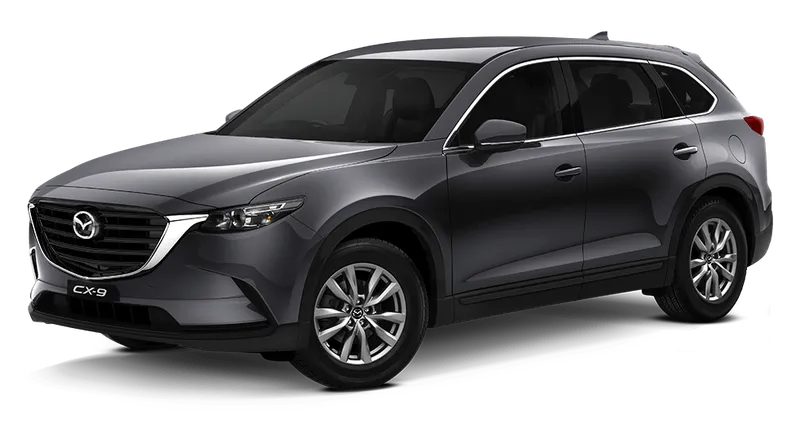
Mazda CX-9
The Mazda CX-9 beats the Ford Explorer on reliability, with lower repair costs and far fewer recalls. Both rate good, but the gap is clear. The Explorer visits the shop less often, yet its failures run costlier and more serious, including engine and shifting problems.
How Do the Ford Explorer and Mazda CX-9 Generations Compare?
Verdict
The Mazda CX-9 is more reliable than the Ford Explorer, scoring 76/100 vs 67/100.
A clear edge goes to the Mazda CX-9. Both land at a good standing, but the CX-9 costs less to repair each year, has a lower chance of a major repair, and has far fewer recalls. The Explorer does make fewer unscheduled shop visits. Its weakness is severity, with harsh shifting, engine failures, and sudden power loss, several tied to crashes. CX-9 owners file more complaints per vehicle sold, so it is not trouble free.
Key Differences
- 1Mazda CX-9 costs $193 less per year to repair
- 2Mazda CX-9 has 111 fewer total recalls
- 3Mazda CX-9 scores 9 points higher in reliability
Category Scoreboard
Ford Explorer vs Mazda CX-9: Which Is More Reliable?
| Metric | Ford Explorer | Mazda CX-9 |
|---|---|---|
| Reliability Score | 67/100 | 76/100 |
| Years Tracked | 9 | 6 |
| Total Recalls | 117 | 6 |
| Complaints per 10k Sold | 6.8 | 15 |
| Annual Repair Cost | $732/yr | $539/yr |
| Repair Frequency | 0.2/yr | 0.6/yr |
| Major Repair Risk | 14% | 10% |
| Safety RatingNHTSA overall | 2026 NHTSA | 2023 NHTSA |
| Frontal | ||
| Side | ||
| Rollover | ||
| Year Wins | 0 | 6 |
What Are the Common Problems With the Ford Explorer and Mazda CX-9?
Harsh or erratic shifting, cars that lose power or shut off while driving, and engines that fail outright, sometimes at low mileage, dominate Explorer complaints. Loose trim, such as an A-pillar molding blowing off at highway speed, adds to the list. Every Explorer problem area has crash-linked reports. CX-9 complaints focus on coolant leaks at the cylinder head that cause overheating and limp mode, plus oil consumption. Its engine and electrical complaints have no crash-linked reports, though a few brake, power train, and steering reports do.
| Component | Ford Explorer | Mazda CX-9 |
|---|---|---|
| ENGINE | 0.4Very Low | 5.7Average |
| UNKNOWN OR OTHER | 1.1Low | 2Low |
| POWER TRAIN | 1.6Low | 1.2Low |
| ELECTRICAL SYSTEM | 0.7Very Low | 1.5Low |
| STRUCTURE | 1.1Low | 0.3Very Low |
| SERVICE BRAKES | 0.2Very Low | 0.7Very Low |
| STEERING | 0.2Very Low | 0.4Very Low |
| BACK OVER PREVENTION | 0.2Very Low | 0.2Very Low |
| SUSPENSION | 0.1Very Low | 0.2Very Low |
| AIR BAGS | 0.1Very Low | 0.2Very Low |
| SEATS | 0.1Very Low | 0.1Very Low |
| ENGINE AND ENGINE COOLING | 0.1Very Low | 0.1Very Low |
| EXTERIOR LIGHTING | 0.1Very Low | —None |
| VISIBILITY/WIPER | —None | 0.1Very Low |
| FUEL/PROPULSION SYSTEM | —None | 0.1Very Low |
| Chest Clip | —None | 0.1Very Low |
| FORWARD COLLISION AVOIDANCE | —None | —None |
| VEHICLE SPEED CONTROL | —None | —None |
| VISIBILITY | —None | —None |
| SEAT BELTS | —None | —None |
Complaints per 10,000 units sold, aggregated across all tracked model years from NHTSA owner reports.
Which Is Cheaper to Maintain: Ford Explorer or Mazda CX-9?
How Does Ford Explorer vs Mazda CX-9 Reliability Compare by Year?
| Year | Ford Explorer | Mazda CX-9 | Edge |
|---|---|---|---|
| 2023 | 71/10012R / 84C | 81/1000R / 12C | Mazda CX-9 |
| 2022 | 65/10021R / 208C | 81/1000R / 9C | Mazda CX-9 |
| 2021 | 62/10022R / 354C | 77/1001R / 35C | Mazda CX-9 |
| 2020 | 54/10029R / 1066C | 78/1001R / 19C | Mazda CX-9 |
| 2019 | 69/1004R / 252C | 73/1002R / 52C | Mazda CX-9 |
| 2018 | 64/1005R / 651C | 66/1002R / 125C | Mazda CX-9 |
Best years to cross-shop: The 2023 Ford Explorer scored 71/100 and the 2023 Mazda CX-9 scored 81/100 — the strongest shared model years that have been on the road for at least two years, where available.
Who Should Buy the Ford Explorer vs the Mazda CX-9?
Ford Explorer vs Mazda CX-9: Common Questions
- Is the Ford Explorer more reliable than the Mazda CX-9?
- No. The CX-9 has a clear edge. It costs less to repair each year, has a lower chance of a major repair, and has far fewer recalls. The Explorer wins only on shop-visit frequency. Both models still earn a good reliability standing.
- Which has more recalls, the Explorer or the CX-9?
- The Explorer, by a wide margin. Federal recall records show 117 recalls across its nine model years, against 6 across the CX-9's six model years. The Explorer's rear camera recalls also draw complaints about repair parts being unavailable.
- Which costs less to repair, the Explorer or the CX-9?
- The CX-9. Independent repair-cost data estimates $539 a year for the CX-9 and $732 for the Explorer, about $965 less over five years. The CX-9 goes to the shop more often, at 0.6 unscheduled visits a year against 0.2.
- What is the most common CX-9 problem?
- Engine trouble leads the owner complaints. Owners describe coolant leaks at the cylinder head near the exhaust manifold, which lead to overheating and limp mode. Excessive oil consumption also appears, with one report of a quart needed in under 3000 miles.
- What goes wrong with the Ford Explorer most often?
- Power train complaints are the largest group. Owners report slamming or skipped gears, sudden downshifts, and cars that lose power while driving. Structure problems follow, such as trim coming loose at highway speed. Engine failures are fewer but costly, with replacement quotes of $11,000 to $12,000.
Related Reliability Comparisons
More Ford Explorer comparisons
Decided between Ford Explorer and Mazda CX-9? Run a VIN check before you buy — uncover hidden accidents, title issues, and open recalls.
How we score the Ford Explorer and Mazda CX-9
Scores weight complaint severity at 35%, repair costs at 30%, recall impact at 20%, and the spread of complaints across systems at 15%, with complaint counts adjusted for US sales. Read the full methodology.
See incorrect data? Report an issue