Last updated: 2026-10-10
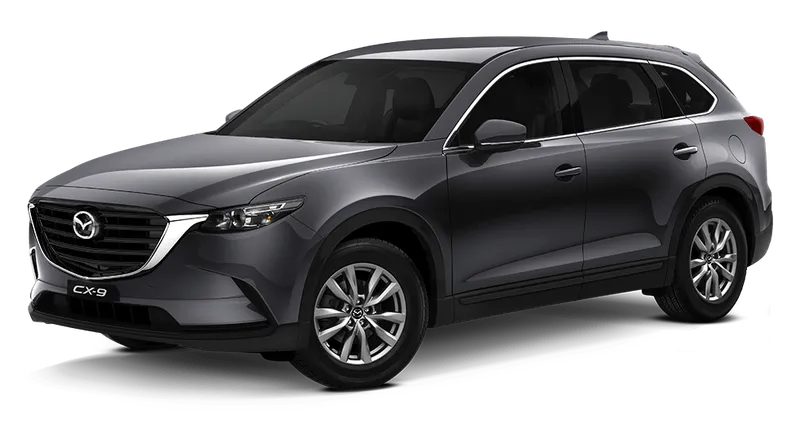
Mazda CX-9 Years to Avoid
6 scored model years (2018–2023) · model average 76/100
Skip the 2018 CX-9. Owners report cracked cylinder heads that leak coolant, often with no warning light, and dealers usually recommend a full engine replacement. The 2023 model year is the one to buy, with excellent reliability and no recalls on file.
Verdict
- Avoid
- 2018 66/100
- Buy
- 2023 81/100
- Model average
- 76/100
Mazda CX-9 Years to Avoid
These model years score significantly below the Mazda CX-9 average of 76/100.
| # | Year | Score | Rating | Recalls | Complaints | Top Issue |
|---|---|---|---|---|---|---|
| 1 | 2018 | 66/100 | Good | 2 | 125 | Engine (60) |
Why These Years Should Be Avoided
2018 Mazda CX-9
Engine trouble dominates, with 60 of 125 complaints. Cracked cylinder heads leak coolant, sometimes into the oil, and failures are reported from about 50,000 to 135,000 miles. Many owners saw no warning light first. Dealers usually quote a full engine replacement near $11,000, and owners say Mazda often refuses help past warranty.
Top issues: Engine (60), Unknown Or Other (17), Electrical System (13), Power Train (12), Service Brakes (5), Steering (3)
View full 2018reliability report →What Are Common Mazda CX-9 Problems?
ENGINE
95 complaintsMost reported in 2018, 2021, 2019
2018: Cracked cylinder heads that leak coolant are the dominant problem.
UNKNOWN OR OTHER
33 complaintsMost reported in 2018, 2019, 2021
2018: Most of these reports describe the center touchscreen cracking from the inside.
ELECTRICAL SYSTEM
26 complaintsMost reported in 2018, 2019, 2020
2018: Spider cracking of the infotainment screen makes up the largest share.
POWER TRAIN
20 complaintsMost reported in 2018, 2019, 2021
2018: Coolant leaks at the cylinder head near the exhaust manifold dominate this category.
SERVICE BRAKES
11 complaintsMost reported in 2018, 2023, 2021
2018: The most serious report involves the electronic parking brake.
STEERING
7 complaintsMost reported in 2018, 2023, 2019
2018: Knocking noises start suddenly when the wheel is turned, with no damage to explain them.
Best Mazda CX-9 Year to Buy Instead
2023 Mazda CX-9
The 2023 rates excellent and has no recalls in federal records. The 2018 has two recalls and far more owner complaints, led by cracked cylinder heads that leak coolant. The 2022 also rates excellent. Newer years have had less time to collect complaints, so check the 2023's brake and steering reports before buying.
Found a Safe Year? Check the Specific Car
Even the 2023 Mazda CX-9 has 0 recalls on file. A VIN check confirms the recall work on the exact car and shows its accident, title, and service history.
- Accidents
- Open Recalls
- Title History
- Odometer Rollback
All Mazda CX-9 Years by Generation
Mazda CX-9 Reliability Scores by Year
Second generation (TC; 2016) (2016–2024)
2022 Mazda CX-9
0 recalls · 9 complaints
2023 Mazda CX-9
0 recalls · 12 complaints
2020 Mazda CX-9
1 recalls · 19 complaints
2021 Mazda CX-9
1 recalls · 35 complaints
2019 Mazda CX-9
2 recalls · 52 complaints
2018 Mazda CX-9
2 recalls · 125 complaints
Frequently Asked Questions
Which Mazda CX-9 year is the worst?
Is the 2019 Mazda CX-9 also a bad year?
Which Mazda CX-9 years have transmission problems?
Which Mazda CX-9 years have the fewest complaints?
Is the 2023 Mazda CX-9 trouble free?
How we score every Mazda CX-9 model year
Scores weight complaint severity at 35%, repair costs at 30%, recall impact at 20%, and the spread of complaints across systems at 15%, with complaint counts adjusted for US sales. Read the full methodology.
See incorrect data? Report an issue