Last updated: 2026-10-10
Chevrolet Traverse vs Dodge Durango: Reliability Compared
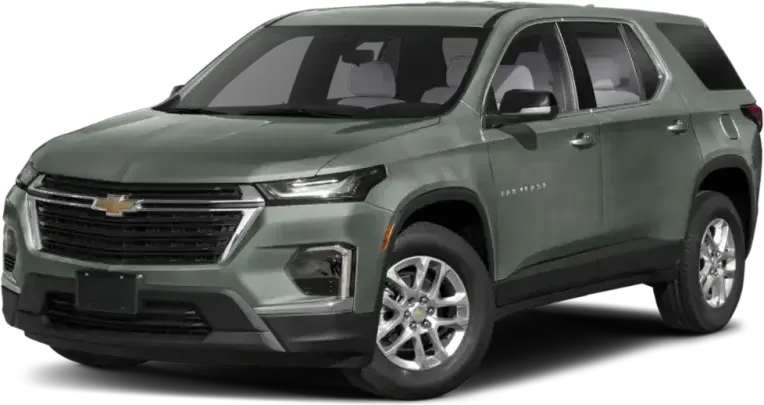
Chevrolet Traverse
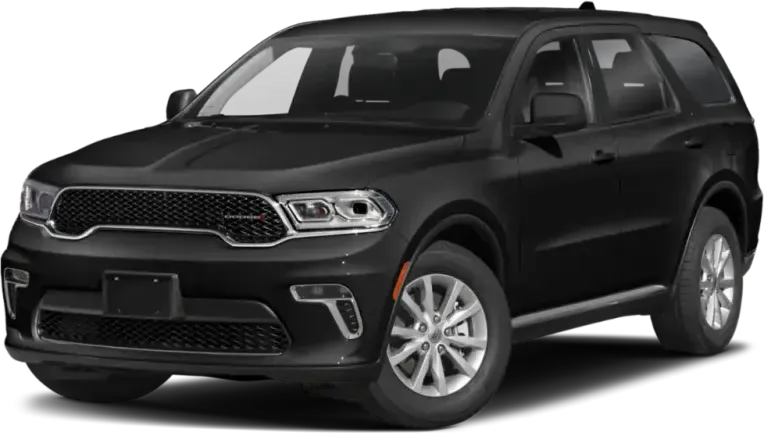
Dodge Durango
Dodge Durango edges out the Chevrolet Traverse on reliability, though both rate good. The deciding fact is shop time: the Durango makes half as many unscheduled visits per year and is less likely to need a major repair. The Traverse has fewer recalls and a slightly lower repair bill.
How Do the Chevrolet Traverse and Dodge Durango Generations Compare?
Verdict
The Dodge Durango is more reliable than the Chevrolet Traverse, scoring 72/100 vs 70/100.
A slight edge goes to the Dodge Durango. Owners filed fewer complaints per vehicle sold, it makes about half as many unscheduled shop visits, and a repair is less likely to be major. The Traverse counters with fewer recalls and a marginally lower yearly repair bill, so the gap is narrow. Both stand as good. The deciding factor is how often each one needs the shop and how serious the visit turns out to be.
Key Differences
- 1Chevrolet Traverse costs $19 less per year to repair
- 2Chevrolet Traverse has 8 fewer total recalls
- 3Dodge Durango has 5% lower major repair risk
Category Scoreboard
Chevrolet Traverse vs Dodge Durango: Which Is More Reliable?
| Metric | Chevrolet Traverse | Dodge Durango |
|---|---|---|
| Reliability Score | 70/100 | 72/100 |
| Years Tracked | 9 | 9 |
| Total Recalls | 19 | 27 |
| Complaints per 10k Sold | 7.2 | 5.4 |
| Annual Repair Cost | $656/yr | $675/yr |
| Repair Frequency | 0.4/yr | 0.2/yr |
| Major Repair Risk | 18% | 13% |
| Safety RatingNHTSA overall | 2026 NHTSA | 2026 NHTSA |
| Frontal | ||
| Side | ||
| Rollover | ||
| Year Wins | 2 | 7 |
What Are the Common Problems With the Chevrolet Traverse and Dodge Durango?
Drivetrain and safety systems dominate the Traverse complaints: AWD shutting off, RPM sticking high with a false park state, alternators dying early, and cracked front exhaust brackets that let fumes into the cabin. Its brake complaints include failure to stop at low speeds and carry 7 crash links, versus 2 for the Durango. Durango problems are more about water and parts supply. Racetrack tail lights fill with water, cooling lines rub through, and brake hydraulic recalls wait on parts. Exterior lighting is the one Durango area with a crash link that the Traverse lacks.
| Component | Chevrolet Traverse | Dodge Durango |
|---|---|---|
| POWER TRAIN | 2.2Low | 0.5Very Low |
| ELECTRICAL SYSTEM | 1.1Low | 1.3Low |
| EXTERIOR LIGHTING | —None | 1.3Low |
| UNKNOWN OR OTHER | 0.9Very Low | 0.2Very Low |
| SERVICE BRAKES | 0.7Very Low | 0.3Very Low |
| ENGINE | 0.6Very Low | 0.3Very Low |
| STEERING | 0.2Very Low | 0.1Very Low |
| AIR BAGS | 0.1Very Low | 0.2Very Low |
| ENGINE AND ENGINE COOLING | 0.2Very Low | —None |
| STRUCTURE | 0.1Very Low | 0.1Very Low |
| SUSPENSION | 0.1Very Low | 0.1Very Low |
| SEAT BELTS | 0.1Very Low | —None |
| FUEL/PROPULSION SYSTEM | 0.1Very Low | —None |
| SEATS | —None | 0.1Very Low |
| BACK OVER PREVENTION | —None | 0.1Very Low |
| FORWARD COLLISION AVOIDANCE | —None | —None |
| VEHICLE SPEED CONTROL | —None | —None |
Complaints per 10,000 units sold, aggregated across all tracked model years from NHTSA owner reports.
Which Is Cheaper to Maintain: Chevrolet Traverse or Dodge Durango?
How Does Chevrolet Traverse vs Dodge Durango Reliability Compare by Year?
| Year | Chevrolet Traverse | Dodge Durango | Edge |
|---|---|---|---|
| 2026 | 76/1000R / 6C | 82/1000R / 0C | Dodge Durango |
| 2025 | 75/1000R / 132C | 78/1000R / 5C | Dodge Durango |
| 2024 | 73/1000R / 107C | 78/1000R / 6C | Dodge Durango |
| 2023 | 72/1002R / 62C | 75/1002R / 27C | Dodge Durango |
| 2022 | 73/1001R / 76C | 71/1006R / 47C | Chevrolet Traverse |
| 2021 | 71/1003R / 72C | 65/1007R / 159C | Chevrolet Traverse |
| 2020 | 62/1008R / 188C | 72/1003R / 62C | Dodge Durango |
| 2019 | 62/1003R / 358C | 67/1004R / 128C | Dodge Durango |
| 2018 | 62/1002R / 416C | 64/1005R / 219C | Dodge Durango |
Best years to cross-shop: The 2024 Chevrolet Traverse scored 73/100 and the 2024 Dodge Durango scored 78/100 — the strongest shared model years that have been on the road for at least two years, where available.
Who Should Buy the Chevrolet Traverse vs the Dodge Durango?
Chevrolet Traverse vs Dodge Durango: Common Questions
- Is the Chevrolet Traverse more reliable than the Dodge Durango?
- No, the Durango has a slight edge. It drew 5.4 complaints per 10,000 sold against 7.2 for the Traverse. Its unscheduled shop visits are 0.2 a year versus 0.4, and 13% of its repairs are major versus 18%. Both are rated good, so the difference is small.
- Which has more recalls, the Traverse or the Durango?
- The Durango has more. Federal recall records show 27 across nine model years for the Durango and 19 for the Traverse. Recall count alone does not decide reliability, since several Durango owners report brake hydraulic recall parts being unavailable for a year or more.
- Which costs less to repair, the Traverse or the Durango?
- The Traverse costs slightly less, at about $656 a year against $675 for the Durango. That is roughly $95 over five years. The Durango is less likely to need a major repair, so the cheaper yearly figure does not mean lower risk.
- What is the common exhaust problem on the Traverse?
- Front exhaust pipe brackets crack at their welds, and the pipe then tears. It begins as a rattle at startup and can become a loud clang, with exhaust fumes in the cabin. Failures appear from about 53,000 miles. GM special coverage applies to 2019 and 2021 but not 2020.
- What goes wrong with the Durango tail lights?
- Water leaks into the liftgate racetrack tail light and burns out LED sections, often taking the license plate lights with it. Failures show up as early as 17,000 miles. Single bulbs cannot be replaced, so the fix is a full assembly quoted at roughly $1,500 to $2,000.
Related Reliability Comparisons
More Chevrolet Traverse comparisons
Decided between Chevrolet Traverse and Dodge Durango? Run a VIN check before you buy — uncover hidden accidents, title issues, and open recalls.
How we score the Chevrolet Traverse and Dodge Durango
Scores weight complaint severity at 35%, repair costs at 30%, recall impact at 20%, and the spread of complaints across systems at 15%, with complaint counts adjusted for US sales. Read the full methodology.
See incorrect data? Report an issue