Last updated: 2026-10-10
Audi e-tron vs Lexus RX: Reliability Compared
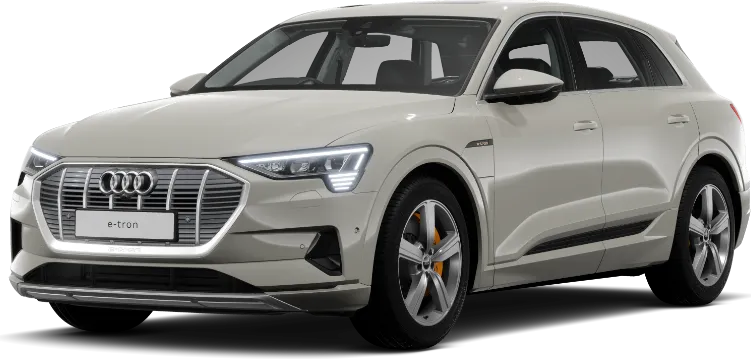
Audi e-tron
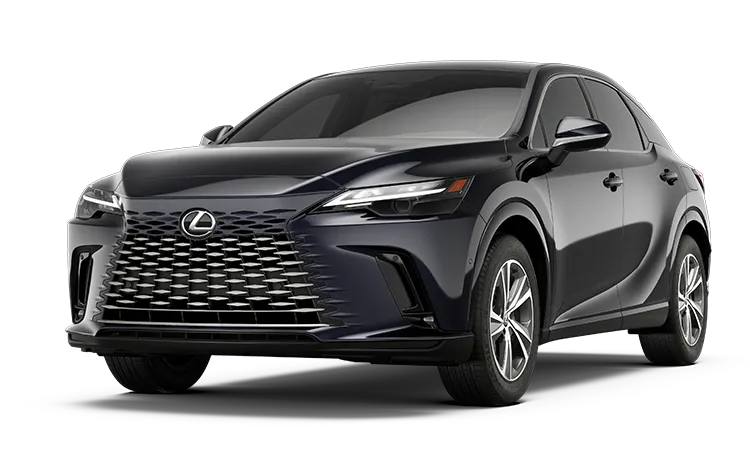
Lexus RX
Reliability favors the Lexus RX over the Audi E-Tron by a large gap, mainly because E-Tron owners report sudden power loss far more often per car sold. The RX also has far fewer recalls, though its air bag and brake actuator complaints deserve a check.
How Do the Audi e-tron and Lexus RX Generations Compare?
Verdict
The Lexus RX is more reliable than the Audi e-tron, scoring 86/100 vs 51/100.
Reliability favors the Lexus RX by a large gap. Federal recall records show 42 recalls across nine RX model years against 106 across eight for the E-Tron. Owner complaints per car sold run about 7.5 per 10,000 for the RX and 80.3 for the E-Tron. The deciding issue is what goes wrong. E-Tron owners report cars losing all power at a light or on the road, while RX complaints are spread across more areas and show up far less often per car sold.
Key Differences
- 1Lexus RX has 72.8 fewer complaints per 10k sold
- 2Lexus RX has 64 fewer total recalls
- 3Lexus RX scores 35 points higher in reliability
Category Scoreboard
Audi e-tron vs Lexus RX: Which Is More Reliable?
| Metric | Audi e-tron | Lexus RX |
|---|---|---|
| Reliability Score | 51/100 | 86/100 |
| Years Tracked | 8 | 9 |
| Total Recalls | 106 | 42 |
| Complaints per 10k Sold | 80.3 | 7.5 |
| Safety RatingNHTSA overall | 2025 NHTSA | 2026 NHTSA |
| Frontal | ||
| Side | ||
| Rollover | ||
| Year Wins | 0 | 8 |
What Are the Common Problems With the Audi e-tron and Lexus RX?
Sudden power loss defines the E-Tron. Owners describe the car shutting down at a light or while driving, then recovering after a restart. Others report a brake pedal that sinks to the floor with no warning. Its electrical complaints carry 7 crash links. RX complaints are more varied: harsh or hanging transmission shifts, stalling, and brake actuator noise like honking or barking. Air bags are the crash-linked area the E-Tron lacks. The RX has 11 crash-linked air bag complaints, including non-deployment and a concussion. Both cars have stopping and power-loss reports, but the E-Tron's come far more often per car sold.
| Component | Audi e-tron | Lexus RX |
|---|---|---|
| ELECTRICAL SYSTEM | 38.2High | 0.5Very Low |
| POWER TRAIN | 12.4Above Avg | 0.2Very Low |
| UNKNOWN OR OTHER | 5.7Average | 0.6Very Low |
| SERVICE BRAKES | 4Average | 0.2Very Low |
| AIR BAGS | 2.3Low | 0.8Very Low |
| FUEL/PROPULSION SYSTEM | 2.7Low | 0.2Very Low |
| FORWARD COLLISION AVOIDANCE | 2.3Low | —None |
| VEHICLE SPEED CONTROL | 2Low | 0.1Very Low |
| STEERING | 2Low | —None |
| ENGINE | 1.7Low | 0.2Very Low |
| TIRES | 0.7Very Low | 0.1Very Low |
| VISIBILITY/WIPER | 0.7Very Low | 0.1Very Low |
| BACK OVER PREVENTION | 0.7Very Low | —None |
| SUSPENSION | 0.7Very Low | —None |
| VISIBILITY | 0.7Very Low | —None |
| STRUCTURE | —None | 0.2Very Low |
| FUEL SYSTEM | —None | 0.1Very Low |
| SEAT BELTS | —None | —None |
| LANE DEPARTURE | —None | —None |
Complaints per 10,000 units sold, aggregated across all tracked model years from NHTSA owner reports.
How Does Audi e-tron vs Lexus RX Reliability Compare by Year?
| Year | Audi e-tron | Lexus RX | Edge |
|---|---|---|---|
| 2025 | 50/10012R / 19C | 83/1005R / 9C | Lexus RX |
| 2024 | 48/10016R / 23C | 85/1009R / 48C | Lexus RX |
| 2023 | 46/10022R / 30C | 85/1005R / 45C | Lexus RX |
| 2022 | 49/10032R / 52C | 90/1000R / 35C | Lexus RX |
| 2021 | 55/1009R / 32C | 86/1005R / 209C | Lexus RX |
| 2020 | 62/1004R / 1C | 86/1005R / 130C | Lexus RX |
| 2019 | 48/1005R / 71C | 82/1009R / 166C | Lexus RX |
| 2018 | 50/1006R / 12C | 85/1003R / 87C | Lexus RX |
Best years to cross-shop: The 2020 Audi e-tron scored 62/100 and the 2022 Lexus RX scored 90/100 — the strongest shared model years that have been on the road for at least two years, where available.
Who Should Buy the Audi e-tron vs the Lexus RX?
Audi e-tron vs Lexus RX: Common Questions
- Is the Audi E-Tron more reliable than the Lexus RX?
- No. The Lexus RX is clearly more reliable, with an excellent standing against a mixed one for the E-Tron. E-Tron owners file about 80.3 complaints per 10,000 cars sold, versus 7.5 for the RX. The E-Tron's leading problem is sudden shutdowns while driving or stopped.
- Which has more recalls, the E-Tron or the RX?
- The E-Tron has more. Federal recall records show 106 recalls across its eight model years, against 42 across nine model years for the RX. Some E-Tron owners also report waiting up to 15 months for recall repairs because dealers lacked parts.
- What is the biggest problem with the Audi E-Tron?
- Electrical failures lead, with 114 complaints. Cars lose all power at a light or while driving, sometimes after a warning message, and usually recover after a restart. Owners also report reduced-power mode, battery drain while parked, and screen crashes that disable the rearview camera.
- What goes wrong most on the Lexus RX?
- Air bag complaints lead, with 73 filings and 11 crash links, mostly about non-deployment. Brake actuator noise, harsh transmission shifts, and stalling follow. The brake actuator repair is costly in some reports, with one dealer quoting $3800.
- Which model years should I avoid on each car?
- On the E-Tron, avoid 2023 and 2019, its weakest years, and favor 2020 or 2021. On the RX, be cautious with 2019 and 2025. The 2022 RX is one of its strongest years and sits in the fourth generation.
Related Reliability Comparisons
More Audi e-tron comparisons
Decided between Audi e-tron and Lexus RX? Run a VIN check before you buy — uncover hidden accidents, title issues, and open recalls.
How we score the Audi e-tron and Lexus RX
Scores weight complaint severity at 35%, repair costs at 30%, recall impact at 20%, and the spread of complaints across systems at 15%, with complaint counts adjusted for US sales. Read the full methodology.
See incorrect data? Report an issue