Last updated: 2026-10-10
Audi e-tron vs Mercedes-Benz EQE: Reliability Compared
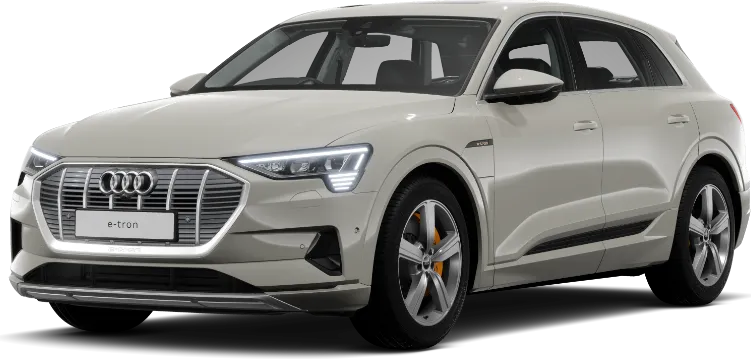
Audi e-tron
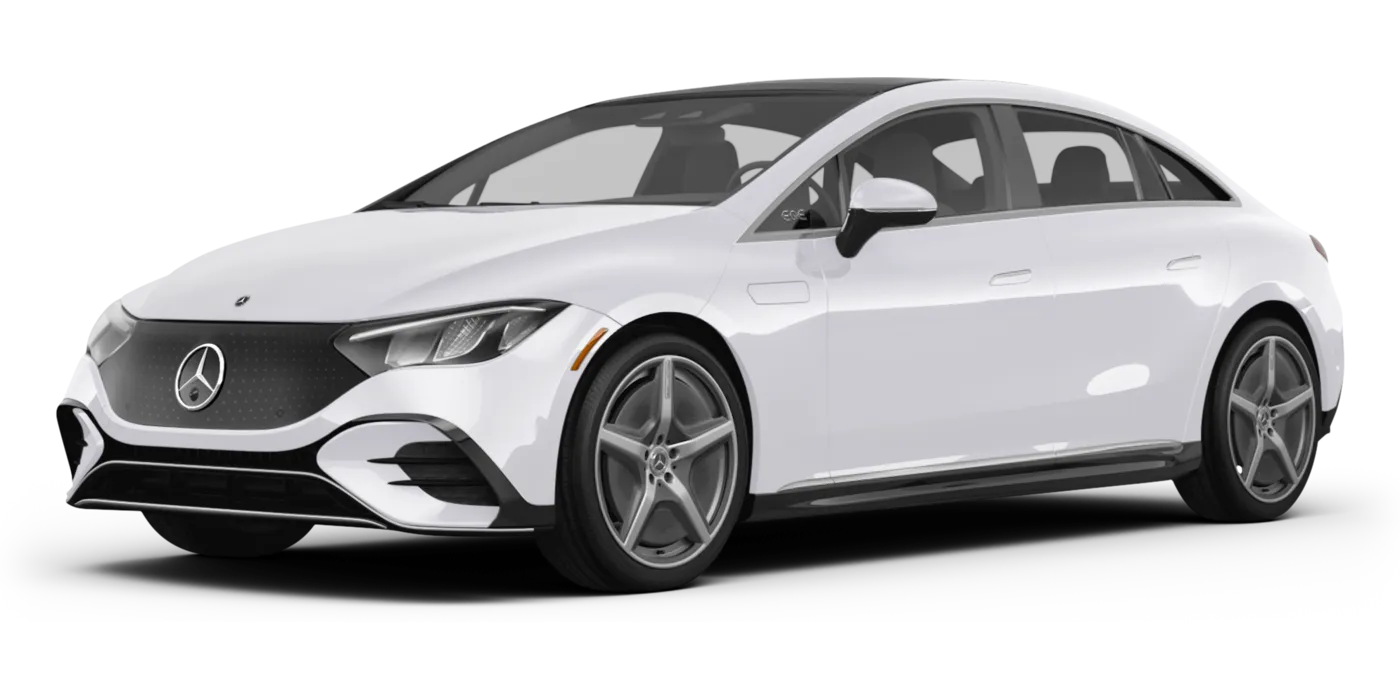
Mercedes-Benz EQE
Clear reliability edge goes to the Mercedes-Benz EQE over the Audi E-Tron. The E-Tron has 106 recalls across 8 model years, against 15 across 2 for the EQE, and its owners report repeated sudden shutdowns and long waits for recall parts.
How Do the Audi e-tron and Mercedes-Benz EQE Generations Compare?
Verdict
The Mercedes-Benz EQE is more reliable than the Audi e-tron, scoring 59/100 vs 51/100.
A clear edge goes to the EQE. Owners filed far fewer complaints per car sold, and federal recall records show a much lighter load. Both cars carry a mixed standing, and both have reports of sudden power loss while driving. The EQE has only two model years behind it, so its record is short. Even so, the E-Tron's repeated shutdowns, recall repairs held up by missing parts, and brake pedals that sink to the floor put it behind.
Key Differences
- 1Mercedes-Benz EQE has 91 fewer total recalls
- 2Mercedes-Benz EQE has 61.7 fewer complaints per 10k sold
- 3Mercedes-Benz EQE scores 8 points higher in reliability
Category Scoreboard
Audi e-tron vs Mercedes-Benz EQE: Which Is More Reliable?
| Metric | Audi e-tron | Mercedes-Benz EQE |
|---|---|---|
| Reliability Score | 51/100 | 59/100 |
| Years Tracked | 8 | 2 |
| Total Recalls | 106 | 15 |
| Complaints per 10k Sold | 80.3 | 18.6 |
| Year Wins | 0 | 2 |
What Are the Common Problems With the Audi e-tron and Mercedes-Benz EQE?
Sudden power loss shows up on both cars, but the E-Tron has it at scale. Its electrical complaints describe cars shutting off at a light, a reduced-power SAFE mode, and a rearview camera lost to screen crashes. Its brake pedal sometimes sinks to the floor with no warning. The EQE stalls too, often at 40 to 45 mph, and its failures appear early. The EQE also has crash-linked airbag complaints, including no deployment in a severe frontal crash, which the E-Tron does not list. EQE owners also report tire blowouts and an unintended acceleration crash.
| Component | Audi e-tron | Mercedes-Benz EQE |
|---|---|---|
| ELECTRICAL SYSTEM | 38.2High | 5.1Average |
| POWER TRAIN | 12.4Above Avg | 1.3Low |
| UNKNOWN OR OTHER | 5.7Average | 4.7Average |
| SERVICE BRAKES | 4Average | 1.3Low |
| AIR BAGS | 2.3Low | 1.3Low |
| FUEL/PROPULSION SYSTEM | 2.7Low | —None |
| FORWARD COLLISION AVOIDANCE | 2.3Low | —None |
| STEERING | 2Low | —None |
| VEHICLE SPEED CONTROL | 2Low | —None |
| ENGINE | 1.7Low | —None |
| TIRES | 0.7Very Low | 0.8Very Low |
| WHEELS | —None | 0.8Very Low |
| BACK OVER PREVENTION | 0.7Very Low | —None |
| SUSPENSION | 0.7Very Low | —None |
| VISIBILITY/WIPER | 0.7Very Low | —None |
| VISIBILITY | 0.7Very Low | —None |
Complaints per 10,000 units sold, aggregated across all tracked model years from NHTSA owner reports.
How Does Audi e-tron vs Mercedes-Benz EQE Reliability Compare by Year?
| Year | Audi e-tron | Mercedes-Benz EQE | Edge |
|---|---|---|---|
| 2024 | 48/10016R / 23C | 61/1005R / 14C | Mercedes-Benz EQE |
| 2023 | 46/10022R / 30C | 56/10010R / 30C | Mercedes-Benz EQE |
Best years to cross-shop: The 2024 Audi e-tron scored 48/100 and the 2024 Mercedes-Benz EQE scored 61/100 — the strongest shared model years that have been on the road for at least two years, where available.
Who Should Buy the Audi e-tron vs the Mercedes-Benz EQE?
Audi e-tron vs Mercedes-Benz EQE: Common Questions
- Is the Audi E-Tron more reliable than the Mercedes-Benz EQE?
- No. The EQE has a clear edge. Owners filed 18.6 complaints per 10,000 EQEs sold, against 80.3 for the E-Tron. The EQE has only two model years of history, so its record is short, but the E-Tron's shutdowns and recall delays weigh heavily against it.
- Which has more recalls, the E-Tron or the EQE?
- The E-Tron, by a wide margin. Federal recall records list 106 recalls across its 8 model years. The EQE has 15 across 2 model years. The E-Tron has had more time on the road, but its total is still much larger.
- What is the most common problem with the Audi E-Tron?
- Electrical trouble leads, with 114 complaints. Cars lose all power at a light or while driving, sometimes after a warning message, then recover after a restart. Other owners report SAFE mode, battery drain while parked, and screen crashes that disable the rearview camera.
- Are there safety concerns with the Mercedes-Benz EQE?
- Yes. All three airbag complaints involve crashes and injuries. One describes no airbag deployment in a severe frontal crash. The other two describe unintended acceleration into a wall. Owners also report stalls around 40 to 45 mph and tire blowouts on Pirelli tires.
- Which Audi E-Tron model years are best to buy used?
- The 2020 and 2021 model years are the strongest, based on owner complaints and recall records. The 2023 and 2019 years are weakest. Whatever year you choose, confirm all recall repairs are done, since some owners waited up to 15 months for parts.
Related Reliability Comparisons
More Audi e-tron comparisons
Decided between Audi e-tron and Mercedes-Benz EQE? Run a VIN check before you buy — uncover hidden accidents, title issues, and open recalls.
How we score the Audi e-tron and Mercedes-Benz EQE
Scores weight complaint severity at 35%, repair costs at 30%, recall impact at 20%, and the spread of complaints across systems at 15%, with complaint counts adjusted for US sales. Read the full methodology.
See incorrect data? Report an issue