Last updated: 2026-11-19
Engine & powertrain
Toyota Highlander Fuel System Problems
Toyota Highlander fuel system complaints center on stalling from fuel pump trouble in 2018-2019 and on hybrid tanks that will not fill.
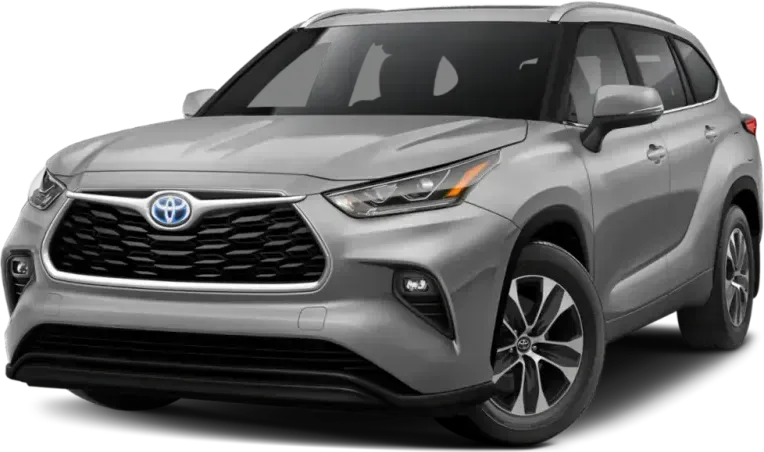
- Owner complaints
- 178
- Share of all complaints
- 8%
- Crash / fire / injury reports
- 2 / 0 / 2
- Related recalls
- 3
Toyota Highlander fuel system complaints by model year
The 2019 model year has the most complaints by far, with 87, well ahead of every other year. The 2018 year follows with 30, then 2021 with 26 and 2020 with 15. Each period has its own pattern: pump-related stalling in 2018 and 2019, hybrid tank fill and gauge trouble in 2020 and 2021, and fuel odor in 2023 and 2024. Years 2022 through 2024 show few complaints. The 2025 and 2026 years are too new to judge, since they have had little time to collect filings.
| Model year | Complaints | Per 10,000 sold | Crash, fire, injury reports |
|---|---|---|---|
| 2018 | 30 | 1.2 | 1, 0, 0 |
| 2019 | 87 | 3.6 | 1, 0, 1 |
| 2020 | 15 | 0.7 | 0, 0, 0 |
| 2021 | 26 | 1 | 0, 0, 0 |
| 2022 | 5 | 0.2 | 0, 0, 0 |
| 2023 | 7 | 0.4 | 0, 0, 0 |
| 2024 | 7 | 0.8 | 0, 0, 1 |
| 2025 | 0 | 0 | 0, 0, 0 |
| 2026 | 1 | n/a | 0, 0, 0 |
Owner complaints filed with NHTSA under fuel system, fuel/propulsion system, hybrid propulsion system. Newer model years have had less time to collect complaints.
What goes wrong
Stalling is the most serious fuel system complaint. Owners of 2018 and 2019 cars describe the engine quitting with no warning at intersections, when pulling away from a stop, or at highway speed. It usually restarts after a pause. A check engine or master caution light often follows. Hybrid owners report something different: the tank stops taking fuel well short of its listed 17.1 gallons, and the range readout falls far below what Toyota advertises.
The stalling is a real safety risk because power can vanish in traffic. One owner crossed several lanes at 70 mph after a hybrid system warning. Another car was left unable to start. Owners filed one crash report each for 2018 and 2019, and no fire reports appear for any year. Many 2018 and 2019 filings come from people who got a recall notice and had no failure yet. The short fills, gauge errors, and fuel odor are mostly nuisances, though one owner reports headaches from fumes.
Symptoms owners report
Stalling without warning
The engine dies while driving or pulling away from a stop, sometimes at 35 to 45 mph, and sometimes at highway speed. Most cars restart after a wait. Some stall repeatedly, and a few trigger traction control or check engine lights.
Hesitation and power loss
Owners describe a lag when accelerating from a stop, rough idle with a warning light, or a sudden loss of power that clears after shifting to Park and back to Drive. One 2021 owner got a hybrid system malfunction warning at 70 mph.
Hybrid tank will not fill
On 2020 and 2021 hybrids, the pump nozzle clicks off after about 12 to 14 gallons, even from near empty. The gauge may read only three-quarters full. Range after a fill-up reads about 420 to 425 miles in some reports.
Erratic fuel gauge
Some owners see a gauge stuck on full after more than 100 miles, or a distance-to-empty reading that shows empty with fuel left. One low-fuel light came on only about 10 miles from empty. Reprogramming did not fix it.
Strong gasoline smell
Newer cars, mainly 2023 and 2024, give off fuel vapor near the fuel cap after hot days or long sits. No warning light comes on. Some owners say the smell reaches the cabin or the house, and dealer visits did not fix it.
Overflow and failed injectors
Isolated 2018 and 2019 reports describe fuel surging out of the filler neck after fill-ups, fuel overflowing at the pump after a pump repair, and failed fuel injectors. These are less common than stalling.
When the problems start
Stalling often shows up early. The 2018 reports run from about 20,000 to 25,000 miles. Failed injectors appear at roughly 30,000 to 38,000 miles. Later cases exist too: a 2019 owner at about 45,000 miles and a 2021 owner with under 85,000. A 2023 fuel odor was confirmed before about 60,000 miles.
Repairs and recalls
The biggest repair story is delay. Owners of 2018 and 2019 cars waited months for fuel pump parts, and some were told their VIN was not included. Federal recall records list two fuel pump recalls covering 2018 and 2019 Highlanders, where dealers replace the pump or pump assembly free. A third recall covers 2020 Highlanders with the 3.5 L V6, where an ECU programming error can interrupt fuel supply during stop and restart; the fix is a free reprogram. One owner paid $1100 for a pump. Software updates did not cure hybrid fill or gauge complaints, and odor owners say dealers did little.
| Model years | Campaign | Problem |
|---|---|---|
| 2020 | 20V162000 | Toyota Motor Engineering & Manufacturing (Toyota) is recalling certain 2020 Highlander vehicles equipped with a 3.5 L, V6 (2GR-FKS) gasoline engine. Due to an Engine Control Unit (ECU) programming error, fuel may not… |
| 2018, 2019 | 20V012000 | Toyota Motor Engineering & Manufacturing (Toyota) recalled certain 2018-2019 4Runner, Highlander, Camry, Land Cruiser, Sequoia, Sienna, Tacoma and Tundra, and Lexus RC 300, RC 350, GS 350, GX 460, IS 300, LC 500, LS… |
| 2018, 2019 | 20V682000 | Toyota Motor Engineering & Manufacturing (Toyota) is recalling certain 2018-2019 4Runner, 2019-2020 Avalon, 2019 Corolla Hatchback, 2017-2019 Highlander, 2018-2020 Camry, 2020 Corolla, 2018-2019 Land Cruiser, 2017-2020… |
Checking a used Highlander for fuel system problems
- Enter the VIN on Toyota's recall lookup and confirm the fuel pump recalls on 2018 and 2019 cars, and the ECU recall on 2020 V6 cars, were completed.
- Ask for dealer paperwork showing the fuel pump was replaced, and when. Be cautious if a car stalled again after the work.
- On a test drive, pull away from stops repeatedly and drive at highway speed. Note any hesitation, rough idle, or warning lights.
- On a hybrid, fill the tank from low and compare gallons pumped with the gauge and range readout. Walk away from big gaps.
- Sniff around the fuel cap and rear door after the car has sat in the sun. Treat a strong gasoline smell as a red flag.
- Scan for stored fuel codes and ask the seller about stalling, towing, or repeat dealer visits for fuel complaints.
For the rest of the car, use a full Toyota Highlander inspection checklist.
3 fuel system recalls cover the Toyota Highlander. A VIN check shows whether the car you're looking at had its recall work done, plus accident and title history.
Toyota Highlander Fuel System Problems: common questions
- Which Toyota Highlander years have the most fuel system problems?
- The 2019 model year has the most complaints by a wide margin, followed by 2018, then 2021 and 2020. Most 2018 and 2019 filings involve fuel pump stalling or waiting on recall parts. The 2025 and 2026 years show almost nothing, but they are too new to read that as good news.
- Is it safe to drive a Highlander that stalls?
- Stalling is a safety risk. Owners report power loss at intersections and at highway speed, and one nearly got rear-ended. Cars usually restart, but some repeat the stall. Complaints include one crash report each for 2018 and 2019. Have the car checked against the recalls before relying on it.
- Is there a recall for Highlander fuel system problems?
- Yes. Federal records list two fuel pump recalls covering 2018 and 2019 Highlanders, where dealers replace the pump free. A third covers 2020 Highlanders with the 3.5 L V6, fixed by an ECU reprogram. The recall lines do not mention hybrid tank fill or fuel odor.
- Why will my Highlander Hybrid not take a full tank?
- Owners of 2020 and 2021 hybrids report the nozzle clicking off after about 12 to 14 gallons against a listed 17.1. Nobody in the data names a cause. Dealer software updates did not fix it, so a short fill alone does not mean the pump is failing.
- How much does a Highlander fuel pump repair cost?
- Recalled pumps on 2018 and 2019 cars are replaced free of charge. Outside a recall, one owner reports paying $1100 for a pump. Independent repair-cost data puts the model's overall yearly repair cost at $489, which covers all repairs, not only fuel system work.
Other Toyota Highlander problems
Engine & powertrain
Brakes, steering & tires
Body & interior
Airbags & seat belts
Electrical & lighting
More on the Toyota Highlander
See incorrect data? Report an issue