Last updated: 2026-10-10
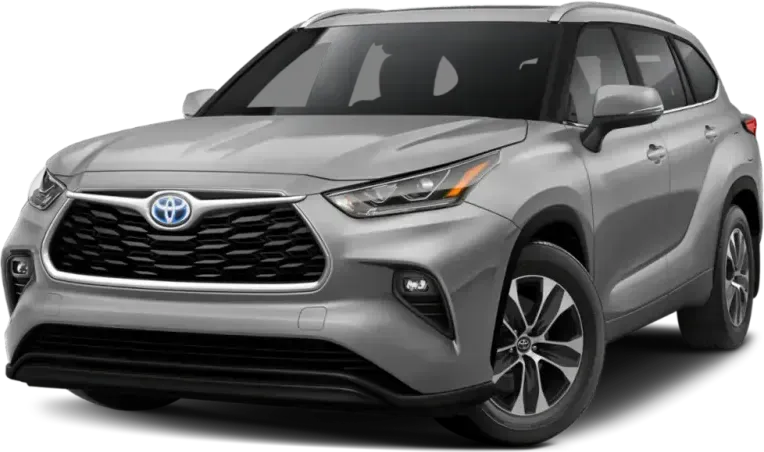
Toyota Highlander Years to Avoid
9 scored model years (2018–2026) · model average 73/100
Skip the 2024 model year. It has the most recalls of any year and the highest complaint rate, led by CV axle noise, stalling hesitation, and curtain airbags that may not deploy with a front window down. The 2022 is the better buy.
Verdict
- Avoid
- 2024 67/100
- Buy
- 2022 74/100
- Model average
- 73/100
Toyota Highlander Years to Avoid
These model years score significantly below the Toyota Highlander average of 73/100.
| # | Year | Score | Rating | Recalls | Complaints | Top Issue |
|---|---|---|---|---|---|---|
| 1 | 2024 | 67/100 | Good | 16 | 198 | Unknown Or Other (43) |
Why These Years Should Be Avoided
2024 Toyota Highlander
Owners report clicking and vibration from the front CV axles, often replaced around 20,000 to 25,000 miles and sometimes back by 50,000. Others describe hesitation and surging from a stop. An airbag recall left families waiting months for parts, and a recall for a blinking, blank instrument cluster had the same wait.
Top issues: Unknown Or Other (43), Power Train (27), Air Bags (27), Electrical System (18), Fuel Propulsion System (14), Suspension (11)
View full 2024reliability report →What Are Common Toyota Highlander Problems?
Highlander transmission problems
485 complaintsMost reported in 2019, 2021, 2020
2019: Transmission failure dominates these reports.
UNKNOWN OR OTHER
254 complaintsMost reported in 2019, 2024, 2021
2019: This catch-all group mixes several problems.
SERVICE BRAKES
169 complaintsMost reported in 2021, 2018, 2022
2021: On hybrid models, braking briefly fades and the SUV surges forward before the brakes catch again.
AIR BAGS
162 complaintsMost reported in 2021, 2020, 2024
2021: Most complaints concern recall 23V865000, which warns that the front passenger air bag may not deploy in a crash.
STRUCTURE
159 complaintsMost reported in 2021, 2023, 2022
2021: Water leaks in through roof rack seals into the A-pillars and headliner.
ELECTRICAL SYSTEM
134 complaintsMost reported in 2019, 2024, 2021
2019: Stalling and sudden power loss lead this group.
Best Toyota Highlander Year to Buy Instead
2022 Toyota Highlander
The 2022 model year has a much lower complaint rate than 2019, 2021, and 2024, and fewer than half the recalls of 2024. It has been on the road long enough to show its faults: a transmission whine past the warranty, a surge while braking, and a bumper cover recall. You can check for all three before buying.
Found a Safe Year? Check the Specific Car
Even the 2022 Toyota Highlander has 7 recalls on file. A VIN check confirms the recall work on the exact car and shows its accident, title, and service history.
- Accidents
- Open Recalls
- Title History
- Odometer Rollback
All Toyota Highlander Years by Generation
Toyota Highlander Reliability Scores by Year
Third generation (XU50) (2014–2019)
Fourth generation (XU70) (2020–2026)
2026 Toyota Highlander
0 recalls · 0 complaints
2025 Toyota Highlander
8 recalls · 40 complaints
2022 Toyota Highlander
7 recalls · 186 complaints
2023 Toyota Highlander
13 recalls · 140 complaints
2020 Toyota Highlander
8 recalls · 269 complaints
2021 Toyota Highlander
6 recalls · 403 complaints
2024 Toyota Highlander
16 recalls · 198 complaints
Frequently Asked Questions
Which Toyota Highlander years should I avoid?
Which Toyota Highlander years have transmission problems?
Is the 2022 Toyota Highlander a good year?
Are the 2025 and 2026 Toyota Highlanders safe bets?
Which Toyota Highlander years have airbag complaints?
How we score every Toyota Highlander model year
Scores weight complaint severity at 35%, repair costs at 30%, recall impact at 20%, and the spread of complaints across systems at 15%, with complaint counts adjusted for US sales. Read the full methodology.
See incorrect data? Report an issue