Last updated: 2026-11-19
Brakes, steering & tires
Tesla Model 3 Suspension Problems
Worn front upper control arms and links are the most common Tesla Model 3 suspension failure. They creak and clunk, mainly on 2018 to 2021 cars.
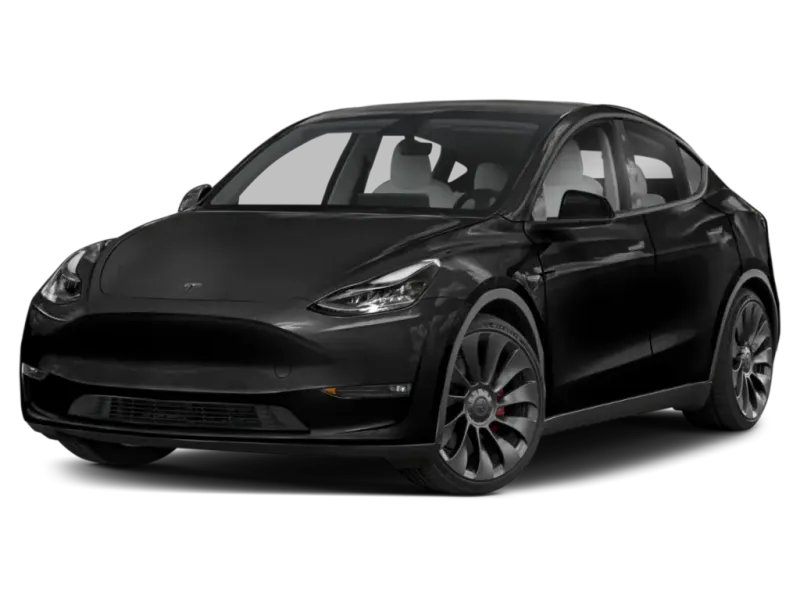
- Owner complaints
- 305
- Share of all complaints
- 7%
- Crash / fire / injury reports
- 14 / 2 / 6
- Related recalls
- 2
Tesla Model 3 suspension complaints by model year
The 2018 model year has the most suspension complaints by a wide margin, both in total and per car sold. The 2019 year is second, followed by 2020 and 2021, with complaint counts falling each year. The 2022 and 2023 years have fewer reports. The 2024, 2025, and 2026 years have only a handful, but those cars have had far less time on the road to collect complaints, so low counts there do not show they are free of the problem. Owners of 2023 cars still describe worn control arms.
| Model year | Complaints | Per 10,000 sold | Crash, fire, injury reports |
|---|---|---|---|
| 2018 | 161 | 11.5 | 6, 0, 1 |
| 2019 | 69 | 4.3 | 4, 0, 3 |
| 2020 | 32 | 1.5 | 2, 1, 1 |
| 2021 | 16 | 1.3 | 2, 1, 0 |
| 2022 | 8 | 0.4 | 0, 0, 0 |
| 2023 | 14 | 0.6 | 0, 0, 1 |
| 2024 | 2 | 0.1 | 0, 0, 0 |
| 2025 | 2 | 0.1 | 0, 0, 0 |
| 2026 | 1 | n/a | 0, 0, 0 |
Owner complaints filed with NHTSA under suspension. Newer model years have had less time to collect complaints.
What goes wrong
The most common complaint is a noisy front end. Owners hear creaking, squeaking, or clunking over bumps and in slow turns. Diagnosis usually points to the front upper control arm ball joints, the lower lateral links, or the compliance links. Some owners also report the car pulling to one side, loose steering, vibration, or an alignment that will not hold.
Most cases are a wear and cost problem, but a smaller set is a safety problem. Owners describe a lateral link separating while driving, a missing mounting bolt, a sheared tie rod, and a front wheel coming off at 60 mph. One owner said the car was not drivable after a lower lateral link failed and had to be towed. Crash reports appear in the data for several years, and 2020 and 2021 each include a fire report. Be careful with the most dramatic filings. Many were written by an outside filer about salvage-yard cars, not about their own vehicles.
Symptoms owners report
Creaking and clunking over bumps
The first sign is a squeak, creak, or groan from the front end over bumps and in low-speed turns. Later it can turn into a clunk under acceleration. Some owners link it to water getting into the ball joint seals.
Worn upper control arms and links
Shops replace the front upper control arms, lower lateral links, and compliance links, often on both sides. Some owners need the work done a second time. Owners rarely see a warning light before the parts fail.
Pulling, vibration, and alignment drift
Owners describe the car pulling to one side, loose steering, vibration from 40 to 80 mph, and an alignment that will not hold. Uneven tire wear and a harsh ride also appear. Some owners say service blamed impact damage, which they deny.
Loose or missing fasteners
A few owners report a lateral link bolt that was missing or under-torqued, loose subframe bolts, or failed captive nuts. One owner had a lateral link separate at about 30,000 miles, causing sudden steering instability.
Sudden suspension failure
The rarest reports are the most serious: a sheared tie rod, a collapsed front suspension, or a front wheel coming off. One driver lost steering and hit two parked cars. A lower lateral link failure left another car undrivable.
When the problems start
Noises and worn arms show up around 30,000 to 40,000 miles in many filings. Repairs are reported at 39,445, just over 50,000, 53,247, and 63,900 miles. One owner with a 2021 car reported the noise at about 110,000 miles. A few extreme cases appear much earlier, including a worn rear control arm at 7,000 miles on a 2023 car.
Repairs and recalls
Owners report that Tesla replaces the upper control arms and lateral links, sometimes both sides at once. Bills in the complaints run from $181.44 for upper control arms to about $2,100 for both front sides. Two federal recalls cover this area. Recall 23V235000 covers 2018 and 2019 cars. Recall 21V835000 covers 2019 to 2021 cars. Both involve front suspension lateral link fasteners that may loosen and let the link separate from the sub-frame. The remedy is to tighten or replace the fasteners free of charge. One owner said their VIN was not included in the recall.
| Model years | Campaign | Problem |
|---|---|---|
| 2019, 2020, 2021 | 21V835000 | Tesla, Inc. (Tesla) is recalling certain 2020-2021 Model Y and 2019-2021 Model 3 vehicles. The front suspension lateral link fasteners may loosen, allowing the lateral link to separate from the sub-frame. |
| 2018, 2019 | 23V235000 | Tesla, Inc. (Tesla) is recalling certain 2018-2019 Model 3 vehicles. The front suspension lateral link fasteners may loosen, allowing the lateral link to separate from the sub-frame. |
Checking a used Model 3 for suspension problems
- Enter the VIN on NHTSA's recall lookup and confirm the lateral link fastener recalls were completed, especially on 2018 to 2021 cars.
- Ask for service records showing control arm, lateral link, or compliance link replacement, and note the mileage and whether it was paid for.
- Test drive over bumps and through slow, tight turns with the radio off. Listen for creaks, squeaks, or clunks from the front.
- Check for the car pulling to one side, a loose steering feel, or vibration between 40 and 80 mph.
- Inspect front tires for uneven wear, which can point to worn suspension parts or an alignment that will not hold.
- Have an independent shop put the car on a lift and check the front links, ball joints, and fasteners before you buy.
For the rest of the car, use a full Tesla Model 3 inspection checklist.
2 suspension recalls cover the Tesla Model 3. A VIN check shows whether the car you're looking at had its recall work done, plus accident and title history.
Tesla Model 3 Suspension Problems: common questions
- Which Tesla Model 3 years have the most suspension problems?
- The 2018 model year has the most complaints, followed by 2019, 2020, and 2021. Counts drop for later years. The newest years have few complaints, but they have had less time to collect them, so that is not proof they are trouble-free.
- Is it safe to drive a Model 3 with a noisy front suspension?
- Do not ignore it. Most noises mean worn parts, but a few owners report a link separating or a wheel coming off. Owners rarely got a warning light. Have the car inspected promptly, and stop driving if steering feels loose or unstable.
- Does a recall cover Model 3 suspension problems?
- Yes, partly. Recall 23V235000 covers 2018 and 2019 cars. Recall 21V835000 covers 2019 to 2021 cars. Both address front suspension lateral link fasteners that may loosen. The remedy is free. Check your VIN, because one owner said theirs was not included.
- How much does Model 3 suspension repair cost?
- Owners report widely varying bills. One paid $181.44 for upper control arms. Others paid between $1,845 and $2,035.20, or about $2,100, for front suspension work. One owner paid $1,357.57 after repeated visits. A lower lateral link failure that required a tow cost one owner more. Warranty status changes who pays.
- Do Model 3 suspension parts fail more than once?
- Some owners say so. Reports describe second replacements, both sides done together, and one owner with three separate suspension visits. Another had control arms replaced at 53,247 miles and lateral links at 85,321 miles.
Other Tesla Model 3 problems
Driver-assist tech
Brakes, steering & tires
Engine & powertrain
Electrical & lighting
Airbags & seat belts
Body & interior
More on the Tesla Model 3
See incorrect data? Report an issue