Last updated: 2026-11-20
Airbags & seat belts
Tesla Model 3 Seat Belt Problems
Tesla Model 3 seat belt complaints center on a \"safety restraint system fault\" warning, worst on 2018 cars, plus belts that will not lock or latch.
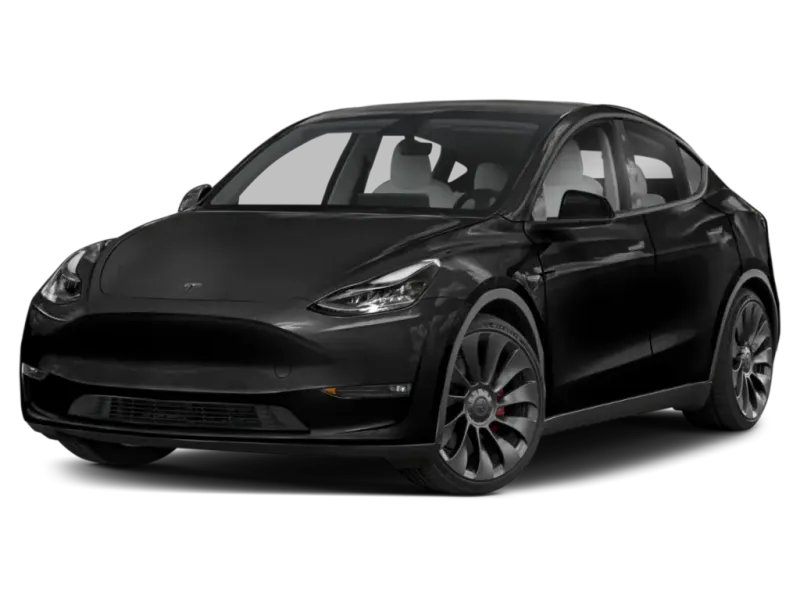
- Owner complaints
- 127
- Share of all complaints
- 3%
- Crash / fire / injury reports
- 3 / 0 / 3
- Related recalls
- 3
Tesla Model 3 seat belt complaints by model year
The 2018 model year dominates, with 63 of the 127 complaints in this area and the highest rate per vehicle sold. The 2019 year follows with 21. The 2020 through 2023 years each sit at roughly 9 to 12 complaints, at lower rates. The 2024, 2025 and 2026 years show only one complaint each, but they have had far less time on the road to collect reports, so that is not a sign they are better. Federal recall records cover 2018 through 2023 in this area.
| Model year | Complaints | Per 10,000 sold | Crash, fire, injury reports |
|---|---|---|---|
| 2018 | 63 | 4.5 | 0, 0, 0 |
| 2019 | 21 | 1.3 | 0, 0, 0 |
| 2020 | 12 | 0.6 | 0, 0, 0 |
| 2021 | 9 | 0.7 | 1, 0, 0 |
| 2022 | 10 | 0.5 | 0, 0, 0 |
| 2023 | 9 | 0.4 | 1, 0, 1 |
| 2024 | 1 | <0.1 | 0, 0, 0 |
| 2025 | 1 | <0.1 | 0, 0, 0 |
| 2026 | 1 | n/a | 1, 0, 2 |
Owner complaints filed with NHTSA under seat belts. Newer model years have had less time to collect complaints.
What goes wrong
The most common complaint is a dash message reading front left or front passenger safety restraint system fault, with a prompt that service is required. It often comes and goes, and many owners say it returned after a repair. Less often, owners describe a front belt that does not lock in a sudden stop, a buckle that will not latch, or a rear belt that sticks.
This matters because the warning points at the belt and airbag system. One owner says Tesla service told them the car was not safe to drive until it was fixed, and offered no loaner. Complaints in this area include no fire reports, and most involve no crash. A few crash reports exist on 2021, 2023 and 2026 cars. The 2026 complaint describes front belts that loosened instead of tightening in a rear-end collision, with two people hurt.
Symptoms owners report
Restraint system fault warning
A front left or front passenger safety restraint system fault message appears on the screen. Owners say it can come and go, show up after a few minutes of driving, and return after repairs. Some report error codes with it.
Belt does not lock in sudden stops
Owners on 2018 cars describe a driver belt that does not catch when pulled hard or when braking suddenly. One says it lurched them toward the steering wheel. Another suspects the impact locking system.
Buckle will not latch
Front and rear buckles stop holding. Owners report a belt that goes in but slides out, a buckle that will not accept the tongue, or a passenger pin mechanism that no longer engages. This shows up on 2018 through 2022 cars.
Rear belt or anchor problems
Owners report a rear belt that sticks and will not retract, a second-row center buckle that needed replacing, and a center belt anchor that pulled loose from the seat.
Seat position and wet seat triggers
Some owners tie the fault to the easy entry seat movement, saying wiring may be pinched or damaged. One 2022 owner reports the passenger light comes on when the seat is damp.
Belt behavior in a crash
A few crash complaints raise belt performance. The 2026 report says front belts loosened and did not pretension in a rear-end impact. A 2021 report says telematics showed the driver belt unlatching before a head-on crash.
When the problems start
Owners report the warning at a wide range of mileages. Examples include about 27,000, 43,500, 47,600 and 57,000 miles, and one 2018 owner reports 105,000. A 2022 owner was still dealing with the passenger fault at 50,000 miles. Several people say it appeared around the end of the 50,000 mile warranty.
Repairs and recalls
Owners report a mix of free and paid fixes. Parts mentioned include wiring, pretensioners, occupancy sensors, a seat harness, and an occupant classification filter module. Bills and quotes run from $151.25 to $700, and one owner was quoted $1100 after a filter module did not help. Several say the fault came back. Three recalls are listed. Recall 21V389000 covers front shoulder belt fasteners on 2018 to 2020 cars. Recall 22V798000 covers second-row buckle and anchor reassembly on 2018 to 2022 cars. Recall 24V376000 is an over-the-air update for the belt warning light and chime on 2018 to 2023 cars.
| Model years | Campaign | Problem |
|---|---|---|
| 2018, 2019, 2020, 2021, 2022, 2023 | 24V376000 | Tesla, Inc. (Tesla) is recalling certain 2012-2024 Model S, 2015-2024 Model X, 2017-2023 Model 3, and 2020-2023 Model Y vehicles. In the event of an unbelted driver, the seat belt warning light and audible chime may… |
| 2018, 2019, 2020, 2021, 2022 | 22V798000 | Tesla, Inc. (Tesla) is recalling certain 2017-2022 Model 3 vehicles. The second-row left seat belt buckle and second-row center seat belt anchor may have been incorrectly reassembled during vehicle service. |
| 2018, 2019, 2020 | 21V389000 | Tesla, Inc. (Tesla) is recalling certain 2018-2020 Model 3 and 2019-2021 Model Y vehicles. One or both fasteners that secure the front seat shoulder belt to the b-pillar may not be properly attached. |
Checking a used Model 3 for seat belt problems
- Turn the car on and watch the screen for any safety restraint system fault message. Cycle the driver and passenger seats through their full range.
- Use the easy entry seat movement several times, then recheck for warnings, since some owners link the fault to seat wiring.
- Pull each belt hard and fast to confirm it locks. Check that every front and rear belt retracts smoothly.
- Latch and unlatch every buckle, including the second-row center. Tug each one to confirm it holds.
- Ask for service records showing past restraint repairs and whether the recall work for your model year was completed.
- Enter the VIN in the federal recall lookup to see whether the three belt recalls are open on that car.
For the rest of the car, use a full Tesla Model 3 inspection checklist.
3 seat belt recalls cover the Tesla Model 3. A VIN check shows whether the car you're looking at had its recall work done, plus accident and title history.
Tesla Model 3 Seat Belt Problems: common questions
- Which Tesla Model 3 years have the most seat belt problems?
- The 2018 model year has the most complaints by far, 63 of 127, and the highest rate per vehicle sold. The 2019 year is next with 21. Later years have fewer complaints, but the newest ones have had less time to collect reports.
- Is it safe to drive with a safety restraint system fault?
- Owners say Tesla service called it a safety issue, and one was told the car was not safe to drive until repaired. The warning relates to the belt and airbag system. Have it inspected rather than ignoring it.
- Does a recall cover Model 3 seat belt problems?
- Three recalls exist. One covers front shoulder belt fasteners on 2018 to 2020 cars. One covers second-row buckle and anchor reassembly on 2018 to 2022 cars. One is a software update for the belt warning chime on 2018 to 2023 cars. None is listed for the restraint fault warning.
- How much does a Model 3 seat belt repair cost?
- Owner reports vary. Bills and quotes include $151.25, $430, $650 and $700. One owner paid $232 in parts and $484 in labor. Another was quoted $1100 after an earlier fix failed. Some repairs were free under warranty or recall.
- Can the seat belt warning come back after a repair?
- Yes, many owners say so. Some had the fault return after weeks or a year. One reports three free fixes and a fourth visit. Another had a filter module installed that did not resolve it.
Other Tesla Model 3 problems
Driver-assist tech
Brakes, steering & tires
Engine & powertrain
Electrical & lighting
Airbags & seat belts
Body & interior
More on the Tesla Model 3
See incorrect data? Report an issue