Last updated: 2026-10-10
Mazda CX-50 vs Toyota Venza: Reliability Compared
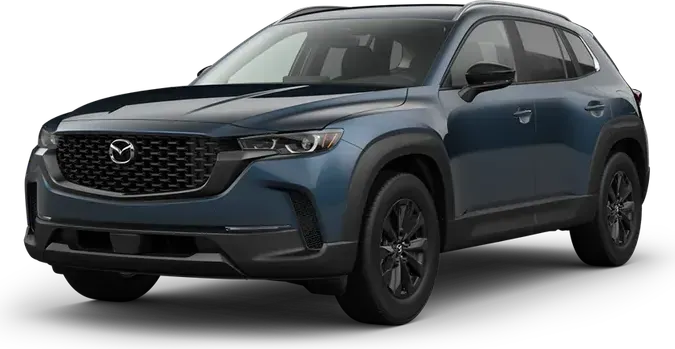
Mazda CX-50
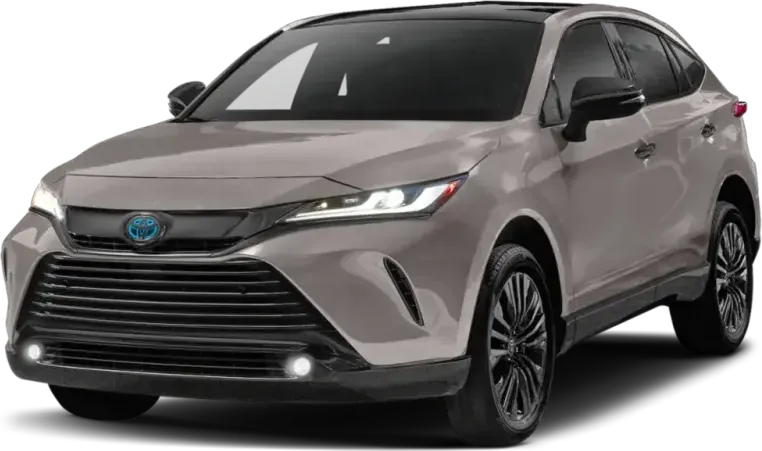
Toyota Venza
On reliability, the Toyota Venza comes out far ahead of the Mazda CX-50. Owners filed 9 complaints on the Venza against 96 on the CX-50. The CX-50 reports include false emergency braking, failed ball joints and crash-linked faults in three areas.
How Do the Mazda CX-50 and Toyota Venza Generations Compare?
Verdict
The Toyota Venza is more reliable than the Mazda CX-50, scoring 80/100 vs 70/100.
Reliability favors the Toyota Venza by a large margin. Owners have filed very few complaints about it, and the two problem areas on file are an odd fuel gauge and headlight shadows, not failed parts. The CX-50 still stands at a good level. But its complaints include brake, suspension and electrical faults that can affect safety or leave you stranded, and that is the deciding difference.
Key Differences
- 1Toyota Venza has 27.2 fewer complaints per 10k sold
- 2Toyota Venza scores 10 points higher in reliability
- 3Toyota Venza has 1 fewer total recalls
Category Scoreboard
Mazda CX-50 vs Toyota Venza: Which Is More Reliable?
| Metric | Mazda CX-50 | Toyota Venza |
|---|---|---|
| Reliability Score | 70/100 | 80/100 |
| Years Tracked | 4 | 4 |
| Total Recalls | 6 | 5 |
| Complaints per 10k Sold | 27.4 | 0.2 |
| Safety RatingNHTSA overall | 2026 NHTSA | 2024 NHTSA |
| Frontal | ||
| Side | ||
| Rollover | ||
| Year Wins | 0 | 2 |
What Are the Common Problems With the Mazda CX-50 and Toyota Venza?
Safety-related parts dominate the CX-50 complaints. False automatic emergency braking has dropped one car from 70 to 35 mph on a highway. Front ball joints and control arms have failed, and in the worst cases a front wheel nearly separated. Brakes, electrical and suspension each have a crash-linked report. Dead batteries have also locked owners out. The Venza has no crash-linked area. Its reports are low-beam shadows that can look like an approaching object, and a tank that fills short of its rated 14.5 gallons while the gauge stays put, then jumps.
| Component | Mazda CX-50 | Toyota Venza |
|---|---|---|
| SERVICE BRAKES | 3.1Average | —None |
| POWER TRAIN | 2.9Low | —None |
| STRUCTURE | 2.9Low | —None |
| ELECTRICAL SYSTEM | 2.3Low | —None |
| SUSPENSION | 2Low | —None |
| STEERING | 2Low | —None |
| FORWARD COLLISION AVOIDANCE | 1.7Low | —None |
| UNKNOWN OR OTHER | 1.4Low | —None |
| SEATS | 1.1Low | —None |
| LANE DEPARTURE | 0.6Very Low | —None |
| VISIBILITY/WIPER | 0.6Very Low | —None |
| AIR BAGS | 0.6Very Low | —None |
| WHEELS | 0.6Very Low | —None |
| EXTERIOR LIGHTING | —None | —None |
| FUEL/PROPULSION SYSTEM | —None | —None |
Complaints per 10,000 units sold, aggregated across all tracked model years from NHTSA owner reports.
How Does Mazda CX-50 vs Toyota Venza Reliability Compare by Year?
| Year | Mazda CX-50 | Toyota Venza | Edge |
|---|---|---|---|
| 2024 | 71/1001R / 26C | 80/1002R / 0C | Toyota Venza |
| 2023 | 65/1002R / 49C | 80/1002R / 0C | Toyota Venza |
Best years to cross-shop: The 2024 Mazda CX-50 scored 71/100 and the 2024 Toyota Venza scored 80/100 — the strongest shared model years that have been on the road for at least two years, where available.
Who Should Buy the Mazda CX-50 vs the Toyota Venza?
Mazda CX-50 vs Toyota Venza: Common Questions
- Is the Mazda CX-50 more reliable than the Toyota Venza?
- No. The Venza leads by a large gap. Owners filed 9 complaints about it, versus 96 for the CX-50. The CX-50 still stands at a good level, but its reports include false emergency braking, failed ball joints and repeated dead batteries.
- Which has more recalls, the CX-50 or the Venza?
- The CX-50 has slightly more. Federal recall records show 6 across its four model years, against 5 across the Venza's four. The difference is small, so recalls should not decide this choice. Check the VIN of any car you consider for open recalls.
- What is the most common CX-50 problem?
- Service brakes lead with 11 complaints. The most common report is false automatic emergency braking, where the car brakes hard with nothing ahead. One owner dropped from 70 to 35 mph on a highway in snow. Another report says the sudden deceleration in stop-and-go traffic stalled the engine.
- Does the Venza have any serious problems?
- None stand out. Its two problem areas have only 2 complaints each. Some owners say low-beam headlights cast dark shadows, and the fuel tank takes less than its rated 14.5 gallons while the gauge reads misleadingly. One owner reports about 11 gallons at empty. A dealer called that normal.
- How much does the Venza cost to repair each year?
- Independent repair-cost data puts the Venza at about $444 a year, with 0.5 unscheduled shop visits a year and a 10% chance that a repair is major. No repair-cost figures are available for the CX-50, so a direct dollar comparison is not possible.
Related Reliability Comparisons
More Mazda CX-50 comparisons
Decided between Mazda CX-50 and Toyota Venza? Run a VIN check before you buy — uncover hidden accidents, title issues, and open recalls.
How we score the Mazda CX-50 and Toyota Venza
Scores weight complaint severity at 35%, repair costs at 30%, recall impact at 20%, and the spread of complaints across systems at 15%, with complaint counts adjusted for US sales. Read the full methodology.
See incorrect data? Report an issue