Last updated: 2026-10-10
Honda CR-V vs Mazda CX-50: Reliability Compared
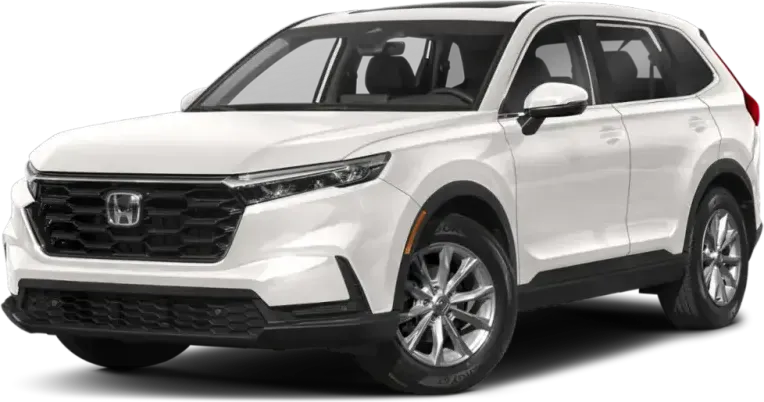
Honda CR-V
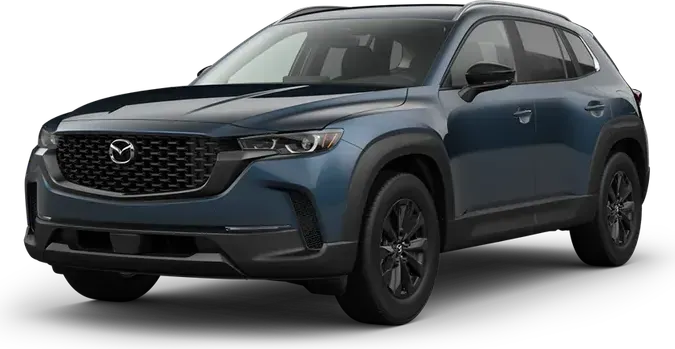
Mazda CX-50
On reliability, the Honda CR-V holds a clear edge over the Mazda CX-50. CR-V owners file 8 complaints per 10,000 sold, while CX-50 owners file 27.4. The CR-V does have known weak spots, mainly a sticking steering rack and false automatic braking, but its record covers nine model years.
How Do the Honda CR-V and Mazda CX-50 Generations Compare?
Verdict
The Honda CR-V is more reliable than the Mazda CX-50, scoring 75/100 vs 70/100.
The clear reliability pick is the Honda CR-V. Its owners file complaints at less than a third of the CX-50's rate, 8 per 10,000 sold against 27.4, and that gap decides it. The CR-V still has problems. Complaints about steering and false emergency braking run into the hundreds, and dozens are tied to crashes. Those complaints are spread over a very large number of cars and nine model years, though. The CX-50 has only been on sale since the 2023 model year, so its record is short, and its complaint rate per vehicle is already higher.
Key Differences
- 1Mazda CX-50 has 40 fewer total recalls
- 2Honda CR-V has 19.4 fewer complaints per 10k sold
- 3Honda CR-V scores 5 points higher in reliability
Category Scoreboard
Honda CR-V vs Mazda CX-50: Which Is More Reliable?
| Metric | Honda CR-V | Mazda CX-50 |
|---|---|---|
| Reliability Score | 75/100 | 70/100 |
| Years Tracked | 9 | 4 |
| Total Recalls | 46 | 6 |
| Complaints per 10k Sold | 8 | 27.4 |
| Safety RatingNHTSA overall | 2026 NHTSA | 2026 NHTSA |
| Frontal | ||
| Side | ||
| Rollover | ||
| Year Wins | 4 | 0 |
What Are the Common Problems With the Honda CR-V and Mazda CX-50?
Steering tops the CR-V's complaint list. The wheel sticks near center, then lets go suddenly, and dealers often blame the steering rack. Phantom braking comes second. The car brakes hard with nothing ahead, warnings flash, and drivers risk being rear-ended. Owners also report highway power loss, oil dilution and fuel injector failures. CX-50 owners report the same false braking, plus hardware failures that aren't among the CR-V's main problem areas. Front lower ball joints have pulled out of control arms, one at 2,077 miles. One liftgate opened on its own, and some batteries die repeatedly. Crash-linked steering complaints appear only on the CR-V, and crash-linked suspension complaints only on the CX-50.
| Component | Honda CR-V | Mazda CX-50 |
|---|---|---|
| STEERING | 1.8Low | 2Low |
| SERVICE BRAKES | 0.4Very Low | 3.1Average |
| ELECTRICAL SYSTEM | 0.9Very Low | 2.3Low |
| POWER TRAIN | 0.2Very Low | 2.9Low |
| STRUCTURE | 0.1Very Low | 2.9Low |
| FORWARD COLLISION AVOIDANCE | 1Very Low | 1.7Low |
| SUSPENSION | —None | 2Low |
| UNKNOWN OR OTHER | 0.3Very Low | 1.4Low |
| SEATS | —None | 1.1Low |
| AIR BAGS | 0.2Very Low | 0.6Very Low |
| VISIBILITY/WIPER | 0.2Very Low | 0.6Very Low |
| ENGINE | 0.7Very Low | —None |
| FUEL SYSTEM | 0.6Very Low | —None |
| LANE DEPARTURE | —None | 0.6Very Low |
| WHEELS | —None | 0.6Very Low |
| FUEL/PROPULSION SYSTEM | 0.4Very Low | —None |
| VEHICLE SPEED CONTROL | 0.1Very Low | —None |
| SEAT BELTS | —None | —None |
| EXTERIOR LIGHTING | —None | —None |
Complaints per 10,000 units sold, aggregated across all tracked model years from NHTSA owner reports.
How Does Honda CR-V vs Mazda CX-50 Reliability Compare by Year?
| Year | Honda CR-V | Mazda CX-50 | Edge |
|---|---|---|---|
| 2026 | 83/1000R / 35C | 76/1000R / 0C | Honda CR-V |
| 2025 | 80/1006R / 201C | 66/1003R / 21C | Honda CR-V |
| 2024 | 77/1004R / 406C | 71/1001R / 26C | Honda CR-V |
| 2023 | 72/1007R / 578C | 65/1002R / 49C | Honda CR-V |
Best years to cross-shop: The 2024 Honda CR-V scored 77/100 and the 2024 Mazda CX-50 scored 71/100 — the strongest shared model years that have been on the road for at least two years, where available.
Who Should Buy the Honda CR-V vs the Mazda CX-50?
Honda CR-V vs Mazda CX-50: Common Questions
- Is the Honda CR-V more reliable than the Mazda CX-50?
- Yes, the Honda CR-V has a clear reliability edge. Owners report 8 complaints per 10,000 CR-Vs sold, compared with 27.4 for the CX-50. The CX-50 also has a much shorter history, with model years starting in 2023. The CR-V data covers 2018 through 2026.
- Which has more recalls, the CR-V or the CX-50?
- The Honda CR-V has more recalls in total: 46 across nine model years. The Mazda CX-50 has 6 across four model years. Part of that gap comes from time on the road, since the CR-V data covers more than twice as many model years. Check any used car's VIN for open recalls before you buy.
- What is the steering problem on the Honda CR-V?
- Most CR-V steering complaints describe a wheel that sticks or catches near center, then suddenly releases, so drivers overcorrect. Owners also hear clicking, creaking or popping, and they notice extra effort returning to straight at highway speeds. Reports start as early as 9,000 miles. Dealers usually diagnose a failing steering rack or gearbox. A separate group of complaints says lane keeping assist tugs the wheel unexpectedly.
- Does the Mazda CX-50 have suspension problems?
- Yes, several CX-50 owner complaints describe failed front lower ball joints and control arms. In the worst cases, the joint pulled out of the control arm and the front wheel nearly separated from the car. Other owners hear loud clunks at 5 to 25 mph. One owner waited nearly two months for a control arm because of a part shortage.
- Do the CR-V and CX-50 both have phantom braking?
- Yes, owners of both models report the car braking hard with nothing ahead. The problem is far larger on the CR-V, with 656 forward collision avoidance complaints and 13 tied to crashes. Many involve adaptive cruise control or curves. CX-50 reports are fewer. One describes the car dropping from 70 to 35 mph on a snowy highway.
Related Reliability Comparisons
More Honda CR-V comparisons
Decided between Honda CR-V and Mazda CX-50? Run a VIN check before you buy — uncover hidden accidents, title issues, and open recalls.
How we score the Honda CR-V and Mazda CX-50
Scores weight complaint severity at 35%, repair costs at 30%, recall impact at 20%, and the spread of complaints across systems at 15%, with complaint counts adjusted for US sales. Read the full methodology.
See incorrect data? Report an issue