Last updated: 2026-11-19
Electrical & lighting
Hyundai Kona Electrical Problems
Hyundai Kona electrical complaints center on sudden power loss, dead batteries and failed horns, with the most reports on 2024 models.
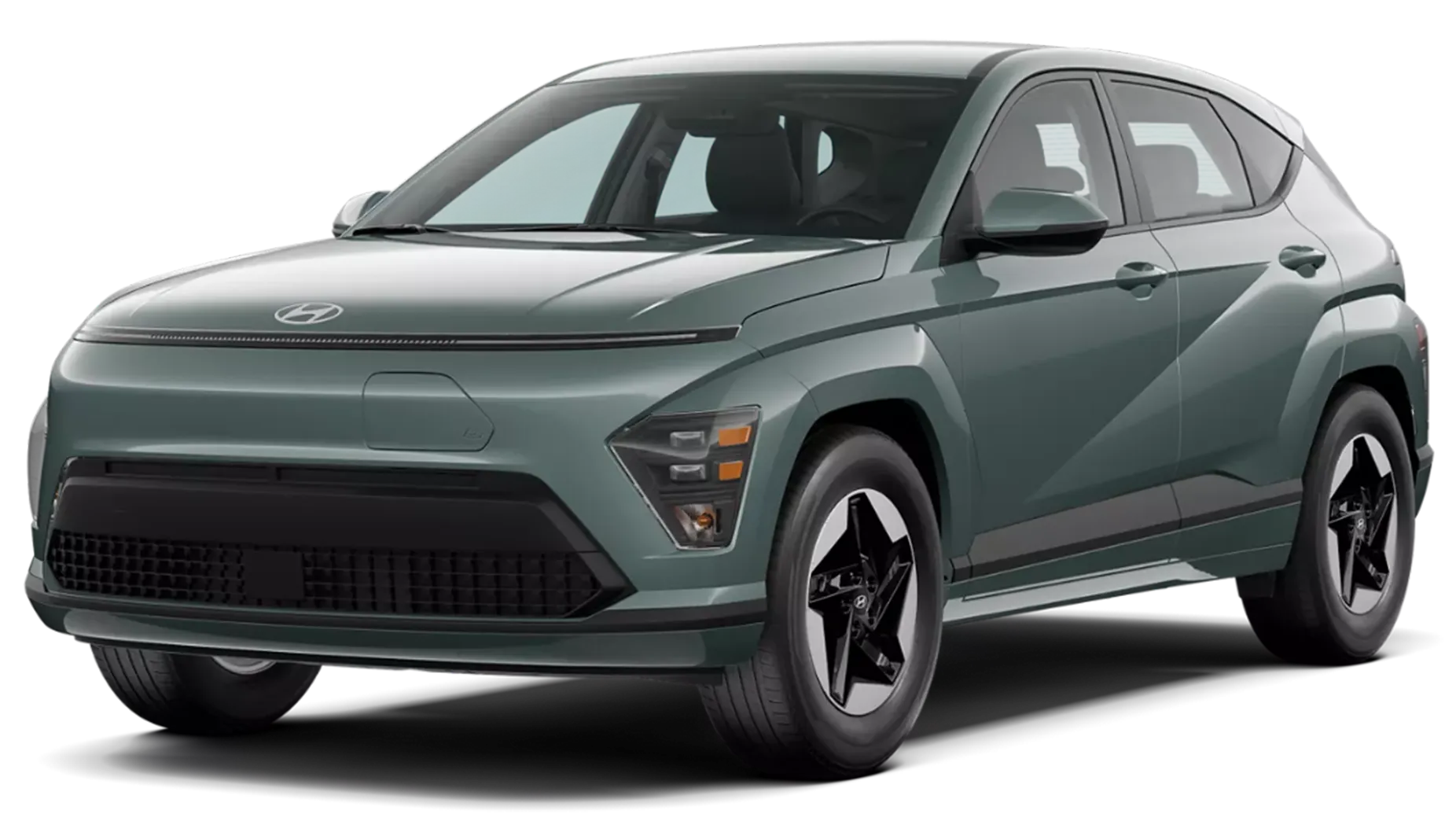
- Owner complaints
- 105
- Share of all complaints
- 13%
- Crash / fire / injury reports
- 2 / 2 / 3
- Related recalls
- 5
Hyundai Kona electrical complaints by model year
The 2024 model year has the most electrical complaints, at 28, and the highest rate per vehicle sold. The 2023 year follows with 21, then 2022 with 16. Model years 2018 through 2021 each have between 6 and 11. The 2025 and 2026 years show only 5 and 2 complaints, but they have had little time on the road, so that count says little about how they will hold up. Treat 2022 through 2024 as the years with the clearest pattern.
| Model year | Complaints | Per 10,000 sold | Crash, fire, injury reports |
|---|---|---|---|
| 2018 | 6 | 1.3 | 0, 2, 2 |
| 2019 | 11 | 1.5 | 1, 0, 0 |
| 2020 | 10 | 1.3 | 0, 0, 0 |
| 2021 | 6 | 0.7 | 0, 0, 0 |
| 2022 | 16 | 2.5 | 0, 0, 0 |
| 2023 | 21 | 2.7 | 0, 0, 0 |
| 2024 | 28 | 3.4 | 1, 0, 1 |
| 2025 | 5 | 0.7 | 0, 0, 0 |
| 2026 | 2 | 1.8 | 0, 0, 0 |
Owner complaints filed with NHTSA under electrical system. Newer model years have had less time to collect complaints.
What goes wrong
Electrical complaints on the Kona do not point to one part. Owners describe the whole car losing power for a few seconds while the engine keeps running, stalls with the dash going dark, batteries that die on nearly new cars, horns that quit, and warning systems that fire for no reason. Dealers often find no fault code, so many owners make repeat trips.
Some of this is a real safety problem. One 2024 owner reports a highway power loss that ended in a crash with injuries. A 2019 report describes wipers and other electrics failing in heavy rain before a rear-end collision. The 2018 reports include engine fires, including a parked car with 22,000 miles on it. Some cars were towed or left at the dealer for weeks. A dead horn or a dark dashboard matters most when it happens in traffic.
Symptoms owners report
Brief total electrical blackout
On 2024 models, headlights, taillights, gauges, infotainment and interior lights all go dark for a few seconds, then return while the engine keeps running. It happens day and night, sometimes repeatedly. Dealers often find no fault code.
Power loss and stalling while driving
Reports from 2019 through 2025 describe the car losing power or stalling on the road, then restarting. One 2021 car failed four times around 21,400 miles. One 2025 failure, with power steering assist lost, traced to a loose fuse box connector.
Dead battery on a young car
New and nearly new Konas fail to start or even unlock. Owners report a dead battery at 700 miles, jump starts under 5,000 miles, and clicking with no crank after sitting two weeks. A software update did not stop one drain.
Horn stops working
Horn failure leads the 2022 and 2023 reports. Some horns quit between about 7,467 and 12,000 miles. Replacement horns often fail again, and some cars have had the assembly swapped up to four times while fuses and relays test fine.
Dash goes black with NO SIGNAL
A 2026 owner saw the digital cluster go black with a red NO SIGNAL message within months of purchase. It returns, then drops out at random. While dark, there is no speedometer, fuel gauge, coolant gauge or tire pressure warning.
False blind-spot warnings
On 2021 cars, blind-spot alerts light and beep with nothing nearby, mostly on highways and rural roads. Dealer calibration and diagnostics did not cure it. One owner also reports the car downshifting and lurching.
When the problems start
Many failures show up early. Owners report a dead battery at 700 miles, a blacked-out dash at 7,192 miles, and horn failures between about 7,467 and 12,000 miles. A jump start was needed under 5,000 and again near 12,000 miles on one 2025 car. Others come later: repeated blackouts at 37,000 miles, a door lock repair at 42,000 miles, and a horn failing again around 65,000 miles.
Repairs and recalls
Owners say dealers often cannot reproduce the faults or pull codes, and some cars come back unfixed. Horn assemblies get replaced repeatedly, and a knock sensor was replaced twice on one 2022 car. One owner was quoted $453 for a door lock repair. A dealer refused warranty coverage for a spill-damaged harness. Federal recall records list five items here. Recall 23V901000 covers 2024 12-volt battery cables that may chafe, fixed with sheathing. Recall 26V047000 covers a 2026 instrument panel display fault, fixed by software update. Other recalls cover Kona Electric battery fire risk and a 2021 EPCU coolant leak.
| Model years | Campaign | Problem |
|---|---|---|
| 2026 | 26V047000 | Hyundai Motor America (Hyundai) is recalling certain 2025-2026 Tucson Hybrid, Tucson Plug-In Hybrid Electric (PHEV), 2026 IONIQ 5, Santa Cruz, Kona, Palisade, Palisade Hybrid, Santa Fe, Santa Fe Hybrid, Sonata, Sonata… |
| 2024 | 23V901000 | Hyundai Motor America (Hyundai) is recalling certain 2024 Kona vehicles. The 12-Volt battery cables may chafe against the engine control module bracket and short circuit during a crash. |
| 2021 | 22V941000 | Hyundai Motor America (Hyundai) is recalling certain 2021 Kona EV vehicles. The Electric Power Control Unit (EPCU) may have been improperly sealed and may leak coolant internally. |
| 2019, 2020 | 20V630000Park outside | Hyundai Motor America (Hyundai) is recalling certain 2019-2020 Kona Electric vehicles. The lithium-ion (Li-ion) battery may short-circuit. |
| 2019, 2020 | 21V127000Park outside | Hyundai Motor America (Hyundai) is recalling certain 2019-2020 Kona Electric and 2020 Ioniq Electric vehicles. The lithium-ion (Li-ion) battery may short-circuit. |
Checking a used Kona for electrical problems
- Run the VIN through NHTSA's recall lookup and confirm recalls such as the 2024 cable sheathing or 2026 display update are completed.
- Press the horn several times during the test drive and ask whether it has ever been replaced.
- Cycle headlights, taillights, infotainment, backup camera and every gauge, and watch the dash for dropouts at startup.
- Ask for service records showing battery tests, jump starts or repeat visits for no-start or power-loss complaints.
- Drive on a highway to see whether blind-spot warnings beep with nothing nearby.
- Check the area under the center console for liquid damage or exposed wiring before buying.
For the rest of the car, use a full Hyundai Kona inspection checklist.
5 electrical recalls cover the Hyundai Kona. A VIN check shows whether the car you're looking at had its recall work done, plus accident and title history.
Hyundai Kona Electrical Problems: common questions
- Which Hyundai Kona years have the most electrical problems?
- The 2024 model year has the most electrical complaints, followed by 2023 and 2022. Older years, 2018 through 2021, have fewer. The 2025 and 2026 years have very few so far, but they have had little time to collect reports, so they are not proven better.
- Is it safe to drive a Kona with electrical problems?
- It depends on the symptom. A dead horn or a dash that goes dark is a safety concern in traffic. Owners report power loss on highways, including one 2024 crash with injuries. Get any power loss or blackout looked at before relying on the car.
- Does a recall cover Kona electrical problems?
- Some. Federal recall records list five in this area: Kona Electric battery fire risk, a 2021 EPCU coolant leak, 2024 battery cable chafing, and a 2026 instrument panel display fault. The recall lines do not mention horn failures or brief blackouts. Check a specific VIN.
- Why does my Kona lose all electrical power for a few seconds?
- Owners of 2024 models report headlights, gauges and infotainment all cutting out for a few seconds while the engine runs. Dealers often find no fault code and cannot reproduce it. The data does not give a confirmed cause for this pattern.
- How much does it cost to fix Kona electrical problems?
- Owners rarely give costs. One 2018 owner was quoted $453 for a door lock repair. Many other repairs, such as horn replacements, were described under warranty, and a dealer refused coverage for spill damage. Costs depend on the fault and warranty status.
Other Hyundai Kona problems
Engine & powertrain
More on the Hyundai Kona
See incorrect data? Report an issue