Last updated: 2026-11-26
Driver-assist tech
Tesla Model X Automatic Emergency Braking Problems
Tesla Model X owners report sudden hard braking on open roads, while others say emergency braking failed to slow for stopped traffic.
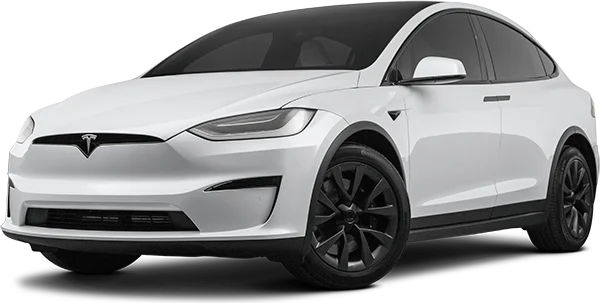
- Owner complaints
- 62
- Share of all complaints
- 7%
- Crash / fire / injury reports
- 9 / 0 / 4
- Related recalls
- 3
Tesla Model X automatic emergency braking complaints by model year
Complaints appear across model years 2018 through 2025. The 2018 group has the most filings in the supplied year-by-year data, followed by 2022; 2019, 2020, and 2023 also have multiple reports. The 2021 and 2025 groups each have one, while 2024 has four. These are complaint counts, not failure rates. Newer years have had less time to accumulate reports, so their lower counts do not establish better reliability.
| Model year | Complaints | Per 10,000 sold | Crash, fire, injury reports |
|---|---|---|---|
| 2018 | 17 | 6.2 | 6, 0, 3 |
| 2019 | 7 | 3.6 | 0, 0, 0 |
| 2020 | 10 | 3.8 | 1, 0, 0 |
| 2021 | 1 | 1.4 | 1, 0, 0 |
| 2022 | 13 | 5.4 | 0, 0, 1 |
| 2023 | 9 | 3.6 | 0, 0, 0 |
| 2024 | 4 | 1.9 | 0, 0, 0 |
| 2025 | 1 | 0.1 | 1, 0, 0 |
Owner complaints filed with NHTSA under forward collision avoidance. Newer model years have had less time to collect complaints.
What goes wrong
On open highways, reports describe the Model X braking sharply with Autopilot, adaptive cruise control, or Full Self-Driving engaged, even when drivers saw no obstacle ahead. Some describe drops of roughly 5 to 20 mph; others report false collision warnings, while separate complaints say the car did not brake for stopped traffic. Several owners say the episodes recurred and they stopped using driver-assistance features.
These reports describe a safety risk, including close calls with traffic behind and complaints involving crashes or injuries. The supplied records list crash reports in multiple years, with the largest count in 2018; they list no fires. The sample also includes reports of crashes while assistance was engaged, but complaints do not establish a confirmed defect in each vehicle. Most describe a sudden braking or assistance event, not a car left undrivable. One 2023 report says the driver restarted the car and continued.
Symptoms owners report
Unexpected highway braking
Reports describe hard or abrupt braking on open highways with Autopilot, adaptive cruise control, or Full Self-Driving active. Some drivers say the car slowed despite no visible obstacle; others describe repeat episodes on the same drive or near daily use. Traffic following close behind was a concern.
Late braking for stopped traffic
Some complaints describe the opposite failure: the car did not slow or warn in time for stopped vehicles, leaving the driver to brake or swerve. Filings include reported rear-end collisions and crashes while driver-assistance features were engaged. These are owner accounts, not confirmed findings about each vehicle.
False collision alerts
Drivers report forward-collision warnings or red alerts when they did not see an immediate hazard, sometimes near a large truck. Some accounts pair the warning with sudden deceleration. Such reports can unsettle the driver and create a risk for vehicles behind.
Assistance features disengage
Separate reports describe Autopilot or Full Self-Driving shutting off at highway speed with a takeover alert, or driver-assistance features becoming unavailable. A 2023 recall says a misaligned forward-facing camera could disable certain active safety features without alerting the driver.
When the problems start
Mileage timing is unclear. One 2020 owner reported repeated sudden braking after about 28,000 miles, and another described severe episodes in a vehicle with about 50,000 miles. Other complaints do not give a useful starting mileage, so the supplied reports do not establish a mileage range when the issue begins.
Repairs and recalls
Some owners say service could not reproduce the braking, and the reports do not establish a consistent owner-reported repair. Federal recall records list a 2021 recall for possible false forward-collision warnings or unexpected automatic braking with specified software; Tesla offered a free over-the-air update. A 2023 recall covers certain 2023 Model X vehicles whose forward-facing camera may be misaligned; Tesla offered a free inspection and adjustment. The other listed 2024 recall concerns muted pedestrian-warning sounds after a factory reset, not automatic braking.
| Model years | Campaign | Problem |
|---|---|---|
| 2023 | 23V489000 | Tesla, Inc. (Tesla) is recalling certain 2023 Model S, Model X, and Model Y vehicles. The forward-facing camera may be misaligned, causing some of the active safety features such as emergency braking, forward collision… |
| 2018, 2019, 2020, 2021 | 21V846000 | Tesla, Inc. (Tesla) is recalling certain 2017-2021 Model S, Model 3, Model X, and 2020-2021 Model Y vehicles operating software version 2021.36.5.2. A communication error may cause false forward-collision warning (FCW)… |
| 2020, 2021 | 24V153000 | Tesla, Inc. (Tesla) is recalling certain 2013, 2018-2021 Model S, 2020-2021 Model X, 2018-2022 Model 3, and 2020-2022 Model Y vehicles. A factory reset muted the Pedestrian Warning System (PWS) sounds. As such, these… |
Checking a used Model X for automatic emergency braking problems
- Check the VIN for open federal recalls and ask for documentation that any applicable remedy was completed.
- Ask the seller for service records mentioning braking alerts, camera alignment, or driver-assistance faults.
- During a normal test drive, watch for warning messages or unexpected braking; do not test emergency braking in traffic.
- Confirm driver-assistance features show as available, and ask a Tesla service center to review any warnings before purchase.
- Have an independent pre-purchase inspection include a review of camera visibility and stored system warnings, if available.
For the rest of the car, use a full Tesla Model X inspection checklist.
3 automatic emergency braking recalls cover the Tesla Model X. A VIN check shows whether the car you're looking at had its recall work done, plus accident and title history.
Tesla Model X Automatic Emergency Braking Problems: common questions
- Which Tesla Model X years have automatic braking complaints?
- The supplied records include complaints from 2018 through 2025. The most filings are for 2018, with 2022 next; several other years also have reports. Counts reflect accumulated owner complaints, not a measured defect rate, and newer model years have had less time to collect them.
- Is a Model X with sudden braking safe to drive?
- Sudden braking can surprise traffic behind, and reports include close calls and crashes. Complaints also describe cars failing to slow for stopped traffic. These are owner reports, not proof of a defect in a specific vehicle. If the car shows warnings or repeats the behavior, avoid relying on the affected driver-assistance feature and have the issue reviewed.
- Does a recall cover Model X automatic emergency braking?
- Federal recall 21V846000 covers certain 2017–2021 vehicles, including Model X, with specified software that may cause false forward-collision warnings or unexpected automatic braking. Tesla’s listed remedy was a free over-the-air update. Recall 23V489000 covers certain 2023 Model X vehicles with a potentially misaligned forward-facing camera that could disable active safety features without alerting the driver.
- What is the fix or repair cost for Model X phantom braking?
- The supplied owner reports do not establish a consistent repair or cost for recurring sudden braking. For vehicles covered by recall 21V846000, the listed remedy is a free over-the-air update. For covered 2023 vehicles in recall 23V489000, Tesla’s listed remedy is a free camera inspection and adjustment as needed. Check eligibility by VIN.
Other Tesla Model X problems
Brakes, steering & tires
Electrical & lighting
Body & interior
More on the Tesla Model X
See incorrect data? Report an issue