Last updated: 2026-11-19
Brakes, steering & tires
Tesla Model X Steering Problems
Tesla Model X steering complaints center on sudden loss of power assist, with a "Steering assist reduced" alert and a wheel that turns only with great force.
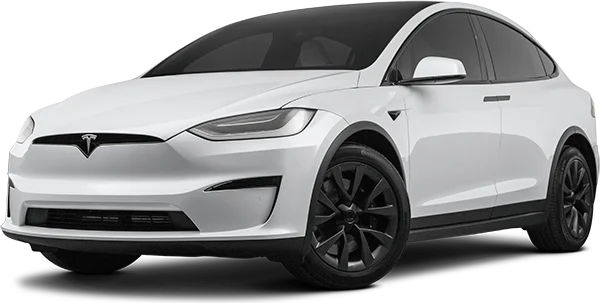
- Owner complaints
- 120
- Share of all complaints
- 14%
- Crash / fire / injury reports
- 5 / 1 / 0
- Related recalls
- 3
Tesla Model X steering complaints by model year
The 2022 and 2023 model years have the most steering complaints, at 39 and 41. The 2021 model year has 12 complaints, but its rate per vehicle sold is about the same as 2022 and 2023. The 2018 through 2020 years have 7 to 10 each, at a much lower rate. The 2024 and 2025 years show only 1 and 2 complaints. That mostly reflects less time on the road, so they should not be treated as clear of the problem.
| Model year | Complaints | Per 10,000 sold | Crash, fire, injury reports |
|---|---|---|---|
| 2018 | 10 | 3.7 | 0, 0, 0 |
| 2019 | 7 | 3.6 | 1, 1, 0 |
| 2020 | 8 | 3.1 | 0, 0, 0 |
| 2021 | 12 | 16.4 | 0, 0, 0 |
| 2022 | 39 | 16.2 | 3, 0, 0 |
| 2023 | 41 | 16.6 | 1, 0, 0 |
| 2024 | 1 | 0.5 | 0, 0, 0 |
| 2025 | 2 | 0.2 | 0, 0, 0 |
Owner complaints filed with NHTSA under steering. Newer model years have had less time to collect complaints.
What goes wrong
The most common failure is power steering assist dropping out without warning. A "Steering assist reduced" or "may require increased effort" message appears, and the wheel becomes very heavy. Owners describe it at parking-lot speeds and at highway speed. Some say it comes and goes. Others say it gets worse until it happens on every drive. Driver-assist features often shut off at the same time. A second group of complaints, mostly on 2022 and 2023 cars, is about the yoke and the touch controls: a small touch horn that is hard to find, and turn signal buttons that miss a press.
The risk is real. Owners report fighting the wheel while merging, changing lanes, or passing a truck, and some had the wheel lock up. Crash reports are few: three on the 2022 model year and one each on 2019 and 2023. The 2019 report is a salvage car with a failed rear suspension, so it is not a steering-assist case. Several owners had the car towed. Others were quoted thousands of dollars after the warranty ended, and some parked the car rather than pay.
Symptoms owners report
Steering assist reduced alert
A warning says steering may need extra effort, and the wheel gets heavy. It happens at crawl speeds and at highway speeds. Lane-keeping and other driver-assist features often shut off together. Some owners say it clears after a restart, then returns.
Wheel locks or won't turn
Some owners lose steering almost completely. One 2021 owner could steer only after dropping below 10 mph and using great force. A 2018 owner described the wheel locking in quarter-turn steps. Several cars were towed to service.
Failure that builds over time
On some 2022 cars, assist works for about 30 minutes, then fails. Over weeks it fails sooner, until it happens on every drive. Another owner says that once it fails in a day, it keeps failing all day.
Creaks and squeals up front
Owners of 2020 and 2022 cars report creaking when turning or going over bumps, and metal-on-metal squeals. Some had front suspension links and control arms replaced more than once. One owner said service would not look at it without hearing the noise first.
Hard-to-find horn on the yoke and wheel
On 2022 and 2023 cars, the horn is a small touch button off to one side. Owners report not finding it in near misses. Touch turn signal buttons sometimes ignore a press, and one owner reports this on more than one Model X.
Driver-assist swerves
Owners on several model years describe Autopilot or Full Self-Driving swerving, braking hard, or ignoring a route. One 2022 owner reported the lane keep system pulling toward a semi-truck, followed by power steering failure.
When the problems start
Owners report power steering failures across a wide range. One 2021 car failed at about 8,000 miles, and another had fewer than 25,000. A cluster falls near 50,000 to 55K miles, including 2018, 2019, and 2021 cars. Front suspension and steering part complaints on 2020 cars often come between 40,000 and 62,000 miles, sometimes just after the warranty ended.
Repairs and recalls
Owners say Tesla service usually diagnoses a failed steering rack or steering gear. Some cases involved the steering column or intermediate shaft. Quotes after warranty run from $4,124.53 to about $5,100, and several owners paid out of pocket. Others could not get an appointment for weeks, or service could not reproduce the fault. Three recalls are listed. One covers 2018 to 2021 cars for loss of power assist on rough roads or after a pothole, fixed by a free over-the-air software update. Another covers 2021 to 2024 cars that may have the wrong air bag after a yoke or wheel swap. A third covers Full Self-Driving Beta behavior at intersections.
| Model years | Campaign | Problem |
|---|---|---|
| 2021, 2022, 2023, 2024 | 23V743000 | Tesla, Inc. (Tesla) is recalling certain 2021-2024 Model S and Model X vehicles. An incorrect air bag may have been installed when the steering yoke or round steering wheel was replaced with a different style of yoke… |
| 2018, 2019, 2020, 2021, 2022, 2023 | 23V085000 | Tesla, Inc. (Tesla) is recalling certain 2016-2023 Model S, Model X, 2017-2023 Model 3, and 2020-2023 Model Y vehicles equipped with Full Self-Driving Beta (FSD Beta) software or pending installation. The FSD Beta… |
| 2018, 2019, 2020, 2021 | 22V818000 | Tesla, Inc. (Tesla) is recalling certain 2017-2021 Model S and Model X vehicles. The electronic power assist steering (EPAS) system may experience a loss of power steering assist when driving on rough roads or after… |
Checking a used Model X for steering problems
- Ask the seller for service records showing any steering rack, steering gear, column, or intermediate shaft replacement, and whether Tesla or the owner paid.
- Check the warranty status and mileage. Many reported failures hit near 50,000 miles, close to the end of basic coverage.
- On the test drive, watch the screen for any steering assist alert, and turn the wheel lock to lock at low speed.
- Listen for creaks or squeals when turning and going over bumps. Ask whether front links or control arms were replaced.
- On a yoke car, find the horn and test the turn signal buttons repeatedly. Decide whether you can live with them.
- Run the VIN through the NHTSA recall lookup and confirm the steering and air bag recalls were completed.
For the rest of the car, use a full Tesla Model X inspection checklist.
3 steering recalls cover the Tesla Model X. A VIN check shows whether the car you're looking at had its recall work done, plus accident and title history.
Tesla Model X Steering Problems: common questions
- Which Tesla Model X years have the most steering problems?
- The 2022 and 2023 model years have the most complaints, at 39 and 41, followed by 2021 with 12. Their rate per vehicle sold is also higher than on 2018 to 2020 cars. The 2024 and 2025 years have few complaints, but they have had less time to collect them.
- Is it safe to drive a Model X with a steering assist reduced warning?
- Owners describe the wheel becoming very hard to turn, sometimes at highway speed, and some had it lock up. Several had the car towed. The data does not support calling it safe. Have it diagnosed before driving, and do not rely on it in traffic.
- Does a recall cover Model X steering failures?
- One recall covers 2018 to 2021 cars for loss of power assist on rough roads or after a pothole, fixed by a software update. Many owners with failed racks or gears still report paying for repairs. Check your VIN to see which recalls apply.
- How much does a Model X steering repair cost?
- Owners report quotes of $4,124.53, about $4,500, $5,100, and near $5,000 for a steering rack, gear, or column once the warranty ended. One owner skipped the repair because of the cost. Your price depends on the diagnosis and your warranty.
- Are the horn and turn signal complaints steering problems?
- They are steering wheel problems, not mechanical ones. Most 2022 and 2023 complaints describe a small touch horn that is hard to find in an emergency, and turn signal buttons that sometimes miss a press. Some owners report near misses because of this.
Other Tesla Model X problems
Brakes, steering & tires
More on the Tesla Model X
See incorrect data? Report an issue