Last updated: 2026-11-19

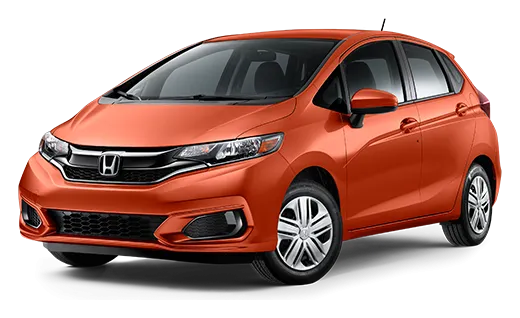
2020 Honda Fit
77
GoodReliability score: 77 out of 100, rated Good

Reliability score

Good · #2 of 6 scored Fit years

2020 Honda Fit Reliability Report

Good reliability for the 2020 Honda Fit, with above-average standing among 2020 sedans. Watch for display glitches and carbon-related misfires.

Recalls

4

Complaints

39

Complaint Rate

12per 10,000 sold

Est. Repair Cost

$390

Annual Fuel Cost

$1,650–1,950

Detailed Score Breakdown

Complaint Severity35% of score66/100

Component-weighted complaints normalized by sales volume

Repair Costs30% of score90/100

Independent repair cost ratings

Recall Impact20% of score71/100

Recall count weighted by severity

Issue Diversity15% of score84/100

Breadth of reported problem categories

The verdict

Consider

The last Third-generation Fit has far fewer complaints and recalls than 2019, but carbon buildup misfires fall outside the warranty extension covering 2018 and 2019.

Looking at a used 2020 Honda Fit? Check that exact car

4 recalls cover this year. A VIN check shows whether the car you found had the work done, plus accidents, title and odometer history.

Generation & Refresh (US)

Final Year

2020 is the last model year of the Third generation (GK/GH/GP).

  • Final-year models are typically the most refined version of a generation.
  • 2 years after the last refresh (2018).
  • 3rd generation Fit (US).

What this means for buyers

Final-year models are usually the most polished version of a generation, but resale value may dip as buyers anticipate the next redesign.

2015: Third generation (GK/GH/GP) Launch

Generation start — new platform.

2018: Mid-Cycle Refresh

Updated features and styling tweaks.

2020: This Model Year

2020 is the last model year of the Third generation (GK/GH/GP).

Should You Buy the 2020 Honda Fit?

Good, and a solid pick among 2020 sedans. Owner complaints and federal recall records put this final Third-generation year above average for its class, and it sits in the middle of the Fit's scored years. The 2019 also rates good but has far more complaints and more recalls. Independent repair-cost data puts yearly upkeep below the class figure, and the federal crash rating is 5 of 5 stars.

The common problems are electrical and driver-assist. Owners report an instrument display that flickers, scrambles, or goes blank, often on cold starts. Dealers quote $1,700 to $4,000 to replace it. Automatic emergency braking sometimes fires with nothing ahead, and the camera can fail and shut off cruise and lane keeping. Some engines misfire from carbon buildup on the intake valves, starting around 20,000 miles. Honda refused to pay for the cleaning, since the warranty extension covers 2018 and 2019 but not 2020. Four recalls cover air bags and back over prevention.

Ask for proof that every recall was completed. Check the dash display and driver-assist systems on a cold start, and ask whether the valves have been cleaned.

See also the 2019 Honda Fit for an earlier comparison.

Pros

  • Acceptable reliability score
  • $66 cheaper to maintain than avg subcompact cars
  • Low major repair risk8%
  • Below-average complaint rate for Sedan

Cons

  • Moderate recall count
  • ELECTRICAL SYSTEM issues reported9 complaints
  • Automatic emergency brakingAutomatic emergency braking activates with no vehicle or object ahead5 complaints

Compare 2020 Honda Fit With

Recall Overview

4

recalls on record

A moderate 4 recalls are on file for the 2020 Honda Fit. Each one points to a specific safety or compliance issue identified by the manufacturer or NHTSA — check the list below before buying.

NHTSA.gov →

Complaint Breakdown

12

per 10,000 sold

Segment avg: 17

LowAvgHigh
Moderate

Safety Incidents

1

Crashes

0

Fires

1

Injuries

0

Deaths

★★★★★

NHTSA 5/5 Stars

Data sourced from NHTSA complaint filings and manufacturer recall notices. Complaint narratives are owner-reported.

2020 Honda Fit Recall Details

4 recalls have been issued for the 2020 Honda Fit. Recall repairs are free at authorized dealers, so check that each one below was done on the car you are looking at.

AirbagsRecall 26V332000May 22, 2026

The front passenger seat weight sensor may crack and short circuit, which can cause the air bags to deploy unintentionally during a crash.

Risk
Air bags that deploy unintentionally during a crash increase the risk of injury.
Fix
Dealers will replace the seat weight sensors, free of charge.
Which vehicles are covered

Honda (American Honda Motor Co.) is recalling certain 2018-2021, 2023 Acura TLX, 2019-2024 RDX, 2017-2020, 2022-2026 MDX, 2017-2021, 2023, 2025 Honda Ridgeline, 2017-2022 Pilot, 2019-2021 Passport, 2018-2026 Odyssey, 2019-2022 Insight, 2019-2021 HR-V, 2018-2020 Fit, 2020-2022 CR-V Hybrid, 2017-2022 CR-V, 2017-2018, 2021 Civic Type R, 2017-2021 Civic hatchback, 2016-2020 Civic coupe, 2016-2022 Civic, 2017-2022 Accord Hybrid, and 2016-2022 Accord vehicles.

More about the fix

Owner notification letters were mailed July 7, 2026. Owners may contact Honda's customer service at 1-888-234-2138. Honda's numbers for this recall are BOL, WO9, OOA, WOM, XOH, NOC, POD, BOE, UOF, POB, EOG, AOI, QO8, TOJ, DO7, and SOK. This recall expands previous NHTSA recall number 24V064. Vehicle Identification Numbers (VINs) involved in this recall will be searchable on NHTSA.gov beginning May 29, 2026.
Backup cameraRecall 24V384000May 31, 2024

The rearview camera image may not display when the engine is started with a key, due to a design error in the audio display power circuit.

As such, these vehicles fail to comply with the requirements of Federal Motor Vehicle Safety Standard number 111, "Rear Visibility."

Risk
An inoperative rearview camera display can reduce the driver's rear visibility, increasing the risk of a crash.
Fix
Dealers will update the display audio unit software, free of charge.
Which vehicles are covered

Honda (America Honda Motor Co.) is recalling certain 2018-2020 Fit and 2019-2022 HR-V vehicles that were previously recalled under NHTSA recall number 23V-046.

More about the fix

Owner notification letters were mailed July 8, 2024. Owners may contact Honda service at 1-888-234-2138. Honda's numbers for this recall are TIQ and DIR. Vehicles previously repaired under recall 23V-046 will need to have the new remedy completed.

AirbagsRecall 24V064000Feb 1, 2024

The front passenger seat weight sensor may crack and short circuit, failing to suppress the air bag as intended.

Risk
An air bag that deploys unintentionally during a crash can increase the risk of injury.
Fix
Dealers will replace the seat weight sensors, free of charge.
Which vehicles are covered

Honda (American Honda Motor Co.) is recalling certain 2020-2022 Pilot, Accord, Civic sedan, HR-V, Odyssey, 2020 Civic coupe, Fit, 2021-2022 Civic hatchback, 2021 Civic Type R, Insight, 2020-2021 CR-V, CR-V Hybrid, Passport, Ridgeline, Accord Hybrid, 2020 Acura MDX, 2022 Acura MDX, 2020-2022 Acura RDX, and 2020-2021 Acura TLX vehicles.

More about the fix

Owner notification letters were mailed March 28, 2024. This is a phased recall. Owners may contact Honda customer service at 1-888-234-2138. Honda's numbers for these recalls are XHP and VHQ.

VIN History Report

Buying a used 2020 Honda Fit? Check its history first

Electrical system problems lead owner complaints about the 2020 Honda Fit, and 4 recalls were issued for it. A VIN check shows whether this car's recall work was done, plus accident, title, and odometer history.

No VIN? Just hit “Check VIN” to look one up.

  • Accidents
  • Open Recalls
  • Title History
  • Odometer Rollback

2020 Honda Fit NHTSA Safety Ratings

Overall Safety Rating

Overall safety rating: 5 out of 5
Crash Test Results by Configuration (expand)

Gas Powertrain

Driver: 5/5Passenger: 5/5

Rollover risk: 14.7%

Safety Technologies

Dynamic Head Restraints (Not Available)Head Restraint (Driver, Front Passenger, Rear Seat)Advanced Belt Feature (Standard)Adjustable Upper Belt Anchorage (Driver, Front Passenger)Seat Belt Reminder System (Driver, Front Passenger)Frontal Air Bag (Driver, Front Passenger)Curtain (Driver, Front Passenger, Rear Seat)Torso/Pelvis (Driver, Front Passenger)Knee (Not Available)Additional Air Bags (None)Meets Side Air Bag Out-of-Position Requirements (Yes)LATCH Locations (Rear Seat)Safety Power Windows (Anti-Pinch) (Standard)Safety Power Windows (Anti-Pinch) locations (Driver)
View full safety data on NHTSA.gov →

Honda Fit Repair Costs & Maintenance

Maintenance Rating

4.5Maintenance rating: 4.5 out of 5

Based on NHTSA complaint patterns, recall severity, and publicly available cost benchmarks.

Est. Annual Maintenance

$390

vs $456 avg for subcompact cars

vs $652 avg for all vehicles

Repair Frequency

0.4

unscheduled repair visits per year

Severe Repair Probability

8%

chance of a major repair

Annual Cost Comparison

Fit
$390
Category Avg
$456
All Vehicles
$652

Category-level averages derived from publicly available industry reports (AAA, CarMD). Model-level estimates produced by Auto Reliability Index.

MPG & Annual Running Costs

Gas

31–36 MPG

Running cost: $2,050–$2,350/yr

Fuel + repair

29–33 city / 36–40 hwy MPG

Running cost includes EPA fuel-cost estimate and independent repair-cost data (repair cost estimated at model level). Excludes routine maintenance, depreciation, and insurance. Data as of 2020 EPA label cycle.

Gas trims
TrimDriveTrans.CityHwyCombFuel Cost
Fit 1.5L 4-cylFront-Wheel DriveAutomatic (variable gear ratios)334036$1,650
Fit 1.5L 4-cylFront-Wheel DriveAutomatic (AV-S7)313633$1,800
Fit 1.5L 4-cylFront-Wheel DriveManual 6-spd293631$1,950

Used Buying Checklist

Key things to inspect or verify before purchasing a 2020 Honda Fit.

  • Start the car cold and watch the instrument display for flickering, scrambled text, or a blank fuel gauge.

  • Check that adaptive cruise, lane keeping, and collision mitigation all turn on without warning lights after several restarts.

  • Drive at 20 to 40 mph on a busy road and watch for false automatic braking or brake warnings.

  • Let the engine idle at a stop and feel for roughness or misfires. Scan for stored misfire codes.

  • Ask for records of any intake valve carbon cleaning or misfire diagnosis.

  • Make slow, tight turns and check that steering stays light, makes no grinding or hissing, and returns to center.

  • Inspect the rear window glass for cracks, especially at the corners.

  • Brake firmly from highway speed and feel for front-end vibration through the wheel or pedal.

Going to see one? Take the printable 2020 Honda Fit inspection checklist with you.

2020 Honda Fit Common Problems by Component

39 owner complaints grouped by vehicle system.

9
5
5
5
6
ELECTRICAL SYSTEM (9)UNKNOWN OR OTHER (5)FORWARD COLLISION AVOIDANCE (5)ENGINE (5)AIR BAGS (3)VISIBILITY/WIPER (2)SERVICE BRAKES (2)FUEL/PROPULSION SYSTEM (2)Other (6)

ELECTRICAL SYSTEM

9 complaints

Fit electrical problems across all model years

The instrument display flickers, scrambles, or goes blank, taking the fuel gauge, odometer, range, and oil-life readouts with it. Several reports tie it to cold starts. The screen stays backlit but shows garbled text, then often clears as the car warms. Some displays get worse over time until they stay blank. Dealers typically offer to replace the whole display unit, with quotes from $1,700 to $4,000. Other reports describe repeated no-start or hard-cranking trouble that dealer visits did not fix, and a failed camera and radar unit.

9 complaints total

UNKNOWN OR OTHER

5 complaints

These reports repeat problems filed under other headings. The most common is the instrument display glitching or going blank in cold weather, which hides the fuel level. One report says it happens whenever the outside temperature is below 49°F. Replacing the display cost one owner over $1,100. A multipurpose camera failure disables adaptive cruise, lane keeping, and collision warnings. In another case the rear tailgate glass shattered on its own while the car sat parked, throwing shards several feet.

5 complaints total

FORWARD COLLISION AVOIDANCE

5 complaints

Automatic emergency braking activates with no vehicle or object ahead. In some cases it grabs the brakes hard in moving traffic, creating a rear-end collision risk. Other reports describe brake warnings that beep and flash at the same spot on a route. A second pattern is failure of the multipurpose camera. When it fails, adaptive cruise, lane keeping, road departure mitigation, and collision mitigation all shut off, and warning lights and chimes come on at startup. The failure is often intermittent, working on some starts and not others.

5 complaints total
ENGINE (5 complaints)

ENGINE

5 complaints

Misfires come on suddenly, with a rough idle at stops or a vibration and clicking above 50 mph. A cluster of dash warning lights appears, sometimes without a check engine light. Dealers consistently diagnose carbon buildup on the intake valves and recommend a cleaning, quoted at about $1,200 in one case. Reports place onset around 20,000 miles. Owners say Honda refused to pay, explaining that a warranty extension for the same fault covers 2018 and 2019 models but not 2020.

5 complaints total
AIR BAGS (3 complaints)

AIR BAGS

3 complaintsSafety-related

In the most serious report, no airbags deployed when a pickup struck the driver's side at an estimated 40 to 50 mph. The driver was injured. Another report describes an airbag warning light signaling a malfunction. The third involves no failure. It describes a long wait for parts to complete a repair the owner was notified about. The data has one crash and one injury in this category.

3 complaints total1 crash1 injury
VISIBILITY/WIPER (2 complaints)

VISIBILITY/WIPER

2 complaints

The rear window shatters on its own, with no impact or visible cause, including while the car is parked. One report describes the glass buckling inward after it cracked. Flying glass is the safety concern. Owners report that Honda refused warranty coverage and that the repair went through insurance with a deductible. Both complaints describe the same rear-glass failure, which also appears in reports filed under other headings.

2 complaints total
SERVICE BRAKES (2 complaints)

SERVICE BRAKES

2 complaints

Two separate problems appear here. The front end shakes hard when braking from highway speed, and the vibration seems to come from the front disc brakes. In the other report, the forward collision system brakes on its own at 30 mph with nothing ahead, hard enough to trigger ABS and nearly cause a rear-end crash. That second problem matches false-braking reports filed under forward collision avoidance.

2 complaints total
FUEL/PROPULSION SYSTEM (2 complaints)

FUEL/PROPULSION SYSTEM

2 complaints

Fit fuel system problems across all model years

The engine loses power, and one report adds a strong smell of gasoline, a symptom that calls for prompt inspection. The other report describes carbon buildup in the engine causing cylinder misfires. That matches the carbon and misfire pattern that dominates the engine reports. Only two complaints are filed here, so no mileage pattern is visible.

2 complaints total
STEERING (2 complaints)

STEERING

2 complaints

The wheel suddenly sticks or turns heavy, even at slight angles. It may also fail to return to center on its own, and grinding or hissing sounds can come on during turns. The problem comes and goes and triggers no warning lights, so it arrives without notice and makes the car hard to control. A dealer and an independent shop traced one case to a faulty power steering rack, and another repair was quoted at $1,800. One case began at 16,300 miles.

2 complaints total
STRUCTURE (1 complaints)

STRUCTURE

1 complaint
09/01/2023

The contact owns a 2020 Honda Fit. The contact stated while driving at various speeds, the vehicle experienced severe front-end shaking and vibration. The vehicle was taken to the local mechanic who diagnosed the vehicle and determined that the engine mount and transmission mount were faulty and needed to be replaced. The vehicle was not yet repaired. The manufacturer and local dealer were not yet contacted. The failure mileage was 65,000.

When Do 2020 Honda Fit Problems Start?

Based on owner complaint patterns, here’s when common issues tend to appear.

20,000–22,156 milesCarbon buildup causing misfires

Best & Worst Honda Fit Years

Best Honda Fit years to buy

Top pick: the highest score among years with at least two years on the road; the newest wins a tie.

Honda Fit years to avoid

Still rated good overall, but well below the other Honda Fit years.

Full Honda Fit years-to-avoid analysis →

Honda Fit reliability score trend

Scores 0–100, higher is better. Best and worst years are ringed. This year is highlighted.

Honda Fit reliability scores by year
YearScoreRating
201567/100Good
201677/100Good
201783/100Excellent
201870/100Good
201968/100Good
202077/100Good

Honda Fit Reliability Compared to Other Years

Reliability scores compared across model years
YearScorevs Prior YearRatingRecallsComplaints
2020(selected)77/100+9Good439
201968/100-2Good6139
201870/100-13Good4117
201783/100+6Excellent043
201677/100+10Good1122
201567/100—Good4272

Frequently Asked Questions

Is the 2020 Honda Fit reliable?
Yes, it rates good for reliability and above average among 2020 sedans. Within the Fit's scored years it lands in the middle of six. Owners filed 39 complaints, and independent repair-cost data estimates yearly repairs at $390, below the $456 class figure. The main weak spots are the instrument display and driver-assist systems.
What are the most common problems with the 2020 Honda Fit?
Electrical trouble leads, with 9 complaints, mostly an instrument display that flickers, scrambles, or goes blank. Forward collision avoidance and engine problems follow with 5 each. Air bags draw 3. Engine reports involve misfires from carbon buildup on the intake valves.
Does the 2020 Honda Fit have instrument display problems?
Yes, it is the top complaint. The display flickers or shows garbled text, taking the fuel gauge, odometer, and oil-life readouts with it. Several owners tie it to cold starts, and it often clears as the car warms. Some displays get worse until they stay blank. Dealers have quoted $1,700 to $4,000 for a replacement.
Does the 2020 Honda Fit have carbon buildup problems?
Some owners report it. Misfires, a rough idle, or vibration appear around 20,000 miles, and dealers diagnose carbon on the intake valves. One cleaning was quoted at about $1,200. Owners say Honda declined to pay because the warranty extension covers 2018 and 2019 models but not 2020.
Is the 2020 Honda Fit better than the 2019?
Both rate good for reliability, but the 2020 has fewer complaints and recalls. The 2019 has 139 complaints and 6 recalls, against 39 complaints and 4 recalls for the 2020. The 2019 does have the warranty extension for carbon buildup, which the 2020 lacks.

Don’t buy a 2020 Honda Fit without checking its VIN first — hidden accidents, title issues, and open recalls could cost you thousands.

Look Up a VIN →

How we score the 2020 Honda Fit

Of the four inputs behind this score, the 2020 Honda Fit does best on repair costs (90/100) and worst on complaint severity (66/100). Scores weight complaint severity at 35%, repair costs at 30%, recall impact at 20%, and the spread of complaints across systems at 15%, with complaint counts adjusted for US sales. Read the full methodology.

Get notified when new recalls or reliability data is added for the Honda Fit.

No spam. Only data updates for this model.

See incorrect data? Report an issue