Last updated: 2026-11-19

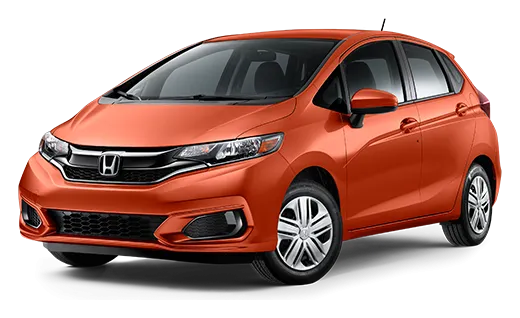
2019 Honda Fit
68
GoodReliability score: 68 out of 100, rated Good

Reliability score

Good · #5 of 6 scored Fit years

2019 Honda Fit Reliability Report

The 2019 Honda Fit has a good reliability standing, but owners report failing fuel injectors and a right-side display that goes blank.

Recalls

6

Complaints

139

Complaint Rate

39.3per 10,000 sold

Est. Repair Cost

$390

Annual Fuel Cost

$1,650–1,950

Detailed Score Breakdown

Complaint Severity35% of score45/100

Component-weighted complaints normalized by sales volume

Repair Costs30% of score90/100

Independent repair cost ratings

Recall Impact20% of score65/100

Recall count weighted by severity

Issue Diversity15% of score80/100

Breadth of reported problem categories

The verdict

Consider

Fuel injector failures and a blanking dash display drive most complaints, and it has more complaints and recalls than the 2018 and 2020 models.

Looking at a used 2019 Honda Fit? Check that exact car

6 recalls cover this year. A VIN check shows whether the car you found had the work done, plus accidents, title and odometer history.

Generation & Refresh (US)

Post-Refresh

2019 is 1 year after the facelift refresh.

  • Year 5 in the Third generation (GK/GH/GP) (2015–2020).
  • Well-established in its generation — most early issues should be resolved.
  • 3rd generation Fit (US).

What this means for buyers

Post-refresh years tend to be among the most refined — updates have been applied and early kinks worked out.

2015: Third generation (GK/GH/GP) Launch

Generation start — new platform.

2018: Mid-Cycle Refresh

Updated features and styling tweaks.

2019: This Model Year

2019 is 1 year after the facelift refresh.

Should You Buy the 2019 Honda Fit?

Reliability is good. Against other 2019 sedans this Fit lands close to average, but within its own scored years it is among the weaker of six. Owners filed 139 complaints, up from 117 for 2018. The 2020 rates better and has 39. Model-wide repairs cost $390 a year against $456 for the class, and the federal crash-test rating is 5 of 5 stars.

Two problems dominate. The right-side display blinks, shows scrambled characters or goes blank, taking the fuel gauge and odometer with it. Cold starts usually trigger it, and it can begin around 20,000 miles. Fuel injectors also fail, often more than once, with misfire codes, rough idle and shaking. Most failures come between 40,000 and 65,000 miles, and dealer cleaning often proves temporary. This year has 6 federal recalls covering air bags, back over prevention and the gasoline fuel system. Owners say replacement parts were slow to arrive.

Ask for repair records showing injector and display work, and confirm every recall was completed. Look closely at the paint on white cars. The 2020 is worth a look if the price fits.

Compared to the 2020 Honda Fit, which scored 9 points higher. See also the 2018 Honda Fit for an earlier comparison.

Pros

  • Acceptable reliability score
  • $66 cheaper to maintain than avg subcompact cars
  • Low major repair risk8%

Cons

  • Above-average recall count
  • Above-average complaint rate for Sedan
  • ElectricalRight-side digital display fails most often44 complaints

Compare 2019 Honda Fit With

Recall Overview

6

recalls on record

The 2019 Honda Fit has 6 recalls on record, which is above average. A high count can flag multiple component concerns, though it also shows the manufacturer is actively addressing known issues.

NHTSA.gov →

Complaint Breakdown

39.3

per 10,000 sold

Segment avg: 20.3

LowAvgHigh
High

Safety Incidents

9

Crashes

1

Fires

3

Injuries

0

Deaths

★★★★★

NHTSA 5/5 Stars

Data sourced from NHTSA complaint filings and manufacturer recall notices. Complaint narratives are owner-reported.

2019 Honda Fit Recall Details

6 recalls have been issued for the 2019 Honda Fit. Recall repairs are free at authorized dealers, so check that each one below was done on the car you are looking at.

AirbagsRecall 26V332000May 22, 2026

The front passenger seat weight sensor may crack and short circuit, which can cause the air bags to deploy unintentionally during a crash.

Risk
Air bags that deploy unintentionally during a crash increase the risk of injury.
Fix
Dealers will replace the seat weight sensors, free of charge.
Which vehicles are covered

Honda (American Honda Motor Co.) is recalling certain 2018-2021, 2023 Acura TLX, 2019-2024 RDX, 2017-2020, 2022-2026 MDX, 2017-2021, 2023, 2025 Honda Ridgeline, 2017-2022 Pilot, 2019-2021 Passport, 2018-2026 Odyssey, 2019-2022 Insight, 2019-2021 HR-V, 2018-2020 Fit, 2020-2022 CR-V Hybrid, 2017-2022 CR-V, 2017-2018, 2021 Civic Type R, 2017-2021 Civic hatchback, 2016-2020 Civic coupe, 2016-2022 Civic, 2017-2022 Accord Hybrid, and 2016-2022 Accord vehicles.

More about the fix

Owner notification letters were mailed July 7, 2026. Owners may contact Honda's customer service at 1-888-234-2138. Honda's numbers for this recall are BOL, WO9, OOA, WOM, XOH, NOC, POD, BOE, UOF, POB, EOG, AOI, QO8, TOJ, DO7, and SOK. This recall expands previous NHTSA recall number 24V064. Vehicle Identification Numbers (VINs) involved in this recall will be searchable on NHTSA.gov beginning May 29, 2026.
Backup cameraRecall 24V384000May 31, 2024

The rearview camera image may not display when the engine is started with a key, due to a design error in the audio display power circuit.

As such, these vehicles fail to comply with the requirements of Federal Motor Vehicle Safety Standard number 111, "Rear Visibility."

Risk
An inoperative rearview camera display can reduce the driver's rear visibility, increasing the risk of a crash.
Fix
Dealers will update the display audio unit software, free of charge.
Which vehicles are covered

Honda (America Honda Motor Co.) is recalling certain 2018-2020 Fit and 2019-2022 HR-V vehicles that were previously recalled under NHTSA recall number 23V-046.

More about the fix

Owner notification letters were mailed July 8, 2024. Owners may contact Honda service at 1-888-234-2138. Honda's numbers for this recall are TIQ and DIR. Vehicles previously repaired under recall 23V-046 will need to have the new remedy completed.

Fuel systemRecall 23V858000Dec 19, 2023

The fuel pump inside the fuel tank may fail.

Risk
Fuel pump failure can cause an engine stall while driving, increasing the risk of a crash.
Fix
Dealers will replace the fuel pump module, free of charge.
Which vehicles are covered

Honda (American Honda Motor Co.) is recalling certain 2013-2023 Honda Accord, Civic Coupe, Civic Sedan, Civic Hatchback, Civic Type R, CR-V, HR-V, Ridgeline, Odyssey, Acura ILX, MDX, MDX Hybrid, RDX, RLX, TLX, 2019-2022 Honda Insight, Passport, 2020 Honda CR-V Hybrid, 2018-2019 Honda Clarity PHEV, Fit, and 2015-2020 Honda Accord Hybrid, Pilot, Acura NSX vehicles.

More about the fix

Owner letters were mailed September 6, 2024. Owners may contact Honda customer service at 1-888-234-2138. Honda's numbers for this recall are KGC and KGD. This recall is an expansion of NHTSA recall numbers 21V-215 and 20V-314.

VIN History Report

Buying a used 2019 Honda Fit? Check its history first

Electrical system problems lead owner complaints about the 2019 Honda Fit, and 6 recalls were issued for it. A VIN check shows whether this car's recall work was done, plus accident, title, and odometer history.

No VIN? Just hit “Check VIN” to look one up.

  • Accidents
  • Open Recalls
  • Title History
  • Odometer Rollback

2019 Honda Fit NHTSA Safety Ratings

Overall Safety Rating

Overall safety rating: 5 out of 5
Crash Test Results by Configuration (expand)

Gas Powertrain

Driver: 5/5Passenger: 5/5

Rollover risk: 14.7%

Safety Technologies

Dynamic Head Restraints (Not Available)Head Restraint (Driver, Front Passenger, Rear Seat)Advanced Belt Feature (Standard)Adjustable Upper Belt Anchorage (Driver, Front Passenger)Seat Belt Reminder System (Driver, Front Passenger)Frontal Air Bag (Driver, Front Passenger)Curtain (Driver, Front Passenger, Rear Seat)Torso/Pelvis (Driver, Front Passenger)Knee (Not Available)Additional Air Bags (Not Available)Meets Side Air Bag Out-of-Position Requirements (Yes)LATCH Locations (Rear Seat)Safety Power Windows (Anti-Pinch) (Standard)Safety Power Windows (Anti-Pinch) locations (Driver)
View full safety data on NHTSA.gov →

Honda Fit Repair Costs & Maintenance

Maintenance Rating

4.5Maintenance rating: 4.5 out of 5

Based on NHTSA complaint patterns, recall severity, and publicly available cost benchmarks.

Est. Annual Maintenance

$390

vs $456 avg for subcompact cars

vs $652 avg for all vehicles

Repair Frequency

0.4

unscheduled repair visits per year

Severe Repair Probability

8%

chance of a major repair

Annual Cost Comparison

Fit
$390
Category Avg
$456
All Vehicles
$652

Category-level averages derived from publicly available industry reports (AAA, CarMD). Model-level estimates produced by Auto Reliability Index.

MPG & Annual Running Costs

Gas

31–36 MPG

Running cost: $2,050–$2,350/yr

Fuel + repair

29–33 city / 36–40 hwy MPG

Running cost includes EPA fuel-cost estimate and independent repair-cost data (repair cost estimated at model level). Excludes routine maintenance, depreciation, and insurance. Data as of 2019 EPA label cycle.

Gas trims
TrimDriveTrans.CityHwyCombFuel Cost
Fit 1.5L 4-cylFront-Wheel DriveAutomatic (variable gear ratios)334036$1,650
Fit 1.5L 4-cylFront-Wheel DriveAutomatic (AV-S7)313633$1,800
Fit 1.5L 4-cylFront-Wheel DriveManual 6-spd293631$1,950

Used Buying Checklist

Key things to inspect or verify before purchasing a 2019 Honda Fit.

  • Start the car cold and confirm the right-side display shows fuel level and odometer without blanking or scrambled characters.

  • Ask for service records showing fuel injector replacement or carbon cleaning, and scan for codes P0302, P0304, and P219A.

  • Let the engine idle, then accelerate firmly, and feel for shaking, sputtering, or hesitation.

  • Restart the car several times and watch for lane keeping, adaptive cruise, or collision mitigation warnings.

  • On white cars, inspect the roof and hood for peeling paint and rust under the clear coat.

  • Check the VIN in federal recall records and get proof that all open recalls were completed.

  • Look under the front bumper for a loose or sagging engine splash shield.

  • If the car was flat-towed behind an RV, check under the hood for an aftermarket charger and melted plastic.

Going to see one? Take the printable 2019 Honda Fit inspection checklist with you.

2019 Honda Fit Common Problems by Component

139 owner complaints grouped by vehicle system.

44
37
ELECTRICAL SYSTEM (44)FUEL/PROPULSION SYSTEM (37)UNKNOWN OR OTHER (13)FUEL SYSTEM (13)STRUCTURE (8)FORWARD COLLISION AVOIDANCE (6)ENGINE (5)SERVICE BRAKES (3)Other (10)

ELECTRICAL SYSTEM

44 complaintsSafety-related

Fit electrical problems across all model years

The right-side digital display fails most often. It blinks, shows scrambled characters, or goes blank, taking the fuel gauge, odometer, and trip data with it. Cold starts usually trigger it, and it often recovers once the car warms up. The fault can start around 20,000 miles. Dealers have quoted replacement of the unit, and one out-of-warranty quote topped $1100. Other reports describe a sudden flood of warning lights for steering, stability, and tire pressure with no fault found, plus slow starts, false alarm triggers, and a silent horn. One crash report involves unintended acceleration.

44 complaints total1 crash

FUEL/PROPULSION SYSTEM

37 complaintsSafety-related

Fit fuel system problems across all model years

Fuel injectors fail, often more than once. The check engine light comes on with misfire codes, rough idle, shaking, and poor acceleration. Dealers often try carbon cleaning of the intake valves and a software update first. Many owners say the fix is temporary and the injectors get replaced later. Failures cluster between 40,000 and 65,000 miles, though some cars show misfires before 20,000. Owners just past warranty report being denied coverage. Two crash reports describe the car lurching forward while the driver held the brake during parking, and one involved an injury.

37 complaints total2 crashes1 injury

UNKNOWN OR OTHER

13 complaintsSafety-related

Many of these reports repeat the instrument display fault filed under the electrical system. The fuel gauge, odometer, and temperature readout go blank or show scrambled characters, often in cold weather. Others describe several warning lights coming on at once, including check engine, stability assist, and power steering, sometimes followed by injector replacement. Isolated reports cover auto-lock failing to engage, an engine splash shield dragging on the road after service, and a recall repair delayed by missing parts. One crash report claims the driver-assist systems failed at highway speed.

13 complaints total1 crash
FUEL SYSTEM (13 complaints)

FUEL SYSTEM

13 complaints

Fit fuel system problems across all model years

These reports are mostly about recall repairs, not breakdowns. Most owners say they got a recall notice, but the replacement part was not available and the repair dragged on for months. Few describe an actual failure. Among those who did, one reports a strong gasoline smell after refueling that started after the recall work. Another had fuel spray from the filler neck, which ended with a charcoal canister replacement. A third reports intermittent no-start problems the dealer could not reproduce.

13 complaints total
STRUCTURE (8 complaints)

STRUCTURE

8 complaintsSafety-related

Paint peels, mainly on white cars. It comes off in sheets on the roof and hood, and owners report bare metal starting to rust. Some say dealers stalled until the warranty ran out and then left the repair to the owner. One report also mentions mold in the trunk and on body panels. A separate complaint describes rear toe alignment that would not stay in spec at about 17,000 miles. The one crash-related report gives no clear vehicle defect.

8 complaints total1 crash
FORWARD COLLISION AVOIDANCE (6 complaints)

FORWARD COLLISION AVOIDANCE

6 complaints

The windshield camera unit fails and shuts down several driver aids at once. Adaptive cruise, lane keeping, collision mitigation, road departure mitigation, and auto high beams all post warnings, sometimes along with a brake system light. The fault is often intermittent at first and comes and goes between starts. Reports cluster between about 34,000 and 50,419 miles. Dealers diagnose a failed camera that needs replacement and recalibration, and one quote was $1600. Cleaning the sensors and testing the battery did not clear the warnings.

6 complaints total
ENGINE (5 complaints)

ENGINE

5 complaintsSafety-related

Misfires and injector faults show up here too. Owners report warning lights, sputtering, and hesitation while merging on the freeway, with codes such as P0304 and P219A. One case near 55,666 miles was tied to a service bulletin but not covered. Another report describes engine failure with smoke and a stall on the interstate, traced to work done during an oil change. One crash report with an injury describes unintended acceleration while the brakes did not respond.

5 complaints total1 crash1 injury
SERVICE BRAKES (3 complaints)

SERVICE BRAKES

3 complaintsSafety-related

Two very different problems show up. One is false automatic braking at highway speed. The collision warning goes off for oncoming traffic in the other lane and the car starts braking hard, which led one owner to switch the system off. The other is a crash report, with a minor injury, where the car lurched forward into a pole while the driver was braking to park. A third report describes battery drain and a touchscreen that stops responding.

3 complaints total1 crash1 injury
EQUIPMENT (2 complaints)

EQUIPMENT

2 complaintsSafety-related

An aftermarket towed battery charger smoldered under the hood while the car was being flat-towed behind an RV. In one case it caused a fire that melted plastic parts and sent excess voltage into the car's electrical system. Both reports involve the same add-on product, not a factory Honda part. They matter mainly to buyers of cars that were set up for towing behind a motorhome.

2 complaints total1 fire
AIR BAGS (2 complaints)

AIR BAGS

2 complaintsSafety-related

Both reports involve crashes where the airbags did not deploy. In one, the car accelerated on its own during a turn, did not respond to the brakes, and hit several vehicles and a tree before stopping. No one was hurt, and the car was totaled. In the other, the car was struck on the passenger side in an intersection and pushed into a second vehicle with no airbag deployment and no warning light.

2 complaints total2 crashes

When Do 2019 Honda Fit Problems Start?

Based on owner complaint patterns, here’s when common issues tend to appear.

13,000–20,000 milesEarly misfires and carbon buildup
40,000–65,000 milesFuel injector failure
34,000–50,419 milesWindshield camera unit failure
19,500–20,000 milesInstrument display blanking

Best & Worst Honda Fit Years

Best Honda Fit years to buy

Top pick: the highest score among years with at least two years on the road; the newest wins a tie.

Honda Fit years to avoid

Still rated good overall, but well below the other Honda Fit years.

Full Honda Fit years-to-avoid analysis →

Honda Fit reliability score trend

Scores 0–100, higher is better. Best and worst years are ringed. This year is highlighted.

Honda Fit reliability scores by year
YearScoreRating
201567/100Good
201677/100Good
201783/100Excellent
201870/100Good
201968/100Good
202077/100Good

Honda Fit Reliability Compared to Other Years

Reliability scores compared across model years
YearScorevs Prior YearRatingRecallsComplaints
202077/100+9Good439
2019(selected)68/100-2Good6139
201870/100-13Good4117
201783/100+6Excellent043
201677/100+10Good1122
201567/100—Good4272

Frequently Asked Questions

Is the 2019 Honda Fit reliable?
Yes, it has a good reliability standing and sits close to average among 2019 sedans. It is among the weaker of the Fit's six scored model years, though. Owners filed 139 complaints, and federal records show 6 recalls. Independent repair-cost data puts yearly repairs below the class average.
What are the most common problems with the 2019 Honda Fit?
Electrical faults lead, with 44 complaints, mostly a right-side display that blinks or goes blank. Fuel injector failure is next at 37, with misfires and rough idle. Smaller groups cover recall repairs delayed by missing parts, and peeling paint, mainly on white cars.
Does the 2019 Honda Fit have fuel injector problems?
Yes, owners report injectors failing, often more than once. The check engine light comes on with misfire codes, rough idle, shaking and poor acceleration. Failures cluster between 40,000 and 65,000 miles, and some cars misfire before 20,000. Dealers often try carbon cleaning and a software update first, and many owners say the fix does not last.
What recalls does the 2019 Honda Fit have?
Federal records list 6 recalls. They cover air bags, back over prevention (2 recalls) and the gasoline fuel system (3 recalls). Owners say some repairs waited months for parts. Check that all recall work on a specific car has been completed before you buy.
Is the 2019 Honda Fit better than the 2018 or 2020?
Against the 2018, it rates about the same, but it has more complaints (139 against 117) and more recalls (6 against 4). The 2020 rates better, with 39 complaints and 4 recalls. If prices are close, the 2020 looks like the stronger pick on this data.

Don’t buy a 2019 Honda Fit without checking its VIN first — hidden accidents, title issues, and open recalls could cost you thousands.

Look Up a VIN →

How we score the 2019 Honda Fit

Of the four inputs behind this score, the 2019 Honda Fit does best on repair costs (90/100) and worst on complaint severity (45/100). Scores weight complaint severity at 35%, repair costs at 30%, recall impact at 20%, and the spread of complaints across systems at 15%, with complaint counts adjusted for US sales. Read the full methodology.

Get notified when new recalls or reliability data is added for the Honda Fit.

No spam. Only data updates for this model.

See incorrect data? Report an issue