Last updated: 2026-11-19

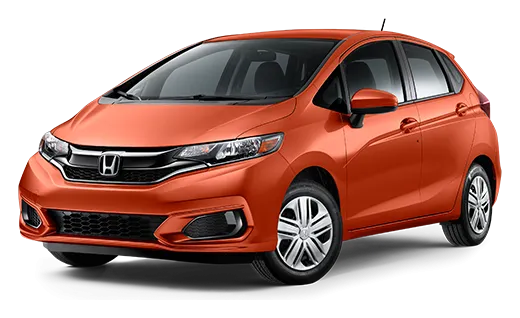
2015 Honda Fit
67
GoodReliability score: 67 out of 100, rated Good

Reliability score

Good · lowest of 6 scored Fit years

2015 Honda Fit Reliability Report

The 2015 Honda Fit rates good but is the weakest Fit year, with no-start trouble, injector misfires and sudden CVT failures reported.

Recalls

4

Complaints

272

Complaint Rate

51.6per 10,000 sold

Est. Repair Cost

$390

Annual Fuel Cost

$1,650–1,900

Detailed Score Breakdown

Complaint Severity35% of score42/100

Component-weighted complaints normalized by sales volume

Repair Costs30% of score90/100

Independent repair cost ratings

Recall Impact20% of score71/100

Recall count weighted by severity

Issue Diversity15% of score72/100

Breadth of reported problem categories

The verdict

Consider

Weakest of the scored Fit years, with the most complaints and four recalls, led by no-starts, injector misfires and CVT failures.

Looking at a used 2015 Honda Fit? Check that exact car

4 recalls cover this year. A VIN check shows whether the car you found had the work done, plus accidents, title and odometer history.

Generation & Refresh (US)

Redesign Year

2015 is the first model year of the Third generation (GK/GH/GP).

  • First-year models may have unresolved issues from the new design.
  • Redesigned for the 2015 model year.
  • Refreshed in 2018.
  • 3rd generation Fit (US).

What this means for buyers

First-year models carry more risk — early production issues are common. Consider waiting for the second year if reliability is a priority.

Compare 2015 pricing and recall counts against 2016+ before deciding.

2015: Third generation (GK/GH/GP) Launch

Generation start — new platform.

2018: Mid-Cycle Refresh

Updated features and styling tweaks.

Should You Buy the 2015 Honda Fit?

Good, with a caveat. This is the weakest of the six scored Fit years, and it is the first year of the third generation. Owners filed 272 complaints, against 122 for the 2016, which rates better. Model-wide repair costs run $390 a year, under the $456 for its class, and the federal crash-test rating is 5 of 5 stars.

Electrical trouble leads the complaints. The push button needs several presses or a jump, and dealers often replace the start button or starter without curing it. The gauge display can go blank on cold mornings. Fuel injectors are next: misfires, stumbling and warning lights, usually fixed by replacing all four injectors, with quotes from $1,400 to $2,300. The CVT can fail suddenly between 70,000 and 95,000 miles, and replacement bills run into the thousands. Federal records list four recalls, covering structure, air bags, power train and the electrical system.

Shoppers should look hard at the 2016 first. If a 2015 is the one, ask for proof that all four recalls were completed, and for records showing whether the injectors, starter or CVT have already been replaced.

Compared to the 2016 Honda Fit, which scored 10 points higher.

Pros

  • Acceptable reliability score
  • $66 cheaper to maintain than avg subcompact cars
  • Low major repair risk8%
  • Below-average complaint rate for Sedan

Cons

  • Moderate recall count
  • ElectricalIntermittent no-starts dominate107 complaints
  • ENGINE issues reported31 complaints

Compare 2015 Honda Fit With

Recall Overview

4

recalls on record

A moderate 4 recalls are on file for the 2015 Honda Fit. Each one points to a specific safety or compliance issue identified by the manufacturer or NHTSA — check the list below before buying.

NHTSA.gov →

Complaint Breakdown

51.6

per 10,000 sold

Segment avg: 51.2

LowAvgHigh
High

Safety Incidents

10

Crashes

1

Fires

13

Injuries

0

Deaths

★★★★★

NHTSA 5/5 Stars

Data sourced from NHTSA complaint filings and manufacturer recall notices. Complaint narratives are owner-reported.

2015 Honda Fit Recall Details

4 recalls have been issued for the 2015 Honda Fit. Recall repairs are free at authorized dealers, so check that each one below was done on the car you are looking at.

Body and structureRecall 15V697000Oct 23, 2015

In the affected vehicles, the rear grab handle brackets were not manufactured properly, and as a result, the brackets may puncture the side curtain air bags upon their deployment.

As such, these vehicles fail to comply with Federal Motor Vehicle Safety Standard (FMVSS) number 214, "Side Impact Protection" and number 226, "Ejection Mitigation".

Risk
If the side curtain air bags are punctured upon deployment, the outboard seat occupants may be at a higher risk of injury during a crash.
Fix
Honda will notify owners, and dealers will replace the rear grab handle bracket, free of charge.
Which vehicles are covered

Honda (American Honda Motor Co.) is recalling certain model year 2015-2016 Fit LX-trim vehicles manufactured April 11, 2014, to July 02, 2015 and not equipped with a sunroof.

More about the fix

The recall began on December 18, 2015. Owners may contact Honda customer service at 1-888-234-2138. Honda's number for this recall is JV8.
TransmissionRecall 15V574000Sep 15, 2015

The software settings that control the transmission operation may result in damage to the transmission drive pulley shaft.

Risk
If the transmission drive pulley shaft is damaged, it may break, and the vehicle may lose acceleration or the front wheels may lock up while driving, increasing the risk of a crash.
Fix
Honda will notify owners, and dealers will update the software for the transmission, free of charge.
Which vehicles are covered

Honda (American Honda Motor Co.) is recalling certain model year 2014-2015 Civic vehicles manufactured January 16, 2014, to November 6, 2014 and 2015 Fit vehicles manufactured March 12, 2014, to May 12, 2015.

More about the fix

The recall is expected to begin October 30, 2015. Owners may contact Honda customer service at 1-888-234-2138. Honda's numbers for this recall are JU2 (Civic) and JU3(Fit).

ElectricalRecall 15V559000Sep 3, 2015

The affected vehicles may experience damage to the wires inside the Plug Top Ignition Coils (PTC) due to improper protection against electrical noise.

Risk
If the wires become damaged, the coil may overheat and cause the engine to stall, increasing the risk of a crash.
Fix
Honda will notify owners, and dealers will replace the Plug Top Ignition Coils with new design, free of charge.
Which vehicles are covered

Honda (American Honda Motor Co.) is recalling certain model year 2015 Fit vehicles manufactured December 6, 2013, to August 28, 2014.

More about the fix

The recall began on October 9, 2015. Owners may contact Honda Automobile Customer Service at 1-888-234-2138. Honda's number for this recall is JT9.

VIN History Report

Buying a used 2015 Honda Fit? Check its history first

Electrical system problems lead owner complaints about the 2015 Honda Fit, and 4 recalls were issued for it. A VIN check shows whether this car's recall work was done, plus accident, title, and odometer history.

No VIN? Just hit “Check VIN” to look one up.

  • Accidents
  • Open Recalls
  • Title History
  • Odometer Rollback

2015 Honda Fit NHTSA Safety Ratings

Overall Safety Rating

Overall safety rating: 5 out of 5
Crash Test Results by Configuration (expand)

Gas Powertrain

Driver: 5/5Passenger: 5/5

Rollover risk: 14.7%

Safety Technologies

Rearview Video Systems (Standard)Dynamic Head Restraints (Not Available)Head Restraint (Driver, Front Passenger, Rear Seat)Advanced Belt Feature (Standard)Adjustable Upper Belt Anchorage (Driver, Front Passenger)Seat Belt Reminder System (Driver, Front Passenger)Frontal Air Bag (Driver, Front Passenger)Curtain (Driver, Front Passenger, Rear Seat)Torso/Pelvis (Driver, Front Passenger)Knee (Not Available)Additional Air Bags (Not Available)Meets Side Air Bag Out-of-Position Requirements (Yes)LATCH Locations (Rear Seat)Safety Power Windows (Anti-Pinch) (Available)Safety Power Windows (Anti-Pinch) locations (Driver)
View full safety data on NHTSA.gov →

Honda Fit Repair Costs & Maintenance

Maintenance Rating

4.5Maintenance rating: 4.5 out of 5

Based on NHTSA complaint patterns, recall severity, and publicly available cost benchmarks.

Est. Annual Maintenance

$390

vs $456 avg for subcompact cars

vs $652 avg for all vehicles

Repair Frequency

0.4

unscheduled repair visits per year

Severe Repair Probability

8%

chance of a major repair

Annual Cost Comparison

Fit
$390
Category Avg
$456
All Vehicles
$652

Category-level averages derived from publicly available industry reports (AAA, CarMD). Model-level estimates produced by Auto Reliability Index.

MPG & Annual Running Costs

Gas

32–36 MPG

Running cost: $2,050–$2,300/yr

Fuel + repair

29–33 city / 36–40 hwy MPG

Running cost includes EPA fuel-cost estimate and independent repair-cost data (repair cost estimated at model level). Excludes routine maintenance, depreciation, and insurance. Data as of 2015 EPA label cycle.

Gas trims
TrimDriveTrans.CityHwyCombFuel Cost
Fit 1.5L 4-cylFront-Wheel DriveAutomatic (variable gear ratios)334036$1,650
Fit 1.5L 4-cylFront-Wheel DriveAutomatic (AV-S7)323734$1,750
Fit 1.5L 4-cylFront-Wheel DriveManual 6-spd293632$1,900

Used Buying Checklist

Key things to inspect or verify before purchasing a 2015 Honda Fit.

  • Start the car several times after it has sat overnight. Repeated button presses or no-crank attempts point to starter trouble.

  • Listen during the first seconds of a cold start for a rattle or grind from the engine.

  • Confirm the right-hand gauge display shows the fuel level and odometer clearly from a cold start.

  • Scan for misfire or fuel trim codes and ask for records showing whether all four fuel injectors were replaced.

  • Drive below 30 mph in stop-and-go traffic and feel for bucking, shudder, or delayed engagement from the CVT.

  • Look under the front bumper for a missing, broken, or zip-tied engine splash shield.

  • Inspect white paint on the roof and door tops for peeling or bare metal.

  • Fold the rear seat back up, test-latch every rear buckle, and pull each belt to check the retractor releases.

Going to see one? Take the printable 2015 Honda Fit inspection checklist with you.

2015 Honda Fit Common Problems by Component

272 owner complaints grouped by vehicle system.

107
31
30
ELECTRICAL SYSTEM (107)ENGINE (31)POWER TRAIN (30)UNKNOWN OR OTHER (24)FUEL/PROPULSION SYSTEM (24)AIR BAGS (14)STRUCTURE (12)SERVICE BRAKES (5)Other (25)

ELECTRICAL SYSTEM

107 complaints

Fit electrical problems across all model years

Intermittent no-starts dominate. The push button needs several presses or a jump, and dealers often replace the start button or starter, sometimes without curing it. The right-hand gauge display goes blank or garbled, usually on cold mornings, hiding the fuel gauge and odometer until the car warms up. Other reports describe the battery draining after a few days parked, the key fob not being detected, and the engine shutting off at highway speed. Several drivers also hit the start button instead of the nearby hazard button and killed the engine while moving.

107 complaints total

ENGINE

31 complaints

Cylinder misfires bring on the check engine light, rough running, and sometimes a cluster of dash warnings with a brief jerk while driving. Dealers often fix this by replacing all four fuel injectors around 48,000 to 50,000 miles, at owner expense once the warranty has run out. Starter failures show up between roughly 56,000 and 65,000 miles. Other reports include a rattle or grind at cold start blamed on the VTC actuator, heavy oil use ending in engine replacement, and stalling at stops in Econ mode.

31 complaints total

POWER TRAIN

30 complaints

The CVT can fail suddenly, usually between 70,000 and 95,000 miles. Drivers lose acceleration on the highway or the car will not move in drive or reverse, sometimes after a short spell of bucking or shuddering below 30 mph. Shops report metal shavings or belt debris in the fluid, and replacement bills run into the thousands. One owner found the filler plug missing. Several other filings are about dealer handling of the drive pulley shaft repair, with owners arguing a software change does not fix the part.

30 complaints total
UNKNOWN OR OTHER (24 complaints)

UNKNOWN OR OTHER

24 complaintsSafety-related

The lower engine splash shield keeps coming loose and drags under the car at highway speed, and dealers often blame road debris. White Orchid Pearl paint peels in large chunks on the roof and doors. Other reports include the hatch glass shattering while parked, the start button shutting the engine off when drivers reach for the hazards, and intermittent no-starts. One car caught fire under the hood while parked overnight at 46,000 miles. One owner drove to a dealer for a rear grab rail bracket repair and found the parts were not in stock.

24 complaints total1 fire
FUEL/PROPULSION SYSTEM (24 complaints)

FUEL/PROPULSION SYSTEM

24 complaints

Fit fuel system problems across all model years

Failing direct fuel injectors are the main pattern. The car stumbles, loses power, or misfires, often with the check engine, power steering, traction control, and tire pressure lights coming on together, sometimes at interstate speed. Codes such as P0301 and P0171 are common, and dealers usually replace all four injectors and fuel pipes, mostly between 22,000 and 50,000 miles, with quotes from $1,400 to $2,300. Some owners report stalling at stops or in turns, including one traced to a fuel pressure sensor in the fuel rail.

24 complaints total
AIR BAGS (14 complaints)

AIR BAGS

14 complaintsSafety-related

Most reports describe front or side air bags failing to deploy in crashes. These include hard rear-end and side impacts and several parking-lot crashes that drivers blame on sudden acceleration, with injuries such as fractured vertebrae and ribs. Three of the filings are identical copies of one rear-end crash. In another report, both side curtains fired with no impact and the car left the road. Other filings cover a dashboard that no longer fits around the passenger air bag after dealer work, and a campaign repair delayed because parts were unavailable.

14 complaints total9 crashes12 injuries
STRUCTURE (12 complaints)

STRUCTURE

12 complaints

The front splash guard or air deflector falls off and drags on the highway, sometimes again and again, and owners end up zip-tying it or paying for a new one. White paint peels down to bare metal on the roof and door tops, and in one case rust has started near the windshield. Owners say Honda extended paint coverage to 7 years, but some failures come after that ends. Other reports describe rainwater collecting on the floors and under the seats, and a rear window that shattered with nothing touching it.

12 complaints total
SERVICE BRAKES (5 complaints)

SERVICE BRAKES

5 complaintsSafety-related

Most of these reports describe the car accelerating while the driver is braking, usually when turning into a parking space. One of them ended with the car going through a restaurant door. Dealers inspected the brakes and found nothing wrong. Other reports cover a shifter that would not leave park, fixed with a new brake switch; a car that rolled backward with the handbrake set; and a loud clicking from the front right brake that a dealer called normal.

5 complaints total1 crash
SEAT BELTS (5 complaints)

SEAT BELTS

5 complaints

Rear seat belt buckles are installed backward, mostly the center and driver-side rear positions, so they do not latch properly. In one car the buckle was empty inside and could not latch at all. Retractors also lock up and keep tightening instead of letting belt out, and in one case the belt had to be cut to free an injured passenger. A child in a booster seat was also cinched at the waist. One owner reports the driver's buckle is very hard to release.

5 complaints total
SEATS (2 complaints)

SEATS

2 complaints

The front seats and forward-tilted head restraints push the head and shoulders into a hunched position. Drivers report neck and back pain, and one owner describes chronic pain that needed medical treatment. Another says the tilted headrests lower the driver's line of sight. Only two complaints are on file, and both are about seat design and comfort, not a part that broke.

2 complaints total1 injury

When Do 2015 Honda Fit Problems Start?

Based on owner complaint patterns, here’s when common issues tend to appear.

70,000–95,000 milesSudden CVT transmission failure

Best & Worst Honda Fit Years

Best Honda Fit years to buy

Top pick: the highest score among years with at least two years on the road; the newest wins a tie.

Honda Fit years to avoid

Still rated good overall, but well below the other Honda Fit years.

Full Honda Fit years-to-avoid analysis →

Honda Fit reliability score trend

Scores 0–100, higher is better. Best and worst years are ringed. This year is highlighted.

Honda Fit reliability scores by year
YearScoreRating
201567/100Good
201677/100Good
201783/100Excellent
201870/100Good
201968/100Good
202077/100Good

Honda Fit Reliability Compared to Other Years

Reliability scores compared across model years
YearScorevs Prior YearRatingRecallsComplaints
202077/100+9Good439
201968/100-2Good6139
201870/100-13Good4117
201783/100+6Excellent043
201677/100+10Good1122
2015(selected)67/100—Good4272

Frequently Asked Questions

Is the 2015 Honda Fit reliable?
It rates good, but it is the weakest of the six scored Fit years. Owners filed 272 complaints, well above the 2016's 122. Model-wide repair costs are lower than the class average, and crash-test results are strong. The risk is in specific repairs: starting, injectors and the CVT.
What are the most common problems with the 2015 Honda Fit?
Electrical problems lead, mainly intermittent no-starts and a gauge display that goes blank when cold. Engine and fuel complaints follow, mostly misfires from failing fuel injectors and some starter failures. Power train complaints center on the CVT, which can fail suddenly with little warning.
Does the 2015 Honda Fit have CVT problems?
Yes. Owners report sudden CVT failure, usually between 70,000 and 95,000 miles. Symptoms include lost acceleration on the highway, bucking or shuddering below 30 mph, or the car refusing to move in drive or reverse. Shops describe metal shavings in the fluid, and replacement bills run into the thousands.
Does the 2015 Honda Fit have fuel injector problems?
Yes, it is a repeat pattern. Failing direct injectors cause stumbling, power loss and misfires, often with several dash lights at once. Dealers usually replace all four injectors and the fuel pipes, mostly between 22,000 and 50,000 miles. Owners quote $1,400 to $2,300 when it is not covered.
Is the 2016 Honda Fit better than the 2015?
Based on the data, yes. The 2016 also rates good, but it rates better, with 122 complaints and one recall against 272 complaints and four recalls for the 2015. A shopper deciding between the two has a clear reason to lean toward the 2016.

Don’t buy a 2015 Honda Fit without checking its VIN first — hidden accidents, title issues, and open recalls could cost you thousands.

Look Up a VIN →

How we score the 2015 Honda Fit

Of the four inputs behind this score, the 2015 Honda Fit does best on repair costs (90/100) and worst on complaint severity (42/100). Scores weight complaint severity at 35%, repair costs at 30%, recall impact at 20%, and the spread of complaints across systems at 15%, with complaint counts adjusted for US sales. Read the full methodology.

Get notified when new recalls or reliability data is added for the Honda Fit.

No spam. Only data updates for this model.

See incorrect data? Report an issue