Last updated: 2026-11-20
Engine & powertrain
Chevrolet Blazer Engine Problems
Chevrolet Blazer engine trouble centers on a failing thermostat or coolant sensor, plus radiator leaks that often show up with no warning.
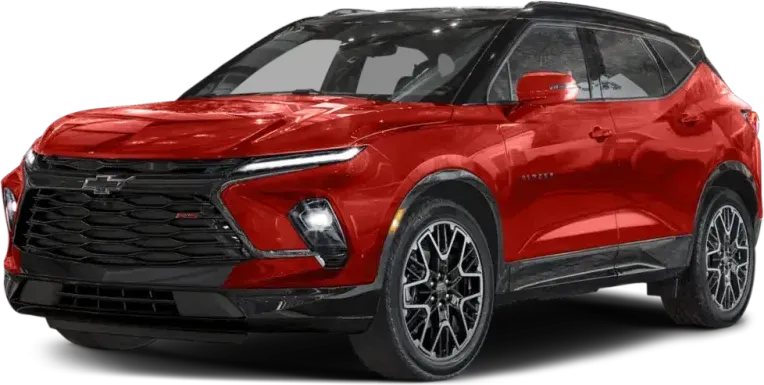
- Owner complaints
- 132
- Share of all complaints
- 17%
- Crash / fire / injury reports
- 0 / 0 / 0
- Related recalls
- 0
Chevrolet Blazer engine complaints by model year
The 2020 model year has the most engine complaints, at 48, and the highest rate per vehicle sold. The 2021 and 2019 years follow with 29 and 23. Complaints drop sharply for 2022 through 2024, at roughly 10 each, with lower rates per sale. Newer years have had less time to collect reports, so that drop does not prove they are better. The 2025 year has only 2 complaints and 2026 has none, both too new to judge. Stalling reports are more common in the later years.
| Model year | Complaints | Per 10,000 sold | Crash, fire, injury reports |
|---|---|---|---|
| 2019 | 23 | 4 | 0, 0, 0 |
| 2020 | 48 | 5.1 | 0, 0, 0 |
| 2021 | 29 | 4.1 | 0, 0, 0 |
| 2022 | 11 | 1.6 | 0, 0, 0 |
| 2023 | 10 | 1.5 | 0, 0, 0 |
| 2024 | 9 | 1.8 | 0, 0, 0 |
| 2025 | 2 | 0.4 | 0, 0, 0 |
| 2026 | 0 | n/a | 0, 0, 0 |
Owner complaints filed with NHTSA under engine, engine and engine cooling. Newer model years have had less time to collect complaints.
What goes wrong
The most common complaint is a thermostat or coolant temperature sensor that fails. The check engine light comes on with code P0128. The temperature gauge sticks on cold, the A/C blows warm, and the cooling fan keeps running after the engine is off. A "steering assist reduced" message often appears too. Radiator leaks are the second big pattern. Owners often learn of them only when a shop finds coolant gone during an oil change.
Most of these problems leave the car drivable, but a few are serious. Some owners report stalling with no warning, on a highway, in an intersection, or after refueling, and dealers sometimes cannot find a cause. A handful report limp mode, a failed fuel pump, or a full engine replacement. Several cars were towed. The records show no crash, fire, or injury reports in this area, but stalling in traffic is the kind of failure that puts drivers at risk.
Symptoms owners report
Thermostat and coolant sensor failure
Code P0128 sets and the temperature gauge sits on cold. The A/C stops cooling and the fan runs hard, sometimes for 30 minutes after shutdown. Steering assist is reduced warnings follow. Some cars set the code again after the parts are replaced.
Silent radiator leaks
Coolant seeps from the radiator with no warning light and often no puddle. A shop finds it at an oil change. Several 2021 owners report a second or third radiator, and replacements can leak again.
Stalling and sudden power loss
Engines quit on highways, in intersections, or after refueling, often without a warning light. One 2022 owner lost all power from a fuel pump failure on a busy road. A 2025 car stopped on an interstate and needed a new engine.
Oil leaks and low oil pressure
Oil leaks appear at the camshaft carrier and at the oil pan. One 2024 car lost oil pressure at about 18,000 miles, and the leak returned after dealer visits. Another sat at a dealer for 58 or more days.
Limp mode and major engine failure
A throttle body fault (code P2101) cut power near 55,000 miles on a 2021. Rarer reports include lost compression in one cylinder, timing chain damage at about 90,200 miles, and engine knocking at 11,222 miles.
When the problems start
Thermostat failures show up early, with owners citing 35,000, 47,500, 52,377, and 59,945 miles. One 2022 owner saw the steering warning begin at 10,000 miles. Radiator leaks start even sooner for some, at 16,000, 19,900, and 25,000 miles, and others at 49,000 and 60,840. Throttle body failure came near 55,000 miles. Oil leaks and major engine failures appear later, at 70,000 and 90,200 miles.
Repairs and recalls
Federal recall records list no recalls in this area. Radiator replacements are often done under warranty when the leak appears early, but repeat failures are common. Thermostat repairs are expensive because the part sits under the intake manifold. Owners cite bills of about $700 to $1,000, and one repair cost $1,131.52. Some dealers refuse warranty work unless a code is stored. One owner mentions manufacturer special coverage for the thermostat. One owner was quoted $6,500 for an oil leak repair, and a 2021 engine failure got a goodwill warranty offer.
Checking a used Blazer for engine problems
- Ask for service records showing any radiator or thermostat replacement, and check whether repairs were repeated.
- Have a shop pressure test the cooling system and look for coolant seepage at the radiator seams.
- Watch the temperature gauge on a long drive. Walk away if it stays on cold or the A/C blows warm.
- After a test drive, shut the engine off and listen. A fan that keeps roaring for minutes points to the thermostat problem.
- Check under the engine and around the oil pan and camshaft area for oil seepage, and read the oil level.
- Run the VIN with a dealer to confirm open campaigns and special coverage, since federal records show no engine recalls.
For the rest of the car, use a full Chevrolet Blazer inspection checklist.
A VIN check shows whether the car you're looking at had its recall work done, plus accident and title history.
Chevrolet Blazer Engine Problems: common questions
- Which Chevrolet Blazer years have the most engine problems?
- The 2020 model year has the most engine complaints, followed by 2021 and 2019. Later years show fewer reports, but they have had less time on the road. The 2025 and 2026 years are too new to judge. Thermostat and radiator problems appear across nearly every year.
- What is the most common Blazer engine problem?
- A failing thermostat or coolant temperature sensor. It sets code P0128, leaves the gauge stuck on cold, kills the A/C, keeps the fan running after shutdown, and triggers a reduced steering assist message. Radiator leaks are the next most common complaint.
- Is it safe to drive a Blazer with these engine problems?
- Thermostat faults usually leave the car drivable, but a leaking radiator can lead to overheating, and some owners were stranded. Stalling without warning is the most serious pattern. Have any warning message or coolant loss checked promptly.
- Is there a recall for Blazer engine problems?
- Federal recall records list no recalls in this area. Owners say the radiator leaks have no recall, and one mentions special coverage for thermostat replacement. Ask a Chevrolet dealer to check your VIN for open campaigns or extended coverage.
- How much does it cost to fix a Blazer thermostat?
- Owners report bills from about $700 to $1,000, and one repair came to $1,131.52. Labor drives the cost because the part sits under the intake manifold. Some cars set the code again after the repair, so ask about warranty coverage first.
Other Chevrolet Blazer problems
Electrical & lighting
Engine & powertrain
More on the Chevrolet Blazer
See incorrect data? Report an issue