Last updated: 2026-11-26
Airbags & seat belts
Tesla Model Y Seat Belt Problems
Tesla Model Y owners report seat belts that will not latch or stay buckled, including rear buckles that release unexpectedly.
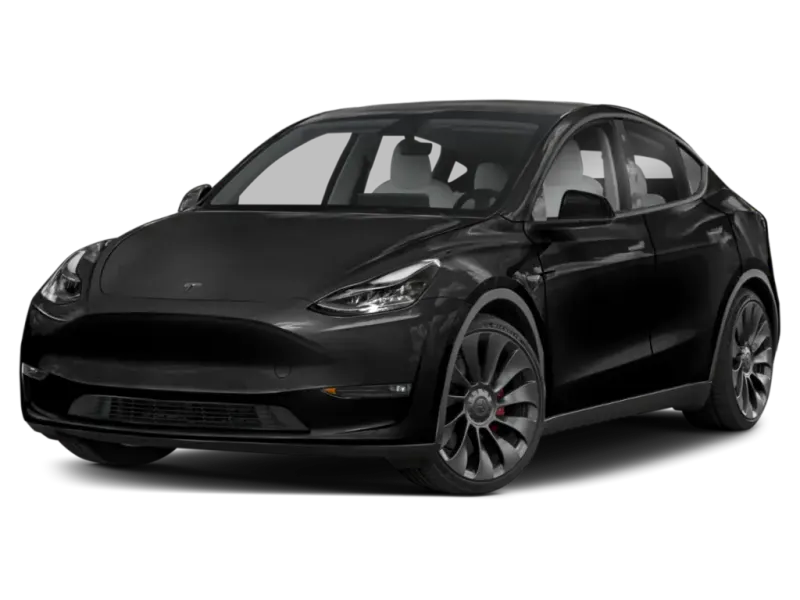
- Owner complaints
- 84
- Share of all complaints
- 2%
- Crash / fire / injury reports
- 1 / 0 / 2
- Related recalls
- 3
Tesla Model Y seat belt complaints by model year
Complaints span model years 2020 through 2025. The 2023 model year has the largest count in the supplied data, with 31, followed by 2021 with 22 and 2022 with 18. The 2020 model year has six complaints, while 2024 has five and 2025 has two. The newer years have had less time on the road to accumulate reports, so their lower counts do not establish better long-term reliability. Complaint counts also do not prove a defect in any individual vehicle.
| Model year | Complaints | Per 10,000 sold | Crash, fire, injury reports |
|---|---|---|---|
| 2020 | 6 | 0.9 | 0, 0, 0 |
| 2021 | 22 | 1.2 | 0, 0, 0 |
| 2022 | 18 | 0.7 | 0, 0, 1 |
| 2023 | 31 | 0.8 | 1, 0, 1 |
| 2024 | 5 | 0.1 | 0, 0, 0 |
| 2025 | 2 | <0.1 | 0, 0, 0 |
Owner complaints filed with NHTSA under seat belts. Newer model years have had less time to collect complaints.
What goes wrong
Rear seat belts that will not click into their buckles or stay latched are a recurring theme in Tesla Model Y owner complaints. Reports also describe buckles that release unexpectedly, restraint-system warnings, and a belt that appears to latch without a confirming click. Some owners say more than one rear belt stopped working; a few describe front-seat warnings or belt problems. These are owner reports, not confirmation that every vehicle has a defect.
An unlatched or unexpectedly released belt can leave an occupant unrestrained. Complaint data include one crash report and two injury reports in this category, but they do not establish that a seat-belt failure caused those events. No fires were reported. Some owners describe an unusable belt, but the records do not show that the vehicle itself became undrivable. Treat any belt that will not latch or stay fastened as a safety concern and have it assessed before carrying a passenger in that seat.
Symptoms owners report
Buckle will not latch
Reports describe the belt tongue sliding into the buckle without clicking or locking. In some cases, owners say repeated attempts did not secure it, leaving that seating position unusable. Rear belts, including middle and passenger-side positions, appear in these accounts.
Buckle releases unexpectedly
Some owners report a latched rear belt disengaging without warning. One complaint describes a child’s car seat tipping after the passenger-side rear belt released. These accounts describe potentially serious restraint concerns, but are not independent confirmation of a vehicle-wide defect.
Several rear belts fail
A number of reports describe two rear buckles failing to latch, including driver-side and center positions. Some owners say they rarely used those seats before noticing the problem; others report that replacement belts later failed again.
Restraint-system warning
Owners report a dashboard or screen message indicating a front safety-restraint system fault, sometimes accompanied by a chime. The complaints do not establish the specific cause of these warnings, so a message alone does not confirm which component needs attention.
When the problems start
Most supplied complaints do not give a failure mileage, and the reported timing varies. One 2021 owner described rear buckles failing at 83,610 miles. A 2022 owner reported a rear belt problem at approximately 3,500 miles. Other accounts describe problems in newer vehicles or after periods of use but provide no usable odometer reading, so these reports do not establish a mileage pattern.
Repairs and recalls
Owners describe taking vehicles to Tesla or requesting service for failed buckles and restraint warnings. Some report that Tesla replaced failed rear belts; one said two replacements later failed again. Other complaints mention delays, an unresolved issue, or disputes about warranty coverage, without establishing a standard outcome or cost. Federal recall records list two 2021 recalls covering certain 2019–2021 Model Ys for potentially unattached second-row retractor or front shoulder-belt fasteners; Tesla was to inspect and replace or repair fasteners as needed, free of charge. A 2024 recall for certain 2020–2023 Model Ys addresses a seat-belt warning light and chime that may not activate for an unbelted driver, with an over-the-air software update.
| Model years | Campaign | Problem |
|---|---|---|
| 2020, 2021, 2022, 2023 | 24V376000 | Tesla, Inc. (Tesla) is recalling certain 2012-2024 Model S, 2015-2024 Model X, 2017-2023 Model 3, and 2020-2023 Model Y vehicles. In the event of an unbelted driver, the seat belt warning light and audible chime may… |
| 2020, 2021 | 21V388000 | Tesla, Inc. (Tesla) is recalling certain 2019-2021 Model Y vehicles. One or both fasteners that secure the left and right second row seat belt retractors may not be properly attached. |
| 2020, 2021 | 21V389000 | Tesla, Inc. (Tesla) is recalling certain 2018-2020 Model 3 and 2019-2021 Model Y vehicles. One or both fasteners that secure the front seat shoulder belt to the b-pillar may not be properly attached. |
Checking a used Model Y for seat belt problems
- With the vehicle parked, check that each belt tongue latches securely and stays latched with a gentle pull.
- Check the front and rear seating positions, including the center rear belt; do not carry passengers in a belt that will not secure.
- Look for restraint-system warnings on the display and ask the seller to document any service response.
- Check the vehicle identification number against federal recall records and confirm whether applicable recall work is complete.
- Review service records for buckle replacements, repeat failures, or restraint-system complaints.
For the rest of the car, use a full Tesla Model Y inspection checklist.
3 seat belt recalls cover the Tesla Model Y. A VIN check shows whether the car you're looking at had its recall work done, plus accident and title history.
Tesla Model Y Seat Belt Problems: common questions
- Which Tesla Model Y years have seat-belt complaints?
- The supplied complaints cover model years 2020 through 2025. The largest counts are for 2023, 2021, and 2022. Counts for 2024 and 2025 are lower, but those vehicles have had less time to accumulate complaints, so the data cannot establish that they are more reliable over the long term.
- Is a Model Y safe to drive if a seat belt will not latch?
- A belt that will not latch or stay secured cannot reliably restrain an occupant in that seating position. Do not carry a passenger there until the issue has been assessed. The complaint records include reports of unusable belts and unexpected releases, but they do not show that every Model Y is affected.
- Do seat-belt recalls cover the Model Y?
- Federal recall records list three campaigns involving certain Model Ys. Two concern potentially unattached seat-belt fasteners on specified 2019–2021 vehicles. A separate campaign for certain 2020–2023 Model Ys concerns the warning light and chime for an unbelted driver. Check the vehicle identification number to determine applicability and completion.
- What is the fix or repair cost for a Model Y seat-belt problem?
- The supplied owner complaints mention Tesla service visits and replacement of failed belts, but do not provide a consistent repair cost. Some owners describe delays or warranty disagreements. For the listed fastener recalls, Tesla was to inspect and repair or replace the fasteners free of charge; the warning-system recall uses an over-the-air software update.
Other Tesla Model Y problems
Driver-assist tech
Brakes, steering & tires
Electrical & lighting
Engine & powertrain
Body & interior
Airbags & seat belts
More on the Tesla Model Y
See incorrect data? Report an issue