Last updated: 2026-11-19
Brakes, steering & tires
Tesla Model Y Suspension Problems
Tesla Model Y suspension problems center on worn front lower links and bushings, and loose bolts that can let a front wheel collapse.
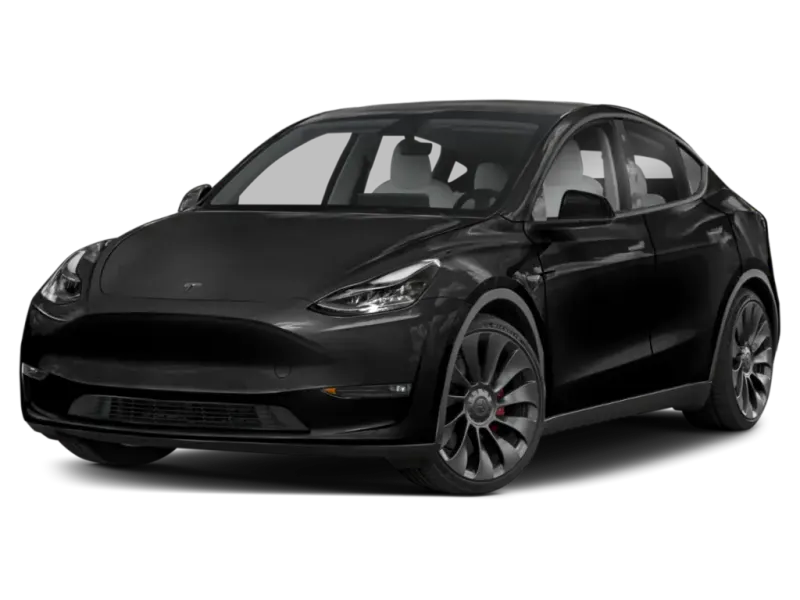
- Owner complaints
- 244
- Share of all complaints
- 6%
- Crash / fire / injury reports
- 9 / 0 / 7
- Related recalls
- 4
Tesla Model Y suspension complaints by model year
The 2023 model year has the most suspension complaints by far, followed by 2021, 2022 and 2020. Relative to sales, 2020 is the highest. The 2024 model year has few complaints, and 2025 has none, but both have had much less time on the road to collect them, so that is not a sign they are better. Some 2020 and 2021 entries come from one filer posting salvage-auction photos, not from owner experience.
| Model year | Complaints | Per 10,000 sold | Crash, fire, injury reports |
|---|---|---|---|
| 2020 | 23 | 5.7 | 2, 0, 1 |
| 2021 | 62 | 3.8 | 2, 0, 0 |
| 2022 | 34 | 1.5 | 2, 0, 3 |
| 2023 | 115 | 3 | 2, 0, 0 |
| 2024 | 10 | 0.3 | 1, 0, 3 |
| 2025 | 0 | 0 | 0, 0, 0 |
Owner complaints filed with NHTSA under suspension. Newer model years have had less time to collect complaints.
What goes wrong
Most owners first hear it. A creak or groan shows up in low-speed turns, especially in reverse, sometimes with clunks over bumps. A shop then finds torn bushings or worn front lower lateral links, compliance links, control arms or ball joints. Inner-edge tire wear often comes with it, and some owners say alignments did not stop it.
The serious cases involve hardware coming loose. Owners describe control arm or lateral link bolts backing out or falling out, the arm dropping, the wheel splaying, steering lost and the car towed. Several say it happened while backing out of a driveway, and others say it happened in traffic. Complaints in this area carry crash reports in every model year from 2020 through 2024, plus injury reports, but no fires. Not every crash entry describes a suspension failure. Still, a car with a loose or missing bolt should not be driven.
Symptoms owners report
Creaking or groaning in turns
The usual first warning is a creak, groan or squeak from the front end during low-speed turns, often worse in reverse. Some owners also hear clunking or popping over bumps and feel loose steering.
Torn bushings and worn links
Shops find torn or dry-rotted bushings on the front lower lateral and compliance links, plus worn control arms and ball joints. Owners often learn of it at a tire change or service visit, with no accident involved.
Bolts backing out or missing
Front lower control arm or lateral link bolts loosen and fall out. Owners report a clicking that becomes a bang, then a dropped arm, a jammed wheel, lost steering and a tow. A missing retaining nut was also found.
Rapid inner-edge tire wear
Tires wear fast on the inside edge while the outer tread looks fine. Owners report alignments that cannot fix it, with rear camber out of spec and no way to adjust it. Flats and a highway blowout were reported.
Rear suspension play and cracks
Some owners report rear wheel shimmy, loose rear hardware, excessive play in a rear upper ball joint, and one cracked rear subframe casting found during an alignment. These are less common than front link failures.
When the problems start
Owners report worn or torn front links starting around 29,103 to 34,306 miles, with the earliest wear entry at 31,099 miles. Others found failures at 42,000, 49,865 and 51,300 miles, and one at 57,974 miles tied to tire wear. Some owners describe loose bolts without giving a mileage. Some salvage-photo entries claim far lower mileage, but those are not owner experience.
Repairs and recalls
Owners most often replace the front lower lateral links and compliance links. One 2021 estimate was $782.40 for both lateral link assemblies, and one 2022 estimate was $1,548.80 for lateral and compliance links. One 2023 owner was quoted $4,599 for a subframe replacement after a bolt stripped the threads. Warranty coverage is mixed: some repairs were covered, while others were billed at about 33,971 miles or denied. Federal recall records list four suspension recalls. 20V709000 covers 2020 upper control arm bolts. 21V835000 covers 2020 to 2021 lateral link fasteners. 21V912000 covers 2020 to 2022 knuckles. 22V895000 covers 2023 lateral link fasteners. All are free repairs.
| Model years | Campaign | Problem |
|---|---|---|
| 2023 | 22V895000 | Tesla, Inc. (Tesla) is recalling certain 2023 Model Y vehicles. The front suspension lateral link fasteners may not have been properly attached to the sub-frame. |
| 2020, 2021, 2022 | 21V912000 | Tesla, Inc. (Tesla) is recalling certain 2020-2022 Model Y vehicles. The front and rear suspension knuckles may fracture, causing the suspension links to separate. |
| 2020, 2021 | 21V835000 | Tesla, Inc. (Tesla) is recalling certain 2020-2021 Model Y and 2019-2021 Model 3 vehicles. The front suspension lateral link fasteners may loosen, allowing the lateral link to separate from the sub-frame. |
| 2020 | 20V709000 | Tesla, Inc. (Tesla) is recalling certain 2020 Model Y vehicles. The bolts connecting the front upper control arm and steering knuckle may have not been properly tightened, allowing the upper control arm to detach from… |
Checking a used Model Y for suspension problems
- Ask Tesla service whether recalls 20V709000, 21V835000, 21V912000 or 22V895000 apply to the VIN and were completed.
- Test drive with the radio off. Make low-speed turns, including in reverse, and listen for creaks, groans or clunks from the front.
- Have a shop lift the car and check front lower link bolts, bushings, control arms and ball joints for looseness or tearing.
- Inspect all four tires for inner-edge wear or cupping, and ask for an alignment printout showing rear camber.
- Request service records showing suspension replacements, and whether Tesla covered them or billed the owner.
- Check the car for repaired collision damage, since owners tied some alignment and noise problems to repairs after a crash.
For the rest of the car, use a full Tesla Model Y inspection checklist.
4 suspension recalls cover the Tesla Model Y. A VIN check shows whether the car you're looking at had its recall work done, plus accident and title history.
Tesla Model Y Suspension Problems: common questions
- Which Tesla Model Y years have the most suspension complaints?
- The 2023 model year has the most, with 115 complaints, then 2021 with 62. The 2020 year is highest relative to sales. Model years 2024 and 2025 show few or none, but they have had less time to collect complaints.
- Is it safe to drive a Model Y with a suspension noise?
- A creak alone may be worn bushings, but it should be inspected soon. Owners report the same warning ending in a loose or missing bolt, a dropped control arm and lost steering. Stop driving if the steering feels loose or the noise turns into a bang.
- Is there a recall for Model Y suspension problems?
- Yes, four. 20V709000 covers 2020 upper control arm bolts. 21V835000 covers 2020 to 2021 lateral link fasteners. 21V912000 covers 2020 to 2022 knuckles. 22V895000 covers 2023 lateral link fasteners. Each is a free repair. The recall lines do not mention worn bushings, and no recall is listed for 2024 or 2025.
- How much does Model Y suspension repair cost?
- Owner estimates include $782.40 for both front lower lateral link assemblies and $1,548.80 for lateral and compliance links. One owner was quoted $4,599 for a subframe replacement. Some repairs were covered under warranty, but others were billed or denied.
- At what mileage do Model Y suspension parts fail?
- Owners most often report worn front links between roughly 29,103 and 34,306 miles. Others report failures at 42,000 to 57,974 miles. Loose-bolt failures do not follow a clear mileage pattern in the complaints, so mileage alone does not rule out a problem.
Other Tesla Model Y problems
Driver-assist tech
Brakes, steering & tires
Electrical & lighting
Engine & powertrain
Body & interior
More on the Tesla Model Y
See incorrect data? Report an issue