Last updated: 2026-10-10
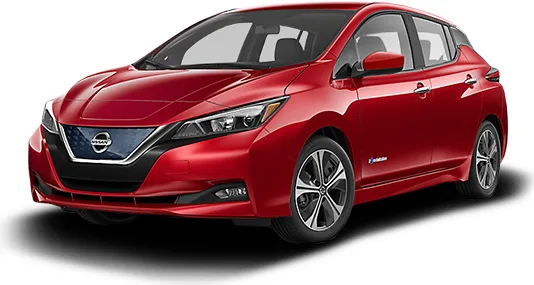
2020 Nissan Leaf Reliability Report
The 2020 Nissan Leaf rates mixed and is the weakest Leaf year, with battery faults and fast-charging limits the main complaints.
Recalls
6
Complaints
159
Complaint Rate
166.3per 10,000 sold
Est. Repair Cost
$748
EV Range
149–226 mi
Detailed Score Breakdown
Component-weighted complaints normalized by sales volume
Independent repair cost ratings
Recall count weighted by severity
Breadth of reported problem categories
The Verdict
Weakest of the five scored Leaf years, with battery failures and owners waiting on repair parts for fast charging; the 2021 rates better.
Top Issues to Watch
- ELECTRICAL SYSTEM (113)
- POWER TRAIN (12)
- FUEL/PROPULSION SYSTEM (11)
Generation & Refresh (US)
2020 is year 3 of the Second generation (ZE1; 2017).
- Redesigned for the 2018 model year.
- Well-established in its generation — most early issues should be resolved.
- A refresh arrives in 2023.
- 2nd generation Leaf (US).
What this means for buyers
Well into the generation cycle — most design and manufacturing issues should be resolved by now.
2018: Second generation (ZE1; 2017) Launch
Generation start — new platform.
2020: This Model Year
2020 is year 3 of the Second generation (ZE1; 2017).
2023: Mid-Cycle Refresh
Updated features and styling tweaks.
Should You Buy the 2020 Nissan Leaf?
Mixed, and the weakest of the five scored Leaf years. Against other 2020 sedans it rates well below average, with 159 owner complaints. The 2019 rates about the same, while the 2021 rates better. Independent repair-cost data puts yearly repairs at $748 against $471 for the class, though the crash-test rating is 5 of 5 stars.
Battery and electrical trouble dominates. Owners describe range readings that swing on freeway hills, batteries that overheat during DC fast charging, and sudden capacity loss that drops the car into reduced-power turtle mode. Traction battery failure tends to appear between 35,000 and 42,701 miles. Many owners say they were told to avoid fast charging until a repair arrives, and dealers report parts unavailable, sometimes for over a year. Federal recall records list six recalls, one in the electrical system.
Ask for recall completion records and any battery service history. If the 2021 fits your budget, it is the better-rated choice.
Compared to the 2021 Nissan Leaf, which scored 12 points higher. See also the 2019 Nissan Leaf for an earlier comparison.
Pros
- +Infrequent unscheduled repairs
- +Low major repair risk (10%)
Cons
- −Below-average reliability score
- −Above-average repair costs for its class
- −Above-average recall count
- −Above-average complaint rate for Sedan
Compare 2020 Nissan Leaf With
Common Problem Categories
Safety
LOW RISK- 6 manufacturer recalls issued
Other
HIGH RISK- ELECTRICAL SYSTEM (113)
- UNKNOWN OR OTHER (14)
Recall Overview
6
recalls on record
The 2020 Nissan Leaf has 6 recalls on record, which is above average. A high count can flag multiple component concerns, though it also shows the manufacturer is actively addressing known issues.
NHTSA.gov →Complaint Breakdown
166.3
per 10,000 soldSegment avg: 17.9
Safety Incidents
1
Crashes
0
Fires
0
Injuries
0
Deaths
NHTSA 5/5 Stars
Data sourced from NHTSA complaint filings and manufacturer recall notices. Complaint narratives are owner-reported.
2020 Nissan Leaf Recall Details
6 recalls have been issued for the 2020 Nissan Leaf. All recall repairs are performed free of charge at authorized dealerships.
ELECTRICAL SYSTEM
Nissan North America, Inc. (Nissan) is recalling certain 2019-2020 LEAF vehicles equipped with a Level 3 quick charging port. The lithium-ion battery may overheat during Level 3 charging.
Consequence
A quick charging battery that overheats increases the risk of a fire.
Remedy
Dealers will update the battery software, free of charge. Owner letters were mailed June 3, 2026. This is a phased recall. Owners may contact Nissan Customer Service at 1-800-867-7669. Nissan's numbers for this recall are R24B2, P4A38, and P5A22.
BACK OVER PREVENTION
Nissan North America, Inc. (Nissan) is recalling certain 2018-2022 LEAF vehicles. Damage to the camera harness can cause distortion or loss of the rearview camera display image. As such, these vehicles fail to comply with the requirements of Federal Motor Vehicle Safety Standard number 111, "Rear Visibility."
Consequence
A rearview camera that does not properly display an image can reduce the driver's rear view, increasing the risk of a crash.
Remedy
Dealers will inspect the rearview camera and harness for damage and replace them as necessary. If no damage is found, the dealer will apply protective tape and reroute the rearview camera harness. Repairs will be performed free of charge. Owner notification letters were mailed August 9, 2024. Owners may contact Nissan customer service at 1-800-867-7669. Nissan's number for this recall is R23D7.
VEHICLE SPEED CONTROL
Nissan North America, Inc. (Nissan) is recalling certain 2018-2023 LEAF vehicles. The vehicle may accelerate unintentionally if the driving mode is changed ("D" to "B"; e-Pedal "On"; or "ECO" mode) after disengaging the cruise control.
Consequence
Unintentional acceleration can increase the risk of a crash.
Remedy
Dealers will reprogram the vehicle control module (VCM), free of charge. Owner notification letters are expected to be mailed August 30, 2023. Owners may contact Nissan's customer service at 1-800-867-7669. Nissan's number for this recall is R23A6.
Buying a used 2020 Nissan Leaf? Check its history first
Electrical system problems lead owner complaints about the 2020 Nissan Leaf, and 6 recalls were issued for it. A VIN check shows whether this car's recall work was done, plus accident, title, and odometer history.
- Accidents
- Open Recalls
- Title History
- Odometer Rollback
2020 Nissan Leaf NHTSA Safety Ratings
Overall Safety Rating
Crash Test Results by Configuration (expand)
Gas Powertrain
Rollover risk: 10.7%
Safety Technologies
Nissan LeafRepair Costs & Maintenance
Maintenance Rating
4Maintenance rating: 4 out of 5Based on NHTSA complaint patterns, recall severity, and publicly available cost benchmarks.
Est. Annual Maintenance
$748
vs $471 avg for alternative fuel vehicles
vs $652 avg for all vehicles
Repair Frequency
0.2
unscheduled repair visits per year
Severe Repair Probability
10%
chance of a major repair
Annual Cost Comparison
Category-level averages derived from publicly available industry reports (AAA, CarMD). Model-level estimates produced by Auto Reliability Index.
MPG & Annual Running Costs
Electric
149–226 mi range
Fuel cost: $700–$750/yr
Fuel only
30.426–32.283 kWh/100mi · 8–11 hrs @ 240V
Based on EPA fuel-cost estimates. Excludes routine maintenance, depreciation, and insurance. Data as of 2020 EPA label cycle.
Electric trims
| Trim | Drive | Trans. | Range | kWh/100mi | Fuel Cost |
|---|---|---|---|---|---|
| Leaf (40 kW-hr battery pack) | Front-Wheel Drive | Automatic (A1) | 149 mi | 30.4 | $700 |
| Leaf (62 kW-hr battery pack) | Front-Wheel Drive | Automatic (A1) | 226 mi | 31.3 | $700 |
| Leaf SV/SL (62 kW-hr battery pack) | Front-Wheel Drive | Automatic (A1) | 215 mi | 32.3 | $750 |
Used Buying Checklist
Key things to inspect or verify before purchasing a 2020 Nissan Leaf.
Run the VIN for open recalls and ask the dealer whether any battery or fast-charging repair is still waiting on parts.
Drive at highway speed over hills and watch whether the remaining-range reading jumps or drops sharply.
Ask for service records showing battery diagnostics, pack replacement, or a "Service EV System Power Reduced" warning.
Shift into reverse several times, including after opening and closing the hatch, and confirm the camera picture stays clear.
In cold weather, run the defroster on full and confirm the windshield clears quickly.
Drive over rough pavement while easing on and off the throttle, and listen for clunks from the motor mount or axles.
Set cruise control, press the lower-speed button, and confirm the set speed actually drops by one mph.
2020 Nissan Leaf Common Problems by Component
159 owner complaints grouped by vehicle system.
ELECTRICAL SYSTEM
113 complaintsLeaf electrical problems across all model years
Range readings swing sharply, especially at freeway speeds on hills, and some batteries overheat during DC fast charging. One owner reports swollen cells that left the car undrivable. Most complaints, though, are about waiting for a repair. Owners say they were told to avoid fast charging until a recall repair arrives, and dealers report the parts are not available, in some cases for over a year. That limits many cars to local driving. One owner reports cars going into an undrivable mode after the recall visit, and fire risk is a recurring worry.
UNKNOWN OR OTHER
14 complaintsThe rear camera image turns pink, dark, gray or distorted, often off and on, and dealers often cannot reproduce the fault. Some owners say a software update did not fix it. One links the failure to opening and closing the rear hatch. Others describe a picture too blurry to make out objects behind the car, which they see as a backing risk. The remaining complaints concern the unfinished battery and fast-charging recall repair, which owners say limits range and long trips with no firm fix date.
POWER TRAIN
12 complaintsBattery capacity drops suddenly and the car falls into reduced-power "turtle mode." Dealers diagnose defective cells and recommend replacing the pack, and owners report no loaner car while they wait. One owner reports the slowdown and a "Service EV System Power Reduced" warning days after the recall visit. Most complaints, however, are about not being able to fast charge while the recall remedy is still unavailable and its promised dates keep slipping. Single reports describe the motor speeding up on its own while rocking the car on ice, and loud clicking when shifting or speeding up.
FUEL/PROPULSION SYSTEM (11 complaints)
FUEL/PROPULSION SYSTEM
11 complaintsThe charge reading plunges while driving, sometimes from mid-range to near zero on the highway, and the car may stop accelerating above 35 mph. Dealers confirm failing batteries, in one case at 35,000 miles. Owners report waits of weeks to months for a replacement pack and no loaner car. One says the fault came back after two dealer repairs. The rest describe a fast-charging recall that has stayed open for a long time with no remedy available, which owners say cuts usable range and carries a fire risk.
FORWARD COLLISION AVOIDANCE (2 complaints)
FORWARD COLLISION AVOIDANCE
2 complaintsCruise control raises the set speed when the driver presses the button to lower it. It also sometimes jumps by 2 or 3 mph or ignores the button entirely. A separate report suspects automatic emergency braking applied hard without reason, which creates a risk of being rear-ended. No dealer has confirmed either problem. With only 2 complaints, there is not enough here to call it a trend.
SUSPENSION (2 complaints)
SUSPENSION
2 complaintsA clunk or thump appears when acceleration changes, on bumpy roads, or at various speeds. One complaint traces the noise to a failed rear motor mount. In another, at 720 miles, a dealer found a faulty driveshaft and CV joint and retorqued the axle nut, though the owner doubted the repair fixed the safety issue. With only 2 complaints, these look like isolated cases rather than a trend.
VISIBILITY/WIPER (2 complaints)
VISIBILITY/WIPER
2 complaintsThe defroster stops working and the windshield frosts over. One owner reports it quits below about 10 degrees Fahrenheit, and the glass iced over at highway speed, nearly causing a crash. Another says the dealer needs a new part, but the repair has stalled waiting on Nissan corporate. Both describe a serious visibility hazard in winter driving. With only 2 complaints, it is unclear how widespread the problem is.
SERVICE BRAKES (1 complaints)
SERVICE BRAKES
1 complaintOn Monday, I was departing from the supermarket parking lot. As I was waiting at the stop sign to exit the parking lot, my 2020 Nissan Leaf SV vehicle shuttered and there was a blinking notification on the dashboard stating: TM System Malfunction EPedal Failure Suddenly my ability to stop the vehicle was compromised. I turned onto the surface street and continued to pump the brakes with no response. I turned back into the supermarket parking lot and continued to pump the brakes but there was no engagement. I slowly drove around the parking lot trying to stop with no success. I eventually had to turn on the emergency brake and then force the vehicle into park. It was a very scary scenario. I called the dealership to explain the situation and the service advisor suggested that I have the vehicle towed to the dealership for a diagnostic evaluation. After sitting in the car for 30 minutes with it turned off, I turned it back on and drove the vehicle on surface streets to the dealership with no breaking incident. The next day, the service department performed a diagnostic inspection and determined that the 12 volt battery was the cause and needed to be replaced. I was relieved that this was the issue. The technician kept the vehicle one more day to drive it and be sure it was operational. In the end, I purchased a new battery. I am writing your organization to report this incident to try to avoid any injuries or deaths in the future. This incident happened to me without any warning and could have been very dangerous if I was at a busy intersection or on the freeway. There was no warning on the dashboard about the battery or maintenance warning to see the dealer. This needs to researched with Nissan Motor Company. Thank you [XXX] [XXX] INFORMATION REDACTED PURSUANT TO THE FREEDOM OF INFORMATION ACT (FOIA), 5 U.S.C. 552(B)(6)
VEHICLE SPEED CONTROL (1 complaints)
VEHICLE SPEED CONTROL
1 complaintAbout 3 months ago, I took this car in after receiving a recall notice for unexpected acceleration while on adaptive cruise control even though this was an issue I had never experienced before. But on monday, driving in stop and go traffic in light rain (intermittent wipers on slow setting), all of a sudden the car started accelerating directly towards the car 20 feet or so in front of us; the brakes had to be manually slammed on to bring the car to stop with now only 2-3 feet or so between the two cars. This was very alarming. When I spoke to the dealership about them needing to fix this safety issue and how I thought it must be related to the recall, they said it could not be given it first happened 3 months later and I would have to pay for an evaluation and if they found anything wrong for the repair. I am reporting this and would like to know if other Nissan Leafs are seeing the same issue post-recall repair. I will say it doesn't happen all the time since I like and use adaptive cruise control regularly. I carefully tried it after this event but with much more distance between me and the car in front and it did slow the car down as it normally does when traffic slowed, but again, I never got as close to the car as this time and it was not raining so who knows. I have reported this to Nissan corporate and was told someone would call me back in the next few days.
STRUCTURE (1 complaints)
STRUCTURE
1 complaintSafety-related"AUTOMATIC BRAKING SYSTEM FAILED TO ENGAGE" ON A OFFRAMP LANE FROM FREEWAY 5 SOUTHBOUND TO CROWN VALLEY PARKWAY OFF RAMP WHILE TRAVELING APPROXIMATELY 25MPH I REAR ENDED A VEHICLE THAT WAS AT DEAD STOP AND THAT VEHICLE REAR ENDED A SECOND VEHICLE. CALIFORNIA HIGHWAY PATROL WAS CALLED AND REPORT WAS DOCUMENTED WHICH IS ATTACHED. THIS HAPPENED ON DECEMBER 22,2020 AT ABOUT 7PM, DARK CLEAR EVENING IN THE CITY OF MISSION VIEJO. IT WAS ON THE STRAIGHT FREEWAY LANE LEADING TO THE OFFRAMP WITH OTHER LANES ON THE FREEWAY MOVING FREELY. UPON DISCUSSION WITH NISSAN INVESTIGATION (CLAIM NO. 42994813) 615 725 7590, THEY SUMMARIZED 10 PAGE DISCLAIMER FROM OWNERS MANUAL STATING THAT BRAKING SYSTEM IS NOT 100%. ITS UNDERSTANDABLE IF THE VEHICLE WAS OLD BUT THIS IS A NEW VEHICLE WITH WHAT IS ADVERTISED AS A AUTOMATIC BRAKING SYSTEM AND THAT SYSTEM DID NOT WORK. I MANUALLY BRAKED TO A CRASH.
When Do 2020 Nissan Leaf Problems Start?
Based on owner complaint patterns, here's when common issues tend to appear.
Best & Worst Nissan Leaf Years
Best Nissan Leaf Years to Buy
Based on reliability index score2021
2018
2020
(Current Model)
Nissan Leaf Years to Avoid
2020
(Current Model)
2019
Nissan Leaf Reliability Score Trend
Scores 0–100. Higher is better. Current year highlighted.
| Year | Score | Rating |
|---|---|---|
| 2018 | 67/100 | Good |
| 2019 | 58/100 | Mixed |
| 2020 | 58/100 | Mixed |
| 2021 | 70/100 | Good |
| 2025 | 79/100 | Good |
Nissan Leaf Reliability Compared to Other Years
Frequently Asked Questions
Is the 2020 Nissan Leaf reliable?
What are the most common problems with the 2020 Nissan Leaf?
Does the 2020 Nissan Leaf have battery problems?
How many recalls does the 2020 Nissan Leaf have?
Is the 2020 Nissan Leaf better than the 2021 or 2019?
Don’t buy a 2020 Nissan Leaf without checking its VIN first — hidden accidents, title issues, and open recalls could cost you thousands.
How we score the 2020 Nissan Leaf
Of the four inputs behind this score, the 2020 Nissan Leaf does best on repair costs (80/100) and worst on complaint severity (27/100). Scores weight complaint severity at 35%, repair costs at 30%, recall impact at 20%, and the spread of complaints across systems at 15%, with complaint counts adjusted for US sales. Read the full methodology.
Get notified when new recalls or reliability data is added for the Nissan Leaf.
No spam. Only data updates for this model.
Browse More Nissan Models

Nissan Altima
Score: 88/100

Nissan Ariya
Score: 88/100

Nissan Armada
Score: 74/100

Nissan Frontier
Score: 77/100

Nissan Kicks
Score: 83/100

Nissan Maxima
Score: 77/100
Browse More 2020 Vehicles

2020 Lexus RX
Score: 86/100

2020 Mazda CX-5
Score: 86/100

2020 Lexus UX
Score: 84/100

2020 Lexus IS
Score: 83/100

2020 Lexus ES
Score: 83/100
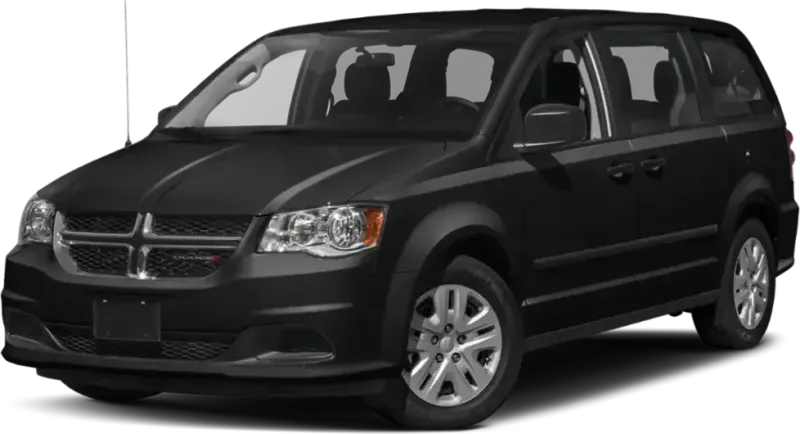
2020 Dodge Grand Caravan
Score: 83/100
See incorrect data? Report an issue