Last updated: 2026-10-10
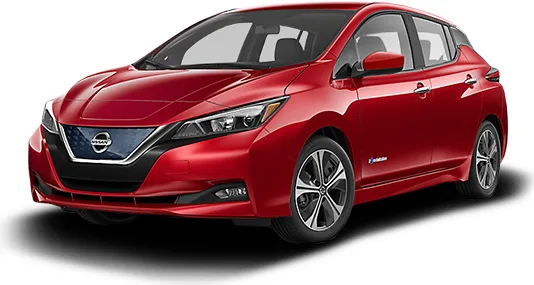
2025 Nissan Leaf Reliability Report
The 2025 Nissan Leaf stands good for reliability, but owners report serious electrical faults, including unintended acceleration.
Recalls
0
Complaints
7
Complaint Rate
13.7per 10,000 sold
Est. Repair Cost
$748
EV Range
149–212 mi
Detailed Score Breakdown
Component-weighted complaints normalized by sales volume
Independent repair cost ratings
Recall count weighted by severity
Breadth of reported problem categories
The Verdict
Last second-generation year and the strongest of the five scored Leaf years, with no recalls but three serious electrical complaints.
Top Issues to Watch
- ELECTRICAL SYSTEM (3)
- VEHICLE SPEED CONTROL (1)
- STRUCTURE (1)
Generation & Refresh (US)
2025 is the last model year of the Second generation (ZE1; 2017).
- Final-year models are typically the most refined version of a generation.
- 2 years after the last refresh (2023).
- 2nd generation Leaf (US).
What this means for buyers
Final-year models are usually the most polished version of a generation, but resale value may dip as buyers anticipate the next redesign.
2018: Second generation (ZE1; 2017) Launch
Generation start — new platform.
2023: Mid-Cycle Refresh
Updated features and styling tweaks.
2025: This Model Year
2025 is the last model year of the Second generation (ZE1; 2017).
Should You Buy the 2025 Nissan Leaf?
Reliability for this final second-generation Leaf is good. It sits close to average among 2025 sedans and ranks as the best of the five Leaf model years we score. Federal recall records show no recalls. One cost matters: independent repair-cost data puts yearly repairs for the Leaf at $748, against $471 for its class.
Owners filed 7 complaints, and three of them involve the electrical system. Those three are serious. One owner describes the car continuing to accelerate after lifting off the pedal, slowing only under braking, with the problem returning after a restart. Another saw a "Service EV" message, then an audible "Caution Fire" warning at 8,750 miles, and the cause had not been found. A third reports smoke filling the cabin during Level 3 charging, with occupants coughing.
Because no recall exists, a clean recall search proves little. Ask the seller for repair records covering the electrical system and charging. Ask whether any warning messages have appeared, and have a dealer look into any open concern before you buy.
See also the 2021 Nissan Leaf for an earlier comparison.
Pros
- +Acceptable reliability score
- +Infrequent unscheduled repairs
- +Low major repair risk (10%)
- +No recalls issued
Cons
- −Above-average repair costs for its class
- −Above-average complaint rate for Sedan
- −ELECTRICAL SYSTEM: Car keeps accelerating after the driver lifts off the pedal (3 complaints)
Compare 2025 Nissan Leaf With

Common Problem Categories
Other
HIGH RISK- ELECTRICAL SYSTEM (3)
- UNKNOWN OR OTHER (1)
Recall Overview
0
recalls on record
No recalls are on record for the 2025 Nissan Leaf — uncommon, and a strong signal of manufacturing quality.
NHTSA.gov →Complaint Breakdown
13.7
per 10,000 soldSegment avg: 2
Safety Incidents
0
Crashes
0
Fires
0
Injuries
0
Deaths
Data sourced from NHTSA complaint filings and manufacturer recall notices. Complaint narratives are owner-reported.
Buying a used 2025 Nissan Leaf? Check its history first
Electrical system problems lead owner complaints about the 2025 Nissan Leaf, and 0 recalls were issued for it. A VIN check shows whether this car's recall work was done, plus accident, title, and odometer history.
- Accidents
- Open Recalls
- Title History
- Odometer Rollback
2025 Nissan Leaf NHTSA Safety Ratings
Crash Test Results by Configuration (expand)
Gas Powertrain
Safety Technologies
Nissan LeafRepair Costs & Maintenance
Maintenance Rating
4Maintenance rating: 4 out of 5Based on NHTSA complaint patterns, recall severity, and publicly available cost benchmarks.
Est. Annual Maintenance
$748
vs $471 avg for alternative fuel vehicles
vs $652 avg for all vehicles
Repair Frequency
0.2
unscheduled repair visits per year
Severe Repair Probability
10%
chance of a major repair
Annual Cost Comparison
Category-level averages derived from publicly available industry reports (AAA, CarMD). Model-level estimates produced by Auto Reliability Index.
MPG & Annual Running Costs
Electric
149–212 mi range
Fuel cost: $700/yr
Fuel only
30.426–30.782 kWh/100mi · 8–11 hrs @ 240V
Based on EPA fuel-cost estimates. Excludes routine maintenance, depreciation, and insurance. Data as of 2025 EPA label cycle.
Electric trims
| Trim | Drive | Trans. | Range | kWh/100mi | Fuel Cost |
|---|---|---|---|---|---|
| LEAF | Front-Wheel Drive | Automatic (A1) | 149 mi | 30.4 | $700 |
| LEAF SV | Front-Wheel Drive | Automatic (A1) | 212 mi | 30.8 | $700 |
Used Buying Checklist
Key things to inspect or verify before purchasing a 2025 Nissan Leaf.
Drive in stop-and-go traffic and confirm the car slows down when you lift off the accelerator.
Turn the car off and restart it, then check again that it stops accelerating once you release the pedal.
Watch the dash at startup and while driving for a "Service EV" message or any fire caution warning.
Run a Level 3 charging session and check the cabin for visible smoke or a burning smell.
Ask for dealer records of any visits for Service EV warnings, fire warnings, or unintended acceleration, and what was repaired.
Run the VIN through federal recall records and confirm all open recalls have been completed.
2025 Nissan Leaf Common Problems by Component
7 owner complaints grouped by vehicle system.
ELECTRICAL SYSTEM
3 complaintsLeaf electrical problems across all model years
The car keeps accelerating after the driver lifts off the pedal. It slows only under braking, and the problem can come back after a restart. Other reports describe a "Service EV" message followed by an audible "Caution Fire" warning at 8,750 miles. Owners also report visible smoke filling the cabin during Level 3 charging, with occupants coughing. These failures carry serious risk. Unintended acceleration can lead to a crash, and the fire warning and the smoke while charging point to a possible fire hazard. In the fire-warning case, the cause had not yet been found.
UNKNOWN OR OTHER
1 complaintWhen the outside temperature is below freezing, the heater runs for about 10 minutes and then starts blowing nothing but cold air. This is not just an inconvenience and discomfort, but leads to distracted driving which could result in an accident. Lately the temperature has sometimes dipped below 0 degrees F, and the car is almost undrivable. This problem has been widely discussed on the Leaf owners' forum online and was just acknowledged by my service representative at Valley Nissan in Longmont, CO. There were no warning lamps or other indications of the problem before or after.
VEHICLE SPEED CONTROL
1 complaintWhile quickly shifting the car from drive to reverse the car will suddenly go full throttle in reverse with no pedal input. This is very easy to get it to do
STRUCTURE (1 complaints)
STRUCTURE
1 complaintDoor latch hits door striker
WHEELS (1 complaints)
WHEELS
1 complaintLeased new vehicle, after approximately 900-miles, started to hear knocking sounds during acceleration and deceleration. Checked wheel lug nuts and all were loose and passenger side wheel lock was missing. Torque spec at factory needs to be reviewed. Contacted the dealership, Tynan’s Nissan in Aurora, CO.
Best & Worst Nissan Leaf Years
Best Nissan Leaf Years to Buy
Based on reliability index scoreNissan Leaf Years to Avoid
Nissan Leaf Reliability Score Trend
Scores 0–100. Higher is better. Current year highlighted.
| Year | Score | Rating |
|---|---|---|
| 2018 | 67/100 | Good |
| 2019 | 58/100 | Mixed |
| 2020 | 58/100 | Mixed |
| 2021 | 70/100 | Good |
| 2025 | 79/100 | Good |
Nissan Leaf Reliability Compared to Other Years
Frequently Asked Questions
Is the 2025 Nissan Leaf reliable?
What are the most common problems with the 2025 Nissan Leaf?
Does the 2025 Nissan Leaf have unintended acceleration problems?
Has the 2025 Nissan Leaf been recalled?
How much does the 2025 Nissan Leaf cost to repair?
Don’t buy a 2025 Nissan Leaf without checking its VIN first — hidden accidents, title issues, and open recalls could cost you thousands.
How we score the 2025 Nissan Leaf
Of the four inputs behind this score, the 2025 Nissan Leaf does best on recall impact (100/100) and worst on complaint severity (69/100). Scores weight complaint severity at 35%, repair costs at 30%, recall impact at 20%, and the spread of complaints across systems at 15%, with complaint counts adjusted for US sales. Read the full methodology.
Get notified when new recalls or reliability data is added for the Nissan Leaf.
No spam. Only data updates for this model.
Browse More Nissan Models

Nissan Altima
Score: 88/100

Nissan Ariya
Score: 88/100

Nissan Armada
Score: 74/100

Nissan Frontier
Score: 77/100

Nissan Kicks
Score: 83/100

Nissan Maxima
Score: 77/100
Browse More 2025 Vehicles
2025 Nissan Ariya
Score: 88/100

2025 Honda HR-V
Score: 88/100

2025 Acura ZDX
Score: 88/100

2025 Kia Carnival
Score: 88/100

2025 Hyundai Elantra
Score: 87/100

2025 Toyota Corolla Cross
Score: 86/100
See incorrect data? Report an issue