Last updated: 2026-10-10
Nissan Leaf vs Subaru Legacy: Reliability Compared
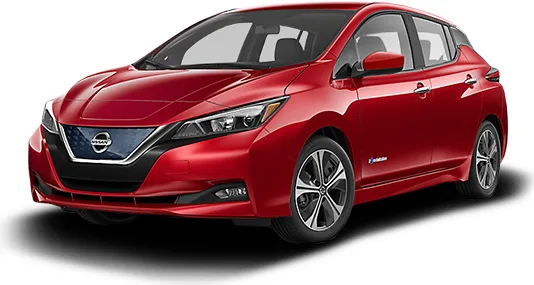
Nissan Leaf
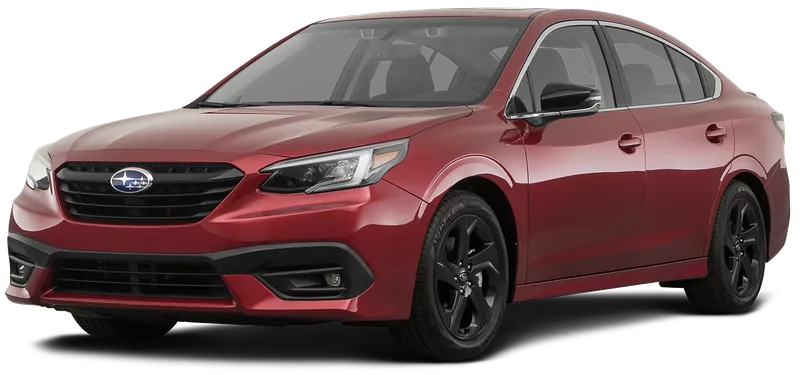
Subaru Legacy
The Subaru Legacy comes out clearly ahead of the Nissan Leaf on reliability, with far fewer owner complaints per car sold. Both cars stand as good, and both have 19 recalls. The Legacy also costs less each year to repair, though the Leaf visits the shop less often.
How Do the Nissan Leaf and Subaru Legacy Generations Compare?
Verdict
The Subaru Legacy is more reliable than the Nissan Leaf, scoring 75/100 vs 66/100.
Reliability favors the Subaru Legacy by a clear margin, though both cars stand as good. The deciding factors are the complaint rate and the repair bill. Leaf owners filed far more complaints per car sold, and independent repair-cost data puts the Leaf's yearly upkeep higher. The Leaf does go to the shop a little less often and has a slightly lower chance of a major repair, so the Legacy's edge comes from fewer reported problems and cheaper bills, not from fewer breakdowns. Recall totals are even.
Key Differences
- 1Subaru Legacy costs $185 less per year to repair
- 2Subaru Legacy has 40.4 fewer complaints per 10k sold
- 3Subaru Legacy scores 9 points higher in reliability
Category Scoreboard
Nissan Leaf vs Subaru Legacy: Which Is More Reliable?
| Metric | Nissan Leaf | Subaru Legacy |
|---|---|---|
| Reliability Score | 66/100 | 75/100 |
| Years Tracked | 5 | 8 |
| Total Recalls | 19 | 19 |
| Complaints per 10k Sold | 61.6 | 21.2 |
| Annual Repair Cost | $748/yr | $563/yr |
| Repair Frequency | 0.2/yr | 0.3/yr |
| Major Repair Risk | 10% | 12% |
| Year Wins | 0 | 5 |
What Are the Common Problems With the Nissan Leaf and Subaru Legacy?
Electrical and high-voltage battery trouble dominates the Leaf's complaints. Owners describe the car accelerating after they lift off the pedal, a "Caution Fire" warning, smoke during Level 3 charging, and the charge reading collapsing into "turtle mode" at highway speed. Phantom braking is the main brake complaint. Electrical and brake reports both include crash-linked cases. The Legacy's complaints lean toward windshields cracking with no impact, plus cabin water leaks and telematics failures. Its crash-linked reports are different: low-speed surges in parking spaces and driveways, and lurching forward from a stop. Those two areas carry the Legacy's crash links.
| Component | Nissan Leaf | Subaru Legacy |
|---|---|---|
| ELECTRICAL SYSTEM | 37.3High | 4.5Average |
| UNKNOWN OR OTHER | 6.5Average | 3.6Average |
| VISIBILITY/WIPER | 1.9Low | 6.5Average |
| FUEL/PROPULSION SYSTEM | 3.7Average | 0.3Very Low |
| POWER TRAIN | 3.5Average | 0.4Very Low |
| SERVICE BRAKES | 2Low | 0.2Very Low |
| VEHICLE SPEED CONTROL | 1.3Low | 0.5Very Low |
| AIR BAGS | 0.6Very Low | 0.4Very Low |
| VISIBILITY | —None | 0.9Very Low |
| STEERING | 0.6Very Low | 0.3Very Low |
| ENGINE | 0.3Very Low | 0.5Very Low |
| FORWARD COLLISION AVOIDANCE | 0.5Very Low | 0.2Very Low |
| STRUCTURE | 0.5Very Low | 0.1Very Low |
| SUSPENSION | 0.2Very Low | —None |
| BACK OVER PREVENTION | 0.2Very Low | —None |
| SEAT BELTS | 0.2Very Low | —None |
Complaints per 10,000 units sold, aggregated across all tracked model years from NHTSA owner reports.
Which Is Cheaper to Maintain: Nissan Leaf or Subaru Legacy?
How Does Nissan Leaf vs Subaru Legacy Reliability Compare by Year?
| Year | Nissan Leaf | Subaru Legacy | Edge |
|---|---|---|---|
| 2025 | 79/1000R / 7C | 80/1000R / 6C | Subaru Legacy |
| 2021 | 70/1004R / 51C | 75/1003R / 31C | Subaru Legacy |
| 2020 | 58/1006R / 159C | 67/1006R / 121C | Subaru Legacy |
| 2019 | 58/1005R / 251C | 69/1003R / 123C | Subaru Legacy |
| 2018 | 67/1004R / 64C | 70/1003R / 116C | Subaru Legacy |
Best years to cross-shop: The 2021 Nissan Leaf scored 70/100 and the 2021 Subaru Legacy scored 75/100 — the strongest shared model years that have been on the road for at least two years, where available.
Who Should Buy the Nissan Leaf vs the Subaru Legacy?
Nissan Leaf vs Subaru Legacy: Common Questions
- Is the Nissan Leaf more reliable than the Subaru Legacy?
- No. The Subaru Legacy has a clear edge. Both stand as good, but Leaf owners filed 61.6 complaints per 10,000 sold against 21.2 for the Legacy. The Leaf's complaints also include battery power loss and fire-related warnings. The Leaf does make fewer unscheduled shop visits.
- Which has more recalls, the Leaf or the Legacy?
- They are even at 19 recalls each. The spread differs. The Leaf's recalls fall across 5 model years, while the Legacy's fall across 8. That means the Leaf's recalls are packed into fewer years. Check any car's VIN for open recalls before buying.
- Which is cheaper to repair, the Leaf or the Legacy?
- The Legacy is cheaper. Independent repair-cost data estimates $563 a year for the Legacy and $748 for the Leaf, a gap of about $925 over five years. The Leaf has a lower chance of a major repair, at 10% against 12%, but its yearly costs still run higher.
- What goes wrong most often on the Subaru Legacy?
- Windshield cracks lead the complaints, often with no visible impact. Owners report cracks spreading into the driver's line of sight or blocking the EyeSight cameras. Replacement requires camera recalibration, which adds cost. Cabin water leaks and telematics unit failures come next.
- Are there safety concerns with the Nissan Leaf's battery?
- Yes. Owners have reported sudden charge drops, "turtle mode" power loss at highway speed, a "Caution Fire" warning, and smoke during Level 3 charging. Check recalls before buying, and test how the battery holds its charge on a highway drive.
Related Reliability Comparisons
More Nissan Leaf comparisons
Decided between Nissan Leaf and Subaru Legacy? Run a VIN check before you buy — uncover hidden accidents, title issues, and open recalls.
How we score the Nissan Leaf and Subaru Legacy
Scores weight complaint severity at 35%, repair costs at 30%, recall impact at 20%, and the spread of complaints across systems at 15%, with complaint counts adjusted for US sales. Read the full methodology.
See incorrect data? Report an issue