Last updated: 2026-10-10
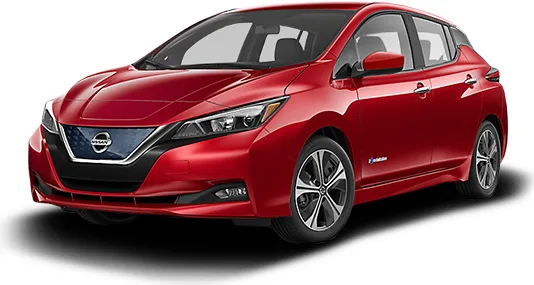
2019 Nissan Leaf Reliability Report
The 2019 Nissan Leaf has mixed reliability, well below other 2019 sedans, with owners reporting a fast-charging ban over battery fire risk.
Recalls
5
Complaints
251
Complaint Rate
203per 10,000 sold
Est. Repair Cost
$748
EV Range
150–226 mi
Detailed Score Breakdown
Component-weighted complaints normalized by sales volume
Independent repair cost ratings
Recall count weighted by severity
Breadth of reported problem categories
The Verdict
Middle of the Leaf pack, but owners report a long-running fast-charging ban over battery fire risk and far more complaints than the 2018.
Top Issues to Watch
- ELECTRICAL SYSTEM (162)
- FUEL/PROPULSION SYSTEM (17)
- POWER TRAIN (12)
Generation & Refresh (US)
2019 is year 2 of the Second generation (ZE1; 2017).
- Redesigned for the 2018 model year.
- A refresh arrives in 2023.
- 2nd generation Leaf (US).
What this means for buyers
Year 2 is typically a safer pick than the first model year — early issues are more likely to be identified, but the platform is still new.
If you're comparing prices, check 2018 (redesign year) vs 2019+ pricing and recalls.
2018: Second generation (ZE1; 2017) Launch
Generation start — new platform.
2019: This Model Year
2019 is year 2 of the Second generation (ZE1; 2017).
2023: Mid-Cycle Refresh
Updated features and styling tweaks.
Should You Buy the 2019 Nissan Leaf?
Buy with caution. This Leaf has mixed reliability, sits well below average among 2019 sedans, and lands in the middle of the five scored Leaf years. Owners filed 251 complaints. Independent repair-cost data puts yearly repairs at $748, against $471 for its class. The 2018 model rates better, and the 2020 rates about the same.
The battery and fast charging cause the most trouble. Many owners say they were told not to use the CHAdeMO quick-charge port because of a fire risk, then waited more than a year while dealers reported no parts or remedy. That limits trips to one charge of range. Others describe charge plunging suddenly into turtle mode, and one reports total battery failure at 130,000 miles. Backup cameras also go black, with some starting between 10,000 and 18,470 miles. Federal recall records list five recalls for this year.
Ask the seller for proof that every recall is done, including electrical and back over prevention work, and whether the fast-charge restriction still applies. Look at a 2018 first.
Compared to the 2020 Nissan Leaf, which scored the same. See also the 2018 Nissan Leaf for an earlier comparison.
Pros
- +Infrequent unscheduled repairs
- +Low major repair risk (10%)
Cons
- −Below-average reliability score
- −Above-average repair costs for its class
- −Moderate recall count
- −Above-average complaint rate for Sedan
Compare 2019 Nissan Leaf With

Common Problem Categories
Safety
LOW RISK- 5 manufacturer recalls issued
Other
HIGH RISK- ELECTRICAL SYSTEM (162)
- UNKNOWN OR OTHER (32)
Recall Overview
5
recalls on record
A moderate 5 recalls are on file for the 2019 Nissan Leaf. Each one points to a specific safety or compliance issue identified by the manufacturer or NHTSA — check the list below before buying.
NHTSA.gov →Complaint Breakdown
203
per 10,000 soldSegment avg: 19.1
Safety Incidents
4
Crashes
2
Fires
5
Injuries
0
Deaths
Data sourced from NHTSA complaint filings and manufacturer recall notices. Complaint narratives are owner-reported.
2019 Nissan Leaf Recall Details
5 recalls have been issued for the 2019 Nissan Leaf. All recall repairs are performed free of charge at authorized dealerships.
ELECTRICAL SYSTEM
Nissan North America, Inc. (Nissan) is recalling certain 2019-2020 LEAF vehicles equipped with a Level 3 quick charging port. The lithium-ion battery may overheat during Level 3 charging.
Consequence
A quick charging battery that overheats increases the risk of a fire.
Remedy
Dealers will update the battery software, free of charge. Owner letters were mailed June 3, 2026. This is a phased recall. Owners may contact Nissan Customer Service at 1-800-867-7669. Nissan's numbers for this recall are R24B2, P4A38, and P5A22.
VEHICLE SPEED CONTROL
Nissan North America, Inc. (Nissan) is recalling certain 2018-2023 LEAF vehicles. The vehicle may accelerate unintentionally if the driving mode is changed ("D" to "B"; e-Pedal "On"; or "ECO" mode) after disengaging the cruise control.
Consequence
Unintentional acceleration can increase the risk of a crash.
Remedy
Dealers will reprogram the vehicle control module (VCM), free of charge. Owner notification letters are expected to be mailed August 30, 2023. Owners may contact Nissan's customer service at 1-800-867-7669. Nissan's number for this recall is R23A6.
BACK OVER PREVENTION
Nissan North America, Inc. (Nissan) is recalling certain 2018-2022 LEAF vehicles. Damage to the camera harness can cause distortion or loss of the rearview camera display image. As such, these vehicles fail to comply with the requirements of Federal Motor Vehicle Safety Standard number 111, "Rear Visibility."
Consequence
A rearview camera that does not properly display an image can reduce the driver's rear view, increasing the risk of a crash.
Remedy
Dealers will inspect the rearview camera and harness for damage and replace them as necessary. If no damage is found, the dealer will apply protective tape and reroute the rearview camera harness. Repairs will be performed free of charge. Owner notification letters were mailed August 9, 2024. Owners may contact Nissan customer service at 1-800-867-7669. Nissan's number for this recall is R23D7.
Buying a used 2019 Nissan Leaf? Check its history first
Electrical system problems lead owner complaints about the 2019 Nissan Leaf, and 5 recalls were issued for it. A VIN check shows whether this car's recall work was done, plus accident, title, and odometer history.
- Accidents
- Open Recalls
- Title History
- Odometer Rollback
2019 Nissan Leaf NHTSA Safety Ratings
Crash Test Results by Configuration (expand)
Gas Powertrain
Rollover risk: 0.0%
Safety Technologies
Nissan LeafRepair Costs & Maintenance
Maintenance Rating
4Maintenance rating: 4 out of 5Based on NHTSA complaint patterns, recall severity, and publicly available cost benchmarks.
Est. Annual Maintenance
$748
vs $471 avg for alternative fuel vehicles
vs $652 avg for all vehicles
Repair Frequency
0.2
unscheduled repair visits per year
Severe Repair Probability
10%
chance of a major repair
Annual Cost Comparison
Category-level averages derived from publicly available industry reports (AAA, CarMD). Model-level estimates produced by Auto Reliability Index.
MPG & Annual Running Costs
Electric
150–226 mi range
Fuel cost: $700–$750/yr
Fuel only
30.182–32.283 kWh/100mi · 8–11 hrs @ 240V
Based on EPA fuel-cost estimates. Excludes routine maintenance, depreciation, and insurance. Data as of 2019 EPA label cycle.
Electric trims
| Trim | Drive | Trans. | Range | kWh/100mi | Fuel Cost |
|---|---|---|---|---|---|
| Leaf (40 kW-hr battery pack) | Front-Wheel Drive | Automatic (A1) | 150 mi | 30.2 | $700 |
| Leaf (62 kW-hr battery pack) | Front-Wheel Drive | Automatic (A1) | 226 mi | 31.0 | $700 |
| Leaf SV/SL (62 kW-hr battery pack) | Front-Wheel Drive | Automatic (A1) | 215 mi | 32.3 | $750 |
Used Buying Checklist
Key things to inspect or verify before purchasing a 2019 Nissan Leaf.
Run the VIN through federal recall records and confirm whether the fast-charge battery remedy is available and completed.
Make sure you can charge at home on Level 2, since owners report being told not to fast charge.
Ask a Nissan dealer to scan the battery for cell imbalance before you buy.
Drive a long highway climb and watch for battery charge dropping sharply, then recovering.
Shift into reverse several times and confirm the backup camera shows a live image every time.
On level ground, lift off the accelerator in e-pedal mode and confirm the car slows to a stop.
Run the wipers and defroster on high and confirm the windshield clears quickly.
Use navigation and the infotainment screen throughout the drive and watch for reboots or black screens.
2019 Nissan Leaf Common Problems by Component
251 owner complaints grouped by vehicle system.
ELECTRICAL SYSTEM
162 complaintsSafety-relatedLeaf electrical problems across all model years
Fast charging is off limits for most of these owners. They describe being told not to use the CHAdeMO quick-charge port because of a battery fire risk, then waiting more than a year while dealers report no parts or remedy. Trips are capped at one charge of range. Other reports describe charge suddenly plunging into reduced-power turtle mode, a total battery failure at 130,000 miles, infotainment reboots, and a grayed-out rear camera. One filing reports smoke under the car during a fast charge. Another describes a rear-end crash with the brake pedal pressed.
UNKNOWN OR OTHER
32 complaintsSafety-relatedMost of these filings again describe the long wait for a fix to the fast-charging battery fire risk, and some owners say they were never notified. Other failures are more varied. One report describes a power-reduced warning at low speed followed by smoke and a fire that engulfed the car. Others describe the car shutting off without warning, including at a red light, with dealers finding nothing wrong. Owners also report a range estimate that drops sharply after about 100 miles, and a backup camera that goes black or shows static.
FUEL/PROPULSION SYSTEM
17 complaintsThe fast-charging ban dominates this category. Owners say recall notices blame excess lithium deposits in some battery cells and promise a software fix whose date keeps slipping, leaving the car limited to trips within its single-charge range. Two reports describe real driving failures. In one, the battery's charge collapses in traffic right after the recall software service, raising a stalling risk. In the other, charge drops by tens of percentage points in moments on the highway in cold weather, followed by a pull-over warning.
POWER TRAIN (12 complaints)
POWER TRAIN
12 complaintsRapid swings in battery charge are the main driving failure here. One dealer diagnosed a cell imbalance across multiple cells after the reading jumped up and down while driving. Another report describes charge falling about 40% in a minute on long cold uphill climbs and recovering past the crest, getting worse each winter. Separate complaints describe an uncommanded full-throttle surge while rocking out of snow and a clunk when pulling away from a stop. Most remaining filings concern the delayed fast-charge battery remedy.
VISIBILITY/WIPER (10 complaints)
VISIBILITY/WIPER
10 complaintsBackup camera blackouts lead this category. The screen goes black or shows the previous image in reverse, often intermittently, so dealers cannot reproduce the fault. Several owners say their VIN is not covered by a camera recall. Wipers also stop working, with one dealer blaming a bent arm and refusing warranty coverage. Other complaints describe a defroster that will not clear a fogged windshield in traffic, a rear hatch window that shattered on a normal close, and climate settings hidden while using Android Auto.
SERVICE BRAKES (5 complaints)
SERVICE BRAKES
5 complaintsSafety-relatedSudden brake loss is the most serious report. Drivers describe a pedal with little or no resistance after an e-pedal disconnect or T/M system malfunction warning, sometimes with ABS and check engine lights. One driver had to use the emergency brake and crashed into a garage. Other complaints say the e-pedal fails to slow the car, letting it creep forward without throttle, or that stopping distances with the larger battery feel much longer. The electronic parking brake also may not engage automatically as the manual describes.
ENGINE (3 complaints)
ENGINE
3 complaintsPower cuts in extreme cold are the only driving failure reported here. In one case at about -10 degrees F, a cold-battery warning appeared and power dropped while the car was climbing a steep hill at about 50 mph. The other two complaints concern the fast-charge battery recall and Nissan's slow response. One owner who imported the car to Canada says it cannot pass a safety inspection or be registered while the recall stays open with no remedy.
BACK OVER PREVENTION (2 complaints)
BACK OVER PREVENTION
2 complaintsThe backup camera intermittently loses its picture, leaving a blank screen while reversing. Owners say the fault returns after a recall repair, and dealers cannot find it because it comes and goes. One owner paid for an earlier repair that did not solve it. Another reports a blank screen at about 10,000 miles and says the dealer could not do the recall repair because parts were unavailable. Losing the camera makes reversing harder in a car with limited rear visibility.
VEHICLE SPEED CONTROL (2 complaints)
VEHICLE SPEED CONTROL
2 complaintsSafety-relatedUnexpected speed changes cause both complaints. In one, the car lurches forward at low speed while entering a garage on a nearly empty battery, the brakes fail to stop it, and the crash causes an injury. In the other, charge falls from 80-90% to 10% in under 30 seconds at highway speed. Turtle mode then limits the car to about 40 mph in 55 mph traffic. The charge rebounds once stopped, but the power limit stays on.
SEAT BELTS (2 complaints)
SEAT BELTS
2 complaintsNo audible chime sounds when a front seat belt is unbuckled, according to both complaints. Dealers say the car is designed this way. One owner points to federal standards that call for an audible signal lasting four to eight seconds and a visual alert lasting at least one minute when the driver's belt is off. These filings describe a missing warning feature rather than a belt failure, and neither reports a crash or injury.
When Do 2019 Nissan Leaf Problems Start?
Based on owner complaint patterns, here's when common issues tend to appear.
Best & Worst Nissan Leaf Years
Best Nissan Leaf Years to Buy
Based on reliability index scoreNissan Leaf Years to Avoid
2020
2019
(Current Model)
Nissan Leaf Reliability Score Trend
Scores 0–100. Higher is better. Current year highlighted.
| Year | Score | Rating |
|---|---|---|
| 2018 | 67/100 | Good |
| 2019 | 58/100 | Mixed |
| 2020 | 58/100 | Mixed |
| 2021 | 70/100 | Good |
| 2025 | 79/100 | Good |
Nissan Leaf Reliability Compared to Other Years
Frequently Asked Questions
Is the 2019 Nissan Leaf reliable?
What are the most common problems with the 2019 Nissan Leaf?
Can you fast charge a 2019 Nissan Leaf?
Does the 2019 Nissan Leaf have backup camera problems?
Is the 2018 Nissan Leaf better than the 2019?
Don’t buy a 2019 Nissan Leaf without checking its VIN first — hidden accidents, title issues, and open recalls could cost you thousands.
How we score the 2019 Nissan Leaf
Of the four inputs behind this score, the 2019 Nissan Leaf does best on repair costs (80/100) and worst on complaint severity (26/100). Scores weight complaint severity at 35%, repair costs at 30%, recall impact at 20%, and the spread of complaints across systems at 15%, with complaint counts adjusted for US sales. Read the full methodology.
Get notified when new recalls or reliability data is added for the Nissan Leaf.
No spam. Only data updates for this model.
Browse More Nissan Models

Nissan Altima
Score: 88/100

Nissan Ariya
Score: 88/100

Nissan Armada
Score: 74/100

Nissan Frontier
Score: 77/100

Nissan Kicks
Score: 83/100

Nissan Maxima
Score: 77/100
Browse More 2019 Vehicles

2019 Lexus RX
Score: 82/100
2019 Nissan Frontier
Score: 80/100

2019 Kia Sedona
Score: 80/100

2019 Chevrolet Impala
Score: 79/100

2019 Lexus IS
Score: 79/100

2019 Lexus ES
Score: 78/100
See incorrect data? Report an issue