Last updated: 2026-10-10
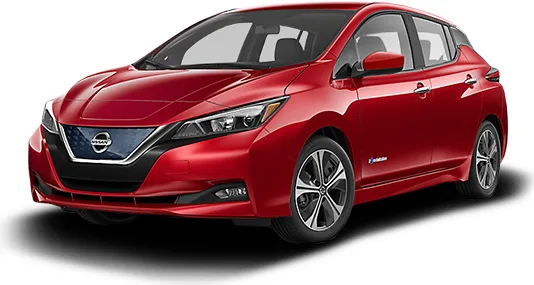
2018 Nissan Leaf Reliability Report
The 2018 Nissan Leaf has a good reliability standing, but owners report sudden loss of drive power and high-voltage battery failures.
Recalls
4
Complaints
64
Complaint Rate
43.5per 10,000 sold
Est. Repair Cost
$748
EV Range
151 mi
Detailed Score Breakdown
Component-weighted complaints normalized by sales volume
Independent repair cost ratings
Recall count weighted by severity
Breadth of reported problem categories
The Verdict
Middle of five scored Leaf years, with good standing but complaints of sudden power loss, phantom braking, and low-speed surging; the 2019 rates worse.
Top Issues to Watch
- ELECTRICAL SYSTEM (15)
- SERVICE BRAKES (12)
- VEHICLE SPEED CONTROL (9)
Generation & Refresh (US)
2018 is the first model year of the Second generation (ZE1; 2017).
- First-year models may have unresolved issues from the new design.
- Redesigned for the 2018 model year.
- Refreshed in 2023.
- 2nd generation Leaf (US).
What this means for buyers
First-year models carry more risk — early production issues are common. Consider waiting for the second year if reliability is a priority.
Compare 2018 pricing and recall counts against 2019+ before deciding.
2018: Second generation (ZE1; 2017) Launch
Generation start — new platform.
2023: Mid-Cycle Refresh
Updated features and styling tweaks.
Should You Buy the 2018 Nissan Leaf?
Reliability stands as good, and this Leaf lands close to average among 2018 sedans. It sits in the middle of the five scored Leaf years. The 2019 rates worse, with 251 complaints and 5 recalls against 64 and 4 here. Independent repair-cost data puts yearly repairs at $748 for the Leaf, well above $471 for its class.
The biggest complaint area is the electrical system. Owners describe the car suddenly losing drive power, dropping into neutral, and showing "Service EV System" or "Power supply failure", sometimes at freeway speed. High-voltage battery failure or drain shows up between 53,000 and 74,000 miles, and some replacement packs failed too. Brake complaints mostly describe phantom braking with no traffic around. Nine complaints cover unintended low-speed acceleration, four with crashes, often with e-Pedal on. Federal recall records list four recalls, covering back over prevention, vehicle speed control, and visibility equipment.
Ask for proof that every recall was completed and for any battery service or pack replacement records.
Compared to the 2019 Nissan Leaf, which scored 9 points lower.
Pros
- +Acceptable reliability score
- +Infrequent unscheduled repairs
- +Low major repair risk (10%)
Cons
- −Above-average repair costs for its class
- −Moderate recall count
- −Above-average complaint rate for Sedan
Compare 2018 Nissan Leaf With
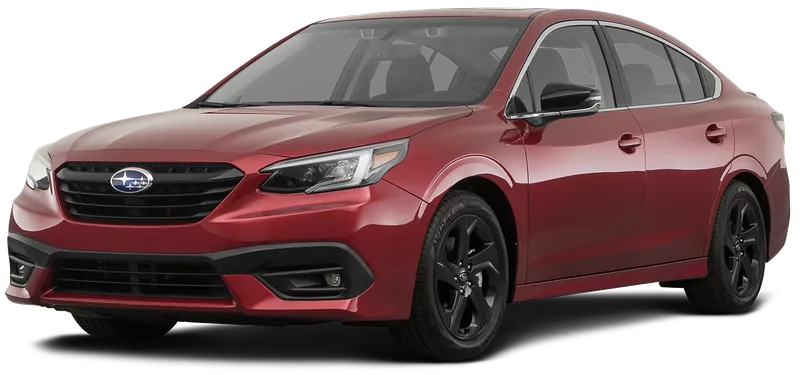
Common Problem Categories
Safety
LOW RISK- 4 manufacturer recalls issued
Other
HIGH RISK- ELECTRICAL SYSTEM (15)
- SERVICE BRAKES (12)
Recall Overview
4
recalls on record
A moderate 4 recalls are on file for the 2018 Nissan Leaf. Each one points to a specific safety or compliance issue identified by the manufacturer or NHTSA — check the list below before buying.
NHTSA.gov →Complaint Breakdown
43.5
per 10,000 soldSegment avg: 25.7
Safety Incidents
9
Crashes
1
Fires
3
Injuries
0
Deaths
Data sourced from NHTSA complaint filings and manufacturer recall notices. Complaint narratives are owner-reported.
2018 Nissan Leaf Recall Details
4 recalls have been issued for the 2018 Nissan Leaf. All recall repairs are performed free of charge at authorized dealerships.
BACK OVER PREVENTION
Nissan North America, Inc. (Nissan) is recalling certain 2018-2022 LEAF vehicles. Damage to the camera harness can cause distortion or loss of the rearview camera display image. As such, these vehicles fail to comply with the requirements of Federal Motor Vehicle Safety Standard number 111, "Rear Visibility."
Consequence
A rearview camera that does not properly display an image can reduce the driver's rear view, increasing the risk of a crash.
Remedy
Dealers will inspect the rearview camera and harness for damage and replace them as necessary. If no damage is found, the dealer will apply protective tape and reroute the rearview camera harness. Repairs will be performed free of charge. Owner notification letters were mailed August 9, 2024. Owners may contact Nissan customer service at 1-800-867-7669. Nissan's number for this recall is R23D7.
VEHICLE SPEED CONTROL
Nissan North America, Inc. (Nissan) is recalling certain 2018-2023 LEAF vehicles. The vehicle may accelerate unintentionally if the driving mode is changed ("D" to "B"; e-Pedal "On"; or "ECO" mode) after disengaging the cruise control.
Consequence
Unintentional acceleration can increase the risk of a crash.
Remedy
Dealers will reprogram the vehicle control module (VCM), free of charge. Owner notification letters are expected to be mailed August 30, 2023. Owners may contact Nissan's customer service at 1-800-867-7669. Nissan's number for this recall is R23A6.
EQUIPMENT, VISIBILITY
Nissan North America, Inc. (Nissan) is recalling certain 2018-2023 LEAF vehicles. The Owner's Manual instructions for defroster operation are incorrect, and may result in reduced defroster performance under specific conditions. As such, these vehicles fail to comply with the requirements of Federal Motor Vehicle Safety Standard number 103, "Windshield Defrosting and Defogging Systems."
Consequence
Reduced defroster performance can limit visibility out of the windshield, increasing the risk of a crash.
Remedy
Nissan will mail an addendum with updated instructions on how to operate the defroster, free of charge. Owner notification letters are expected to be mailed April 1, 2023. Owners may contact Nissan's customer service at 1-800-867-7669. Nissan's number for this recall is R22C5.
Buying a used 2018 Nissan Leaf? Check its history first
Electrical system problems lead owner complaints about the 2018 Nissan Leaf, and 4 recalls were issued for it. A VIN check shows whether this car's recall work was done, plus accident, title, and odometer history.
- Accidents
- Open Recalls
- Title History
- Odometer Rollback
2018 Nissan Leaf NHTSA Safety Ratings
Crash Test Results by Configuration (expand)
Gas Powertrain
Rollover risk: 0.0%
Safety Technologies
Nissan LeafRepair Costs & Maintenance
Maintenance Rating
4Maintenance rating: 4 out of 5Based on NHTSA complaint patterns, recall severity, and publicly available cost benchmarks.
Est. Annual Maintenance
$748
vs $471 avg for alternative fuel vehicles
vs $652 avg for all vehicles
Repair Frequency
0.2
unscheduled repair visits per year
Severe Repair Probability
10%
chance of a major repair
Annual Cost Comparison
Category-level averages derived from publicly available industry reports (AAA, CarMD). Model-level estimates produced by Auto Reliability Index.
MPG & Annual Running Costs
Electric
151 mi range
Fuel cost: $700/yr
Fuel only
30.001 kWh/100mi · 8 hrs @ 240V
Based on EPA fuel-cost estimates. Excludes routine maintenance, depreciation, and insurance. Data as of 2018 EPA label cycle.
Electric trims
| Trim | Drive | Trans. | Range | kWh/100mi | Fuel Cost |
|---|---|---|---|---|---|
| Leaf | Front-Wheel Drive | Automatic (A1) | 151 mi | 30.0 | $700 |
Used Buying Checklist
Key things to inspect or verify before purchasing a 2018 Nissan Leaf.
Ask for service records showing any high-voltage battery replacement, and get a dealer battery health report.
Drive up a grade at highway speed and watch for sudden charge drops, turtle mode, or a shift into neutral.
Test e-Pedal in a parking lot with full-lock turns and confirm the car slows and holds smoothly.
Drive at 30 to 65 mph on open roads and watch for false automatic braking.
Start the car and confirm no airbag, seatbelt, or emergency braking warning lights stay on.
Inspect the steering wheel rim for chipped paint or loose, sharp material.
Open and close the driver door several times and check for sagging or poor latching.
Look under the front of the car for rust on the subframe.
2018 Nissan Leaf Common Problems by Component
64 owner complaints grouped by vehicle system.
ELECTRICAL SYSTEM
15 complaintsSafety-relatedLeaf electrical problems across all model years
The car suddenly loses drive power. Warnings fill the dash, the car drops into neutral, and messages such as "Service EV System" or "Power supply failure" appear, sometimes at freeway speed. Other reports describe fast battery drain, erratic charge readings, bloated cells, and internal shorts in the high-voltage pack. Some of these failures happen in replacement packs. Cold weather can trigger limp mode or a no-start. One crash report describes losing brakes along with power. Less common faults include PTC heater and A/C compressor failure that disables defrost, plus a touchscreen that locks up.
SERVICE BRAKES
12 complaintsSafety-relatedMost reports describe phantom braking. The car brakes hard on its own with no traffic around, at speeds from about 30 mph up to highway speed, often with automatic emergency braking warnings on the dash. Other reports describe the opposite: braking that is missing or delayed. This happens with e-Pedal on, at a stop, during tight parking-lot turns, or over bumps, where the pedal drops and braking returns after a second or two. Two complaints involve crashes, including a car that crept forward at a light while the driver pressed the brake.
VEHICLE SPEED CONTROL
9 complaintsSafety-relatedThe main concern is unintended acceleration at low speed, and four of the nine complaints involve crashes. Drivers describe the car surging while parking or turning into a driveway, often with e-Pedal on, and not stopping despite hard braking. Cars ended up hitting a pole, a garage, a tree, and a structure. Other reports describe the car lunging with cruise control on, accelerating after the pedal is released, or coasting when e-Pedal regenerative braking fails to engage. A few mention flashing emergency braking warnings or collision avoidance that releases the brakes too early.
STEERING (5 complaints)
STEERING
5 complaintsTwo problems dominate. The steering wheel surface chips, warps, or comes loose, and two owners report cut fingers, one needing urgent care. ProPilot Assist complaints describe the car accelerating toward a stopped vehicle in stop-and-go traffic, or not detecting it at all, so the driver must brake to avoid a crash. A separate report cites an airbag fault light that comes back after dealer resets.
STRUCTURE (4 complaints)
STRUCTURE
4 complaintsThe most common complaint is a front driver door that sags and stops closing properly. Dealer adjustments to the striker or hinge do not last. One report describes a front subframe so rusted it failed inspection at 27,599 miles. Another describes B-pillar plastic door trim that looks melted by reflected sunlight, which the dealer refused to cover as a defect. None of these reports involve a crash or injury.
UNKNOWN OR OTHER (4 complaints)
UNKNOWN OR OTHER
4 complaintsSafety-relatedThese reports cover unrelated faults. A Power Distribution Module failure strands one car at 77k miles, with a quoted repair of $5k. When e-Pedal holds the car at a stop, the brake lights stay off, and one such report involves a crash with an injury. Shifting too soon after power-up can drop the car into neutral and let it roll the wrong way on a hill. The backup camera sometimes shows a black screen.
AIR BAGS (3 complaints)
AIR BAGS
3 complaintsSafety-relatedThe main pattern is faulty front passenger occupancy sensors. The seatbelt or airbag warning light stays on with the seat empty, and the passenger airbag status light can stay lit with someone seated. Dealer code clears fix it for only a month or two. One quote to replace two sensors came to $1800. In a separate crash report, the air bags did not deploy when the car was hit from behind and slid into a curb.
POWER TRAIN (3 complaints)
POWER TRAIN
3 complaintsSafety-relatedThe car shuts down or loses power, and the reports trace this to the high-voltage battery. Owners describe the car shutting off at highway speed while climbing, diagnostics showing bad cells in the main battery, and the charge falling from about 60% to 25% within seconds in cold weather. One fire-related report starts with a "Service EV System No Power" no-start at 29,862 miles. A thermal event involving the Power Distribution Module followed.
FORWARD COLLISION AVOIDANCE (2 complaints)
FORWARD COLLISION AVOIDANCE
2 complaintsA malfunction warning appears and automatic emergency braking stops working. Dealers trace it to a failed front radar or sensor, which also disables cruise control. One failure comes at around 25000 miles, and one repair quote is $1900. Neither complaint describes a crash. Both describe a system that has shut itself off and costs a lot to restore.
FUEL/PROPULSION SYSTEM (2 complaints)
FUEL/PROPULSION SYSTEM
2 complaintsAt highway speed, the battery charge reading collapses from half or full to nearly empty. The car tells the driver to pull over and may enter "turtle mode," which cuts power and can hold top speed below 20mph. In one report the car then shuts off completely, leaving the driver to coast without power brakes or steering. In another, the charge reading recovers after the car stops. One owner blames a weak cell in the high-voltage battery.
When Do 2018 Nissan Leaf Problems Start?
Based on owner complaint patterns, here's when common issues tend to appear.
Best & Worst Nissan Leaf Years
Best Nissan Leaf Years to Buy
Based on reliability index score2021
2018
(Current Model)
2020
Nissan Leaf Years to Avoid
Nissan Leaf Reliability Score Trend
Scores 0–100. Higher is better. Current year highlighted.
| Year | Score | Rating |
|---|---|---|
| 2018 | 67/100 | Good |
| 2019 | 58/100 | Mixed |
| 2020 | 58/100 | Mixed |
| 2021 | 70/100 | Good |
| 2025 | 79/100 | Good |
Nissan Leaf Reliability Compared to Other Years
Frequently Asked Questions
Is the 2018 Nissan Leaf reliable?
What are the most common problems with the 2018 Nissan Leaf?
Does the 2018 Nissan Leaf have battery problems?
Does the 2018 Nissan Leaf have unintended acceleration problems?
Is the 2018 Nissan Leaf more reliable than the 2019?
Don’t buy a 2018 Nissan Leaf without checking its VIN first — hidden accidents, title issues, and open recalls could cost you thousands.
How we score the 2018 Nissan Leaf
Of the four inputs behind this score, the 2018 Nissan Leaf does best on repair costs (80/100) and worst on complaint severity (47/100). Scores weight complaint severity at 35%, repair costs at 30%, recall impact at 20%, and the spread of complaints across systems at 15%, with complaint counts adjusted for US sales. Read the full methodology.
Get notified when new recalls or reliability data is added for the Nissan Leaf.
No spam. Only data updates for this model.
Browse More Nissan Models

Nissan Altima
Score: 88/100

Nissan Ariya
Score: 88/100

Nissan Armada
Score: 74/100
Nissan Frontier
Score: 77/100

Nissan Kicks
Score: 83/100

Nissan Maxima
Score: 77/100
Browse More 2018 Vehicles

2018 Lexus RX
Score: 85/100

2018 Nissan Murano
Score: 82/100

2018 Lexus IS
Score: 81/100

2018 Lexus ES
Score: 80/100
2018 Toyota Corolla
Score: 80/100
2018 Buick Encore
Score: 80/100
See incorrect data? Report an issue