Last updated: 2026-10-10
Kia EV6 vs Mazda CX-50: Reliability Compared
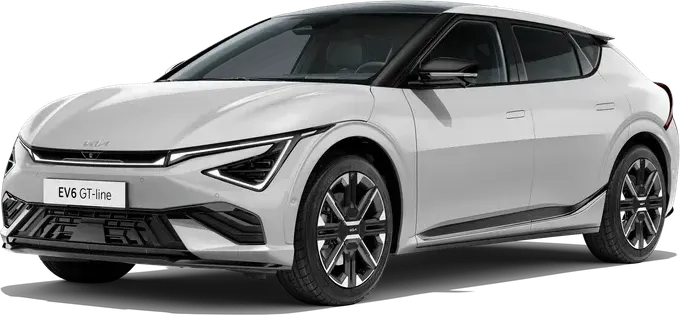
Kia EV6
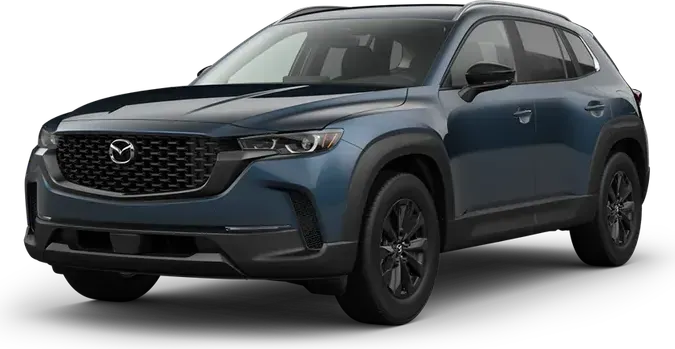
Mazda CX-50
Reliability favors the Mazda CX-50 by a wide margin over the KIA EV6. EV6 owners report cars losing drive power without warning, and nothing similar shows up for the CX-50. Federal recall records list 8 recalls for the EV6 and 6 for the CX-50.
How Do the Kia EV6 and Mazda CX-50 Generations Compare?
Verdict
The Mazda CX-50 is more reliable than the Kia EV6, scoring 70/100 vs 57/100.
Reliability favors the CX-50, and the gap is large. The deciding issue is the EV6's loss of drive power, which owners mostly trace to the integrated charge control unit. The car can drop into a slow turtle mode and then shut down, and some failures repeat after recall updates or replacement. The CX-50 draws far fewer complaints per car sold, and none of its power train reports describe losing drive power. Its serious reports, such as false automatic braking and ball joint failures, are scattered rather than a pattern across the car.
Key Differences
- 1Mazda CX-50 has 21.5 fewer complaints per 10k sold
- 2Mazda CX-50 scores 13 points higher in reliability
- 3Mazda CX-50 has 2 fewer total recalls
Category Scoreboard
Kia EV6 vs Mazda CX-50: Which Is More Reliable?
| Metric | Kia EV6 | Mazda CX-50 |
|---|---|---|
| Reliability Score | 57/100 | 70/100 |
| Years Tracked | 5 | 4 |
| Total Recalls | 8 | 6 |
| Complaints per 10k Sold | 48.9 | 27.4 |
| Safety RatingNHTSA overall | 2026 NHTSA | 2026 NHTSA |
| Frontal | ||
| Side | ||
| Rollover | ||
| Year Wins | 1 | 3 |
What Are the Common Problems With the Kia EV6 and Mazda CX-50?
One failure dominates the EV6 complaints. Most electrical and power train reports describe the same event: a pop, a warning message, speed capped near 25 mph, then a dead car. Brake lights that stay off during hard i-Pedal slowing and shattering sunroof glass add to the list. The CX-50's complaints spread across brakes, structure, electrical and suspension. Its worst reports are false emergency braking, dead batteries that lock owners out, and front ball joints that pull out of the control arm. Both models have crash-linked brake and electrical complaints. Only the EV6 has a crash-linked power train complaint. Only the CX-50 lists a crash-linked suspension complaint.
| Component | Kia EV6 | Mazda CX-50 |
|---|---|---|
| ELECTRICAL SYSTEM | 28.4High | 2.3Low |
| POWER TRAIN | 7.8Above Avg | 2.9Low |
| SERVICE BRAKES | 1.8Low | 3.1Average |
| UNKNOWN OR OTHER | 3.3Average | 1.4Low |
| STRUCTURE | 1Very Low | 2.9Low |
| STEERING | 0.3Very Low | 2Low |
| FORWARD COLLISION AVOIDANCE | 0.3Very Low | 1.7Low |
| SUSPENSION | —None | 2Low |
| SEATS | —None | 1.1Low |
| LANE DEPARTURE | 0.4Very Low | 0.6Very Low |
| AIR BAGS | 0.4Very Low | 0.6Very Low |
| EXTERIOR LIGHTING | 0.8Very Low | —None |
| VEHICLE SPEED CONTROL | 0.6Very Low | —None |
| FUEL/PROPULSION SYSTEM | 0.6Very Low | —None |
| VISIBILITY/WIPER | —None | 0.6Very Low |
| WHEELS | —None | 0.6Very Low |
| TIRES | 0.4Very Low | —None |
| ENGINE | 0.4Very Low | —None |
Complaints per 10,000 units sold, aggregated across all tracked model years from NHTSA owner reports.
How Does Kia EV6 vs Mazda CX-50 Reliability Compare by Year?
| Year | Kia EV6 | Mazda CX-50 | Edge |
|---|---|---|---|
| 2026 | 58/1000R / 0C | 76/1000R / 0C | Mazda CX-50 |
| 2025 | 69/1000R / 0C | 66/1003R / 21C | Kia EV6 |
| 2024 | 59/1002R / 38C | 71/1001R / 26C | Mazda CX-50 |
| 2023 | 52/1003R / 98C | 65/1002R / 49C | Mazda CX-50 |
Best years to cross-shop: The 2024 Kia EV6 scored 59/100 and the 2024 Mazda CX-50 scored 71/100 — the strongest shared model years that have been on the road for at least two years, where available.
Who Should Buy the Kia EV6 vs the Mazda CX-50?
Kia EV6 vs Mazda CX-50: Common Questions
- Is the KIA EV6 more reliable than the Mazda CX-50?
- No. The CX-50 comes out well ahead. EV6 owners filed 351 complaints, or 48.9 per 10,000 sold, against 96 for the CX-50 at 27.4. The EV6's biggest problem is sudden loss of power, usually traced to the ICCU. The CX-50's power train reports do not describe that.
- Which has more recalls, the EV6 or the CX-50?
- The EV6 has more. Federal recall records show 8 recalls across its five model years, compared with 6 across four for the CX-50. The difference is small. The bigger gap is in owner complaints, where the EV6 is far higher per car sold.
- What goes wrong with the KIA EV6?
- The main failure is a loss of drive power, which owners mostly trace to the integrated charge control unit. A pop and a warning message come first, then speed drops to about 25 mph and the car dies. Some owners report repeat failures, 12V battery deaths and waits of weeks for parts.
- What are the worst problems reported on the Mazda CX-50?
- The most serious are false automatic emergency braking and front suspension failures. One owner saw the car drop from 70 to 35 mph on a snowy highway. Several reports describe ball joints and control arms failing, with one wheel nearly separating. Both areas have a crash-linked complaint.
- Which model years should I avoid for each?
- For the EV6, avoid 2022 and 2023, the weakest years. For the CX-50, avoid 2023 and 2025. The 2024 model year is among the strongest for both. The 2026 model year has had little time to collect complaints, so do not treat it as proven.
Related Reliability Comparisons
More Kia EV6 comparisons
Decided between Kia EV6 and Mazda CX-50? Run a VIN check before you buy — uncover hidden accidents, title issues, and open recalls.
How we score the Kia EV6 and Mazda CX-50
Scores weight complaint severity at 35%, repair costs at 30%, recall impact at 20%, and the spread of complaints across systems at 15%, with complaint counts adjusted for US sales. Read the full methodology.
See incorrect data? Report an issue