Last updated: 2026-11-19
Brakes, steering & tires
Hyundai Tucson Brake Problems
Hyundai Tucson brake complaints center on sudden automatic braking, pedals that fail to stop the car, and long waits for a recall fix.
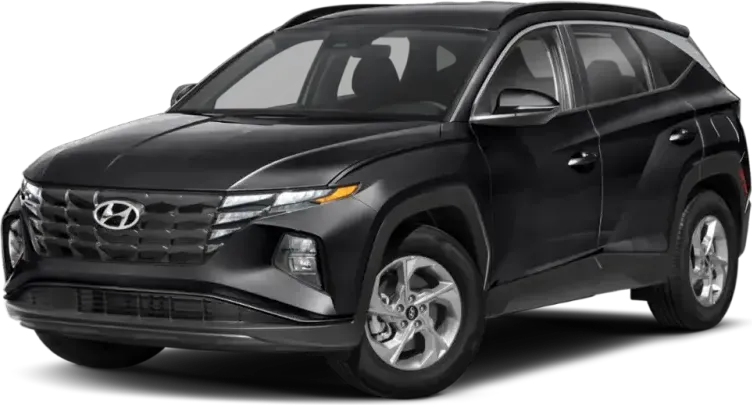
- Owner complaints
- 336
- Share of all complaints
- 14%
- Crash / fire / injury reports
- 37 / 5 / 19
- Related recalls
- 1
Hyundai Tucson brake complaints by model year
The 2019 model year leads, with 115 complaints and the highest rate per 10,000 sold, driven largely by recall repair delays. The 2018, 2020, 2022 and 2025 years sit in the middle, with roughly 35 to 41 complaints each. The 2021 and 2023 years have the fewest among older cars, at 13 and 16. The 2026 year has 16 complaints, but it is new and has had little time to collect filings, so its count says little. The 2025 and 2024 years are also still early.
| Model year | Complaints | Per 10,000 sold | Crash, fire, injury reports |
|---|---|---|---|
| 2018 | 40 | 2.6 | 4, 0, 3 |
| 2019 | 115 | 8.4 | 6, 3, 3 |
| 2020 | 41 | 3.3 | 0, 1, 1 |
| 2021 | 13 | 0.9 | 0, 0, 0 |
| 2022 | 35 | 2 | 9, 1, 2 |
| 2023 | 16 | 0.8 | 2, 0, 0 |
| 2024 | 21 | 1 | 5, 0, 2 |
| 2025 | 39 | 1.7 | 4, 0, 3 |
| 2026 | 16 | n/a | 7, 0, 5 |
Owner complaints filed with NHTSA under service brakes, parking brake. Newer model years have had less time to collect complaints.
What goes wrong
Brake complaints make up about one in seven of all Tucson filings, 336 in total. The pattern changes with the model year. Older cars draw reports of a pedal that sinks toward the floor, a car that will not stop at parking speeds, and long waits for a recall repair. Newer cars draw reports of automatic emergency braking that slams on with nothing ahead. Warped front rotors that shake the car under braking show up across several years, and some owners say the shake returned after replacement.
The risk is real. Crash reports appear in most model years, many of them rear-end impacts after unprompted braking, or low-speed crashes where the car would not stop. Injuries include a concussion and broken ribs. Fires are reported in the 2019, 2020 and 2022 model years. Some cars were towed or declared a total loss. Dealers often cannot reproduce the fault, so a clean shop visit does not rule it out.
Symptoms owners report
Sudden automatic braking
The car brakes hard on its own with no obstacle ahead, at parking speeds or in highway traffic. Several owners were rear-ended, and some say it continued with the warning timing set to Late. Afterward the car may refuse to accelerate briefly. Reports run from 2022 through 2026.
Pedal sinks or fails to stop
Owners describe a pedal that goes to the floor, or a car that does not slow when the brake is pressed firmly. Some say no warning light came on. One 2026 owner reports about a 10 second delay before the brakes engaged. These reports include crashes and injuries.
Surge forward with brake applied
At parking speeds, the car lunges forward while the driver presses the pedal. Crashes into a storefront, a building and roadside poles are reported in the 2022, 2023 and 2025 years. One owner says it happened three times. Dealers often cannot duplicate it.
Warped rotors and shaking
Front rotors warp and the car shakes or pulses under braking, especially at higher speeds or downhill. Owners in the 2022 through 2025 years describe repeated replacement or resurfacing, and one 2024 report says the shake returned after warranty replacement.
Recall waits and ABS faults
For 2018 through 2021 cars, many filings are about waiting months for a recall repair because parts were on back order. Owners say dealers told them to park outside. Other reports describe ABS warning lights with no clear cause, and one traced to a rear wheel sensor.
Car moves while in Park
A few owners report the car rolling or creeping in Park. One 2023 owner says it rolled with the parking brake set. A 2018 report describes a car coming out of Park in a driveway and injuring the driver. A 2026 owner reports two incidents in three days.
When the problems start
Owners rarely tie these problems to a single mileage, and some reports start very early. Sudden braking in the 2026 year is reported as early as 700 miles. Rotor shaking appears between about 7,209 and 11,007 miles in the 2024 year, and near 12,200 miles in the 2025 year. Other reports cite 18,000 miles, 60,000 miles for a worn tone ring, 69,000 miles for a surge with the pedal pressed, and 76,000 miles for rotors.
Repairs and recalls
Federal recall 20V543000 covers the anti-lock brake control unit (HECU), which could corrode internally. The remedy is a replacement HECU fuse, plus an ESC software update for 2019 through 2021 cars. Owners say parts were on back order for weeks or months. Beyond the recall, reported fixes include rotor replacement or resurfacing, a new master cylinder, a front tone ring and a rear wheel sensor. Owners often say dealers could not reproduce braking faults. Independent repair-cost data puts the model's overall annual repair cost at $426, with no brake-specific figure.
Checking a used Tucson for brake problems
- Run the VIN through federal recall records and confirm recall 20V543000 was completed on any 2018 through 2021 car, including the software update on 2019 through 2021.
- Ask for service records showing brake work. Repeated rotor replacement or resurfacing suggests the shake may return.
- On a test drive, brake firmly from highway speed and feel for steering wheel shake or pedal pulsation.
- Check that the pedal feels firm and holds steady at a stop, and that no ABS or brake warning light stays on.
- Set the parking brake on an incline and confirm the car holds in Park without creeping.
- On a 2022 or newer car, ask the seller whether the car ever braked hard on its own, and test drive in traffic.
For the rest of the car, use a full Hyundai Tucson inspection checklist.
1 brake recall cover the Hyundai Tucson. A VIN check shows whether the car you're looking at had its recall work done, plus accident and title history.
Hyundai Tucson Brake Problems: common questions
- Which Hyundai Tucson years have the most brake problems?
- The 2019 model year has the most complaints by a wide margin, at 115, and the highest rate per 10,000 sold. The 2018, 2020, 2022 and 2025 years follow with about 35 to 41 each. The 2026 year is too new for its count to mean much.
- Is it safe to drive a Tucson with brake problems?
- Not if the symptom is a sinking pedal, a car that will not stop, or a surge with the brake pressed. These appear in crash and injury reports. Dealers often cannot reproduce them, so get a written diagnosis and avoid driving until the car is checked.
- Does a recall cover Tucson brake problems?
- Federal recall 20V543000 covers the anti-lock brake control unit (HECU) in 2019 through 2021 Tucsons, expanded to certain 2016 through 2018 models. It does not address warped rotors or other complaints here. Check your VIN to see whether the repair is open or done.
- How much does it cost to fix Tucson brake problems?
- The data has no brake-specific repair cost. Independent repair-cost data puts the model's overall annual repair cost at $426. Recall repairs under 20V543000 are performed through dealers under the recall remedy. Rotor or master cylinder work is a separate repair.
- Why does my Tucson brake suddenly with nothing ahead?
- Owners with 2022 through 2026 cars describe automatic emergency braking engaging with no obstacle, at parking speeds and on highways. Some say it continued with the warning timing set to Late. Dealers often cannot duplicate it, so document each event and report it to the dealer.
Other Hyundai Tucson problems
Engine & powertrain
Electrical & lighting
Driver-assist tech
More on the Hyundai Tucson
See incorrect data? Report an issue