Last updated: 2026-10-10
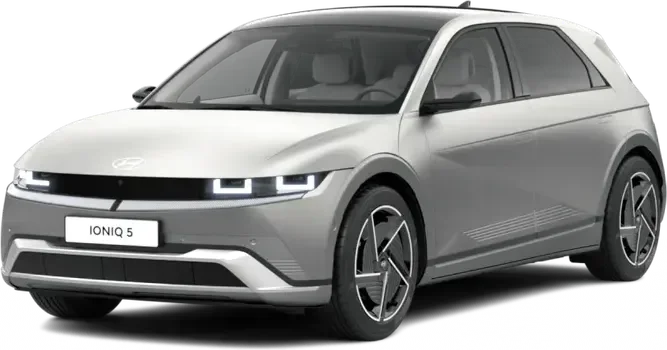
2024 Hyundai Ioniq 5 Reliability Report
The 2024 Hyundai Ioniq 5 has mixed reliability, with sudden power loss from a failed charging control unit as the main owner complaint.
Recalls
2
Complaints
134
Complaint Rate
30.2per 10,000 sold
Est. Repair Cost
N/A
EV Range
220–303 mi
Detailed Score Breakdown
Component-weighted complaints normalized by sales volume
Independent repair cost ratings
Recall count weighted by severity
Breadth of reported problem categories
The Verdict
The facelift year, among the stronger Ioniq 5 years, but still marked by sudden power loss and two electrical recalls.
Top Issues to Watch
- ELECTRICAL SYSTEM (86)
- POWER TRAIN (25)
- SERVICE BRAKES (4)
Generation & Refresh (US)
2024 received a 2024 facelift update for the First generation (NE).
- Changes: Updated infotainment system; Larger battery pack (84 kWh); Added rear hatch windscreen wiper; Minor improvements to power efficiency and aerodynamics; N-Line variant added.
- Year 3 in this generation (2022–2024).
- 1st generation Ioniq 5 (US).
What this means for buyers
Refresh years bring updates but can also introduce new issues. Check early recall data before buying.
2022: First generation (NE) Launch
Generation start — new platform.
2024: This Model Year (Refresh)
2024 received a 2024 facelift update for the First generation (NE).
Should You Buy the 2024 Hyundai Ioniq 5?
Buy with caution. This model year has mixed reliability and sits well below average among 2024 SUVs. Within the Ioniq 5 lineup it is among the stronger of the five years, and both the 2023 and 2025 model years rate worse. It does earn 5 of 5 stars in federal crash tests.
The main problem is sudden loss of drive power. Owners describe a loud pop, then a warning to check the electrical system or that power is limited. Speed drops to about 20 mph, and the car can die in traffic. Dealers usually trace it to a failed Integrated Charging Control Unit. Trouble shows up from about 5,034 to 16,000 miles, and some owners report failures after the recall software fix. Replacement parts are often back-ordered for weeks. Federal recall records list 2 recalls, both for the electrical system. Four owners also report the brake pedal failing at low speed, two of them with crashes.
Ask the seller for proof that every recall was completed and for any records of charging unit or 12-volt battery repairs.
Compared to the 2025 Hyundai Ioniq 5, which scored 5 points lower. See also the 2023 Hyundai Ioniq 5 for an earlier comparison.
Pros
- +Low recall count
- +5-star NHTSA crash rating
Cons
- −Below-average reliability score
- −Above-average complaint rate for SUV
- −ELECTRICAL SYSTEM complaints dominate (64%)
- −ELECTRICAL SYSTEM: Car suddenly loses drive power, and dealers usually trace it to a failed... (86 complaints)
Compare 2024 Hyundai Ioniq 5 With
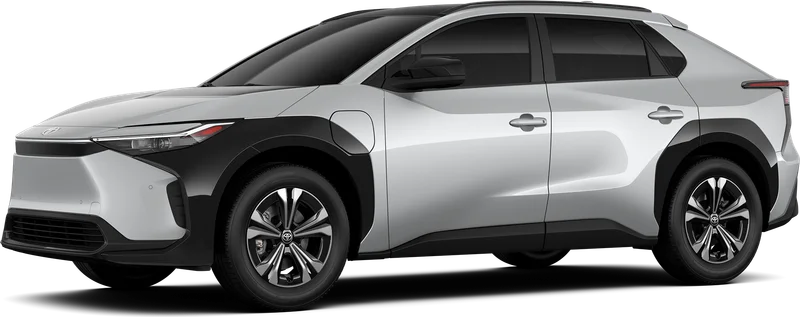
2024 Toyota bZ4X
Reliability: 75/100
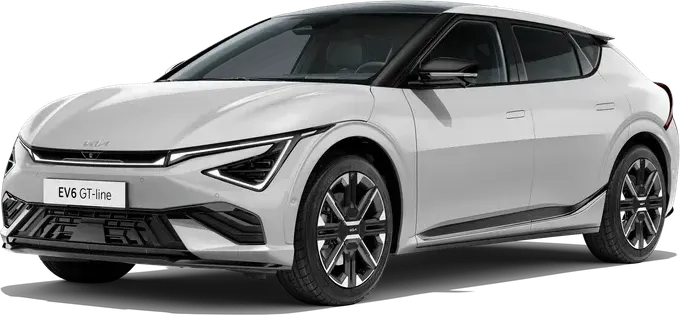
2024 Kia EV6
Reliability: 59/100

2024 Tesla Model Y
Reliability: 63/100
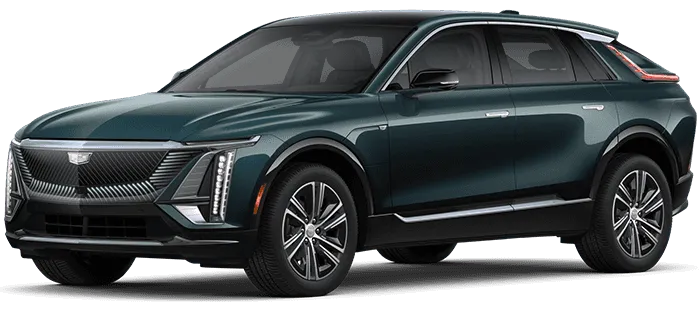
2024 Cadillac Lyriq
Reliability: 64/100
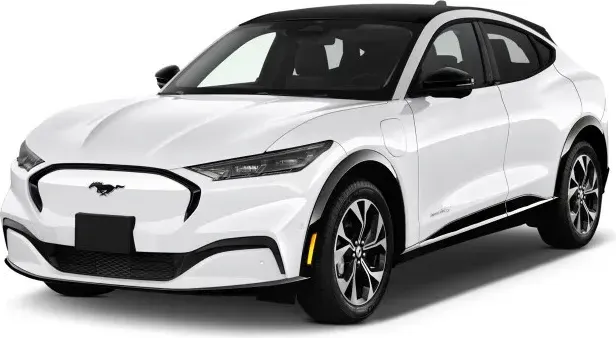
2024 Ford Mustang Mach-E
Reliability: 74/100
Common Problem Categories
Safety
LOW RISK- 2 manufacturer recalls issued
Other
HIGH RISK- ELECTRICAL SYSTEM (86)
- POWER TRAIN (25)
Recall Overview
2
recalls on record
The 2024 Hyundai Ioniq 5 carries 2 recalls — a low count. Authorized dealers repair any open recall free of charge, regardless of warranty status.
NHTSA.gov →Complaint Breakdown
30.2
per 10,000 soldSegment avg: 6.9
Safety Incidents
4
Crashes
0
Fires
0
Injuries
0
Deaths
NHTSA 5/5 Stars
Data sourced from NHTSA complaint filings and manufacturer recall notices. Complaint narratives are owner-reported.
2024 Hyundai Ioniq 5 Recall Details
2 recalls have been issued for the 2024 Hyundai Ioniq 5. All recall repairs are performed free of charge at authorized dealerships.
ELECTRICAL SYSTEM
Hyundai Motor America (Hyundai) is recalling certain 2022-2024 IONIQ 5, 2023-2025 IONIQ 6, Genesis GV60, Genesis GV70 "Electrified," and Genesis G80 "Electrified" vehicles. The Integrated Charging Control Unit (ICCU) may become damaged and stop charging the 12-volt battery, which can result in a loss of drive power.
Consequence
A loss of drive power increases the risk of a crash.
Remedy
Dealers will inspect and replace the ICCU and its fuse, as necessary. In addition, dealers will update the ICCU software. All repairs will be performed free of charge. Owner notification letters were mailed December 20, 2024. Owners may contact Hyundai customer service at 1-855-371-9460 or Genesis customer service at 1-844-340-9741. Hyundai's numbers for this recall are 272 (Hyundai) and 025G (Genesis). This recall expands and replaces previous recall number 24V-204. Vehicles previously repaired under recall 24V-204 will need to have the new remedy completed.
ELECTRICAL SYSTEM
Hyundai Motor America (Hyundai) is recalling certain 2022-2024 IONIQ 5, 2023-2024 IONIQ 6, Genesis GV60, Genesis GV70 "Electrified," and Genesis G80 "Electrified" vehicles. The Integrated Charging Control Unit (ICCU) may become damaged and stop charging the 12-Volt battery, which can result in a loss of drive power.
Consequence
A loss of drive power increases the risk of a crash.
Remedy
This recall is replaced by NHTSA recall number 24V-868. Vehicles already repaired under this recall will need to have the new remedy completed. Dealers will inspect and replace the ICCU and its fuse, as necessary. In addition, dealers will update the ICCU software. All repairs will be performed free of charge. Owner notification letters were mailed April 22, 2024. Owners may contact Hyundai customer service at 1-855-371-9460. Hyundai's number for this recall is 257/021G.
Buying a used 2024 Hyundai Ioniq 5? Check its history first
Electrical system problems lead owner complaints about the 2024 Hyundai Ioniq 5, and 2 recalls were issued for it. A VIN check shows whether this car's recall work was done, plus accident, title, and odometer history.
- Accidents
- Open Recalls
- Title History
- Odometer Rollback
2024 Hyundai Ioniq 5 NHTSA Safety Ratings
Overall Safety Rating
Crash Test Results by Configuration (expand)
Gas Powertrain
Rollover risk: 8.4%
Safety Technologies
Hyundai Ioniq 5Repair Costs & Maintenance
Maintenance Rating
2Maintenance rating: 2 out of 5Based on NHTSA complaint patterns, recall severity, and publicly available cost benchmarks.
Category-level averages derived from publicly available industry reports (AAA, CarMD). Model-level estimates produced by Auto Reliability Index.
2024 Hyundai Ioniq 5 Example Repair Prices
National average price ranges for common repairs. These are not model-year-specific failure predictions.
| Repair | Estimated Cost |
|---|---|
| Tire Pressure Monitor Lamp Diagnosis | $98 – $143 |
| General Diagnosis | $122 – $179 |
| Noise Diagnosis | $122 – $179 |
| Vibration Diagnosis | $122 – $179 |
| No Start Diagnosis | $122 – $179 |
| Pre-Purchase Car Inspection | $183 – $269 |
| Engine Oil Light Diagnosis | $122 – $179 |
| Check Engine Light Diagnosis & Testing | $122 – $179 |
| AC Diagnosis | $122 – $179 |
| Air Conditioning System Leak Inspection | $122 – $179 |
Estimates based on national average repair costs. Actual costs may vary by location and shop.
MPG & Annual Running Costs
Electric
220–303 mi range
Fuel cost: $700–$750/yr
Fuel only
30–34.021 kWh/100mi · 6.3–8.5 hrs @ 240V
Based on EPA fuel-cost estimates. Excludes routine maintenance, depreciation, and insurance. Data as of 2024 EPA label cycle.
Electric trims
| Trim | Drive | Trans. | Range | kWh/100mi | Fuel Cost |
|---|---|---|---|---|---|
| Ioniq 5 Long range RWD | Rear-Wheel Drive | Automatic (A1) | 303 mi | 30.0 | $700 |
| Ioniq 5 Standard range RWD | Rear-Wheel Drive | Automatic (A1) | 220 mi | 31.0 | $700 |
| Ioniq 5 Long range AWD | All-Wheel Drive | Automatic (A1) | 260 mi | 34.0 | $750 |
Used Buying Checklist
Key things to inspect or verify before purchasing a 2024 Hyundai Ioniq 5.
Have a Hyundai dealer confirm all ICCU recall work, including recall 272, is complete on this VIN.
Ask for service records showing any ICCU or 12-volt battery replacement, tow-in, or power-loss repair.
Plug into a Level 2 charger and a fast charger to confirm the car charges on both.
With your foot on the brake, start the car and shift into Drive. Confirm it holds firmly without creeping.
Spray water on the rear glass and backup camera, then check how much you can see out the back.
Remove the cabin air filter and check it for washer fluid or a chemical smell.
Back out of a driveway as traffic passes and note whether the car brakes itself without reason.
Use lane-keeping assist on a highway with right-hand curves and watch for drift into the left lane.
2024 Hyundai Ioniq 5 Common Problems by Component
134 owner complaints grouped by vehicle system.
ELECTRICAL SYSTEM
86 complaintsSafety-relatedIoniq 5 electrical problems across all model years
The car suddenly loses drive power, and dealers usually trace it to a failed Integrated Charging Control Unit (ICCU). Drivers hear a loud pop, then get warnings to check the electrical system or that power is limited. Speed drops to around 20 mph before the car dies, often in traffic. The 12-volt battery sometimes fails with it. Many failures come before 16,000 miles, some after the recall software fix. Replacement parts are often back-ordered for weeks. Two crash reports describe the car not stopping when the brake was pressed, one with a surge of acceleration.
POWER TRAIN
25 complaintsThe car shuts down completely while driving, and these reports again blame ICCU failure. Often a loud pop comes first. Then a warning says to stop the vehicle and check the power supply, or a low 12-volt battery alert appears. The car drops into limp mode at 25 to 30 mph and can then lose all power, including lights, door locks, and the ability to shift into Park. Several failures happen after all recall updates were done. Failures cluster around 11,000 to 12,000 miles, and replacement parts are back-ordered.
UNKNOWN OR OTHER
5 complaintsMost of these reports repeat the ICCU problem: power loss, warnings to stop and check the power supply, no fast charging, and replacement parts back-ordered for a month. The rest are scattered. A horn fails again and again, possibly because water gets inside. Another car throws random warnings for brakes, lane departure, and battery, with the speedometer reading 0, even after several dealer repairs. Washer fluid also turns up soaking a cabin air filter, causing a chemical smell and headaches.
SERVICE BRAKES (4 complaints)
SERVICE BRAKES
4 complaintsSafety-relatedThe brake pedal stops working at low speed, and the car rolls or lurches forward. Reports describe this while stopped at a light, right after shifting into Drive, and while parking. Two of the 4 complaints involve crashes, including one where the car pushed another vehicle through a garage door. Drivers say they could only stop the car by shifting into Park or shutting it off. Another report describes the pedal sinking to the floor and a knocking sound near a stop. One failure came at about 10,000 miles.
VISIBILITY/WIPER (4 complaints)
VISIBILITY/WIPER
4 complaintsRain and snow sit on the sloped rear glass because this model year has no rear wiper, so the view out the back disappears in bad weather. The backup camera also gets wet and becomes hard to see through. Separately, rodents chew through the washer fluid tubing, and the damage can return less than two weeks after a replacement. In another report, the windshield cracked from the A-pillar while the car sat parked.
LANE DEPARTURE (2 complaints)
LANE DEPARTURE
2 complaintsDriver-assist systems take action on their own in two ways. When backing out of a driveway or parking space, the car stops itself as traffic passes, even when there is plenty of room, and turning off the parking sensors does not help. On the highway, lane-keeping assist sometimes steers into the left lane. This happens most often on right-hand bends in clear, dry conditions, and the driver has to fight the wheel to correct it.
STEERING (1 complaints)
STEERING
1 complaintThe vehicle was returned to me after a manufacturer-authorized high-voltage battery replacement that was completed on December 10, 2025. Immediately after pickup, the vehicle began exhibiting safety-related issues. I experienced abnormal and hard steering operation, repeated low coolant warnings, and battery management system (BMS) and electrical warning messages. These warning messages appeared immediately after the repair and before the vehicle was driven by me. I returned the vehicle to the dealership multiple times for the same issues. During the final visit, the dealership retained the vehicle for approximately 12 days. After this inspection period, I was informed that the vehicle had underbody damage affecting the coolant system and high-voltage battery and that the damage was likely caused by road debris. The issues began immediately after the battery replacement and involved safety-related systems including steering, coolant, and the high-voltage battery. The vehicle was returned with unresolved warning messages related to these systems. I am concerned that the vehicle was released after a major battery repair in an unsafe condition and that the affected systems may not have been properly inspected or repaired prior to release.
FUEL/PROPULSION SYSTEM (1 complaints)
FUEL/PROPULSION SYSTEM
1 complaintWhile driving car, got warning to “Check electric vehicle system” quickly followed by “Stop vehicle and check power supply”. Car went into “Power Limited” turtle mode and speed dropped down to 25mph without warning. Was able to limp the mile and a half home but glad I was not driving on the interstate at high speed at the time. Dealer confirms ICCU failed and needs replaced, part backordered and no ETA on when it will be back in stock.
AIR BAGS (1 complaints)
AIR BAGS
1 complaintThe yellow airbag SRS critical safety restraint wire runs exposed and loose and drooping beneth the front seats with NO space between the harness and the floor (it could have been run above the seat plate or otherwise protected. Mine snagged on something and was torn from the terminal block and has disable the airbag. Hyundai denies it a defective design or assembly and had denied warranty coverage but wants $10,000 to enable it - $6,933 for the part - $3,000 labor. The driver seat moves back and forth automatically when entering and existing - there is no control of the movement and anything more than 1/2 high is able to become tangled and disable the airbag without warning. Hyundai via emails to their legal counsel as well as customer care is fully advised but has denied warranty status or other fix or accomadation. The warrenty for this car - for which coverage has been denied - is in full force per Hyundai's express terms. This is a critical safety issue which upon limited investagation effects numous ioniq5's of multiple years besides the 2024 limited. Note also the 2024 limited has a movable drivers seat foot rest which is prone to sweep matters under the seat when lowered.
FORWARD COLLISION AVOIDANCE (1 complaints)
FORWARD COLLISION AVOIDANCE
1 complaintThe forward collision system will intermittently erroneously detect objects in front of the vehicle while stopped or in motion. While driving on the freeway, this will cause the car to engage the emergency braking system endangering those in and around the car. While stop to the stoplight, this causes the front detection alarm to go off. The dealership has reproduced the error and tried software updates and replacing sensors, but the problem persists.
When Do 2024 Hyundai Ioniq 5 Problems Start?
Based on owner complaint patterns, here's when common issues tend to appear.
Best & Worst Hyundai Ioniq 5 Years
Best Hyundai Ioniq 5 Years to Buy
Based on reliability index score2024
(Current Model)
2023
2022
Hyundai Ioniq 5 Years to Avoid
Hyundai Ioniq 5 Reliability Score Trend
Scores 0–100. Higher is better. Current year highlighted.
| Year | Score | Rating |
|---|---|---|
| 2022 | 46/100 | Mixed |
| 2023 | 50/100 | Mixed |
| 2024 | 58/100 | Mixed |
| 2025 | 53/100 | Mixed |
| 2026 | 63/100 | Good |
Hyundai Ioniq 5 Reliability Compared to Other Years
Frequently Asked Questions
Is the 2024 Hyundai Ioniq 5 reliable?
What are the most common problems with the 2024 Hyundai Ioniq 5?
Does the 2024 Hyundai Ioniq 5 have ICCU problems?
Has the 2024 Hyundai Ioniq 5 been recalled?
Is the 2024 Hyundai Ioniq 5 better than the 2023 or 2025?
Don’t buy a 2024 Hyundai Ioniq 5 without checking its VIN first — hidden accidents, title issues, and open recalls could cost you thousands.
How we score the 2024 Hyundai Ioniq 5
Of the four inputs behind this score, the 2024 Hyundai Ioniq 5 does best on how many systems draw complaints (86/100) and worst on repair costs (40/100). Scores weight complaint severity at 35%, repair costs at 30%, recall impact at 20%, and the spread of complaints across systems at 15%, with complaint counts adjusted for US sales. Read the full methodology.
Get notified when new recalls or reliability data is added for the Hyundai Ioniq 5.
No spam. Only data updates for this model.
Browse More Hyundai Models
Hyundai Elantra
Score: 94/100
Hyundai Ioniq 6
Score: 82/100
Hyundai Kona
Score: 67/100

Hyundai Palisade
Score: 72/100
Hyundai Santa Cruz
Score: 74/100
Hyundai Santa Fe
Score: 75/100
Browse More 2024 Vehicles
2024 Nissan Ariya
Score: 88/100
2024 Kia Soul
Score: 86/100
2024 Lexus RX
Score: 85/100
2024 Honda Ridgeline
Score: 85/100
2024 Hyundai Elantra
Score: 85/100
2024 Jeep Compass
Score: 84/100
See incorrect data? Report an issue