Last updated: 2026-11-23
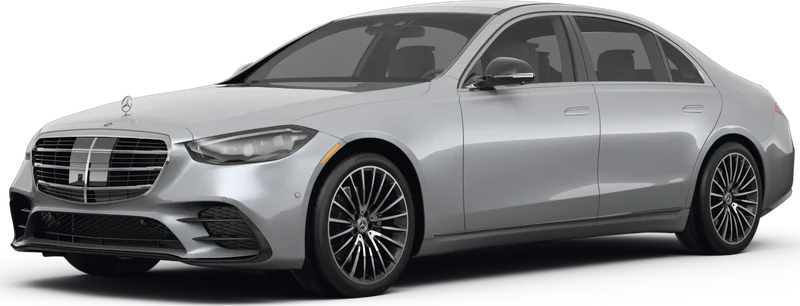
Mercedes-Benz S-Class Years to Avoid
7 scored model years (2018–2024) · model average 57/100
Skip the 2022 S-Class. Owners report the car braking hard on its own, along with electrical faults such as no-starts and blacked-out instrument clusters. The 2024 model year is the better buy, with far fewer complaints and recalls.
Verdict
- Avoid
- 2022 52/100
- Buy
- 2024 62/100
- Model average
- 57/100
Know which year you're looking at? Check the exact Mercedes‑Benz S‑Class
A good year can still hide accident damage or recall work that was never done. A VIN check shows the history of the car you found.
Mercedes-Benz S-Class Years to Avoid
These model years score significantly below the Mercedes-Benz S-Class average of 57/100.
| # | Year | Score | Rating | Recalls | Complaints | Top Issue |
|---|---|---|---|---|---|---|
| 1 | 2022 | 52/100 | Mixed | 12 | 48 | Electrical System (9) |
Why These Years Should Be Avoided
2022 Mercedes-Benz S-Class
Owners filed 48 complaints, the most of any year, and the highest rate per vehicle sold. Cars brake to a full stop on their own at speeds from 15 to 55 mph, sometimes with nothing ahead. Electrical reports add no-starts with battery warnings, flickering clusters, and wiring under the hood that chars. Dealer updates often do not stop the braking.
Top issues: Electrical System (9), Service Brakes (5), Forward Collision Avoidance (5), Tires (4), Fuel System, Gasoline (4), Power Train (3)
View full 2022 reliability report →What Are Common Mercedes-Benz S-Class Problems?
ELECTRICAL SYSTEM
20 complaintsMost reported in 2022, 2021, 2023
2022: Wiring under the hood can char and smolder.
SERVICE BRAKES
11 complaintsMost reported in 2022, 2018, 2019
2022: Cars brake to a full stop on their own at speeds from 15 to 55 mph, sometimes with nothing ahead, and nearly get rear-ended.
STEERING
11 complaintsMost reported in 2018, 2019, 2022
2018: Sudden steering stiffness is the clearest pattern.
ENGINE
11 complaintsMost reported in 2018, 2021, 2019
2018: Misfires and rough running lead the engine reports.
TIRES
9 complaintsMost reported in 2022, 2023, 2021
2022: Front tires blow out after ordinary potholes, often bending or ruining the rim.
FORWARD COLLISION AVOIDANCE
9 complaintsMost reported in 2022, 2021, 2018
2022: The car brakes hard for no reason, at speeds up to 70 mph, during left turns, and with no objects in the road.
Best Mercedes-Benz S-Class Year to Buy Instead
2024 Mercedes-Benz S-Class
The 2024 has the fewest recalls of any year, 4, and the lowest complaint rate. The 2022 and 2021 model years draw far more owner complaints, mostly electrical. The 2024 is not flawless, since two owners report harsh shifting between 3rd and 4th gear. It has only two years on the road, so its record is still short.
Found a Safe Year? Check the Specific Car
Even the 2024 Mercedes-Benz S-Class has 4 recalls on file. A VIN check confirms the recall work on the exact car and shows its accident, title, and service history.
- Accidents
- Open Recalls
- Title History
- Odometer Rollback
All Mercedes-Benz S-Class Years by Generation
Mercedes-Benz S-Class Reliability Scores by Year
Sixth generation (W222) (2014–2020)
2020 Mercedes-Benz S-Class
7 recalls · 7 complaints
2019 Mercedes-Benz S-Class
14 recalls · 16 complaints
2018 Mercedes-Benz S-Class
15 recalls · 29 complaints
Seventh generation (W223) (2021–2023)
2023 Mercedes-Benz S-Class
11 recalls · 12 complaints
2021 Mercedes-Benz S-Class
17 recalls · 36 complaints
2022 Mercedes-Benz S-Class
12 recalls · 48 complaints
Frequently Asked Questions
Which Mercedes-Benz S-Class years should I avoid?
Which Mercedes-Benz S-Class years have transmission problems?
Is the 2021 Mercedes-Benz S-Class a bad year?
Is the 2018 Mercedes-Benz S-Class reliable?
Is the 2024 Mercedes-Benz S-Class worth buying?
How we score every Mercedes-Benz S-Class model year
Scores weight complaint severity at 35%, repair costs at 30%, recall impact at 20%, and the spread of complaints across systems at 15%, with complaint counts adjusted for US sales. Read the full methodology.
See incorrect data? Report an issue