Last updated: 2026-10-10
Mazda CX-30 vs Nissan Kicks: Reliability Compared

Mazda CX-30
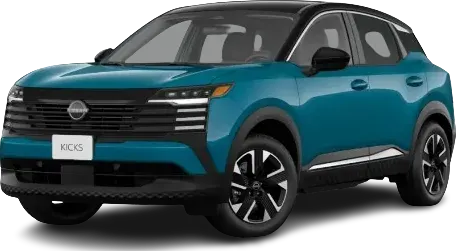
Nissan Kicks
The Nissan Kicks beats the Mazda CX-30 on reliability by a large gap. Owners file more complaints about the Kicks, but the CX-30 has more crash-linked braking and airbag reports, and that weighs against it.
How Do the Mazda CX-30 and Nissan Kicks Generations Compare?
Verdict
The Nissan Kicks is more reliable than the Mazda CX-30, scoring 78/100 vs 67/100.
Reliability favors the Nissan Kicks by a large gap on the index. That may look odd, since owners filed more complaints about the Kicks. The CX-30's problems lean toward safety systems: airbags, emergency braking and total power loss, with more crash-linked reports in those areas. The Kicks complaints are frequent but cluster around electrical and power-loss faults that dealers often cannot reproduce. Recall counts are even at 10 each. On the data given, the Kicks is the safer bet.
Key Differences
- 1Nissan Kicks scores 11 points higher in reliability
- 2Mazda CX-30 has 2.6 fewer complaints per 10k sold
- 3Mazda CX-30 has a 1-star higher safety rating
Category Scoreboard
Mazda CX-30 vs Nissan Kicks: Which Is More Reliable?
| Metric | Mazda CX-30 | Nissan Kicks |
|---|---|---|
| Reliability Score | 67/100 | 78/100 |
| Years Tracked | 7 | 9 |
| Total Recalls | 10 | 10 |
| Complaints per 10k Sold | 5.7 | 8.3 |
| Safety RatingNHTSA overall | 2026 NHTSA | 2026 NHTSA |
| Frontal | ||
| Side | ||
| Rollover | ||
| Year Wins | 0 | 7 |
What Are the Common Problems With the Mazda CX-30 and Nissan Kicks?
Safety hardware is where the two split. On the CX-30, automatic emergency braking can stop the car with nothing ahead, one owner reports it 11 times, and brakes carry 6 crash-linked complaints. Airbags can deploy with no crash, and they carry 4 crash-linked reports. The Kicks has no airbag category among its main problems. Its complaints center on electrical faults, including rear hatch glass that shatters on a parked car, and sudden power drops with a malfunction message. Rear automatic braking can also stop the car while backing up. Both have oil, stalling or transmission issues that can leave you stranded.
| Component | Mazda CX-30 | Nissan Kicks |
|---|---|---|
| ELECTRICAL SYSTEM | 0.8Very Low | 1.8Low |
| UNKNOWN OR OTHER | 0.7Very Low | 1.2Low |
| ENGINE | 1.2Low | 0.5Very Low |
| SERVICE BRAKES | 0.4Very Low | 0.7Very Low |
| POWER TRAIN | 0.3Very Low | 0.8Very Low |
| FORWARD COLLISION AVOIDANCE | 0.2Very Low | 0.4Very Low |
| STRUCTURE | 0.1Very Low | 0.5Very Low |
| AIR BAGS | 0.3Very Low | 0.2Very Low |
| VISIBILITY/WIPER | 0.3Very Low | 0.1Very Low |
| VEHICLE SPEED CONTROL | 0.2Very Low | 0.2Very Low |
| STEERING | 0.1Very Low | 0.3Very Low |
| SUSPENSION | 0.1Very Low | 0.1Very Low |
| LANE DEPARTURE | 0.1Very Low | 0.1Very Low |
| WHEELS | 0.1Very Low | 0.1Very Low |
| BACK OVER PREVENTION | —None | 0.2Very Low |
| SEATS | 0.1Very Low | —None |
| ELECTRONIC STABILITY CONTROL (ESC) | —None | 0.1Very Low |
| FUEL/PROPULSION SYSTEM | —None | 0.1Very Low |
| VISIBILITY | —None | —None |
Complaints per 10,000 units sold, aggregated across all tracked model years from NHTSA owner reports.
How Does Mazda CX-30 vs Nissan Kicks Reliability Compare by Year?
| Year | Mazda CX-30 | Nissan Kicks | Edge |
|---|---|---|---|
| 2026 | 72/1000R / 0C | 83/1001R / 1C | Nissan Kicks |
| 2025 | 68/1001R / 22C | 78/1003R / 24C | Nissan Kicks |
| 2024 | 68/1002R / 23C | 81/1001R / 20C | Nissan Kicks |
| 2023 | 68/1001R / 20C | 80/1001R / 23C | Nissan Kicks |
| 2022 | 67/1001R / 28C | 82/1000R / 19C | Nissan Kicks |
| 2021 | 60/1002R / 94C | 78/1002R / 66C | Nissan Kicks |
| 2020 | 64/1003R / 31C | 78/1000R / 85C | Nissan Kicks |
Best years to cross-shop: The 2024 Mazda CX-30 scored 68/100 and the 2022 Nissan Kicks scored 82/100 — the strongest shared model years that have been on the road for at least two years, where available.
Who Should Buy the Mazda CX-30 vs the Nissan Kicks?
Mazda CX-30 vs Nissan Kicks: Common Questions
- Is the Mazda CX-30 more reliable than the Nissan Kicks?
- No. The Nissan Kicks leads by a large gap on the index. The CX-30 has fewer complaints per car sold, but it has crash-linked airbag and emergency braking reports that the Kicks does not show in its main problem areas. Both models carry a good standing.
- Which has more recalls, the CX-30 or the Kicks?
- They are even. Federal recall records show 10 recalls for each. The CX-30 spreads them over 7 model years and the Kicks over 9. Check any car's VIN for open recalls before buying, since two CX-30 airbag complaints mention a recall with no fix available.
- Which has more owner complaints?
- The Kicks does, with 439 complaints, or 8.3 per 10,000 sold. The CX-30 has 218, or 5.7 per 10,000 sold. The Kicks complaints often involve electrical and power faults that dealers could not reproduce, while the CX-30 has more crash-linked safety reports.
- What is the biggest problem with the Mazda CX-30?
- Engine oil warnings are the most common, with 44 complaints, including a car needing a quart every 1,000 to 2,000 miles. The more serious reports involve automatic emergency braking that stops the car with nothing ahead, and airbags that deploy with no crash.
- Why does the rear window break on the Nissan Kicks?
- The data gives no cause. Owners report the rear glass shattering with a loud pop, sometimes on a parked car with the defroster off. Reports appear under both electrical and structure complaints, and in one case the dealer could not find a reason.
Related Reliability Comparisons
More Mazda CX-30 comparisons
Decided between Mazda CX-30 and Nissan Kicks? Run a VIN check before you buy — uncover hidden accidents, title issues, and open recalls.
How we score the Mazda CX-30 and Nissan Kicks
Scores weight complaint severity at 35%, repair costs at 30%, recall impact at 20%, and the spread of complaints across systems at 15%, with complaint counts adjusted for US sales. Read the full methodology.
See incorrect data? Report an issue