Last updated: 2026-11-19
Brakes, steering & tires
Hyundai Palisade Brake Problems
Hyundai Palisade brake problems center on the ABS kicking in at low speed over bumps, so the SUV keeps rolling. Most reports come from 2024 models.
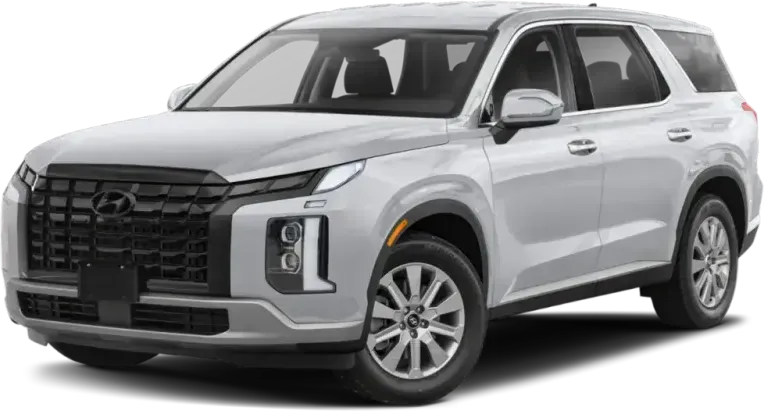
- Owner complaints
- 427
- Share of all complaints
- 17%
- Crash / fire / injury reports
- 25 / 0 / 17
- Related recalls
- 2
Hyundai Palisade brake complaints by model year
The 2024 model year has the most brake complaints by a wide margin, and it also has the highest rate per vehicle sold. The 2025 and 2023 model years come next, and both describe the same low-speed ABS pattern. The 2020, 2021 and 2022 years have only a handful each, and their complaints differ, such as a soft pedal or unwanted automatic braking. The 2026 model year has very few, but it is too new to judge. Recent years have had less time to collect complaints, so a low count there does not mean the problem is absent.
| Model year | Complaints | Per 10,000 sold | Crash, fire, injury reports |
|---|---|---|---|
| 2020 | 7 | 0.9 | 1, 0, 1 |
| 2021 | 10 | 1.2 | 2, 0, 10 |
| 2022 | 11 | 1.3 | 5, 0, 0 |
| 2023 | 82 | 9.2 | 3, 0, 0 |
| 2024 | 223 | 20.3 | 10, 0, 1 |
| 2025 | 88 | 7.7 | 4, 0, 5 |
| 2026 | 6 | 7 | 0, 0, 0 |
Owner complaints filed with NHTSA under service brakes, parking brake. Newer model years have had less time to collect complaints.
What goes wrong
The most common complaint is the anti-lock brakes activating when they should not. Owners cross a speed bump, rail crossing, pothole or manhole cover at low speed and press the pedal. The pedal pulses, the front end shakes, and the SUV keeps moving even with the pedal pushed to the floor. Owners say no warning light comes on. Dealers often cannot reproduce it.
This is a safety problem, not a nuisance. Owners describe rear-end crashes at parking-lot and stop-sign speeds, and many report near misses. Across all years, brake complaints include 25 crashes and 17 injuries. None report a fire. Several owners say the SUV went to the dealer, came back with no fault found, and then did it again. One 2021 owner said the SUV was not drivable after a crash, with fluid leaks and severe front-end damage. Brakes make up 17% of all Palisade complaints.
Symptoms owners report
ABS triggers over bumps
At low speed on rough pavement, railroad tracks, speed bumps or potholes, the ABS pulses and the brakes lose bite. The steering wheel and front end shake. The SUV keeps rolling with the pedal floored. This is the main pattern on 2023 to 2025 models.
Soft or sinking pedal
On 2021, 2022 and 2026 models, owners describe a pedal that goes soft or sinks to the floor while the car barely slows. One 2022 owner said bleeding the brakes helped for only a few weeks.
Stiff or stuck pedal
Some owners find the pedal abnormally stiff or stuck in traffic. Two 2021 crash reports say forward collision braking did not act. A 2023 owner saw a radar-blocked warning along with a stiff pedal.
Surging or creeping while braking
Owners of 2022, 2025 and 2026 models say the SUV lunges forward, creeps, or revs up while they press the brake. This happens mostly in parking lots and at stop signs.
Unwanted automatic braking
On 2021 and 2022 models, the automatic emergency braking brakes hard with nothing ahead, including at highway speed and during lane changes. Many of these failures come with no warning light.
Caliper and parking brake faults
Less common reports include a frozen rear caliper grinding metal on metal in a 2021, and a corroded electronic parking brake caliper that would not release in a 2022. A wheel sensor fault set off ABS and collision warnings.
When the problems start
Owners report this problem very early. The 2024 and 2025 complaints include cars with about 1,200 miles and just over 3,000 miles, and the 2025 summary says most cases start before 5,000 miles. For 2023 models, the ABS pattern is reported between 18,000 and 35,000 miles. A spongy pedal on a 2022 began around 22,000 miles, and one 2026 case began at about 530 miles.
Repairs and recalls
Owners say dealers often cannot reproduce the fault and send the car home with no repair. Some dealers replaced ABS parts anyway. One 2024 owner had the ABS main governor swapped, and another had repairs twice in three months. A 2026 owner's ABS module replacement did not cure it. One 2025 dealer confirmed the shaking but had no fix yet. Federal recall records list two brake recalls. The 2021 recall covers contaminated brake fluid, and the fix is a new master cylinder and fluid flush. The 2023 recall covers a brake booster diaphragm, and the fix is inspection and replacement, both free. Neither recall line mentions the low-speed ABS problem. Independent repair-cost data puts yearly repairs for the model overall at $573.
| Model years | Campaign | Problem |
|---|---|---|
| 2023 | 23V415000 | Hyundai Motor America (Hyundai) is recalling certain 2023 Palisade vehicles. The brake booster diaphragm may become misaligned and cause an internal vacuum leak, which can result in a loss of power brake assist. |
| 2021 | 21V840000 | Hyundai Motor America (Hyundai) is recalling certain 2021 Palisade vehicles. The brake fluid may be contaminated, which can cause the brake master cylinder inner-cup seals to swell, and reduce braking performance. |
Checking a used Palisade for brake problems
- Test drive over speed bumps and rough pavement at under 15 mph, braking firmly. Note any pulsing pedal, shaking, or a car that keeps rolling.
- Ask the seller for dealer service records showing brake or ABS visits, and whether the problem was fixed or reported as not reproducible.
- Run the VIN through Hyundai's recall lookup to confirm the 2021 or 2023 brake recall work was done on that car.
- On a 2021 model, ask whether the master cylinder was replaced and the fluid flushed. On a 2023, ask whether the booster was inspected.
- Press the pedal at a stop and hold. Walk away from a pedal that feels stiff, sinks, or lets the car creep forward.
- Have an independent mechanic inspect the calipers, parking brake and wheel sensors, and scan for stored ABS codes before you buy.
For the rest of the car, use a full Hyundai Palisade inspection checklist.
2 brake recalls cover the Hyundai Palisade. A VIN check shows whether the car you're looking at had its recall work done, plus accident and title history.
Hyundai Palisade Brake Problems: common questions
- Which Hyundai Palisade years have the most brake problems?
- The 2024 model year has the most brake complaints and the highest rate per vehicle sold. The 2025 and 2023 years follow with the same low-speed ABS pattern. The 2020 to 2022 years have far fewer complaints. The 2026 year is too new to judge, so its low count says little.
- Is it safe to drive a Palisade with the ABS problem?
- Owners report the SUV failing to stop at low speed, causing rear-end crashes and near misses, usually with no warning light. Because dealers often cannot reproduce it, the risk is hard to rule out. Drive slowly over rough surfaces, leave extra room, and report the problem to Hyundai and NHTSA.
- Does a recall cover Palisade brake problems?
- Federal recall records list two. One covers 2021 models for contaminated brake fluid that can swell master cylinder seals. The other covers 2023 models for a brake booster diaphragm that can leak vacuum. Neither recall line mentions the low-speed ABS pattern. Check your VIN for open recalls.
- How much does it cost to fix Palisade brake problems?
- The data gives no cost for fixing the ABS complaint. Owners mostly report dealers finding no fault, or replacing ABS parts with mixed results. The two listed recalls are repaired free of charge. Independent repair-cost data puts yearly repairs for the model overall at $573.
- Do Palisade brake problems start early?
- Yes, for the newer years. Several 2024 and 2025 owners report the ABS problem within the first few thousand miles, some before 5,000. Reports on 2023 models run from 18,000 to 35,000 miles. A new or nearly new Palisade is not exempt from this pattern.
Other Hyundai Palisade problems
Airbags & seat belts
Body & interior
Engine & powertrain
Electrical & lighting
Brakes, steering & tires
More on the Hyundai Palisade
See incorrect data? Report an issue