Last updated: 2026-11-20
Ford F-150 vs Nissan Titan: Reliability Compared
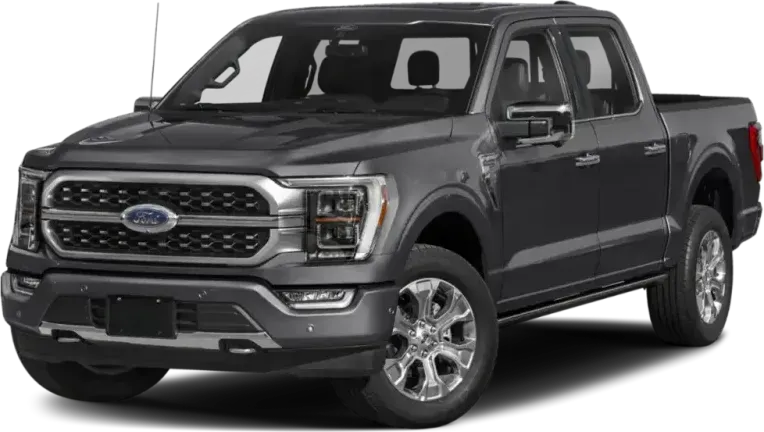 Ford F-150
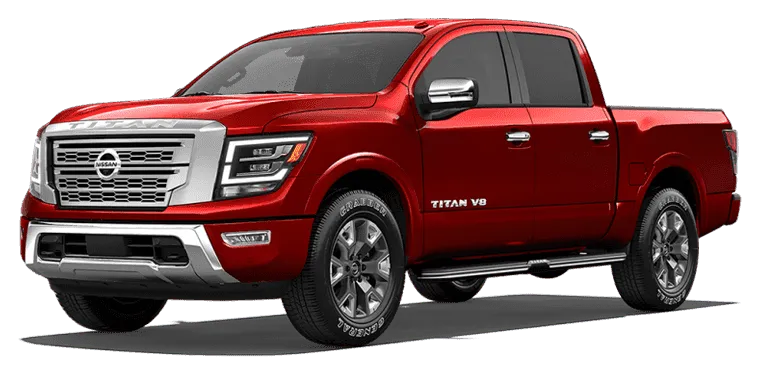 Nissan Titan
Dead even: 3 rounds each, 1 drawn
Reliability favors the Nissan Titan slightly over the Ford F-150, mostly on repair cost: $555 a year against $788. The Titan also has far fewer recalls and crash-linked complaints. Its weak spot is engine crankshaft failure, while the F-150 has brake and rollaway reports.
How Do the Ford F-150 and Nissan Titan Generations Compare?
Verdict
The Nissan Titan is more reliable than the Ford F-150, scoring 70/100 vs 66/100.
Slight edge to the Nissan Titan. Both trucks stand at good, and the gap is small. The Titan wins on lower yearly repair cost, a much lighter recall count, and fewer crash-linked complaints. Shop visits are the same at 0.3 a year, and the Titan's chance of a major repair is one point higher. The Titan also draws more complaints for each 10,000 sold, and its engine failures are expensive when they hit. The F-150's rollaway and brake reports carry more crashes, which keeps the Titan ahead.
Biggest gaps
- Nissan Titan has 81 fewer total recalls
- Ford F-150 has 7.3 fewer complaints per 10k sold
- Nissan Titan costs $233 less per year to repair
Round by round
- Reliability ScoreTitan
- Total RecallsTitan
- Complaint RateF-150
- Annual Repair CostTitan
- Repair FrequencyDraw
- Major Repair RiskF-150
- Safety RatingF-150
Leaning Ford F‑150 or Nissan Titan? Check the exact car before you buy
Whichever wins on paper, the car in front of you has its own past. A VIN check shows its accidents, title history and any open recalls.
Ford F-150 vs Nissan Titan: Which Is More Reliable?
| Metric | Ford F-150 | Nissan Titan |
|---|---|---|
| Reliability ScoreOut of 100, higher is better | 66/100 | 70/100 |
| Years Tracked | 9 | 7 |
| Total RecallsLower is better | 107 | 26 |
| Complaints per 10k SoldLower is better | 7.2 | 14.5 |
| Annual Repair CostLower is better | $788/yr | $555/yr |
| Repair FrequencyUnscheduled shop visits a year | 0.3/yr | 0.3/yr |
| Major Repair RiskChance a repair is major | 15% | 16% |
| Safety RatingNHTSA overall | 2026 NHTSA | 2024 NHTSA |
| Frontal | ||
| Side | ||
| Rollover | ||
| Year WinsModel years with the higher score | 0 (1 tied) | 6 (1 tied) |
What Are the Common Problems With the Ford F-150 and Nissan Titan?
Safety systems dominate the worst F-150 reports. Trucks roll away after being shifted into Park, and the 10-speed automatic shifts hard and drops to first gear at speed. Brake pedals sink to the floor, and the brake area alone has 41 crash-linked complaints. Auto start-stop stalls engines at stops. The Titan's main problem is the engine: crankshafts break or bottom ends come apart at highway speed, often with no warning light, mostly between 30,000 and 56,376 miles. Its transmission also hesitates to downshift. Crash links stay at 1 or 2 per area, and brakes are not a main problem area.
| Ford F-150 | Problem area | Nissan Titan |
|---|---|---|
2.7 | Transmission | 3.6 |
1.0 | Engine | 3.3 |
0.7 | Electrical | 2.1 |
0.1 | Fuel system | 0.7 |
0.3 | Brakes | 0.5 |
<0.1 | Wheels and tires | 0.4 |
0 | Suspension | 0.3 |
0.1 | Steering | 0.2 |
<0.1 | Acceleration and cruise control | 0.3 |
<0.1 | Airbags | 0.2 |
<0.1 | Automatic emergency braking | 0.2 |
0.2 | Headlights and exterior lights | 0 |
0.2 | Body and structure | 0 |
0.2 | Wipers and visibility | 0 |
<0.1 | Backup camera | 0 |
<0.1 | Seat belts | 0 |
0.5 | Other or unspecified | 0.9 |
<0.1 | Equipment | 0 |
Complaints per 10,000 units sold, aggregated across all tracked model years from NHTSA owner reports. Shorter bars mean fewer complaints.
Ford F-150 problem guides
- Ford F-150 transmission problems
- Ford F-150 engine problems
- Ford F-150 electrical problems
- Ford F-150 fuel system problems
- Ford F-150 brake problems
- Ford F-150 wheel and tire problems
- Ford F-150 steering problems
- Ford F-150 headlight and exterior light problems
- Ford F-150 body and structure problems
- Ford F-150 wiper and visibility problems
- Ford F-150 backup camera problems
Which Is Cheaper to Maintain: Ford F-150 or Nissan Titan?
How Does Ford F-150 vs Nissan Titan Reliability Compare by Year?
| Year | Ford F-150 | Nissan Titan | Edge |
|---|---|---|---|
| 2024 | 72/1009 recalls · 239 complaints | 72/1002 recalls · 15 complaints | Tie |
| 2023 | 66/10010 recalls · 522 complaints | 72/1002 recalls · 18 complaints | Titan+6 |
| 2022 | 60/10021 recalls · 827 complaints | 71/1004 recalls · 14 complaints | Titan+11 |
| 2021 | 56/10026 recalls · 1,332 complaints | 66/1005 recalls · 58 complaints | Titan+10 |
| 2020 | 65/1007 recalls · 748 complaints | 70/1005 recalls · 24 complaints | Titan+5 |
| 2019 | 63/1006 recalls · 1,353 complaints | 69/1004 recalls · 49 complaints | Titan+6 |
| 2018 | 56/10015 recalls · 2,339 complaints | 67/1004 recalls · 90 complaints | Titan+11 |
Best years to cross-shop: The 2024 Ford F-150 scored 72/100 and the 2024 Nissan Titan scored 72/100, the strongest shared model years that have been on the road for at least two years, where available.
Who Should Buy the Ford F-150 vs the Nissan Titan?
Team TitanChoose the Titan if you want lower running costs and fewer safety-related reports. Its repair bill is lower and its recall count is far smaller. Target 2023 or 2024, its strongest years, but note they have had less time to collect complaints. Skip 2018 and 2021. Ask for proof of oil changes, since some owners say Nissan denied engine warranty claims without dealer oil service, and listen for engine knock on the test drive.
Team F-150Choose the F-150 if you want a wider range of years to shop, 2018 through 2026, and can live with a higher repair bill. Its complaint rate per 10,000 sold is lower. Avoid 2021 and 2018. The 2025 and 2026 trucks look strongest but are too new to call proven. On a test drive, load the transmission, confirm the truck holds in Park, check that the brake pedal feels firm, and look for moisture inside the lights.
Ford F-150 vs Nissan Titan: Common Questions
- Is the Ford F-150 more reliable than the Nissan Titan?
- No, the Nissan Titan has a slight edge. Both stand at good, but the Titan costs less to repair each year and has fewer recalls and fewer crash-linked complaints. The F-150 has a lower complaint rate per 10,000 sold, so the gap is small and depends on the model year.
- Which has more recalls, the F-150 or the Titan?
- The F-150 has far more. Federal recall records show 107 recalls across 9 model years for the F-150, against 26 across 7 model years for the Titan. The F-150 also covers two more model years in the data, so part of the difference comes from that.
- Which is cheaper to repair, the F-150 or the Titan?
- The Titan is cheaper. Independent repair-cost data puts it at $555 a year against $788 for the F-150, about $1,165 less over five years. Shop visits are equal at 0.3 a year, and major repairs are about as likely on both, 16% for the Titan and 15% for the F-150.
- What is the main engine problem on the Nissan Titan?
- Broken crankshafts. Owners report the crankshaft breaking or the bottom end coming apart at highway speed, often with no warning light, and the truck needs a new engine. Most reports fall between 30,000 and 56,376 miles. Some owners say Nissan denied warranty claims when oil changes were not done at a dealer.
- What are the biggest safety complaints on the Ford F-150?
- Brakes and rollaway. The brake pedal sinks to the floor, sometimes with a Low Brake Fluid warning, and the brake area has 41 crash-linked complaints. Owners also report trucks rolling away after being shifted into Park, with the display still showing Park, and some of those reports end in crashes or injuries.
Related Reliability Comparisons
More Ford F-150 comparisons
Decided between Ford F-150 and Nissan Titan? Run a VIN check before you buy — uncover hidden accidents, title issues, and open recalls.
How we score the Ford F-150 and Nissan Titan
Scores weight complaint severity at 35%, repair costs at 30%, recall impact at 20%, and the spread of complaints across systems at 15%, with complaint counts adjusted for US sales. Read the full methodology.
See incorrect data? Report an issue