Last updated: 2026-11-20
Nissan Titan vs Toyota Tundra: Reliability Compared
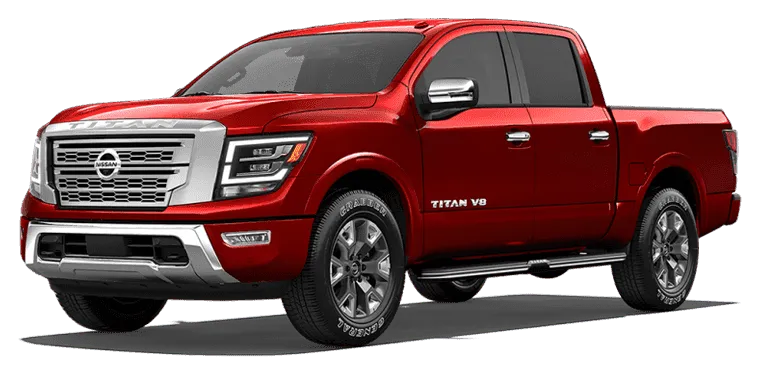 Nissan Titan
 Toyota Tundra
The Titan takes 5 of 7 rounds (1 drawn)
The Toyota Tundra and Nissan Titan are effectively tied on reliability, so the type of failure should decide it. Tundra owners report throttle hesitation from a stop. Titan owners report broken crankshafts. The Titan costs slightly less to maintain and has far fewer recalls.
How Do the Nissan Titan and Toyota Tundra Generations Compare?
Verdict
The Nissan Titan is more reliable than the Toyota Tundra, scoring 70/100 vs 69/100.
Reliability is effectively tied, and both trucks land in the good range. Repair cost, shop-visit frequency and major-repair odds sit close together, with the Titan a little cheaper to keep. The deciding factor is the kind of failure. The Tundra's top complaint is throttle hesitation that dealers struggle to reproduce. The Titan's is a crankshaft that breaks without warning. Pick based on which risk you can live with and which model years you can find.
Biggest gaps
- Nissan Titan has 64 fewer total recalls
- Toyota Tundra has a 1-star higher safety rating
- Nissan Titan has 2% lower major repair risk
Round by round
- Reliability ScoreTitan
- Total RecallsTitan
- Complaint RateTitan
- Annual Repair CostTitan
- Repair FrequencyDraw
- Major Repair RiskTitan
- Safety RatingTundra
Leaning Nissan Titan or Toyota Tundra? Check the exact car before you buy
Whichever wins on paper, the car in front of you has its own past. A VIN check shows its accidents, title history and any open recalls.
Nissan Titan vs Toyota Tundra: Which Is More Reliable?
| Metric | Nissan Titan | Toyota Tundra |
|---|---|---|
| Reliability ScoreOut of 100, higher is better | 70/100 | 69/100 |
| Years Tracked | 7 | 9 |
| Total RecallsLower is better | 26 | 90 |
| Complaints per 10k SoldLower is better | 14.5 | 15.7 |
| Annual Repair CostLower is better | $555/yr | $606/yr |
| Repair FrequencyUnscheduled shop visits a year | 0.3/yr | 0.3/yr |
| Major Repair RiskChance a repair is major | 16% | 18% |
| Safety RatingNHTSA overall | 2024 NHTSA | 2026 NHTSA |
| Frontal | ||
| Side | ||
| Rollover | ||
| Year WinsModel years with the higher score | 3 | 4 |
What Are the Common Problems With the Nissan Titan and Toyota Tundra?
Throttle response defines the Tundra's complaints. The pedal goes down, nothing happens for a second or more, then the truck lurches. Engine, power train and fuel reports repeat this, and a few engines died at highway speed. Warped front rotors cause violent shaking under braking. The Titan's trouble is mechanical. Crankshafts break, often with no warning light, and the truck loses all power. Diesel owners report CP4 fuel pump failures. Service brakes carry 4 crash-linked Tundra reports, and the Titan has no brake area among its main problems.
| Nissan Titan | Problem area | Toyota Tundra |
|---|---|---|
3.3 | Engine | 5.2 |
3.6 | Transmission | 1.7 |
2.1 | Electrical | 1.0 |
0.7 | Fuel system | 1.9 |
0.5 | Brakes | 1.1 |
0.3 | Acceleration and cruise control | 0.6 |
0.4 | Wheels and tires | 0.1 |
0.2 | Steering | 0.2 |
0.3 | Suspension | <0.1 |
0.2 | Airbags | 0.1 |
0.2 | Automatic emergency braking | <0.1 |
0 | Headlights and exterior lights | 0.3 |
0 | Body and structure | 0.2 |
0 | Seats | 0.2 |
0 | Stability control | <0.1 |
0 | Backup camera | <0.1 |
0 | Wipers and visibility | <0.1 |
0 | Lane keeping | <0.1 |
0.9 | Other or unspecified | 0.3 |
Complaints per 10,000 units sold, aggregated across all tracked model years from NHTSA owner reports. Shorter bars mean fewer complaints.
Which Is Cheaper to Maintain: Nissan Titan or Toyota Tundra?
How Does Nissan Titan vs Toyota Tundra Reliability Compare by Year?
| Year | Nissan Titan | Toyota Tundra | Edge |
|---|---|---|---|
| 2024 | 72/1002 recalls · 15 complaints | 62/10014 recalls · 365 complaints | Titan+10 |
| 2023 | 72/1002 recalls · 18 complaints | 58/10022 recalls · 424 complaints | Titan+14 |
| 2022 | 71/1004 recalls · 14 complaints | 56/10021 recalls · 436 complaints | Titan+15 |
| 2021 | 66/1005 recalls · 58 complaints | 76/1003 recalls · 24 complaints | Tundra+10 |
| 2020 | 70/1005 recalls · 24 complaints | 73/1005 recalls · 48 complaints | Tundra+3 |
| 2019 | 69/1004 recalls · 49 complaints | 70/10010 recalls · 74 complaints | Tundra+1 |
| 2018 | 67/1004 recalls · 90 complaints | 69/1009 recalls · 100 complaints | Tundra+2 |
Best years to cross-shop: The 2024 Nissan Titan scored 72/100 and the 2021 Toyota Tundra scored 76/100, the strongest shared model years that have been on the road for at least two years, where available.
Who Should Buy the Nissan Titan vs the Toyota Tundra?
Team TundraChoose the Tundra if you want a larger pool of trucks to shop and can accept an intermittent throttle delay. Most of its complaints are about response from a stop, and the weakest years are 2022 and 2023. Test drive for hesitation from a stop and a rolling start, and brake from highway speed to check for shaking. Lean toward 2021, one of its strongest years, over the early third-generation trucks. Treat 2026 with caution. It is strong on paper but has had little time to collect complaints.
Team TitanChoose the Titan if you want slightly lower running costs and fewer recalls, and you can check the engine's history. Aim for 2023 or 2024, its strongest years, and avoid 2018 and 2021. Ask for dealer oil change records, since some owners say warranty claims were denied without them. Listen for engine knock and look for metal in the oil. If you want a diesel, ask about fuel pump work.
Nissan Titan vs Toyota Tundra: Common Questions
- Is the Toyota Tundra more reliable than the Nissan Titan?
- No, they are effectively tied. Both stand in the good range, both average 0.3 unscheduled shop visits a year, and repair costs are close. The Tundra's main weakness is throttle hesitation. The Titan's is crankshaft and engine failure. Your choice depends on which risk worries you more.
- Which truck has more recalls, the Tundra or the Titan?
- The Tundra has more. Federal recall records show 90 recalls across its 9 model years, against 26 across 7 model years for the Titan. The Tundra also has more complaints in total, 1658 against 268, though the rates per 10,000 sold are close at 15.7 and 14.5.
- Which is cheaper to repair, the Tundra or the Titan?
- The Titan is cheaper. Independent repair-cost data shows about $555 a year for the Titan and $606 for the Tundra, roughly $255 over five years. A repair is major 16% of the time on the Titan and 18% on the Tundra. The gap is small.
- What is the biggest problem with the Nissan Titan?
- Engine failure is the most serious. Owners report the crankshaft breaking or the bottom end coming apart at highway speed, often without a warning light, and needing a full engine replacement. Most reports fall between 30,000 and 56,376 miles. Some owners say warranty claims were denied when oil changes were not done at a dealer.
- Which Tundra years should I avoid?
- Avoid 2022 and 2023 if you can. They are the weakest years, and they are the first two years of the third generation. The 2021 model ranks among the strongest. The 2026 model also ranks strong, but it has had little time to collect complaints, so do not take that as proof.
Related Reliability Comparisons
More Nissan Titan comparisons
Decided between Nissan Titan and Toyota Tundra? Run a VIN check before you buy — uncover hidden accidents, title issues, and open recalls.
How we score the Nissan Titan and Toyota Tundra
Scores weight complaint severity at 35%, repair costs at 30%, recall impact at 20%, and the spread of complaints across systems at 15%, with complaint counts adjusted for US sales. Read the full methodology.
See incorrect data? Report an issue