Last updated: 2026-11-20
Brakes, steering & tires
Ford Escape Brake Problems
A pedal that sinks to the floor and rear pads that wear out early lead Ford Escape brake complaints. Three recalls cover brake parts.
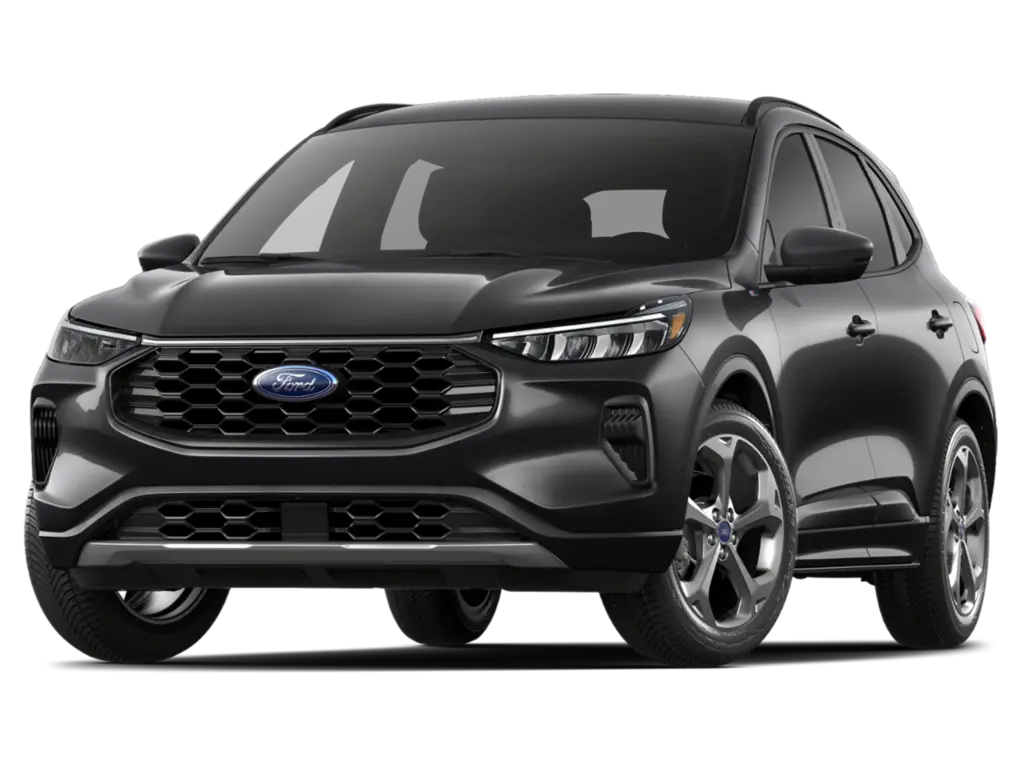
- Owner complaints
- 107
- Share of all complaints
- 2%
- Crash / fire / injury reports
- 10 / 0 / 5
- Related recalls
- 3
Ford Escape brake complaints by model year
The 2022 model year has the most brake complaints, 40, and the highest rate per vehicle sold. The 2020 year is next with 33, followed by 2018 with 20. The 2019 year has 8. Model years 2023 through 2026 show only a handful, from none to three. Those years have had less time on the road to collect complaints, so the low counts do not show they are free of brake trouble. Recalls cover brake parts on 2018, 2020, and 2022 Escapes.
| Model year | Complaints | Per 10,000 sold | Crash, fire, injury reports |
|---|---|---|---|
| 2018 | 20 | 0.7 | 3, 0, 2 |
| 2019 | 8 | 0.3 | 2, 0, 1 |
| 2020 | 33 | 1.8 | 1, 0, 0 |
| 2022 | 40 | 2.9 | 3, 0, 2 |
| 2023 | 3 | 0.2 | 1, 0, 0 |
| 2024 | 2 | 0.1 | 0, 0, 0 |
| 2025 | 0 | 0 | 0, 0, 0 |
| 2026 | 1 | 0.8 | 0, 0, 0 |
Owner complaints filed with NHTSA under service brakes, parking brake. Newer model years have had less time to collect complaints.
What goes wrong
Two brake problems dominate this model's complaints. In the first, the pedal drops to the floor and the car barely slows, often with no warning light first. In the second, the rear pads and rotors wear out far sooner than expected, or the brakes squeal, grind, or moan. Dealers often call the noise and wear normal, or cannot reproduce the fault.
The pedal complaints are the serious ones. Reports include crashes into a house, a tree, a pole, and the back of another car, and several list injuries. No fire reports appear in the data. Brake complaints are a small slice of all complaints on this model, about 2%, so this is not the Escape's main weak spot. Still, a pedal that fails without warning is a safety problem. Some drivers say normal braking came back after a restart. Others report the dealer could not find a cause and made no repair.
Symptoms owners report
Pedal sinks to the floor
The pedal goes down with little or no braking. It has happened at 5 mph right after startup, in parking lots, and at highway speed. Several 2022 owners say no warning light came on first. Some cars stopped only after a crash.
Brakes fade out with warnings
On 2020 models, the brakes turn hard or mushy while warnings appear for the brake system, ABS, hill start assist, and pre-collision assist. Drivers pumped the pedal or used the parking brake. A restart often brings function back. Hybrid owners describe fade on long downhill grades.
Rear pads and rotors wear fast
Owners of 2018 and 2019 cars were told the rear brakes were badly worn at routine service. Rotors were deeply scored and pads wore unevenly, inside versus outside. Dealers often called it normal wear and declined warranty coverage.
Squeal, grind, or moan
Noise is the most common 2022 complaint. It shows up when braking, especially in reverse, in the morning, or in damp weather. Some 2020 and 2019 owners also report grinding or a dragging sound. Dealers often cannot reproduce it.
Heavy brake dust on front wheels
Several 2022 owners saw thick black dust on the front wheels early in the car's life. Some worried the pad lining was made incorrectly and feared brake fade. It appears in complaints more than in repair reports.
Surge or odd behavior when parking
Two crash reports describe the engine surging as the brake was released or pressed while parking, then the pedal going to the floor or the car jumping a curb. A 2023 report blames a high pedal that caught the driver's foot.
When the problems start
Early wear is the clearest mileage pattern. Rear pads and rotors were reported worn out at about 10,800 to 20,863 miles on 2019 cars and between 13,967 and 32,000 miles on 2018 cars. Heavy brake dust on the 2022 was noted at 4,800 miles and within the first 7,000. One 2018 master cylinder fault came at about 23,000 miles. A 2020 car showed brake warnings at 32,600 miles.
Repairs and recalls
Reports of repairs are mixed. On a 2020 car, the dealer reprogrammed the ABS, PCM, and IPC modules and disconnected the battery, and the owner says warranty did not cover it. In one 2024 report a software reprogram was the dealer's answer, while in the other the dealer would not repair an ABS problem without a stored code. One 2022 owner reports rear caliper spring clips and pin bushings were replaced for a moaning noise. Wear complaints often ended with warranty coverage declined. Federal records list three recalls: 18V104000 for 2018 front brake hoses that may chafe and leak fluid, 25V693000 for 2020 brake pads, and 21V922000 for 2021 to 2022 brake linings. Fixes are free at dealers.
| Model years | Campaign | Problem |
|---|---|---|
| 2022 | 21V922000 | Ford Motor Company (Ford) is recalling certain 2021-2022 Bronco Sport and Escape vehicles. The rear brake linings may have been manufactured incorrectly, which can affect braking performance. As such, these vehicles… |
| 2020 | 25V693000 | Ford Motor Company (Ford) is recalling certain 2020 Escape vehicles. The rear brake pads may have been manufactured incorrectly, which can reduce brake function in the event of a brake booster malfunction. As such,… |
| 2018 | 18V104000 | Ford Motor Company (Ford) is recalling certain 2018 Ford Escape and Lincoln MKC vehicles. These vehicles may be equipped with incorrect front brake hoses that may chafe against other components, possibly resulting in a… |
Checking a used Escape for brake problems
- Enter the VIN on NHTSA's recall lookup and confirm the brake recalls for 2018, 2020, and 2022 cars show as completed.
- Ask for service records showing rear pad and rotor replacements, and how many miles each lasted.
- Look at the rear rotors for deep scoring and compare inside and outside pad thickness on both sides.
- Start the car cold and press the pedal several times in a safe spot. Walk away if it sinks or feels hard or mushy.
- Check the dash after startup for brake, ABS, hill start, or pre-collision warnings, and ask whether any have appeared before.
- Drive in reverse and brake gently in a quiet lot, listening for squeal, moaning, or grinding from the rear.
For the rest of the car, use a full Ford Escape inspection checklist.
3 brake recalls cover the Ford Escape. A VIN check shows whether the car you're looking at had its recall work done, plus accident and title history.
Ford Escape Brake Problems: common questions
- Which Ford Escape years have the most brake problems?
- The 2022 model year has the most brake complaints, with 40, and the highest rate per vehicle sold. The 2020 year follows with 33, then 2018 with 20. Years from 2023 on show few, but they have had less time to collect complaints.
- Is it safe to drive an Escape with brake problems?
- Not if the pedal sinks or feels hard or mushy. Owners report crashes after the pedal went to the floor, sometimes with no warning light. Noise alone is less urgent, but have any brake noise inspected before relying on the car.
- Is there a recall for Ford Escape brakes?
- Yes, three. 18V104000 covers 2018 front brake hoses that may chafe and leak fluid. 25V693000 covers 2020 brake pads. 21V922000 covers 2021 to 2022 brake linings. Dealers do the work free. Check a specific VIN to see if it applies.
- Why do the rear brakes wear out so fast on some Escapes?
- The data does not give a cause. Owners of 2018 and 2019 cars report worn rear pads and rotors between roughly 10,800 and 32,000 miles. One dealer blamed dirty pad slide pins for uneven wear. Others called it normal wear.
- How much do Escape brake repairs cost?
- Complaints rarely give a price. Independent repair-cost data puts yearly repairs for the whole model at about $600, not brakes alone. Recall work is free. Owners say wear and module repairs were often not covered by warranty.
Other Ford Escape problems
Engine & powertrain
Body & interior
Electrical & lighting
More on the Ford Escape
See incorrect data? Report an issue