
Last updated: 2026-11-19

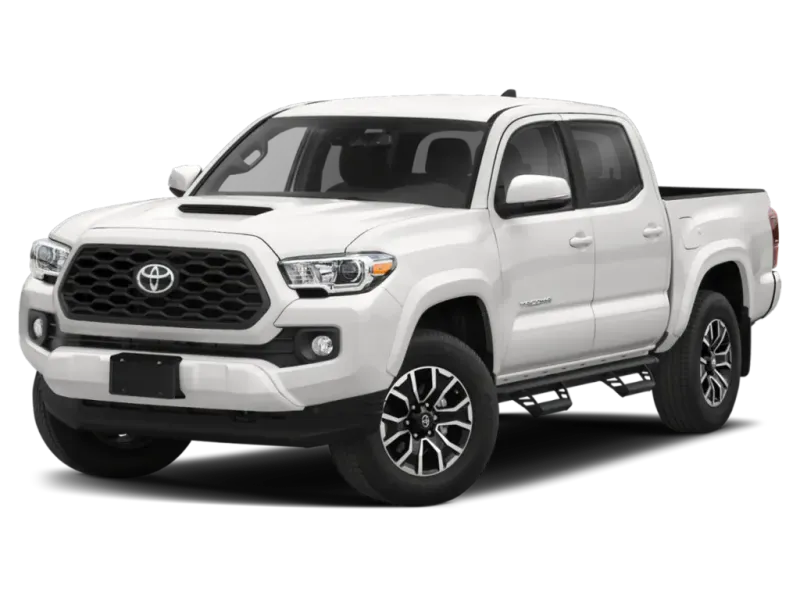
2020 Toyota Tacoma
78
GoodReliability score: 78 out of 100, rated Good

Reliability score

Good · #3 of 9 scored Tacoma years

2020 Toyota Tacoma Reliability Report

The 2020 Toyota Tacoma has good reliability and beats most 2020 trucks, but some owners report fuel pump stalling and sinking brake pedals.

Recalls

1

Complaints

90

Complaint Rate

3.8per 10,000 sold

Est. Repair Cost

$478

Annual Fuel Cost

$2,850–3,300

Detailed Score Breakdown

Complaint Severity35% of score76/100

Component-weighted complaints normalized by sales volume

Repair Costs30% of score70/100

Independent repair cost ratings

Recall Impact20% of score88/100

Recall count weighted by severity

Issue Diversity15% of score85/100

Breadth of reported problem categories

The verdict

Consider

Good reliability with far fewer complaints than the 2019, though owners report fuel pump stalling and early brake pedal failures.

Looking at a used 2020 Toyota Tacoma? Check that exact car

1 recall covers this year. A VIN check shows whether the car you found had the work done, plus accidents, title and odometer history.

Generation & Refresh (US)

Refresh Year

2020 received a facelift update for the Third generation (N240/N260/N300/N310/N320/N330).

  • Changes: Exterior updates; New technologies like Apple CarPlay, Android Auto.
  • Year 5 in this generation (2016–2023).
  • 3rd generation Tacoma (US).

What this means for buyers

Refresh years bring updates but can also introduce new issues. Check early recall data before buying.

2016: Third generation (N240/N260/N300/N310/N320/N330) Launch

Generation start — new platform.

2020: This Model Year (Refresh)

2020 received a facelift update for the Third generation (N240/N260/N300/N310/N320/N330).

Should You Buy the 2020 Toyota Tacoma?

Good reliability is the verdict here. Against other 2020 trucks this one stands well above average, and it ranks among the stronger of the nine scored Tacoma years. Owners filed 90 complaints, well under the 219 on the 2019, which also has four recalls. The 2021 does better still, with 81 complaints and no recalls. Model-wide repair costs run about $478 a year, against $548 for the class.

Fuel delivery and brakes are the problems to know. Some trucks jerk as if out of fuel, then stall at highway speed or on hills, and a few will not restart. Dealers often found a failed fuel pump, with one truck quitting at 55,247 miles. The brake reports are more alarming. The pedal sinks toward the floor, mostly between 1,800 and 14,000 miles, and one dealer found a failed master cylinder. The one federal recall covers the fuel system, gasoline.

Ask the seller for proof that the recall work was done, plus any fuel pump or brake repair records. Test the brake pedal for sinking at stops. If the budget allows, compare a 2021.

Compared to the 2021 Toyota Tacoma, which scored 3 points higher. See also the 2019 Toyota Tacoma for an earlier comparison.

Pros

  • Acceptable reliability score
  • $70 cheaper to maintain than avg midsize trucks
  • Infrequent unscheduled repairs
  • Low recall count

Cons

  • Fuel systemSudden stalling and loss of power dominate these reports16 complaints
  • BrakesSinking or soft brake pedal is the most serious pattern13 complaints

Compare 2020 Toyota Tacoma With

Recall Overview

1

recall on record

The 2020 Toyota Tacoma carries 1 recall — a low count. Authorized dealers repair any open recall free of charge, regardless of warranty status.

NHTSA.gov →

Complaint Breakdown

3.8

per 10,000 sold

Segment avg: 15.4

LowAvgHigh
Low

Safety Incidents

6

Crashes

0

Fires

7

Injuries

0

Deaths

★★★★★

NHTSA 4/5 Stars

Data sourced from NHTSA complaint filings and manufacturer recall notices. Complaint narratives are owner-reported.

2020 Toyota Tacoma Recall Details

1 recall has been issued for the 2020 Toyota Tacoma. Recall repairs are free at authorized dealers, so check that each one below was done on the car you are looking at.

Fuel systemRecall 20V682000Nov 4, 2020

The low-pressure fuel pump inside the fuel tank may fail.

Risk
If the fuel pump fails, the engine can stall while driving, increasing the risk of a crash.
Fix
Toyota will notify owners, and dealers will replace the fuel pump assembly with an improved one, free of charge.
Which vehicles are covered

Toyota Motor Engineering & Manufacturing (Toyota) is recalling certain 2018-2019 4Runner, 2019-2020 Avalon, 2019 Corolla Hatchback, 2017-2019 Highlander, 2018-2020 Camry, 2020 Corolla, 2018-2019 Land Cruiser, 2017-2020 Tacoma, 2019-2020 RAV4, 2019-2020 Sequoia, 2017-2020 Sienna, 2019-2020 Tundra, 2018-2020 Lexus ES350, 2017 Lexus GS200t, 2017-2019 Lexus GS350, 2019 Lexus GS300, 2018-2020 Lexus LC500h, 2019-2020 Lexus LS500, 2018-2019 Lexus GX460, 2017 Lexus IS200t, 2019 Lexus IS300, 2019 Lexus IS350, 2018-2020 Lexus LC500, 2018 Lexus LS500, 2019 Lexus LS500h, 2018-2019 Lexus LX570, 2017 Lexus RC200t, 2019 Lexus RC300, RC350, 2017 and 2019-2020 Lexus RX350, 2018-2020 RX350L, 2019 Lexus UX200, 2018-2019 Lexus NX300 vehicles.

More about the fix

Owners of specific models were notified that remedy parts were available starting January 21, 2021. Owners of other models will be notified as remedy parts become available. Remedy parts should be available for all affected vehicles by late March 2021. Owners may contact Toyota customer service at 1-888-270-9371 or Lexus customer service at 1-800-255-3987. Note: This recall is an expansion of recall 20V-012. Toyota's number for this recall is 20TA02. Lexus' number for this recall is 20LA01.

VIN History Report

Buying a used 2020 Toyota Tacoma? Check its history first

Fuel/propulsion system problems lead owner complaints about the 2020 Toyota Tacoma, and 1 recall was issued for it. A VIN check shows whether this car's recall work was done, plus accident, title, and odometer history.

No VIN? Just hit “Check VIN” to look one up.

  • Accidents
  • Open Recalls
  • Title History
  • Odometer Rollback

2020 Toyota Tacoma NHTSA Safety Ratings

Overall Safety Rating

Overall safety rating: 4 out of 5
Crash Test Results by Configuration (expand)

Gas Powertrain

Driver: 4/5Passenger: 4/5

Rollover risk: 19.1%

Safety Technologies

Dynamic Head Restraints (Driver, Front Passenger)Head Restraint (Driver, Front Passenger, Rear Seat)Advanced Belt Feature (Standard)Adjustable Upper Belt Anchorage (Driver, Front Passenger)Seat Belt Reminder System (Driver, Front Passenger)Frontal Air Bag (Driver, Front Passenger)Curtain (Driver, Front Passenger, Rear Seat)Torso/Pelvis (Driver, Front Passenger)Knee (Driver, Front Passenger)Additional Air Bags (None)Meets Side Air Bag Out-of-Position Requirements (Yes)LATCH Locations (Rear Seat)Safety Power Windows (Anti-Pinch) (Optional)Safety Power Windows (Anti-Pinch) locations (Driver, Front Passenger)
View full safety data on NHTSA.gov →

Toyota Tacoma Repair Costs & Maintenance

Maintenance Rating

3.5Maintenance rating: 3.5 out of 5

Based on NHTSA complaint patterns, recall severity, and publicly available cost benchmarks.

Est. Annual Maintenance

$478

vs $548 avg for midsize trucks

vs $652 avg for all vehicles

Repair Frequency

0.3

unscheduled repair visits per year

Severe Repair Probability

17%

chance of a major repair

Annual Cost Comparison

Tacoma
$478
Category Avg
$548
All Vehicles
$652

Category-level averages derived from publicly available industry reports (AAA, CarMD). Model-level estimates produced by Auto Reliability Index.

Toyota Tacoma Resale Value

The Toyota Tacoma is estimated to retain about 86.3% of its original value after 5 years, based on observed used-car listings.

This benchmark covers the Toyota Tacoma model overall and is not specific to the 2020 model year.

Value Retained
86.3%

after 5 years

Depreciation
13.7%

over the same period

Listings Analyzed
719

U.S. used-car listings

Listings observed in . Actual resale value varies by trim, mileage, condition, and location.

Explore Toyota Tacoma depreciation and resale value on CarResaleValue.com

MPG & Annual Running Costs

Gas

18–21 MPG

Running cost: $3,350–$3,800/yr

Fuel + repair

17–20 city / 20–24 hwy MPG

Running cost includes EPA fuel-cost estimate and independent repair-cost data (repair cost estimated at model level). Excludes routine maintenance, depreciation, and insurance. Data as of 2020 EPA label cycle.

Gas trims
TrimDriveTrans.CityHwyCombFuel Cost
Tacoma 2WD 3.5L 6-cylRear-Wheel DriveAutomatic (S6)192421$2,850
Tacoma 2WD 2.7L 4-cylRear-Wheel DriveAutomatic (S6)202321$2,850
Tacoma 4WD 3.5L 6-cylPart-time 4-Wheel DriveAutomatic (S6)182220$3,000
Tacoma 4WD 2.7L 4-cylPart-time 4-Wheel DriveAutomatic (S6)192220$3,000
Tacoma 4WD 3.5L 6-cylPart-time 4-Wheel DriveManual 6-spd172118$3,300
Tacoma 4WD D-CAB MT TRD-ORP/PRO 3.5L 6-cylPart-time 4-Wheel DriveManual 6-spd172018$3,300

Used Buying Checklist

Key things to inspect or verify before purchasing a 2020 Toyota Tacoma.

  • Hold firm brake pressure at a stop and reject the truck if the pedal slowly sinks toward the floor.

  • Check under the steering column and the driver footwell carpet for brake fluid leaking from the master cylinder.

  • Start the engine cold and again when warm, and note long cranking, starter grinding, rough idle, or a gasoline smell.

  • Ask for fuel pump repair records and run the VIN for open recalls before buying.

  • Cruise steadily at 30 to 40 mph and feel for a shudder from the automatic transmission.

  • Make slow full-lock turns and listen for groaning, then confirm the steering wheel sits centered on a straight road.

  • Check the rear cab carpet for dampness or mold from leaking pressure release vents.

  • Inspect the engine wiring harness for rodent damage and the timing chain cover area for oil leaks.

Going to see one? Take the printable 2020 Toyota Tacoma inspection checklist with you.

2020 Toyota Tacoma Common Problems by Component

90 owner complaints grouped by vehicle system.

16
13
11
20
FUEL/PROPULSION SYSTEM (16)SERVICE BRAKES (13)ENGINE (11)POWER TRAIN (9)UNKNOWN OR OTHER (7)ELECTRICAL SYSTEM (5)VEHICLE SPEED CONTROL (5)AIR BAGS (4)Other (20)

FUEL/PROPULSION SYSTEM

16 complaints

Tacoma fuel system problems across all model years

Sudden stalling and loss of power dominate these reports. Trucks jerk and buck as if out of fuel, then die at highway speeds, on inclines, or in parking lots, and some will not restart. Dealers often find a failed fuel pump, and one truck quit at 55,247 miles. In another case the stalling continued after both the high and low pressure pumps were replaced. Some trucks cannot be made to fail in the shop, and several owners say dealers declined to cover the repair. Slow acceleration, rough idle, hard restarts after fueling, and a gasoline smell after parking also appear.

16 complaints total

SERVICE BRAKES

13 complaints

Tacoma brake problems across all model years

A sinking or soft brake pedal is the most serious pattern. The pedal slowly drops to the floor at a stop or gives out while slowing, and some drivers use the parking brake to avoid a collision. One dealer found a failed master cylinder, and other reports describe brake fluid leaking from the master cylinder into the cab. Rear wheels lock up or brakes pulsate, even after the drums are replaced several times. The electronic booster gives uneven assist at low speed. Most failures appear early, between 1,800 and 14K miles.

13 complaints total

ENGINE

11 complaints

Serious engine failures appear at very different mileages. One engine seized on the highway at 1,400 miles, another needed a new cylinder head at 48,200, and a leaking timing chain cover gasket requires dropping the engine to fix. Some failures arrive with a low oil pressure light or a check engine light. Other reports describe long cranking on warm starts with a gasoline smell, starter grinding, rough idle, brief stalls at speed, weak acceleration with delayed shifts, and surging while reversing. Dealers often find nothing wrong.

11 complaints total
POWER TRAIN (9 complaints)

POWER TRAIN

9 complaints

Tacoma transmission problems across all model years

Hesitation and unpredictable power delivery lead this category. The engine revs without moving the truck, then lunges forward or backward once the pedal is released. Some trucks enter limp mode near 25 mph while pulling into traffic or stall at highway speed, and dealers often find no codes. Automatic trucks shudder at steady speeds of 30 to 40 mph, which owners trace to torque converter lock-up. Manual trucks report early throwout bearing wear, a creaking clutch pedal that returns after repair, and fluid weeping from the differential housing.

9 complaints total
ELECTRICAL SYSTEM (5 complaints)

ELECTRICAL SYSTEM

5 complaints

Hard starting is the most common electrical problem. The engine cranks for several seconds without firing and needs a second try, and one dealer described this as normal for late model trucks. A check engine light can come from rodents chewing the engine wiring harness. Other reports cover a corroded battery terminal causing no-start, a Qi charging pad that overheats, a dead hands-free microphone, and an infotainment screen that turns itself off and on while driving.

5 complaints total
VEHICLE SPEED CONTROL (5 complaints)

VEHICLE SPEED CONTROL

5 complaints

Phantom braking is the main concern. With adaptive cruise on, the truck suddenly drops 10 to 20 mph while passing a large truck, then speeds back up. The collision system also brakes hard with nothing ahead, sometimes with cruise off, which creates a rear-end collision risk. In one case cruise control kept accelerating past the set speed to 83 to 85 mph until the driver shut it off. Separately, the instrument cluster sometimes stays black at startup, taking the speedometer and cruise control with it.

5 complaints total
AIR BAGS (4 complaints)

AIR BAGS

4 complaintsSafety-related

Three of the four reports involve crashes, with four injuries in total. Two describe air bags that do not deploy in serious impacts, including a side collision that totaled the truck. In a low-speed slide into a ditch, a side curtain air bag deploys at an angle, strikes the driver's eye, and causes permanent blindness in that eye. A separate report describes the seat belt and SRS warning lights flashing and staying on after the passenger seat is adjusted.

4 complaints total3 crashes4 injuries
STRUCTURE (3 complaints)

STRUCTURE

3 complaintsSafety-related

Water leaks through the pressure release vents on the back of the cab during heavy rain and soaks the carpet, which grows mold. At higher speeds the hood vibrates and reflects sunlight in a strobe-like flash that can blind the driver. One crash report describes a front impact with trees that totaled the truck and caused serious injuries and fractures, with no air bag deployment.

3 complaints total1 crash1 injury
STEERING (3 complaints)

STEERING

3 complaints

Cracked steering racks are the main concern. Racks crack by 53,000 miles, and a replacement can crack again in less than 7,000 miles, with groaning during slow turns as a warning sign. Toyota treats the cracking as wear and tear and declines goodwill repairs, even though owners point to a service bulletin. Another pattern is a steering wheel that sits off center and pulls to one side, returning within 500 miles of an alignment.

3 complaints total
FORWARD COLLISION AVOIDANCE (2 complaints)

FORWARD COLLISION AVOIDANCE

2 complaintsSafety-related

Driver-assist sensors cannot always be relied on. In one crash, the rear pre-collision system gives no warning and does not stop the truck while it backs into a parked vehicle. In cold climates, snow and ice cover the front collision sensor and the LED headlights, which give off too little heat to clear themselves. Drivers have to pull over repeatedly to clean them.

2 complaints total1 crash

When Do 2020 Toyota Tacoma Problems Start?

Based on owner complaint patterns, here’s when common issues tend to appear.

48,000–55,247 milesFuel pump failure and stalling
1,800–14,000 milesBrake pedal and lock-up failures

Best & Worst Toyota Tacoma Years

Best Toyota Tacoma years to buy

Top pick: the highest score among years with at least two years on the road; the newest wins a tie.

Toyota Tacoma years to avoid

Still rated good overall, but well below the other Toyota Tacoma years.

Full Toyota Tacoma years-to-avoid analysis →

Toyota Tacoma reliability score trend

Scores 0–100, higher is better. Best and worst years are ringed. This year is highlighted.

Toyota Tacoma reliability scores by year
YearScoreRating
201871/100Good
201970/100Good
202078/100Good
202181/100Excellent
202277/100Good
202376/100Good
202472/100Good
202576/100Good
202682/100Excellent

Toyota Tacoma Reliability Compared to Other Years

Reliability scores compared across model years
YearScorevs Prior YearRatingRecallsComplaints
202682/100+6Excellent015
202576/100+4Good4121
202472/100-4Good4156
202376/100-1Good455
202277/100-4Good360
202181/100+3Excellent081
2020(selected)78/100+8Good190
201970/100-1Good4219
201871/100—Good3210

Frequently Asked Questions

Is the 2020 Toyota Tacoma reliable?
Yes, it has good reliability. It sits well above average among 2020 trucks and among the stronger of the nine scored Tacoma years. Owners filed 90 complaints, far fewer than the 219 for the 2019. Model-wide repair costs run about $478 a year, below the $548 class figure. Stalling and brake problems are the main concerns.
What are the most common problems with the 2020 Toyota Tacoma?
Fuel system trouble leads the complaints, with 16 reports of stalling and power loss. Service brakes follow with 13, mostly a soft or sinking pedal. Engine problems (11) and power train issues (9) come next, including hesitation, limp mode, and shuddering at steady speeds of 30 to 40 mph in automatic trucks.
Does the 2020 Toyota Tacoma have fuel pump problems?
Some do. Owners describe trucks that jerk, lose power, and die at highway speed, on inclines, or in parking lots, and some will not restart. Dealers often found a failed fuel pump, and one truck quit at 55,247 miles. In another case, stalling continued after both pumps were replaced.
Has the 2020 Toyota Tacoma been recalled?
Federal recall records show one recall for this model year, covering the fuel system, gasoline. That is far fewer than the four recalls on the 2019. Ask the seller for proof the recall work was completed, or have a Toyota dealer check the VIN.
Is the 2020 Toyota Tacoma better than the 2021?
Not by the data. The 2021 has excellent reliability, against good for the 2020. It also has 81 complaints and no recalls, versus 90 complaints and one recall for the 2020. The 2020 still rates well above average among 2020 trucks, so it is a sound choice at the right price.

Don’t buy a 2020 Toyota Tacoma without checking its VIN first — hidden accidents, title issues, and open recalls could cost you thousands.

Look Up a VIN →

How we score the 2020 Toyota Tacoma

Of the four inputs behind this score, the 2020 Toyota Tacoma does best on recall impact (88/100) and worst on repair costs (70/100). Scores weight complaint severity at 35%, repair costs at 30%, recall impact at 20%, and the spread of complaints across systems at 15%, with complaint counts adjusted for US sales. Read the full methodology.

Get notified when new recalls or reliability data is added for the Toyota Tacoma.

No spam. Only data updates for this model.

See incorrect data? Report an issue