Last updated: 2026-11-20
Honda Accord vs Nissan Altima: Reliability Compared
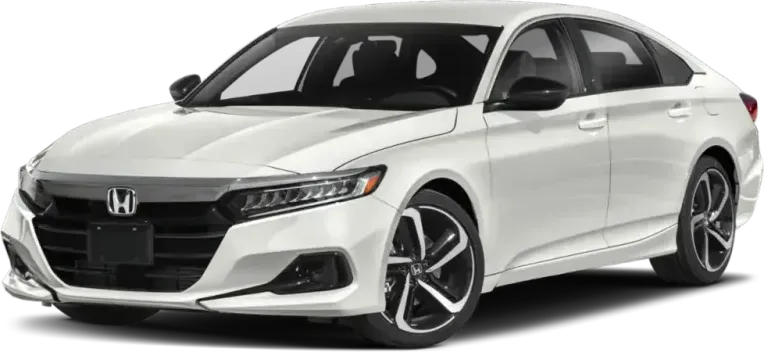 Honda Accord
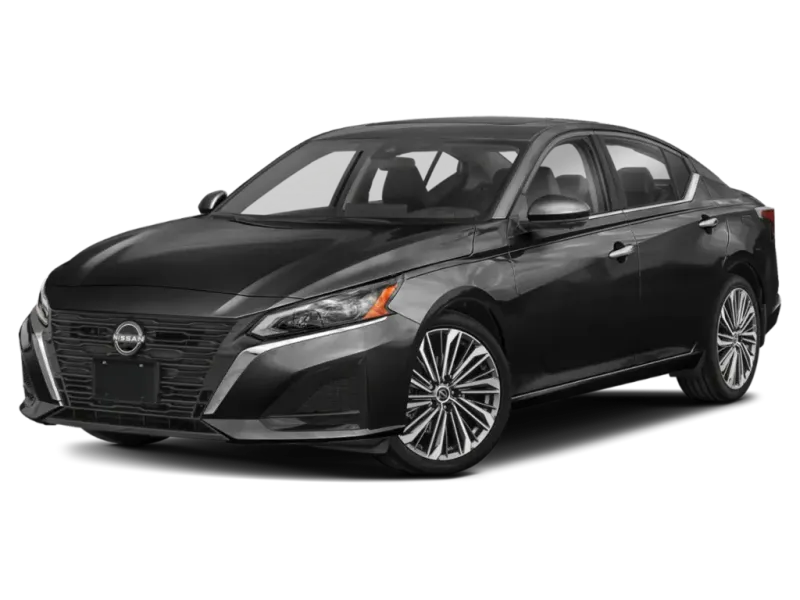 Nissan Altima
The Altima takes 3 of 7 rounds (2 drawn)
The Nissan Altima comes out ahead of the Honda Accord on reliability, with far fewer owner complaints per car sold. The Accord costs less to repair. Its larger recall count and complaint rate are what hold it back, while both cars show the same shop-visit frequency.
How Do the Honda Accord and Nissan Altima Generations Compare?
Verdict
The Nissan Altima is more reliable than the Honda Accord, scoring 79/100 vs 74/100.
Reliability favors the Altima by a clear margin. Owners filed 1.7 complaints per 10,000 sold, against 7.3 for the Accord, and federal recall records show 20 recalls across nine model years against 46. Both cars hold a good standing, and the Accord is cheaper to repair each year. But the Accord's complaint load is heavier and includes fuel in the engine oil, sudden power loss, and false emergency braking. That volume of problem reports decides it.
Biggest gaps
- Nissan Altima has 5.6 fewer complaints per 10k sold
- Nissan Altima has 26 fewer total recalls
- Honda Accord has 3% lower major repair risk
Round by round
- Reliability ScoreAltima
- Total RecallsAltima
- Complaint RateAltima
- Annual Repair CostAccord
- Repair FrequencyDraw
- Major Repair RiskAccord
- Safety RatingDraw
Leaning Honda Accord or Nissan Altima? Check the exact car before you buy
Whichever wins on paper, the car in front of you has its own past. A VIN check shows its accidents, title history and any open recalls.
Honda Accord vs Nissan Altima: Which Is More Reliable?
| Metric | Honda Accord | Nissan Altima |
|---|---|---|
| Reliability ScoreOut of 100, higher is better | 74/100 | 79/100 |
| Years Tracked | 9 | 9 |
| Total RecallsLower is better | 46 | 20 |
| Complaints per 10k SoldLower is better | 7.3 | 1.7 |
| Annual Repair CostLower is better | $400/yr | $483/yr |
| Repair FrequencyUnscheduled shop visits a year | 0.3/yr | 0.3/yr |
| Major Repair RiskChance a repair is major | 9% | 12% |
| Safety RatingNHTSA overall | 2026 NHTSA | 2026 NHTSA |
| Frontal | ||
| Side | ||
| Rollover | ||
| Year WinsModel years with the higher score | 1 (1 tied) | 7 (1 tied) |
What Are the Common Problems With the Honda Accord and Nissan Altima?
Engine and fuel trouble sets the Accord apart: gasoline in the oil with a strong fuel smell, power dropping from 65 to 20 mph, failed injectors, and two engine fires. The Altima's main pattern is intermittent no-starts that need a jump, plus one complaint of a failing CVT. Both cars brake hard with nothing ahead. The Altima has an air bag area with 21 crash-linked complaints, including a driver air bag that did not fully deploy. The Accord's list has no air bag area, but it has a fuel system area with crash links, and the Altima's list has no such area.
| Honda Accord | Problem area | Nissan Altima |
|---|---|---|
1.3 | Engine | 0.2 |
0.9 | Electrical | 0.3 |
0.8 | Brakes | 0.2 |
1.0 | Fuel system | 0 |
0.9 | Automatic emergency braking | <0.1 |
0.2 | Airbags | 0.1 |
0.3 | Steering | <0.1 |
0.2 | Transmission | <0.1 |
0.1 | Body and structure | <0.1 |
0.1 | Acceleration and cruise control | 0 |
0 | Door latches and locks | <0.1 |
0 | Wipers and visibility | <0.1 |
<0.1 | Suspension | <0.1 |
<0.1 | Seat belts | <0.1 |
0 | Seats | <0.1 |
0 | Headlights and exterior lights | <0.1 |
<0.1 | Wheels and tires | 0 |
<0.1 | Lane keeping | 0 |
0 | Backup camera | <0.1 |
0.4 | Other or unspecified | 0.2 |
Complaints per 10,000 units sold, aggregated across all tracked model years from NHTSA owner reports. Shorter bars mean fewer complaints.
Honda Accord problem guides
Nissan Altima problem guides
Which Is Cheaper to Maintain: Honda Accord or Nissan Altima?
How Does Honda Accord vs Nissan Altima Reliability Compare by Year?
| Year | Honda Accord | Nissan Altima | Edge |
|---|---|---|---|
| 2026 | 84/1000 recalls · 16 complaints | 88/1000 recalls · 1 complaint | Altima+4 |
| 2025 | 82/1001 recall · 130 complaints | 79/1001 recall · 7 complaints | Accord+3 |
| 2024 | 74/1006 recalls · 238 complaints | 81/1001 recall · 44 complaints | Altima+7 |
| 2023 | 73/10010 recalls · 237 complaints | 84/1000 recalls · 31 complaints | Altima+11 |
| 2022 | 75/1003 recalls · 322 complaints | 84/1000 recalls · 32 complaints | Altima+9 |
| 2021 | 76/1005 recalls · 297 complaints | 78/1002 recalls · 72 complaints | Altima+2 |
| 2020 | 71/1008 recalls · 412 complaints | 71/1006 recalls · 184 complaints | Tie |
| 2019 | 68/1005 recalls · 797 complaints | 71/1008 recalls · 235 complaints | Altima+3 |
| 2018 | 62/1008 recalls · 2,021 complaints | 76/1002 recalls · 226 complaints | Altima+14 |
Best years to cross-shop: The 2021 Honda Accord scored 76/100 and the 2023 Nissan Altima scored 84/100, the strongest shared model years that have been on the road for at least two years, where available.
Who Should Buy the Honda Accord vs the Nissan Altima?
Team AltimaPick the Altima if you want fewer problem reports and fewer recalls overall. Target 2022, which ranks among its strongest years, and avoid 2020 and 2019, its weakest. Check that the car has never been stranded by a no-start, and ask whether the sudden unprompted braking some owners describe has shown up. If a dealer says it cannot find a fault, treat that as a warning.
Team AccordPick the Accord if the lowest yearly repair bill matters most to you, or if you want a lower chance of a major repair. Avoid 2018 and 2019, its weakest years. The 2025 and 2026 models rate best, but they have had the least time to collect complaints, so do not read that as proof they are the safest buy. On any Accord, smell the oil dipstick for fuel and ask about injector work, which owners report around 40,000 to 50,000 miles.
Honda Accord vs Nissan Altima: Common Questions
- Is the Honda Accord more reliable than the Nissan Altima?
- No, the Altima has a clear edge. Owners filed far fewer complaints per car sold, and federal recall records list fewer recalls. Both cars hold a good standing, so the Accord is not a bad choice. It simply carries more reports of engine, fuel, and braking trouble.
- Which has more recalls, the Accord or the Altima?
- The Accord has more. Federal recall records show 46 recalls across its 2018 to 2026 model years, against 20 for the Altima. Check any specific car's VIN for open recalls before you buy, because a count across several years does not tell you what applies to one car.
- Which costs less to repair, the Accord or the Altima?
- The Accord costs less. Independent repair-cost data puts it at about $400 a year, compared with $483 for the Altima. Over five years that is roughly $415 saved. The Accord also has a lower chance that a repair turns out to be major.
- Do the Accord and Altima both have phantom braking complaints?
- Yes. Owners of both cars describe automatic emergency braking that slams on with nothing ahead. Accord drivers report it up to 70 mph and mention shadows as a trigger. Altima owners report repeated stops on the interstate. Dealers often could not reproduce the fault on either car.
- Which model years of the Accord and Altima should I avoid?
- Avoid the 2018 and 2019 Accord, which are its weakest years. On the Altima, avoid 2020 and 2019. Newer years look better on paper, but they have had less time to collect complaints, so check each car's own history instead of trusting the year alone.
Related Reliability Comparisons
More Honda Accord comparisons
Decided between Honda Accord and Nissan Altima? Run a VIN check before you buy — uncover hidden accidents, title issues, and open recalls.
How we score the Honda Accord and Nissan Altima
Scores weight complaint severity at 35%, repair costs at 30%, recall impact at 20%, and the spread of complaints across systems at 15%, with complaint counts adjusted for US sales. Read the full methodology.
See incorrect data? Report an issue