Last updated: 2026-11-19
Driver-assist tech
Honda Accord Automatic Emergency Braking Problems
On the Honda Accord, automatic emergency braking most often fires with nothing ahead, stopping the car hard and sometimes causing rear-end crashes.
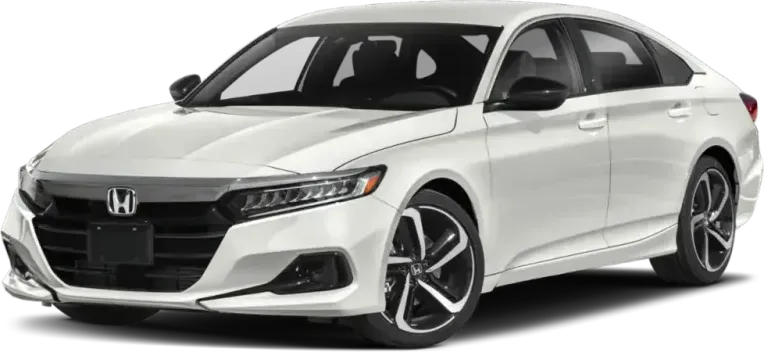
- Owner complaints
- 520
- Share of all complaints
- 12%
- Crash / fire / injury reports
- 17 / 0 / 26
- Related recalls
- 0
Honda Accord automatic emergency braking complaints by model year
The 2018 model year has the most complaints by far, at 204, and the highest rate per vehicle sold. The 2019 and 2020 years follow, with 2021 and 2022 still well above the newest years. The 2021 and 2022 years carry the most crash and injury reports. Complaints thin out from 2023 onward, but those years have had less time on the road to collect filings, so low counts there do not show the problem is gone. The 2026 count rests on one owner's report and is too new to judge.
| Model year | Complaints | Per 10,000 sold | Crash, fire, injury reports |
|---|---|---|---|
| 2018 | 204 | 7 | 1, 0, 6 |
| 2019 | 102 | 3.8 | 1, 0, 5 |
| 2020 | 75 | 3.8 | 1, 0, 2 |
| 2021 | 52 | 2.6 | 5, 0, 2 |
| 2022 | 48 | 3.1 | 3, 0, 8 |
| 2023 | 16 | 0.8 | 4, 0, 0 |
| 2024 | 13 | 0.8 | 1, 0, 2 |
| 2025 | 8 | 0.5 | 1, 0, 1 |
| 2026 | 2 | 1.6 | 0, 0, 0 |
Owner complaints filed with NHTSA under forward collision avoidance. Newer model years have had less time to collect complaints.
What goes wrong
The main complaint is phantom braking. The car brakes hard with no vehicle or object ahead, usually with an orange BRAKE message on the dash. Owners report it on city streets, in rain, while passing trucks, and at highway speed. Dealers often cannot reproduce it. A second pattern is a set of collision mitigation and adaptive cruise warnings that shut the driver-assist systems off together.
The danger is the traffic behind you. Owners describe near rear-end collisions and actual crashes, and whiplash and neck injuries come up often. Crash reports appear in most model years, including one where the car hit a concrete barrier on a snowy highway. No fires are reported. The data does not describe cars left undrivable, though one owner said the car dragged and would not pass 10 mph. Federal recall records list no recalls in this area.
Symptoms owners report
Hard braking with nothing ahead
The car slams to a near stop on a clear road, from city speeds up to highway speeds. Owners feel a sharp jolt and see a flashing BRAKE message. Drivers behind often have no time to react.
Triggers like shadows and passing trucks
Owners name shadows from overpasses and trees, railroad tracks, curves, merging, and passing semi trucks or cars in the next lane. Heavy rain and snow are also mentioned. The same car often repeats the event over weeks or months.
Collision mitigation warning clusters
Messages for collision mitigation braking, road departure mitigation, and adaptive cruise control appear together, and the systems shut off. Some owners saw this on cars with only a few thousand miles. A restart sometimes clears it, and it often returns.
Cruise control misreads traffic
Adaptive cruise control brakes for cars in neighboring lanes. In one report it lost track of the car ahead after the turn signal went on and sped up into a crash. Another owner said the car braked in the middle of a left turn.
Brake drag with a warning
In a smaller set of reports, a collision mitigation warning comes on and the car feels as if a brake is stuck. One owner could not get above 10 mph. The dealer found nothing wrong.
System cannot stay off
Owners say the system can be switched off but turns back on at every restart, and some turn it off each time they start the car. Others say it cannot be fully disabled.
When the problems start
Owners rarely tie the problem to one mileage, and it shows up both early and late. One 2020 owner saw the warning cluster at 2,516 miles. A 2023 owner had an emergency stop crash under 8,000 miles. Another owner bought a 2022 with about 30,000 miles and reported repeat false braking by about 108,000 miles. One 2019 owner reported warnings at about 75,500 miles.
Repairs and recalls
Owners say dealers often find no fault or no stored codes, so many leave without a fix. Where parts were replaced, results were mixed. A front camera or radar swap did not always stop repeat episodes, one dealer replaced a forward camera twice with no change, and one recalibration failed within miles. One 2018 owner about 5,000 miles past warranty was quoted over $3,000. A 2019 owner reported new warnings hours after a dealer software update. Federal recall records list no recalls in this area.
Checking a used Accord for automatic emergency braking problems
- Ask the seller if the car has ever braked hard on its own, and whether the owner turns the system off at each start.
- Check the dash at startup for BRAKE, collision mitigation, road departure, or adaptive cruise warnings. They should clear and stay off.
- Test drive on a highway, in shade and past trucks, and note any sudden unexplained slowing.
- Request service records showing dealer visits for these warnings, camera or radar replacement, or software updates, and ask what was found.
- Check the front camera and radar area for damage or a bad windshield replacement, and ask if any crash repair was done.
- Run the VIN on the federal recall lookup before buying, since open items can change.
For the rest of the car, use a full Honda Accord inspection checklist.
A VIN check shows whether the car you're looking at had its recall work done, plus accident and title history.
Honda Accord Automatic Emergency Braking Problems: common questions
- Which Honda Accord years have the most automatic emergency braking complaints?
- The 2018 model year leads with 204 complaints, followed by 2019 and 2020. The 2021 and 2022 years have the most crash and injury reports. Newer years have fewer complaints, but they have had less time to collect them.
- Is it safe to drive an Accord with this problem?
- The main risk is a sudden stop that gets you rear-ended. Owners report crashes, whiplash, and neck injuries. Most cars keep driving between episodes, but the braking can repeat without warning. Have the car checked, and be careful in heavy traffic.
- Is there a recall for Accord automatic emergency braking problems?
- Federal recall records list no recalls in this area for the Accord. Some owners mention recalls or dealer campaigns in their complaints, but those comments do not confirm a recall. Check the VIN on the federal recall lookup for any open items.
- How much does the fix cost?
- Owner reports give little cost data. One 2018 owner just past warranty was quoted over $3,000 for repairs. Others describe dealer visits that found nothing, so there was no charge or no fix. Parts swaps like cameras or radar have not always stopped it.
- Can I turn off automatic emergency braking on an Accord?
- Owners say the system can be switched off, but it turns back on at every restart, so some turn it off each time they drive. Others say it cannot be fully disabled. Turning it off removes the safety feature it provides.
Other Honda Accord problems
Engine & powertrain
Electrical & lighting
Brakes, steering & tires
Airbags & seat belts
Body & interior
More on the Honda Accord
See incorrect data? Report an issue