Last updated: 2026-11-26
Brakes, steering & tires
Honda Accord Wheel And Tire Problems
The Honda Accord has reports of early tire wear, sudden tire failures and recurring tire-pressure warnings.
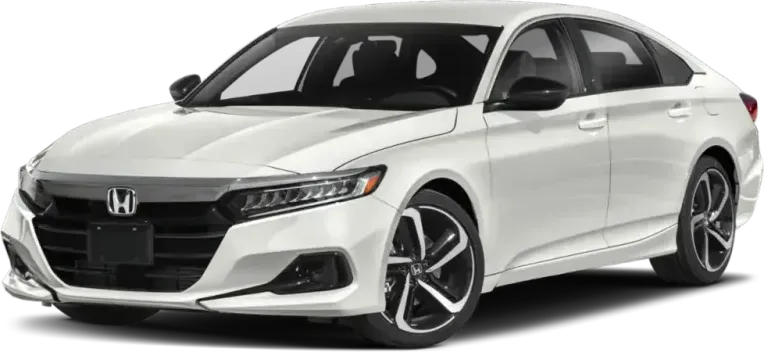
- Owner complaints
- 54
- Share of all complaints
- 1%
- Crash / fire / injury reports
- 2 / 0 / 1
- Related recalls
- 0
Honda Accord wheel and tire complaints by model year
The largest raw complaint count is for 2018, with 14 reports, followed by 2019 with 10 and 2022 with eight. The fewest are one each for 2021 and 2026. The 2026 figure, and counts for other recent years, reflect less time to collect reports and should not be treated as evidence of better reliability. Per-sale rates are low across the listed years, ranging from zero as reported for 2021 to 0.8 per 10,000 sold for 2026. Counts alone do not establish that one year is more reliable.
| Model year | Complaints | Per 10,000 sold | Crash, fire, injury reports |
|---|---|---|---|
| 2018 | 14 | 0.5 | 0, 0, 0 |
| 2019 | 10 | 0.4 | 1, 0, 1 |
| 2020 | 4 | 0.2 | 0, 0, 0 |
| 2021 | 1 | <0.1 | 0, 0, 0 |
| 2022 | 8 | 0.5 | 0, 0, 0 |
| 2023 | 5 | 0.3 | 1, 0, 0 |
| 2024 | 6 | 0.4 | 0, 0, 0 |
| 2025 | 5 | 0.3 | 0, 0, 0 |
| 2026 | 1 | 0.8 | 0, 0, 0 |
Owner complaints filed with NHTSA under wheels, tires. Newer model years have had less time to collect complaints.
What goes wrong
Tires losing air, wearing unevenly or failing suddenly recur in Honda Accord wheel and tire complaints. Reports describe low-pressure warnings that return after a reset, leaks that went unnoticed by the warning system, and tires with chunking, separation or sidewall damage. Other filings mention rim damage, noise, vibration and a wheel bearing concern. These accounts do not establish a shared cause, and some involve tire or shop issues rather than a defect in the car.
The reports include serious incidents: a 2019 complaint describes a crash after a pothole-related blowout, and a 2025 filing describes a wheel coming off at speed. Year-level data records crash reports for 2019 and 2023, with one injury reported in 2019; no fires are listed. A flat or failed tire can make a car hard to control or leave it stranded, though the data does not show how often cars become undrivable. Federal recall records list no recalls in this problem area.
Symptoms owners report
Recurring pressure warnings
Some owners say the low-tire-pressure warning came on when measured pressures seemed normal, then returned after recalibration. Others report a leak or flat without a timely warning. These are conflicting owner experiences, not proof that every Accord has a pressure-monitoring fault.
Early or uneven tread wear
Reports describe inner-edge wear, tread chunking, cupping, separation and tires needing replacement earlier than owners expected. One owner reported chunking across all four tires near 29,200 miles; others described uneven wear or vibration. The filings do not establish a single cause.
Sudden tire or sidewall failure
Owners have reported blowouts or sidewall failures while driving, including a 2025 complaint involving a flat and rim damage on a smooth road. Other blowout reports mention potholes or uncertain tire damage. A sudden loss of tire pressure can affect control, but individual complaints do not confirm a vehicle-wide defect.
Wheel noise or damage
Complaints mention a loud tire-flopping sound, a thump or vibration from the rear, and a report of a cracked rim without an identified impact. Other filings describe wheel damage after striking a pothole. These reports do not establish that all such noises or damage share one cause.
Wheel and bearing concerns
A small number of reports describe a wheel bearing replacement, difficulty adjusting rear wheels during alignment, or wheels said to be defective and associated with uneven tire wear. These are owner accounts; the supplied records do not confirm a common wheel or bearing defect.
Repairs and recalls
Owner accounts describe replacing tires, using a spare after a flat, having tires inspected or rotated, and having an alignment performed. Some report repeated dealer visits without a problem being identified or a warning returning after recalibration. A wheel bearing replacement is also reported. Federal recall records list no recalls in this problem area. One 2025 complaint mentions a delayed tire recall repair, but that filing alone does not establish a recall covering this problem. The model's annual repair-cost estimate is not specific to wheels or tires.
Checking a used Accord for wheel and tire problems
- Check tire pressures with a gauge and compare them with the vehicle placard; do not rely only on the dashboard warning.
- Inspect all tires, including inner edges, for uneven wear, cracks, bulges, separation or visible cords.
- Look for rim damage and ask about prior flats, blowouts, wheel loss or tire replacements.
- During a test drive, note thumping, vibration or unusual tire noise without testing the car at speed.
- Review service records for repeated pressure warnings, tire replacements, rotations and alignment work.
- Check current federal recall records using the vehicle identification number.
For the rest of the car, use a full Honda Accord inspection checklist.
A VIN check shows whether the car you're looking at had its recall work done, plus accident and title history.
Honda Accord Wheel And Tire Problems: common questions
- Which Honda Accord years have wheel and tire complaints?
- Complaints appear across the listed years from 2018 through 2026. The highest raw count is for 2018, followed by 2019 and 2022. Newer model years have had less time to collect reports, so a low count for a recent year is not evidence that it is the safest choice.
- Is it safe to drive an Accord with a tire-pressure warning?
- Reports include warnings owners believed were false and tires that lost air without a timely warning. Check pressure with a gauge and inspect the tire rather than assuming the light is wrong or that no light means the tire is sound. Do not continue driving on a visibly damaged or deflated tire.
- Is there a wheel or tire recall for the Accord?
- The supplied federal recall records list no recalls in the wheels and tires problem area. A complaint about waiting for a recall repair is not itself confirmation of a recall covering this issue. Check the vehicle identification number against current federal records for any open recalls.
- What wheel and tire symptoms should I check on a used Accord?
- Look for uneven or inner-edge tread wear, cracking, bulges, separation, visible cords and rim damage. Ask whether the car has had repeated pressure warnings, flats, early tire replacement, wheel or bearing work, or alignment visits. A test drive can reveal vibration or unusual tire noise, but cannot rule out hidden damage.
- What might it cost to fix Accord wheel and tire problems?
- The supplied data gives no problem-specific repair prices. The model's annual repair-cost estimate is not a price for a particular tire, wheel, bearing or alignment issue. Have a qualified shop inspect the vehicle and provide an estimate before purchase.
Other Honda Accord problems
Engine & powertrain
Electrical & lighting
Driver-assist tech
Brakes, steering & tires
Airbags & seat belts
Body & interior
More on the Honda Accord
See incorrect data? Report an issue