Last updated: 2026-11-19

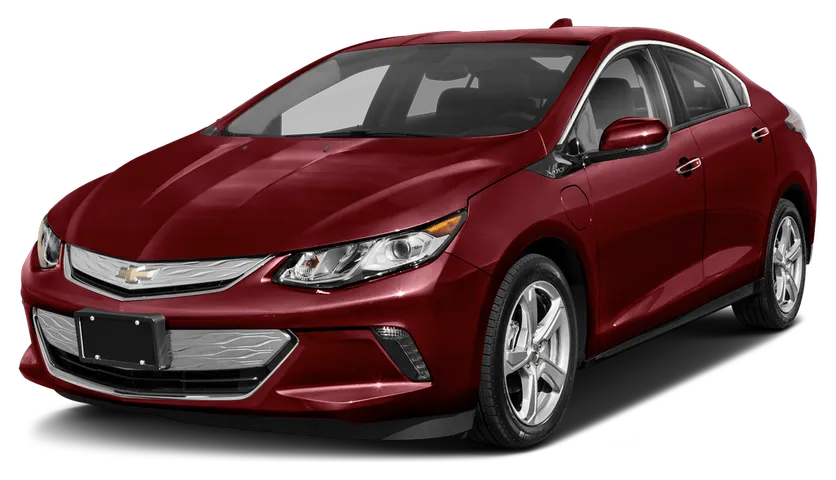
2018 Chevrolet Volt
60
GoodReliability score: 60 out of 100, rated Good

Reliability score

Good · #3 of 4 scored Volt years

2018 Chevrolet Volt Reliability Report

Rated good, the 2018 Chevrolet Volt still trails other 2018 sedans, with false "Shift to Park" alerts and sudden power loss the main risks.

Recalls

2

Complaints

229

Complaint Rate

125.1per 10,000 sold

Est. Repair Cost

$550

Annual Fuel Cost

$1,450

Detailed Score Breakdown

Complaint Severity35% of score24/100

Component-weighted complaints normalized by sales volume

Repair Costs30% of score80/100

Independent repair cost ratings

Recall Impact20% of score80/100

Recall count weighted by severity

Issue Diversity15% of score80/100

Breadth of reported problem categories

The verdict

Consider

Middle of the four scored Volt years: better than 2017, behind 2019, with false shift-to-park alerts, propulsion loss and EGR valve failures.

Looking at a used 2018 Chevrolet Volt? Check that exact car

2 recalls cover this year. A VIN check shows whether the car you found had the work done, plus accidents, title and odometer history.

Generation & Refresh (US)

Post-Refresh

2018 is 1 year after the 2017 chevrolet volt refresh.

  • Year 3 in the Second generation (2016–2019) (2016–2023).
  • Well-established in its generation — most early issues should be resolved.
  • 2nd generation Volt (US).

What this means for buyers

Post-refresh years tend to be among the most refined — updates have been applied and early kinks worked out.

2016: Second generation (2016–2019) Launch

Generation start — new platform.

2017: Mid-Cycle Refresh

Updated features and styling tweaks.

2018: This Model Year

2018 is 1 year after the 2017 chevrolet volt refresh.

Should You Buy the 2018 Chevrolet Volt?

Mixed, leaning cautious. Owner complaints and federal records put this year in good standing, and it lands in the middle of the four scored Volt years. Against other 2018 sedans it ranks well below average, and independent repair-cost data puts yearly repairs at $550 versus $471 for its class. It is clearly better than the 2017 and behind the 2019. Crash protection is strong at 5 of 5 stars.

The trouble is drivability. Owners report a false "Shift to Park" message that keeps the car from shutting off or locking, and the 12-volt battery can drain. Others lose drive power on the highway with a "Propulsion Power Is Reduced" warning, often traced to the battery energy control module, with bills over $3,000. The gas engine can also quit with "Engine Not Available", usually an EGR valve failure between 20,000 and 45,000 miles. Parts are often backordered. Federal recall records list two recalls, for seat belts and hydraulic service brakes.

Ask for repair records covering the shifter, the control module and the EGR valve, plus proof both recalls were done. Also look at a 2019.

Compared to the 2019 Chevrolet Volt, which scored 8 points higher. See also the 2017 Chevrolet Volt for an earlier comparison.

Pros

  • Acceptable reliability score
  • Low major repair risk9%
  • Low recall count

Cons

  • Above-average repair costs for its class
  • Above-average complaint rate for Sedan
  • ElectricalCar often refuses to power down70 complaints

Compare 2018 Chevrolet Volt With

Recall Overview

2

recalls on record

The 2018 Chevrolet Volt carries 2 recalls — a low count. Authorized dealers repair any open recall free of charge, regardless of warranty status.

NHTSA.gov →

Complaint Breakdown

125.1

per 10,000 sold

Segment avg: 26.4

LowAvgHigh
High

Safety Incidents

4

Crashes

0

Fires

1

Injuries

0

Deaths

★★★★★

NHTSA 5/5 Stars

Data sourced from NHTSA complaint filings and manufacturer recall notices. Complaint narratives are owner-reported.

2018 Chevrolet Volt Recall Details

2 recalls have been issued for the 2018 Chevrolet Volt. Recall repairs are free at authorized dealers, so check that each one below was done on the car you are looking at.

Seat beltsRecall 18V673000Sep 26, 2018

Certain second-row or third-row rear seatbelts retractor assemblies may not automatically lock when the seatbelt is fully pulled out of the retractor, possibly preventing a child seat from being properly secured.

As such, these vehicles fail to comply with the requirements of Federal Motor Vehicle Safety Standard (FMVSS) number 208, "Occupant Crash Protection."

Risk
If the child seat is not properly secured in the event of a crash, it can increase the risk of injury.
Fix
GM will notify owners, and dealers will inspect the rear seatbelt retractors and replace them if necessary, free of charge.
Which vehicles are covered

General Motors LLC (GM) is recalling certain 2018-2019 Cadillac CT6, Escalade ESV, Chevrolet Suburban, Volt, and GMC Yukon XL vehicles.

More about the fix

The recall began November 7, 2018. Owners may contact Cadillac customer service at 1-800-458-8006, Chevrolet customer service at 1-800-222-1020 or GMC customer service at 1-800-462-8782. GM's number for this recall is 18315.
BrakesRecall 18V576000Aug 30, 2018

The rear brake caliper pistons may have an insufficient coating causing gas pockets to form, potentially reducing rear brake performance.

Risk
A reduction of braking performance can increase the risk of a crash.
Fix
GM will notify owners, and dealers will bleed the vehicle's brake system, free of charge.
Which vehicles are covered

General Motors LLC (GM) is recalling certain 2018-2019 Chevrolet Equinox, Impala, Cruze, Volt and Bolt EV vehicles, GMC Terrain vehicles, Buick Lacrosse and Regal vehicles, Cadillac XTS and XTS Professional vehicles and 2018 Chevrolet Malibu vehicles.

More about the fix

The recall began October 11, 2018. Owners may contact Buick customer service at 1-800-521-7300, Cadillac customer service at 1-800-458-8006, Chevrolet customer service at 1-800-222-1020, or GMC customer service at 1-800-462-8782. GM's number for this recall is 18279.

VIN History Report

Buying a used 2018 Chevrolet Volt? Check its history first

Electrical system problems lead owner complaints about the 2018 Chevrolet Volt, and 2 recalls were issued for it. A VIN check shows whether this car's recall work was done, plus accident, title, and odometer history.

No VIN? Just hit “Check VIN” to look one up.

  • Accidents
  • Open Recalls
  • Title History
  • Odometer Rollback

2018 Chevrolet Volt NHTSA Safety Ratings

Overall Safety Rating

Overall safety rating: 5 out of 5
Crash Test Results by Configuration (expand)

Gas Powertrain

Driver: 5/5Passenger: 4/5

Rollover risk: 9.3%

Safety Technologies

Dynamic Head Restraints (Not Available)Head Restraint (Driver, Front Passenger, Rear Seat)Advanced Belt Feature (Standard)Adjustable Upper Belt Anchorage (Not Available)Seat Belt Reminder System (Driver, Front Passenger)Frontal Air Bag (Driver, Front Passenger)Curtain (Driver, Front Passenger, Rear Seat)Torso (Rear Seat)Pelvis/Torso (Driver, Front Passenger)Knee (Driver, Front Passenger)Additional Air Bags (Not Available)Meets Side Air Bag Out-of-Position Requirements (Yes)LATCH Locations (Rear Seat)Safety Power Windows (Anti-Pinch) (Standard)Safety Power Windows (Anti-Pinch) locations (Driver)
View full safety data on NHTSA.gov →

Chevrolet Volt Repair Costs & Maintenance

Maintenance Rating

4Maintenance rating: 4 out of 5

Based on NHTSA complaint patterns, recall severity, and publicly available cost benchmarks.

Est. Annual Maintenance

$550

vs $471 avg for alternative fuel vehicles

vs $652 avg for all vehicles

Repair Frequency

0.4

unscheduled repair visits per year

Severe Repair Probability

9%

chance of a major repair

Annual Cost Comparison

Volt
$550
Category Avg
$471
All Vehicles
$652

Category-level averages derived from publicly available industry reports (AAA, CarMD). Model-level estimates produced by Auto Reliability Index.

MPG & Annual Running Costs

Plug-in Hybrid

42 MPG

Running cost: $2,000/yr

Fuel + repair

43 city / 42 hwy MPG

Running cost includes EPA fuel-cost estimate and independent repair-cost data (repair cost estimated at model level). Excludes routine maintenance, depreciation, and insurance. Data as of 2018 EPA label cycle.

Plug-in Hybrid trims
TrimDriveTrans.CityHwyCombFuel Cost
Volt 1.5L 4-cylFront-Wheel DriveAutomatic (variable gear ratios)434242$1,450

Used Buying Checklist

Key things to inspect or verify before purchasing a 2018 Chevrolet Volt.

  • Shift into Park and power off at least ten times; walk away if "Shift to Park" appears with the shifter in Park.

  • Ask for service records showing any battery energy control module (BECM) diagnosis or replacement, and any reduced-propulsion episodes.

  • Have a dealer scan for stored codes such as U2603, P25A2, or C056D before buying.

  • Check the service history for EGR valve or cooler replacement and any "Engine Not Available" warnings.

  • Run the gas engine until fully warm, then sniff under the hood for a burnt plastic smell.

  • After the test drive, check front wheels for excess heat, smoke, or odor from sticking calipers.

  • On a cool day, turn on the defrost and watch whether the windshield fogs over instead of clearing.

  • Confirm power steering assist stays steady through low-speed turns with no dash warning message.

Going to see one? Take the printable 2018 Chevrolet Volt inspection checklist with you.

2018 Chevrolet Volt Common Problems by Component

229 owner complaints grouped by vehicle system.

70
50
38
28
ELECTRICAL SYSTEM (70)POWER TRAIN (50)FUEL/PROPULSION SYSTEM (38)ENGINE (28)UNKNOWN OR OTHER (22)SERVICE BRAKES (7)VISIBILITY/WIPER (4)STEERING (3)Other (7)

ELECTRICAL SYSTEM

70 complaints

Volt electrical problems across all model years

The car often refuses to power down. It shows "Shift to Park" while the shifter is already in Park. Lights stay on, the doors will not lock, and the 12-volt battery can drain. Cycling the shifter or pressing its button usually clears the message, but owners say it gets more frequent over time. One dealer replaced a shifter wire harness jumper, and the fault came back. A second pattern is sudden loss of drive power on the highway with a "Propulsion Power Is Reduced" warning. Dealers trace it to the battery energy control module (BECM), with repair bills over $3,000.

70 complaints total

POWER TRAIN

50 complaints

Volt transmission problems across all model years

A false "Shift to Park" message dominates these reports. The car will not turn off or lock until the driver works the shifter or restarts it, sometimes several times. In a few cases the shifter stops working entirely and no power reaches the wheels. Other reports describe losing propulsion while driving. The car hesitates in an intersection, jerks and stalls, or shows the park warning at freeway speed and has to be towed. Dealers point to the battery energy control module in some cases, and replacement parts are unavailable.

50 complaints total

FUEL/PROPULSION SYSTEM

38 complaints

Volt fuel system problems across all model years

Propulsion cuts out while driving. A "Reduced Propulsion" warning appears, the car slows to a crawl or goes into limp mode, and some cars stop in a travel lane or fail to climb a hill. Electric range can drop to zero without warning, and the gas engine starts on its own. Dealers most often blame the battery energy control module (BECM). Some cases are traced to the EGR valve or catalytic converter. Many complaints center on backordered parts, cars sitting at dealers for a month or more, and no loaner.

38 complaints total
ENGINE (28 complaints)

ENGINE

28 complaints

Volt engine problems across all model years

The gas engine shuts down mid-drive. "Reduced Propulsion" and then "Engine Not Available" messages appear, often at highway speed, leaving only whatever battery range remains. Drivers end up stranded or towed. Dealers usually diagnose a failed EGR valve, sometimes with the cooler, at roughly 20,000 to 45,000 miles. The part is backordered, and cars sit at dealers for months. A separate pattern is a burnt plastic smell from under the hood once the engine is fully warm, reported on low-mileage cars. Dealers dismiss it as break-in.

28 complaints total
UNKNOWN OR OTHER (22 complaints)

UNKNOWN OR OTHER

22 complaints

Most of these reports describe the same false "Shift to Park" fault. The car stays on, lights stay lit, and the doors will not lock until the shifter is jiggled or cycled. Dealers have called for a gear assembly replacement or charged a diagnostic fee, and some fixes do not hold. Other complaints include a rear clunk that nudges the car forward as it stops, a surge followed by "Engine Not Available" when the battery runs out, laggy Android Auto, and glare from interior chrome.

22 complaints total
SERVICE BRAKES (7 complaints)

SERVICE BRAKES

7 complaintsSafety-related

Front brake calipers stick, which overheats the wheels and causes smoke, odor, and high tire pressure. The problem returns after cleaning or dealer service. Two complaints involve crashes. In one, the brakes lose all resistance on a long downhill in stop-and-go traffic, and inspectors find no error codes. In the other, the car accelerates on its own while parking and injures the driver. Other reports cover ABS failure tied to a fractured front half shaft anti-click washer that damages the wheel speed sensor, and brake lights that stay off when the regen paddle slows the car.

7 complaints total2 crashes1 injury
VISIBILITY/WIPER (4 complaints)

VISIBILITY/WIPER

4 complaintsSafety-related

The windshield fogs over completely when the defrost is turned on in cool weather, and one driver reports a crash from the lost visibility. Another report describes heat and defrost stopping during a "Reduced Propulsion" episode in heavy rain, which left the glass fogged. Glare from interior chrome temporarily blinds drivers in direct sun. In one case a protruding screw punctured the washer fluid tank and drained it.

4 complaints total1 crash
STEERING (3 complaints)

STEERING

3 complaints

Power steering cuts out while driving. A dash message appears and the wheel becomes very hard to turn, making quick avoidance impossible. Assist can return after the car sits for a while. Dealers find stored codes, including C056D, but often cannot reproduce the failure and leave it unrepaired. One car is towed. A separate report describes the car sputtering, pulling to the right at highway speed, and smoking, with no warning light, at about 80,200 miles.

3 complaints total
VEHICLE SPEED CONTROL (2 complaints)

VEHICLE SPEED CONTROL

2 complaints

Power drops suddenly, either at startup or at freeway speed. A "Propulsion Power is Reduced" warning appears, the car makes a strange noise, and it will not drive normally until it is restarted several times. In another case the car shows "Shift to Park" while moving downhill on a freeway, stops responding to the accelerator, and coasts in traffic. One dealer responds with a battery capacity reset, which the owner doubts will fix it.

2 complaints total
ELECTRONIC STABILITY CONTROL (ESC) (1 complaints)

ELECTRONIC STABILITY CONTROL (ESC)

1 complaint
07/04/2020

WHENEVER I PUT MY VEHICLE IN PARK AND TURN IF OFF, THE SCREEN ON THE DASH WILL SAY "PLEASE SHIFT TO PARK." I WILL TURN ON MY VEHICLE AND THEN SHIFT IT TO PARK AGAIN AND TURN IT OFF. SOMETIMES IT WILL STOP NOTIFYING ME AFTER ONE TIME AND OTHER TIMES I WILL HAVE TO TURN IT OFF AND SHIFT IT TO PARK, EVEN THOUGH ITS IN PARK, SEVERAL TIMES. THE CAR WILL NOT TURN OFF AND I CANNOT LEAVE THE VEHICLE UNTIL IT STOPS NOTIFYING ME.

When Do 2018 Chevrolet Volt Problems Start?

Based on owner complaint patterns, here’s when common issues tend to appear.

20,000–45,000 milesEGR valve failure, engine unavailable

Best & Worst Chevrolet Volt Years

Best Chevrolet Volt years to buy

Top pick: the highest score among years with at least two years on the road; the newest wins a tie.

Chevrolet Volt years to avoid

Full Chevrolet Volt years-to-avoid analysis →

Chevrolet Volt reliability score trend

Scores 0–100, higher is better. Best and worst years are ringed. This year is highlighted.

Chevrolet Volt reliability scores by year
YearScoreRating
201666/100Good
201757/100Mixed
201860/100Good
201968/100Good

Chevrolet Volt Reliability Compared to Other Years

Reliability scores compared across model years
YearScorevs Prior YearRatingRecallsComplaints
201968/100+8Good235
2018(selected)60/100+3Good2229
201757/100-9Mixed0703
201666/100—Good1171

Frequently Asked Questions

Is the 2018 Chevrolet Volt reliable?
Reasonably, but with caveats. It rates good and sits in the middle of the four scored Volt years, yet it falls well below average among 2018 sedans. Owners filed 229 complaints, mostly about power loss and shifter warnings. Repair costs run $550 a year against $471 for its class.
What are the most common problems with the 2018 Chevrolet Volt?
Electrical faults lead, with 70 complaints, followed by power train (50), fuel/propulsion (38) and engine (28). The usual symptoms are a false "Shift to Park" message, sudden loss of drive power, and the gas engine shutting down. Dealers often point to the battery energy control module or the EGR valve.
Does the 2018 Chevrolet Volt have EGR valve problems?
Yes, owners report it. The gas engine shuts down mid-drive, with "Reduced Propulsion" and then "Engine Not Available" messages, often at highway speed. Dealers usually diagnose a failed EGR valve, sometimes with the cooler, at roughly 20,000 to 45,000 miles. Owners say the part is backordered and cars wait months.
Has the 2018 Chevrolet Volt been recalled?
Yes. Federal recall records list two recalls for this model year, covering seat belts and hydraulic service brakes. The records do not say whether any particular car was repaired, so ask the seller for proof that both recalls were completed.
Is the 2018 Chevrolet Volt better than the 2017 or 2019?
It is better than the 2017, which rates worse and has 703 complaints. The 2019 rates better than the 2018, with 35 complaints and 2 recalls. If you want the Volt with the stronger standing, the 2019 is the one to compare against.

Don’t buy a 2018 Chevrolet Volt without checking its VIN first — hidden accidents, title issues, and open recalls could cost you thousands.

Look Up a VIN →

How we score the 2018 Chevrolet Volt

Of the four inputs behind this score, the 2018 Chevrolet Volt does best on repair costs (80/100) and worst on complaint severity (24/100). Scores weight complaint severity at 35%, repair costs at 30%, recall impact at 20%, and the spread of complaints across systems at 15%, with complaint counts adjusted for US sales. Read the full methodology.

Get notified when new recalls or reliability data is added for the Chevrolet Volt.

No spam. Only data updates for this model.

See incorrect data? Report an issue