Last updated: 2026-11-19
Engine & powertrain
Chevrolet Traverse Engine Problems
Chevrolet Traverse engine complaints are mostly cracked exhaust pipes and broken brackets that cause loud rattles and fumes in the cabin.
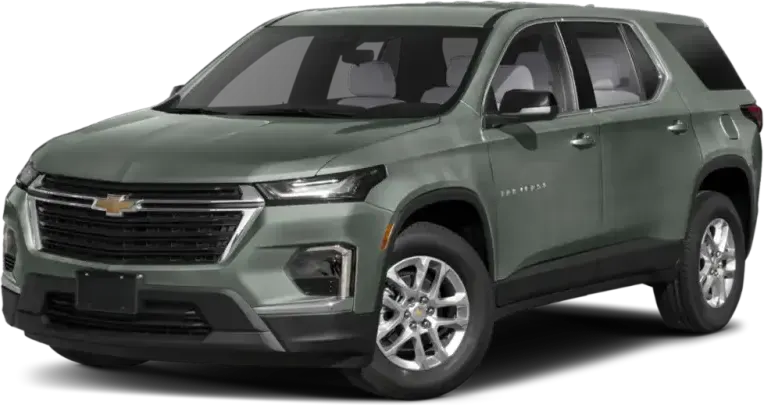
- Owner complaints
- 279
- Share of all complaints
- 16%
- Crash / fire / injury reports
- 0 / 1 / 2
- Related recalls
- 0
Chevrolet Traverse engine complaints by model year
The 2018, 2019 and 2020 model years carry the most engine complaints, with 73, 45 and 82. The 2020 year is highest relative to sales, followed by 2018. The 2021 through 2024 years show far fewer reports, though 2023 owners still describe repeat exhaust leaks and 2024 owners describe coolant leaks. The 2025 and 2026 years have very few complaints, but they have had little time on the road, so low counts there do not make them safer picks.
| Model year | Complaints | Per 10,000 sold | Crash, fire, injury reports |
|---|---|---|---|
| 2018 | 73 | 5 | 0, 0, 0 |
| 2019 | 45 | 3.1 | 0, 1, 0 |
| 2020 | 82 | 6.5 | 0, 0, 0 |
| 2021 | 14 | 1.2 | 0, 0, 0 |
| 2022 | 16 | 1.7 | 0, 0, 1 |
| 2023 | 17 | 1.5 | 0, 0, 1 |
| 2024 | 22 | 2.1 | 0, 0, 0 |
| 2025 | 6 | 0.4 | 0, 0, 0 |
| 2026 | 4 | n/a | 0, 0, 0 |
Owner complaints filed with NHTSA under engine, engine and engine cooling. Newer model years have had less time to collect complaints.
What goes wrong
Most engine complaints on this SUV are really exhaust failures. The welded bracket on the front exhaust pipe breaks, the pipe cracks, and sometimes the manifold or catalytic converter follows. Owners hear a rattle or loud rumble at startup, and some smell exhaust inside the car. Repairs often fail again. Less common reports cover oil leaks, oil consumption, coolant leaks from radiator hoses, and engines that shut off while driving.
Exhaust fumes in the cabin are a carbon monoxide concern, so that symptom should not wait. The bigger risks are rarer: a 2019 fire report where the engine shut off, smoked and burned, a 2018 report of an engine that died on the highway with no warning, and a 2026 report of a sudden highway shutdown that ended in a new engine. Federal records show no engine-related crashes. Some owners left cars unrepaired while arguing over who should pay.
Symptoms owners report
Broken exhaust bracket and cracked pipe
The welded bracket on the front exhaust pipe fractures and leaves a crack or hole. Owners hear rattling, rumbling or a loud exhaust, worst at startup. Some get a check engine light with code P0420. Others get no warning at all.
Exhaust fumes in the cabin
Leaks under the car let exhaust smell reach the passenger area, especially during auto stop. Owners report headaches and one report of dizziness. This is a carbon monoxide risk and the most urgent symptom in this group.
Oil leaks and oil use
Reports include leaks at the timing cover, valve covers and oil pan gasket. Some owners add a quart or more between changes. One dealer confirmed the consumption, but the manufacturer called it normal and declined to act.
Coolant leaks from radiator hoses
Mostly 2024 and 2025 cars. Upper and lower hoses, fittings or the radiator leak, sometimes emptying the reservoir with no dash warning. Repairs have been delayed by a national parts backorder, which raises overheating risk.
Stalling, shutdowns and limp mode
Some engines cut out at low speed or on the highway. Others drop into reduced power and will not pass 25 mph. Many of these reports read like transmission faults, and dealers sometimes cannot reproduce them.
Internal engine failure
Rare but costly. Owners describe a failed rod bearing, a locked engine from an oil pump failure, and a piston that struck a valve. Each case ended with a replacement engine or a call for one.
When the problems start
Exhaust failures often show up between about 53,000 and 61,000 miles on 2020 cars. Earlier ones appear too: a 2023 owner had a first leak at 32,095 miles and a fourth repair at 58,480. One 2020 report runs up to 106,000 miles. Coolant leaks hit 2024 cars as early as 15,000 miles. A rod bearing failed at 55,000 miles.
Repairs and recalls
Federal recall records list no recalls in this area. Some owners cite a GM coverage policy for the front exhaust bracket on 2018 and 2019 cars, but dealers often refuse coverage once the warranty ends. Owners report paying about $1,600 for an exhaust repair, $2,404.74 for a bracket and converter repair, and a manifold quote near $2500. Leaks sometimes return after repair, and one 2023 car needed repairs several times. One 2019 owner reports a $5K repair that required dropping the engine. Coolant repairs have waited on backordered parts.
Checking a used Traverse for engine problems
- Start the engine cold and listen for rattling, rumbling or a purring exhaust note. Walk away from any car that sounds loud at startup.
- Look under the car for cracks, fresh welds or loose brackets near the front exhaust pipe and catalytic converter.
- Ask for repair records showing exhaust work, and whether the bracket was replaced, repeated or denied warranty coverage.
- Check for oil seepage at the valve covers, timing cover and oil pan, and pull the dipstick to check the level.
- Inspect radiator hoses and the coolant reservoir level on 2024 and newer cars, since leaks gave no dash warning.
- Scan for stored codes such as P0420 and ask whether the engine ever shut off or went into reduced power.
For the rest of the car, use a full Chevrolet Traverse inspection checklist.
A VIN check shows whether the car you're looking at had its recall work done, plus accident and title history.
Chevrolet Traverse Engine Problems: common questions
- Which Chevrolet Traverse years have the most engine problems?
- The 2018, 2019 and 2020 model years have the most engine complaints, with 2020 the highest and 2018 next relative to sales. Mostly these are exhaust failures. The newest years have fewer reports, but they have had less time to collect them.
- Is it safe to drive a Traverse with an exhaust leak?
- Not for long. Some owners report exhaust fumes inside the cabin, which is a carbon monoxide concern. A loud rattle at startup or a hole in the pipe should be inspected promptly. Do not ignore fumes even if no warning light is on.
- Is there a recall for Traverse engine problems?
- Federal recall records list no recalls in this area. Some owners mention a GM coverage policy for the exhaust bracket on certain years, but that is not a recall. Ask a Chevrolet dealer to check the VIN for coverage.
- How much does it cost to fix a Traverse exhaust leak?
- Owners report paying about $1,600 for one exhaust repair and $2,404.74 for a bracket and catalytic converter repair. One manifold quote was near $2500. Some leaks came back after repair, so costs can repeat.
- Does the Traverse burn oil?
- Some owners say so. A 2023 owner reports adding about three quarts between oil changes, and a dealer confirmed the problem. A 2024 owner reports about a quart every 4,000 miles. The manufacturer has called some of this normal.
Other Chevrolet Traverse problems
Engine & powertrain
Electrical & lighting
Brakes, steering & tires
More on the Chevrolet Traverse
See incorrect data? Report an issue