Last updated: 2026-10-10
Nissan Rogue vs Volkswagen Tiguan: Reliability Compared
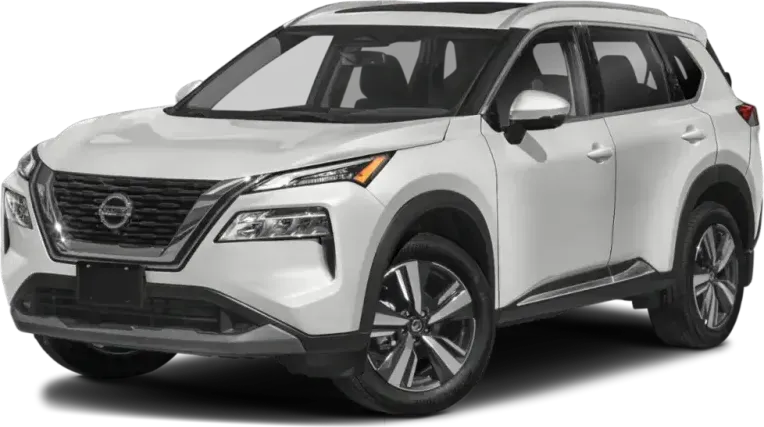
Nissan Rogue
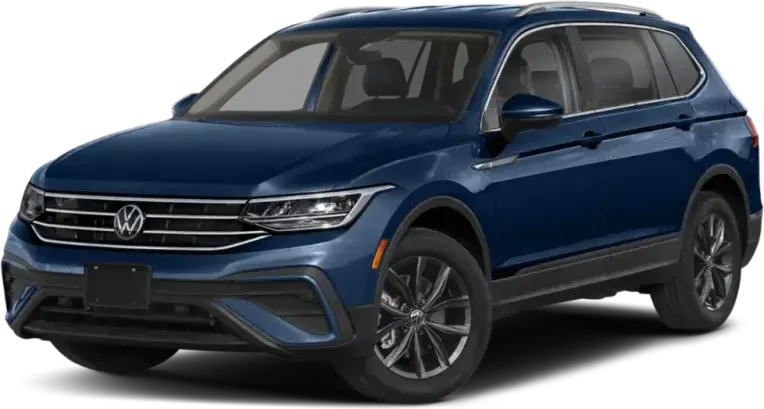
Volkswagen Tiguan
The Nissan Rogue comes out ahead of the Volkswagen Tiguan on reliability, with lower repair costs and fewer shop visits. Independent repair-cost data puts the Rogue at $467 a year against $730 for the Tiguan, though the Rogue has serious automatic braking complaints of its own.
How Do the Nissan Rogue and Volkswagen Tiguan Generations Compare?
Verdict
The Nissan Rogue is more reliable than the Volkswagen Tiguan, scoring 75/100 vs 68/100.
A clear edge goes to the Nissan Rogue. Independent repair-cost data shows lower yearly repair bills and far fewer unscheduled shop visits, and owners file fewer complaints per vehicle sold. The chance that a repair is major is the same for both. The Rogue is not trouble-free, since its false automatic braking stops and crash-linked complaints are serious. Still, the Volkswagen Tiguan's higher costs and more frequent shop trips decide the comparison.
Key Differences
- 1Nissan Rogue costs $263 less per year to repair
- 2Volkswagen Tiguan has 8 fewer total recalls
- 3Nissan Rogue scores 7 points higher in reliability
Category Scoreboard
Nissan Rogue vs Volkswagen Tiguan: Which Is More Reliable?
| Metric | Nissan Rogue | Volkswagen Tiguan |
|---|---|---|
| Reliability Score | 75/100 | 68/100 |
| Years Tracked | 9 | 9 |
| Total Recalls | 43 | 35 |
| Complaints per 10k Sold | 6.2 | 9.3 |
| Annual Repair Cost | $467/yr | $730/yr |
| Repair Frequency | 0.3/yr | 0.9/yr |
| Major Repair Risk | 12% | 12% |
| Safety RatingNHTSA overall | 2026 NHTSA | 2026 NHTSA |
| Frontal | ||
| Side | Not rated | |
| Rollover | ||
| Year Wins | 8 | 1 |
What Are the Common Problems With the Nissan Rogue and Volkswagen Tiguan?
Safety systems dominate the Rogue's complaints. Automatic emergency braking stops the car hard with nothing ahead, and it appears under both service brakes and forward collision avoidance. Other reports cover an engine compartment fire near the battery, a power liftgate that lowers on its own, and a slipping transmission. Every one of its main problem areas has crash-linked reports, including a parked car that rolled away. Tiguan complaints lean toward heat-related power loss, delayed acceleration from a stop, and oil consumption. Its power train area has no crash-linked reports, and its other areas have only one or two.
| Component | Nissan Rogue | Volkswagen Tiguan |
|---|---|---|
| ELECTRICAL SYSTEM | 0.7Very Low | 1.7Low |
| UNKNOWN OR OTHER | 1.1Low | 1.1Low |
| ENGINE | 0.7Very Low | 1.2Low |
| POWER TRAIN | 0.5Very Low | 1.2Low |
| SERVICE BRAKES | 0.8Very Low | 0.4Very Low |
| FORWARD COLLISION AVOIDANCE | 0.5Very Low | 0.3Very Low |
| STRUCTURE | 0.1Very Low | 0.5Very Low |
| VISIBILITY/WIPER | 0.2Very Low | 0.2Very Low |
| VEHICLE SPEED CONTROL | 0.2Very Low | 0.2Very Low |
| FUEL/PROPULSION SYSTEM | 0.2Very Low | 0.2Very Low |
| AIR BAGS | 0.2Very Low | 0.1Very Low |
| STEERING | 0.1Very Low | 0.2Very Low |
| ENGINE AND ENGINE COOLING | 0.3Very Low | —None |
| EXTERIOR LIGHTING | —None | 0.2Very Low |
| SEAT BELTS | —None | 0.1Very Low |
| LANE DEPARTURE | —None | 0.1Very Low |
| SEATS | —None | —None |
| SUSPENSION | —None | —None |
| FUEL SYSTEM | —None | —None |
| VISIBILITY | —None | —None |
| TIRES | —None | —None |
| BACK OVER PREVENTION | —None | —None |
| WHEELS | —None | —None |
Complaints per 10,000 units sold, aggregated across all tracked model years from NHTSA owner reports.
Which Is Cheaper to Maintain: Nissan Rogue or Volkswagen Tiguan?
How Does Nissan Rogue vs Volkswagen Tiguan Reliability Compare by Year?
| Year | Nissan Rogue | Volkswagen Tiguan | Edge |
|---|---|---|---|
| 2026 | 83/1001R / 9C | 76/1000R / 0C | Nissan Rogue |
| 2025 | 84/1001R / 103C | 73/1002R / 18C | Nissan Rogue |
| 2024 | 79/1002R / 116C | 75/1001R / 38C | Nissan Rogue |
| 2023 | 68/1005R / 519C | 73/1001R / 49C | Volkswagen Tiguan |
| 2022 | 70/1007R / 211C | 61/1005R / 199C | Nissan Rogue |
| 2021 | 70/10013R / 269C | 67/1005R / 106C | Nissan Rogue |
| 2020 | 79/1002R / 185C | 69/1003R / 118C | Nissan Rogue |
| 2019 | 73/1006R / 409C | 65/1005R / 165C | Nissan Rogue |
| 2018 | 70/1006R / 718C | 57/10013R / 275C | Nissan Rogue |
Best years to cross-shop: The 2024 Nissan Rogue scored 79/100 and the 2024 Volkswagen Tiguan scored 75/100 — the strongest shared model years that have been on the road for at least two years, where available.
Who Should Buy the Nissan Rogue vs the Volkswagen Tiguan?
Nissan Rogue vs Volkswagen Tiguan: Common Questions
- Is the Nissan Rogue more reliable than the Volkswagen Tiguan?
- Yes, the Rogue has a clear edge. It has lower annual repair costs, fewer unscheduled shop visits, and a lower complaint rate per vehicle sold. Major repair odds are equal at 12%. Its drawbacks are false automatic braking stops and crash-linked complaints in every main problem area.
- Which has more recalls, the Rogue or the Tiguan?
- The Rogue has more. Federal recall records show 43 across its 9 model years, against 35 for the Tiguan. Recall counts also grow with time on the road, so check the VIN of any specific car for open recalls before you buy either one.
- Which costs less to repair, the Rogue or the Tiguan?
- The Rogue costs less. Independent repair-cost data estimates $467 a year for the Rogue and $730 for the Tiguan, which is about $1,315 saved over five years. The Rogue also averages 0.3 unscheduled shop visits a year, versus 0.9 for the Tiguan.
- Do the Rogue and Tiguan both have automatic braking problems?
- Yes. Owners of both report automatic emergency braking stopping the car hard with nothing ahead. The Rogue has far more such complaints, with 13 crash-linked brake reports and 8 more under forward collision avoidance. The Tiguan has 1 crash-linked brake report. Dealers often could not reproduce the problem on either.
- What is the main electrical problem on the Volkswagen Tiguan?
- Power to the gauges, headlights, brake lights, and radio cuts out while driving, usually in heat. A check starter system warning comes first, and some cars stall. Owners tie this to a federal recall for an ignition switch polyfuse, so confirm that recall work was done.
Related Reliability Comparisons
More Nissan Rogue comparisons
Decided between Nissan Rogue and Volkswagen Tiguan? Run a VIN check before you buy — uncover hidden accidents, title issues, and open recalls.
How we score the Nissan Rogue and Volkswagen Tiguan
Scores weight complaint severity at 35%, repair costs at 30%, recall impact at 20%, and the spread of complaints across systems at 15%, with complaint counts adjusted for US sales. Read the full methodology.
See incorrect data? Report an issue