Last updated: 2026-10-10
Lincoln Navigator vs Nissan Armada: Reliability Compared

Lincoln Navigator
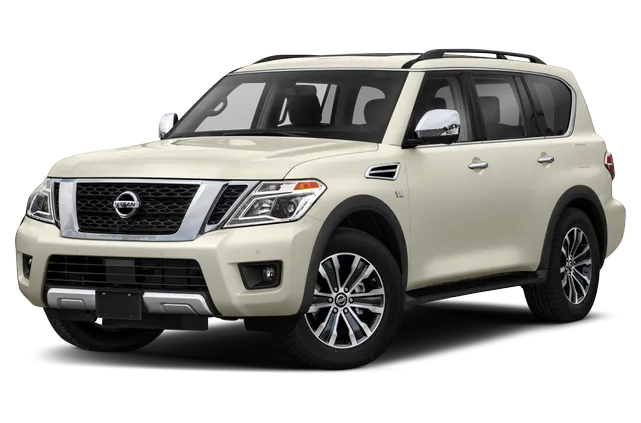
Nissan Armada
On reliability, the Nissan Armada beats the Lincoln Navigator by a large margin. The Armada costs about half as much to repair each year and has far fewer recalls. Navigator owners report serious transmission trouble, while Armada owners mostly report battery and electrical faults.
How Do the Lincoln Navigator and Nissan Armada Generations Compare?
Verdict
The Nissan Armada is more reliable than the Lincoln Navigator, scoring 73/100 vs 62/100.
Reliability favors the Nissan Armada by a large margin. The deciding reason is the cost and severity of ownership. Its estimated annual repair bill is about half the Navigator's, a repair is less likely to be major, and federal recall records show far fewer recalls. Armada owners file more complaints per vehicle sold, mostly about batteries and electrical faults. Those are real annoyances, but the Navigator's transmission trouble and heavy recall history weigh more.
Key Differences
- 1Nissan Armada costs $539 less per year to repair
- 2Nissan Armada has 55 fewer total recalls
- 3Nissan Armada scores 11 points higher in reliability
Category Scoreboard
Lincoln Navigator vs Nissan Armada: Which Is More Reliable?
| Metric | Lincoln Navigator | Nissan Armada |
|---|---|---|
| Reliability Score | 62/100 | 73/100 |
| Years Tracked | 9 | 9 |
| Total Recalls | 68 | 13 |
| Complaints per 10k Sold | 6.2 | 13 |
| Annual Repair Cost | $1089/yr | $550/yr |
| Repair Frequency | 0.4/yr | 0.4/yr |
| Major Repair Risk | 18% | 13% |
| Year Wins | 0 | 9 |
What Are the Common Problems With the Lincoln Navigator and Nissan Armada?
Transmission behavior defines the Navigator's complaints. The 10-speed automatic slips, hesitates, sticks in the wrong gear, then slams into gear late, and some cases end in a rebuild. Cold-start rattle from cam phasers and seat belt pretensioners that fire without a crash add to the list. The Armada's complaints lean electrical: batteries that drain and strand the SUV, and parking sensors that brake hard without warning. It also has transmission failures, stalls, and a brake-pedal switch fault. Only the Armada has crash-linked reports in its power train and service brakes. Only the Navigator has a crash-linked seat belt area. Both have crash-linked electrical reports.
| Component | Lincoln Navigator | Nissan Armada |
|---|---|---|
| ELECTRICAL SYSTEM | 0.9Very Low | 5.5Average |
| POWER TRAIN | 1.4Low | 1.2Low |
| UNKNOWN OR OTHER | 0.5Very Low | 1.3Low |
| ENGINE | 0.6Very Low | 0.8Very Low |
| SERVICE BRAKES | —None | 0.7Very Low |
| SUSPENSION | 0.2Very Low | 0.3Very Low |
| SEAT BELTS | 0.4Very Low | —None |
| BACK OVER PREVENTION | 0.2Very Low | 0.1Very Low |
| AIR BAGS | 0.1Very Low | 0.2Very Low |
| STEERING | 0.3Very Low | —None |
| EXTERIOR LIGHTING | —None | 0.3Very Low |
| VISIBILITY/WIPER | 0.1Very Low | 0.1Very Low |
| FUEL SYSTEM | —None | 0.2Very Low |
| VEHICLE SPEED CONTROL | —None | 0.2Very Low |
| VISIBILITY | 0.1Very Low | —None |
| FORWARD COLLISION AVOIDANCE | —None | 0.1Very Low |
Complaints per 10,000 units sold, aggregated across all tracked model years from NHTSA owner reports.
Which Is Cheaper to Maintain: Lincoln Navigator or Nissan Armada?
How Does Lincoln Navigator vs Nissan Armada Reliability Compare by Year?
| Year | Lincoln Navigator | Nissan Armada | Edge |
|---|---|---|---|
| 2026 | 71/1002R / 0C | 74/1002R / 6C | Nissan Armada |
| 2025 | 64/1006R / 7C | 73/1002R / 19C | Nissan Armada |
| 2024 | 64/1007R / 14C | 75/1001R / 4C | Nissan Armada |
| 2023 | 63/1008R / 5C | 75/1001R / 5C | Nissan Armada |
| 2022 | 61/10013R / 16C | 75/1001R / 8C | Nissan Armada |
| 2021 | 60/10010R / 26C | 74/1002R / 12C | Nissan Armada |
| 2020 | 60/10011R / 24C | 72/1002R / 26C | Nissan Armada |
| 2019 | 59/1004R / 58C | 72/1001R / 72C | Nissan Armada |
| 2018 | 59/1007R / 45C | 70/1001R / 73C | Nissan Armada |
Best years to cross-shop: The 2024 Lincoln Navigator scored 64/100 and the 2024 Nissan Armada scored 75/100 — the strongest shared model years that have been on the road for at least two years, where available.
Who Should Buy the Lincoln Navigator vs the Nissan Armada?
Lincoln Navigator vs Nissan Armada: Common Questions
- Is the Lincoln Navigator more reliable than the Nissan Armada?
- No. The Armada comes out well ahead. It has a lower estimated annual repair cost, a lower chance of a major repair, and far fewer recalls. Its weak spot is a higher complaint rate per vehicle sold, driven mainly by battery and electrical problems.
- Which has more recalls, the Navigator or the Armada?
- The Navigator, by a wide margin. Federal recall records show 68 recalls across its nine model years from 2018 to 2026. The Armada has 13 over the same span. Check any used Navigator's VIN to confirm recall repairs were completed.
- Which costs less to repair?
- The Armada. Independent repair-cost data estimates $550 a year, compared with $1089 for the Navigator. Over five years that is about $2,695 saved. Both average 0.4 unscheduled shop visits a year, so the savings come from cheaper repairs.
- What is the biggest problem with the Navigator?
- The 10-speed automatic transmission. Owners report slipping, hesitation, sticking in the wrong gear, and a hard slam into gear. Some say repeat dealer visits did not fix it and a few ended in a rebuild. Problems have appeared as early as 20,000 to 31,000 miles.
- What goes wrong most often on the Armada?
- Electrical faults, with 95 owner complaints. Batteries drain and strand the SUV, and replacement does not always cure it. Some owners also report parking sensors braking hard without warning. Transmission failures and a brake-pedal switch fault appear less often but are more serious.
Related Reliability Comparisons
More Lincoln Navigator comparisons
Decided between Lincoln Navigator and Nissan Armada? Run a VIN check before you buy — uncover hidden accidents, title issues, and open recalls.
How we score the Lincoln Navigator and Nissan Armada
Scores weight complaint severity at 35%, repair costs at 30%, recall impact at 20%, and the spread of complaints across systems at 15%, with complaint counts adjusted for US sales. Read the full methodology.
See incorrect data? Report an issue