Last updated: 2026-11-19

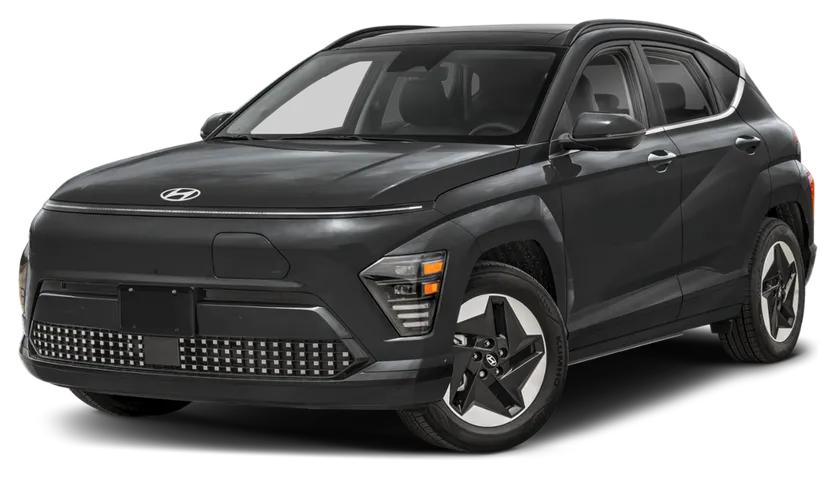
2021 Hyundai Kona Electric
65
GoodReliability score: 65 out of 100, rated Good

Reliability score

Good · #5 of 7 scored Kona Electric years

2021 Hyundai Kona Electric Reliability Report

The 2021 Hyundai Kona Electric rates good, near average for SUVs, but high-voltage battery faults that leave the car undrivable top owner complaints.

Recalls

3

Complaints

27

Complaint Rate

35.3per 10,000 sold

Est. Repair Cost

$396

EV Range

258 mi

Detailed Score Breakdown

Complaint Severity35% of score58/100

Component-weighted complaints normalized by sales volume

Repair Costs30% of score60/100

Independent repair cost ratings

Recall Impact20% of score75/100

Recall count weighted by severity

Issue Diversity15% of score80/100

Breadth of reported problem categories

The verdict

Consider

Matches the 2020's complaint count with one fewer recall, and owners most often report high-voltage battery faults followed by long waits for replacement batteries.

Looking at a used 2021 Hyundai Kona Electric? Check that exact car

3 recalls cover this year. A VIN check shows whether the car you found had the work done, plus accidents, title and odometer history.

Generation & Refresh (US)

Refresh Year

2021 received a facelift update for the First generation (OS).

  • Changes: Exterior redesign; Additional cargo capacity; Rear seat legroom improvement; Addition of a 48-volt mild hybrid system.
  • Year 4 in this generation (2018–2023).
  • 1st generation Kona Electric (US).

What this means for buyers

Refresh years bring updates but can also introduce new issues. Check early recall data before buying.

2018: First generation (OS) Launch

Generation start — new platform.

2021: This Model Year (Refresh)

2021 received a facelift update for the First generation (OS).

Should You Buy the 2021 Hyundai Kona Electric?

This Kona Electric holds good reliability standing, close to average among 2021 SUVs. It sits in the middle of the seven scored Kona Electric years. It rates better than the 2020, which drew the same 27 complaints and one more recall. The 2022 rates a bit better still, with 22 complaints and a single recall.

High-voltage battery faults lead the complaints. Warning lights come on, the car stops driving, and replacements stall because dealers have no batteries and no timeline. Other owners describe a car stuck in park or neutral, sometimes right after a full charge, and a "Check regenerative brakes" warning that came back days after a software update. One owner's home charging plug melted during disconnect at about 8,000 miles. Federal recall records list three campaigns, covering the hydraulic service brakes, the electrical system, and the air bags.

Get the service history and confirm all three recalls are closed. Look for past battery, inverter coolant, or brake unit work. If a 2022 fits your budget, it has drawn fewer complaints and recalls so far.

Compared to the 2022 Hyundai Kona Electric, which scored 6 points higher. See also the 2020 Hyundai Kona Electric for an earlier comparison.

Pros

  • Acceptable reliability score
  • Well-established generation
  • Only 27 complaints reported

Cons

  • Moderate recall count
  • Above-average complaint rate for SUV
  • ElectricalHigh-voltage battery faults come up most8 complaints
  • 1 fire incident reported in owner complaints

Compare 2021 Hyundai Kona Electric With

Recall Overview

3

recalls on record

A moderate 3 recalls are on file for the 2021 Hyundai Kona Electric. Each one points to a specific safety or compliance issue identified by the manufacturer or NHTSA — check the list below before buying.

NHTSA.gov →

Complaint Breakdown

35.3

per 10,000 sold

Segment avg: 21.7

LowAvgHigh
High

Safety Incidents

1

Crashes

1

Fires

0

Injuries

0

Deaths

Data sourced from NHTSA complaint filings and manufacturer recall notices. Complaint narratives are owner-reported.

2021 Hyundai Kona Electric Recall Details

3 recalls have been issued for the 2021 Hyundai Kona Electric. Recall repairs are free at authorized dealers, so check that each one below was done on the car you are looking at.

BrakesRecall 20V748000Jan 12, 2020

The Integrated Electronic Brake (IEB) system may detect an abnormal sensor signal and as a result, may significantly reduce braking performance.

Risk
Reduced braking power could lengthen the distance required to stop the vehicle, increasing the risk of a crash.
Fix
Hyundai will notify owners, and dealers will update the IEB software, free of charge.
Which vehicles are covered

Hyundai Motor America (Hyundai) is recalling certain 2019-2020 Nexo Fuel Cell and 2019-2021 Kona Electric vehicles.

More about the fix

The recall began January 25, 2021. Owners may contact Hyundai customer service at 1-855-371-9460. Hyundai's number for this recall is 199.
ElectricalRecall 22V9410002022-16-12

The Electric Power Control Unit (EPCU) may have been improperly sealed and may leak coolant internally.

Risk
Coolant contacting the EPCU circuit board may cause a loss of drive power, increasing the risk of a crash.
Fix
Dealers will inspect and replace the EPCU, as necessary, free of charge.
Which vehicles are covered

Hyundai Motor America (Hyundai) is recalling certain 2021 Kona EV vehicles.

More about the fix

Owner notification letters were mailed March 22, 2023. A second notice will be sent once the final remedy is available. Owners may contact Hyundai customer service at 1-855-371-9460. Hyundai's number for this recall is 239.

AirbagsRecall 26V728000Mar 11, 2026

A software error in the air bag control unit (ACU) may improperly deactivate the air bag system and seat belt pretensioners.

Risk
Air bags and seat belt pretensioners that do not activate in a crash increases the risk of injury.
Fix
Dealers will update the ACU software, free of charge.
Which vehicles are covered

Hyundai Motor America (Hyundai) is recalling certain 2019-2022 Veloster N, 2019-2023 Kona Electric vehicles.

More about the fix

Owner notification letters are expected to be mailed January 1, 2027. Owners may contact Hyundai customer service at 1-855-371-9460. Hyundai's number for this recall is 311. Vehicle Identification Numbers (VINs) involved in this recall will become searchable on NHTSA.gov on November 6, 2026.

VIN History Report

Buying a used 2021 Hyundai Kona Electric? Check its history first

Electrical system problems lead owner complaints about the 2021 Hyundai Kona Electric, and 3 recalls were issued for it. A VIN check shows whether this car's recall work was done, plus accident, title, and odometer history.

No VIN? Just hit “Check VIN” to look one up.

  • Accidents
  • Open Recalls
  • Title History
  • Odometer Rollback

Hyundai Kona Electric Repair Costs & Maintenance

Maintenance Rating

3Maintenance rating: 3 out of 5

Based on NHTSA complaint patterns, recall severity, and publicly available cost benchmarks.

Est. Annual Maintenance

$396

Category-level averages derived from publicly available industry reports (AAA, CarMD). Model-level estimates produced by Auto Reliability Index.

MPG & Annual Running Costs

Electric

258 mi range

Fuel cost: $600/yr

Fuel only

27 kWh/100mi · 9 hrs @ 240V

Based on EPA fuel-cost estimates. Excludes routine maintenance, depreciation, and insurance. Data as of 2021 EPA label cycle.

Electric trims
TrimDriveTrans.RangekWh/100miFuel Cost
Kona ElectricFront-Wheel DriveAutomatic (A1)258 mi27.0$600

Used Buying Checklist

Key things to inspect or verify before purchasing a 2021 Hyundai Kona Electric.

  • Run a VIN recall check and get dealer records showing completed recall work, not just scheduled appointments.

  • Plug into both a Level 2 charger and a DC fast charger and confirm each starts charging.

  • Inspect the charging plug and inlet for melting or scorch marks.

  • Watch the dash at startup and during the drive for inverter coolant, high voltage, or regenerative brake warnings.

  • Review service records for repeated visits over the inverter coolant warning or battery replacement delays.

  • Run the heater and defroster on high and confirm hot air reaches the windshield.

  • Shift between drive, reverse, and park several times and confirm the parking brake releases cleanly.

  • Use cruise control at highway speed and watch for any sudden loss of power.

Going to see one? Take the printable 2021 Hyundai Kona Electric inspection checklist with you.

2021 Hyundai Kona Electric Common Problems by Component

27 owner complaints grouped by vehicle system.

8
7
4
ELECTRICAL SYSTEM (8)UNKNOWN OR OTHER (7)ENGINE (4)VEHICLE SPEED CONTROL (2)SERVICE BRAKES (2)VISIBILITY (1)EXTERIOR LIGHTING (1)BACK OVER PREVENTION (1)Other (1)

ELECTRICAL SYSTEM

8 complaintsSafety-related

High-voltage battery faults come up most. Warning lights appear, the car stops being drivable, and battery replacements stall because dealers have no batteries and no timeline. There is 1 fire report: the home charging plug melted while the charger was being disconnected, at about 8,000 miles. Other reports describe a heater and defroster that blow only cold air, a car that will not DC fast charge, repeated inverter coolant warnings after several dealer visits, and a sudden loss of power in traffic. Several owners say they are still waiting on parts for recall repairs.

8 complaints total1 fire

UNKNOWN OR OTHER

7 complaints

Repeated "Refill Inverter Coolant" warnings are the main theme. Owners describe several dealer visits, dealers with no coolant in stock, and inverter or charging unit failures that followed. Battery faults also show up. In one, a high voltage warning leaves the car unable to start or shift. In another, the battery will not charge until a sensor is turned off and charging is capped at 90%. One report describes sudden acceleration while parking that the brakes could not stop before a crash. Owners worry the coolant problem could raise fire risk.

7 complaints total

ENGINE

4 complaints

The car will not shift into drive or reverse, sometimes right after a full charge, and stays stuck in park or neutral. Reports also cover stalling while driving, 12-volt battery and "key not detected" messages, a parking brake that will not release, and coolant and tire pressure warnings even though levels check out fine. One complaint describes a rumble that gets louder plus sluggish acceleration that forced a stop at 30 mph. Dealers often cannot reproduce these faults on the first visit.

4 complaints total
VEHICLE SPEED CONTROL (2 complaints)

VEHICLE SPEED CONTROL

2 complaints

Two opposite failures appear. In one, the car speeds up on its own at low speed once the driver lets off the brake, and only hard braking stops it. In the other, drive power drops suddenly at 70 mph with cruise control on. Speed falls until the driver pulls over and restarts the car. Both are loss-of-control risks in traffic. With only 2 complaints, there is no clear mileage pattern.

2 complaints total
SERVICE BRAKES (2 complaints)

SERVICE BRAKES

2 complaints

A "Check regenerative brakes" warning comes on at startup or while braking, sometimes along with other brake system warnings. In one report the parking brake applies by itself while driving and at stops. The warning came back days after a dealer ran diagnostics and a software update and found nothing wrong. Another case was fixed by replacing the integrated electric brake unit assembly. Brakes that apply on their own while the car is moving are a crash risk.

2 complaints total
VISIBILITY (1 complaints)

VISIBILITY

1 complaint
01/19/2022

Sunroof exploded. On 19 January 2022 around 15:45 (Pacific Time) while driving approximately 65mph in my 2021 Hyundai Kona Electric on Hwy 60 (Moreno Valley, California), west-bound I experienced a loud explosion sound in my Kona and glass raining down on me and the inside of the car. I looked up and noticed there was a hole in the sunroof (see attached photos). I immediately found a safe place to exit the highway and stopped.

EXTERIOR LIGHTING (1 complaints)

EXTERIOR LIGHTING

1 complaint
12/15/2022

The headlights even though they are LED they have a terrible beam pattern with noticeable dark spots in your field of view. Also I get flashed from oncoming traffic because of the low mounting position of the head lights easily blinds on coming traffic with the slightest bump or incline in the road. I had the dealer check out their alignment and was told they are fine. I myself have been dazzled by other Kona’s coming at me. I feel these lights are an issue and I see more and more cars with these low mounted headlights which I feel is a design issue that needs to be addressed due to the angle the lights need to shine they easily dazzle oncoming traffic.

BACK OVER PREVENTION (1 complaints)

BACK OVER PREVENTION

1 complaint
12/13/2024

The contact owns a 2021 Hyundai Kona Electric. The contact stated while the vehicle was parked, the rearview camera became inoperable. The contact stated that the image on the rearview camera went blank. There was no warning light illuminated. The vehicle was taken to the dealer, and it was diagnosed and determined that the tailgate wiring harness had failed and needed to be replaced. The vehicle was not repaired. The manufacturer was made aware of the failure and offered to pay for 60 percent of the parts and labor cost to repair the vehicle. The contact declined the offer provided by the manufacturer. The approximate failure mileage was 86,612.

AIR BAGS (1 complaints)

AIR BAGS

1 complaintSafety-related
09/01/2024Crash reported

My wife's car t-boned another vehicle, but the air bags didn't deploy. Luckily, she wasn't hurt badly, but the vehicle was deemed a total loss, so you can imagine the force of the collision. The forward collision warning and automatic emergency braking didn't activate either. I reported it to Hyundai. They sent an inspector to examine the vehicle, and I also showed them photos and a copy of the police report, but they claim that my car was hit on the side, and the pre collision system doesn't detect imminent side impact. That's completely outrageous. I don't know what their inspector wrote in their report, but the photos and police report are irrefutable proof that my wife had a frontal collision with the side of another vehicle. Hyundai kept denying it because they didn't want to help financially. I attached a copy of their determination letters (the second one was after I submitted a copy of the police report to prove that my wife's car is the one that hit the other vehicle, but Hyundai refused to see it as it happened). This is a link to see the interior and exterior photos of the vehicle: [XXX] INFORMATION REDACTED PURSUANT TO THE FREEDOM OF INFORMATION ACT (FOIA), 5 U.S.C. 552(B)(6)

Best & Worst Hyundai Kona Electric Years

Hyundai Kona Electric reliability score trend

Scores 0–100, higher is better. Best and worst years are ringed. This year is highlighted.

Hyundai Kona Electric reliability scores by year
YearScoreRating
201951/100Mixed
202060/100Good
202165/100Good
202271/100Good
202372/100Good
202469/100Good
202571/100Good

Hyundai Kona Electric Reliability Compared to Other Years

Reliability scores compared across model years
YearScorevs Prior YearRatingRecallsComplaints
202571/100+2Good11
202469/100-3Good115
202372/100+1Good15
202271/100+6Good122
2021(selected)65/100+5Good327
202060/100+9Good427
201951/100—Mixed454

Frequently Asked Questions

Is the 2021 Hyundai Kona Electric reliable?
Yes, it holds good reliability standing, close to average for 2021 SUVs. It falls in the middle of the Kona Electric's seven scored years, with 27 owner complaints on file. It rates better than the 2020 and slightly worse than the 2022. The weak spot is the high-voltage battery, where failures can leave the car undrivable.
What are the most common problems with the 2021 Hyundai Kona Electric?
Electrical faults are the most common, with 8 complaints centered on the high-voltage battery. Owners also report a car that won't shift out of park or neutral, stalling, false coolant and tire pressure warnings, and a "Check regenerative brakes" message. A few describe sudden power loss at highway speed or the car moving on its own at low speed after the driver releases the brake.
Does the 2021 Hyundai Kona Electric have battery problems?
Yes. High-voltage battery faults are the top complaint for this year. Warning lights appear and the car stops being drivable. Several owners say replacements stalled because dealers had no batteries and could not give a timeline. Other electrical reports include repeated inverter coolant warnings, a heater that blows only cold air, and a car that won't DC fast charge.
How many recalls does the 2021 Hyundai Kona Electric have?
Federal recall records list three recalls for the 2021 model year. They cover the hydraulic service brakes, the electrical system, and the air bags. Before buying, ask a Hyundai dealer to run the VIN and confirm each recall repair has been completed. The 2020 has four recalls and the 2022 has one.
Is the 2022 Hyundai Kona Electric better than the 2021?
The 2022 rates somewhat better. It has 22 owner complaints and one recall, compared with 27 complaints and three recalls for the 2021. Both years hold good reliability standing. The 2022 has also been on the road a year less, so part of its lower count may come from having had less time to collect complaints.

Don’t buy a 2021 Hyundai Kona Electric without checking its VIN first — hidden accidents, title issues, and open recalls could cost you thousands.

Look Up a VIN →

How we score the 2021 Hyundai Kona Electric

Of the four inputs behind this score, the 2021 Hyundai Kona Electric does best on how many systems draw complaints (80/100) and worst on complaint severity (58/100). Scores weight complaint severity at 35%, repair costs at 30%, recall impact at 20%, and the spread of complaints across systems at 15%, with complaint counts adjusted for US sales. Read the full methodology.

Get notified when new recalls or reliability data is added for the Hyundai Kona Electric.

No spam. Only data updates for this model.

See incorrect data? Report an issue