Last updated: 2026-11-19

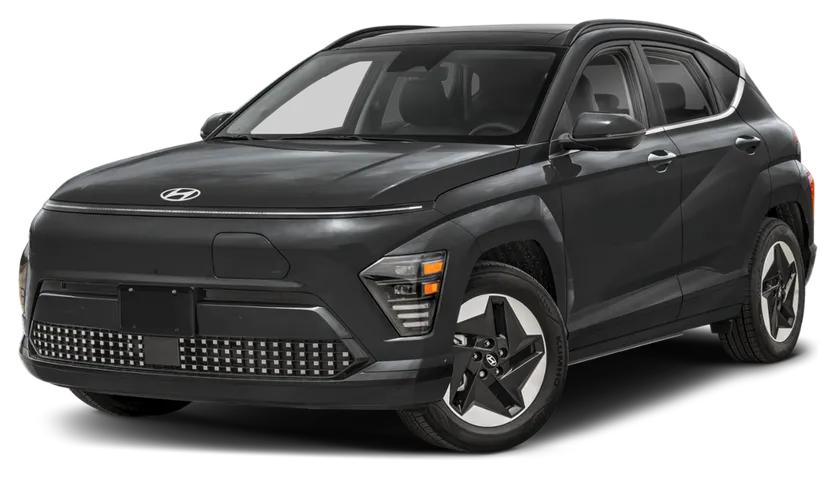
2019 Hyundai Kona Electric
51
MixedReliability score: 51 out of 100, rated Mixed

Reliability score

Mixed · lowest of 7 scored Kona Electric years

2019 Hyundai Kona Electric Reliability Report

The 2019 Hyundai Kona Electric is the weakest Kona Electric year, with owners reporting long battery replacement waits and charging capped at 80%.

Recalls

4

Complaints

54

Complaint Rate

313.8per 10,000 sold

Est. Repair Cost

$396

EV Range

258 mi

Detailed Score Breakdown

Complaint Severity35% of score25/100

Component-weighted complaints normalized by sales volume

Repair Costs30% of score60/100

Independent repair cost ratings

Recall Impact20% of score60/100

Recall count weighted by severity

Issue Diversity15% of score83/100

Breadth of reported problem categories

The verdict

Caution

Weakest of the seven scored years, marked by long battery replacement waits, 80% charging caps, and two park-outside fire recalls.

Looking at a used 2019 Hyundai Kona Electric? Check that exact car

4 recalls cover this year. A VIN check shows whether the car you found had the work done, plus accidents, title and odometer history.

Generation & Refresh (US)

Post-Redesign (Year 2)

2019 is year 2 of the First generation (OS).

  • Redesigned for the 2018 model year.
  • A refresh arrives in 2021.
  • 1st generation Kona Electric (US).

What this means for buyers

Year 2 is typically a safer pick than the first model year — early issues are more likely to be identified, but the platform is still new.

If you're comparing prices, check 2018 (redesign year) vs 2019+ pricing and recalls.

2018: First generation (OS) Launch

Generation start — new platform.

2019: This Model Year

2019 is year 2 of the First generation (OS).

2021: Mid-Cycle Refresh

Updated features and styling tweaks.

Should You Buy the 2019 Hyundai Kona Electric?

Mixed is the fair verdict, and this is the weakest of the seven scored Kona Electric years. Against other 2019 SUVs it sits well below average, with complaints running high for the number sold. The 2020 model, from the same first generation, rates better and drew half as many complaints.

Most owner reports center on the battery. Dealers apply a software update that caps charging at 80%, then the replacement part never arrives and no date is given. Range drops, charging stops multiply, and some cars sit at the dealer for months. Fewer owners describe real failures: a battery that leaves the car inoperative, a drive unit that loses propulsion after a screeching sound, and a reduction gear that grows louder and then locks up with no warning light. Two federal recalls tell owners to park outside because of fire risk.

Ask for records showing every recall was completed, especially the two park-outside campaigns. Confirm whether the battery was actually replaced or only limited by software. On a test drive, listen for clicking or ticking from the drive motor. If the price gap is small, a 2020 is the safer pick.

Compared to the 2020 Hyundai Kona Electric, which scored 9 points higher.

Pros

  • Not a first-year model

Cons

  • Below-average reliability score
  • Moderate recall count
  • Above-average complaint rate for SUV
  • ELECTRICAL SYSTEM complaints dominate76%
  • 2 fire incidents reported in owner complaints
  • Safety recall: park-outside advisory issued

Compare 2019 Hyundai Kona Electric With

Recall Overview

4

recalls on record

Park Outside

A moderate 4 recalls are on file for the 2019 Hyundai Kona Electric. Each one points to a specific safety or compliance issue identified by the manufacturer or NHTSA — check the list below before buying.

NHTSA.gov →

Complaint Breakdown

313.8

per 10,000 sold

Segment avg: 26.7

LowAvgHigh
High

Safety Incidents

2

Crashes

2

Fires

1

Injuries

0

Deaths

Data sourced from NHTSA complaint filings and manufacturer recall notices. Complaint narratives are owner-reported.

2019 Hyundai Kona Electric Recall Details

4 recalls have been issued for the 2019 Hyundai Kona Electric. Recall repairs are free at authorized dealers, so check that each one below was done on the car you are looking at.

ElectricalRecall 20V6300002020-13-10Park outside

The lithium-ion (Li-ion) battery may short-circuit.

Risk
An electrical short in the Li-ion battery increases the risk of a fire.
Fix
Hyundai will notify owners, and dealers will update the Battery Management System (BMS) software and inspect the Li-ion battery, replacing it if necessary, free of charge.
Which vehicles are covered

Hyundai Motor America (Hyundai) is recalling certain 2019-2020 Kona Electric vehicles.

More about the fix

Owners are advised to park their vehicles outside and away from structures until the repair is complete. The recall began November 13, 2020. Owners may contact Hyundai customer service at 1-855-371-9460. Hyundai's number for this recall is 196.
BrakesRecall 20V748000Jan 12, 2020

The Integrated Electronic Brake (IEB) system may detect an abnormal sensor signal and as a result, may significantly reduce braking performance.

Risk
Reduced braking power could lengthen the distance required to stop the vehicle, increasing the risk of a crash.
Fix
Hyundai will notify owners, and dealers will update the IEB software, free of charge.
Which vehicles are covered

Hyundai Motor America (Hyundai) is recalling certain 2019-2020 Nexo Fuel Cell and 2019-2021 Kona Electric vehicles.

More about the fix

The recall began January 25, 2021. Owners may contact Hyundai customer service at 1-855-371-9460. Hyundai's number for this recall is 199.

ElectricalRecall 21V127000Jan 3, 2021Park outside

The lithium-ion (Li-ion) battery may short-circuit.

Risk
An electrical short in the Li-ion battery increases the risk of a fire.
Fix
Owners are advised to park their vehicles outside and away from structures until the interim action is complete.
Which vehicles are covered

Hyundai Motor America (Hyundai) is recalling certain 2019-2020 Kona Electric and 2020 Ioniq Electric vehicles.

More about the fix

Hyundai will notify owners, and as an interim action, owners have the option to follow provided instructions to perform a battery update through the vehicle's infotainment system or request a Hyundai dealer to provide the update. Once parts are available, dealers will inspect the Battery System Assembly (BSA), and replace it if necessary. Repairs will be performed free of charge. Owners were notified of the safety risk, and the interim action, with a letter mailed April 9, 2021. Final owner notification letters were mailed June 17, 2021. Owners may contact Hyundai customer service at 1-855-371-9460. Hyundai's number for this recall is 200.

VIN History Report

Buying a used 2019 Hyundai Kona Electric? Check its history first

Electrical system problems lead owner complaints about the 2019 Hyundai Kona Electric, and 4 recalls were issued for it. A VIN check shows whether this car's recall work was done, plus accident, title, and odometer history.

No VIN? Just hit “Check VIN” to look one up.

  • Accidents
  • Open Recalls
  • Title History
  • Odometer Rollback

Hyundai Kona Electric Repair Costs & Maintenance

Maintenance Rating

3Maintenance rating: 3 out of 5

Based on NHTSA complaint patterns, recall severity, and publicly available cost benchmarks.

Est. Annual Maintenance

$396

Category-level averages derived from publicly available industry reports (AAA, CarMD). Model-level estimates produced by Auto Reliability Index.

MPG & Annual Running Costs

Electric

258 mi range

Fuel cost: $650/yr

Fuel only

28 kWh/100mi · 9 hrs @ 240V

Based on EPA fuel-cost estimates. Excludes routine maintenance, depreciation, and insurance. Data as of 2019 EPA label cycle.

Electric trims
TrimDriveTrans.RangekWh/100miFuel Cost
Kona ElectricFront-Wheel DriveAutomatic (A1)258 mi28.0$650

Used Buying Checklist

Key things to inspect or verify before purchasing a 2019 Hyundai Kona Electric.

  • Run the VIN through federal recall records and confirm every battery recall shows as completed.

  • Ask for dealer invoices that show whether the high-voltage battery pack was actually replaced, not just updated with software.

  • Charge the car fully and check whether it stops at 80%, which suggests the battery recall work is still open.

  • With the radio off, accelerate and coast gently, and listen for clicking or ticking from the drive motor.

  • On smooth pavement, listen for a growing drive noise or screeching from the front, possible signs of gear reduction unit wear.

  • Start the car on a cold morning and check for a burning-wire smell during warm-up.

  • Drive in stop-and-go traffic and note any sudden or unneeded automatic emergency braking.

Going to see one? Take the printable 2019 Hyundai Kona Electric inspection checklist with you.

2019 Hyundai Kona Electric Common Problems by Component

54 owner complaints grouped by vehicle system.

41
ELECTRICAL SYSTEM (41)FUEL/PROPULSION SYSTEM (4)SERVICE BRAKES (3)POWER TRAIN (2)UNKNOWN OR OTHER (2)VEHICLE SPEED CONTROL (1)WHEELS (1)

ELECTRICAL SYSTEM

41 complaintsSafety-related

Most of these reports describe charging capped at 80% while a battery recall repair waits for parts. Dealers apply a software update that limits charge, then the replacement part never arrives and no date is given. That cuts driving range and forces extra charging stops. A smaller group describes actual failures: a battery that leaves the car inoperative, a drive unit that loses propulsion after a screeching sound, and a wire-burning smell during cold-weather warm-up at about 1,000 miles. Two complaints are fire-related.

41 complaints total2 fires

FUEL/PROPULSION SYSTEM

4 complaints

Long waits for a replacement battery pack make up most of these reports. Cars sit at the dealer for months with no parts ETA. Some inspections end without any replacement, and some owners drive for months at an 80% charge limit. A separate pattern involves the drive motor. A clicking or ticking sound under acceleration and deceleration gets steadily worse until the dealer replaces the motor under warranty. Owners worry the reduction gear could fail and cut acceleration without warning.

4 complaints total

SERVICE BRAKES

3 complaintsSafety-related

Automatic emergency braking misbehaves in these reports. It either brakes hard when no collision is imminent or steps in only at the last moment. A false activation can bring the car to a full stop in highway traffic, forcing following drivers to swerve, and repeat events are reported. Another report describes sudden acceleration while braking to park. The single crash-related complaint involves stiff steering at low speed and brakes that fail to stop the car before it hits a pole, with minor injuries.

3 complaints total1 crash
POWER TRAIN (2 complaints)

POWER TRAIN

2 complaints

Failure of the gear reduction unit is the mechanical concern here. A dealer confirms the unit needs replacing. There are no warning lights beforehand, only a louder noise while driving that is easy to mistake for tire or wind noise. The unit can lock up and stop the car while it is moving. The other report describes a long, unfinished wait for a promised high-voltage battery replacement, which the owner links to fire concerns.

2 complaints total
UNKNOWN OR OTHER (2 complaints)

UNKNOWN OR OTHER

2 complaints

Unfinished battery recall work is the common thread. Dealers mark the battery recall as complete after only a software update, and Hyundai later admits no battery was replaced. Other reports describe months of calls, a repair appointment where the dealer has no fix ready, and no repair date while the owner keeps driving the car. One recall notice arrives at around 14,000 miles.

2 complaints total
VEHICLE SPEED CONTROL (1 complaints)

VEHICLE SPEED CONTROL

1 complaintSafety-related
09/10/2025Crash reported1 injury

The contact owned a 2019 Hyundai Kona. The contact stated that while attempting to drive from a complete stop, the vehicle accelerated rapidly through a busy intersection on its own and would not slow or stop, despite the brake pedal being depressed. As a result, the contact briefly lost control of the vehicle as it swerved left to right, only coming to a complete stop after colliding with another vehicle. The air bags did deploy. No warning lights were illuminated. The vehicle was towed to a storage facility and deemed a total loss by the contact's insurance provider. A police report was filed, and injuries were reported. The contact was transported to an area hospital and treated for a broken sternum and hematoma on both her right and left breasts. The manufacturer was not notified of the failure. The failure mileage was 70,000.

WHEELS (1 complaints)

WHEELS

1 complaint
04/07/2022

At time of purchase (new) this car did not come with a spare or jack but included a can of fix a flat and a cheep compressor. While traveling I became stranded with an un repairable flat tire and had to have someone come get me with a jack and abandon the car on the side of the road. I then purchased a spare tire kit directly from the purchase point dealer. On a second incident I discovered that the spare tire (donut) does not fit the rear wheels. It does not clear the brake calipers. Come to find out there is no other rim or tire that will fit this car thus leaving the driver with no options should a flat or bent rim happen. Hyundai's solution to this is to throw a can of fix a flat in the trunk. How can that be legal in this country. For the second time in two years.

Best & Worst Hyundai Kona Electric Years

Best Hyundai Kona Electric years to buy

Top pick: the highest score among years with at least two years on the road; the newest wins a tie.

Hyundai Kona Electric years to avoid

  • 51
    MixedReliability score: 51 out of 100, rated Mixed
    2019Weakest of 7 yearsThis year4 recalls · 54 complaints
Full Hyundai Kona Electric years-to-avoid analysis →

Hyundai Kona Electric reliability score trend

Scores 0–100, higher is better. Best and worst years are ringed. This year is highlighted.

Hyundai Kona Electric reliability scores by year
YearScoreRating
201951/100Mixed
202060/100Good
202165/100Good
202271/100Good
202372/100Good
202469/100Good
202571/100Good

Hyundai Kona Electric Reliability Compared to Other Years

Reliability scores compared across model years
YearScorevs Prior YearRatingRecallsComplaints
202571/100+2Good11
202469/100-3Good115
202372/100+1Good15
202271/100+6Good122
202165/100+5Good327
202060/100+9Good427
2019(selected)51/100—Mixed454

Frequently Asked Questions

Is the 2019 Hyundai Kona Electric reliable?
Not especially. Its reliability is mixed, it ranks well below average among 2019 SUVs, and it is the weakest of the seven scored Kona Electric years. Owners filed 54 complaints, most about the battery and charging being held to 80% while a replacement part was pending. Four recalls apply, and two of them tell owners to park outside because of fire risk.
What are the most common problems with the 2019 Hyundai Kona Electric?
Battery and electrical issues lead by a wide margin, with 41 of the 54 complaints in that area. Owners describe months of reduced range under an 80% charge limit while waiting for parts. Smaller groups involve automatic emergency braking that stops the car hard with nothing ahead, and a drive motor or reduction gear that clicks or grows louder until it needs replacing.
Does the 2019 Hyundai Kona Electric have battery problems?
Yes, battery complaints dominate this year. Owners say a software update limited charging to 80%, then the replacement battery never arrived and dealers gave no date. Some cars sat at the dealer for months, and some inspections ended with no replacement at all. A few reports describe a battery that left the car inoperative, and two complaints are fire-related.
What recalls affect the 2019 Hyundai Kona Electric?
Federal recall records list four recalls for this year. Two cover the electrical system, one covers the hydraulic service brakes, and one covers the air bags. Two of the four carry park-outside advice because of fire risk, so a seller should be able to show that every recall repair was completed before you buy.
Is the 2020 Hyundai Kona Electric better than the 2019?
Yes, the 2020 holds up better. It earns good reliability, while the 2019 is mixed and the weakest year in the lineup. Owners filed 27 complaints on the 2020 compared with 54 on the 2019. Both years have four recalls, so checking recall completion still matters whichever one you choose.

Don’t buy a 2019 Hyundai Kona Electric without checking its VIN first — hidden accidents, title issues, and open recalls could cost you thousands.

Look Up a VIN →

How we score the 2019 Hyundai Kona Electric

Of the four inputs behind this score, the 2019 Hyundai Kona Electric does best on how many systems draw complaints (83/100) and worst on complaint severity (25/100). Scores weight complaint severity at 35%, repair costs at 30%, recall impact at 20%, and the spread of complaints across systems at 15%, with complaint counts adjusted for US sales. Read the full methodology.

Get notified when new recalls or reliability data is added for the Hyundai Kona Electric.

No spam. Only data updates for this model.

See incorrect data? Report an issue